

Reach thousands of whisky and spirits lovers every day.


What Does 80 ppm Mean? Punch and Heavily Peated Whisky Explained
 by Max RinkI’m a whisky enthusiast and aspiring writer, exploring new flavours and the stories behind every bottle.
Follow Spiritory on Google News to get our latest guides and releases delivered straight to your feed.
What Does 80 ppm Mean? Punch and Heavily Peated Whisky Explained
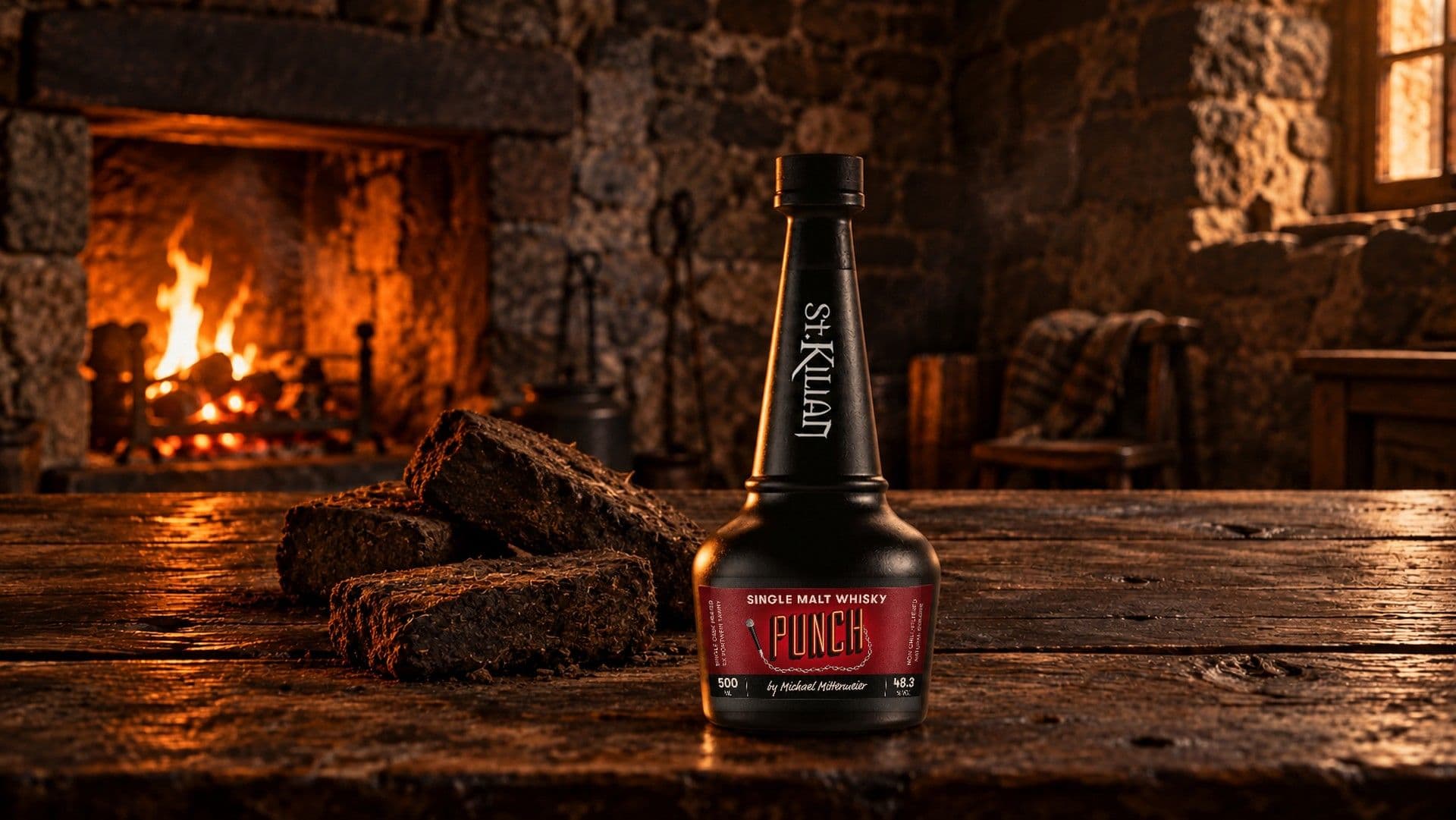
80 ppm means that the malt for Punch took up so much peat smoke during kilning that it holds 80 parts of phenols per million parts of malt. The number describes the malt and not the whisky in the glass, because according to St. Kilian Distillers a large share of the phenols is lost during milling, mashing, fermentation, distillation and maturation.
Key Takeaways
ppm stands for parts per million and gives the phenol content of the malt, measured after kilning and before mashing.
Punch by Michael Mittermeier is heavily peated at 80 ppm, comes from Cask Nr.5914 (ex Tawny Port) and is bottled at 48.3% ABV.
For comparison, Whisky Advocate lists about 35 ppm for Lagavulin and Caol Ila, about 45 ppm for Laphroaig and 50 to 55 ppm for Ardbeg.
Figures from different labs and years are not always like for like: St. Kilian measured the same malt with two methods and got 54 and 80 ppm.
A Tawny Port cask brings flavours of its own that sit next to the smoke. The number alone does not tell you how a whisky tastes.
Tip: Ask three questions about any ppm figure. Does it describe the malt or the whisky? How was it measured? And how long did the whisky spend in the cask? The answers make the number comparable.
What ppm Measures, and What It Does Not
The abbreviation ppm stands for parts per million. On a label it usually tells you how much phenol the peat smoked barley malt contained. Phenols are aroma compounds with smoky, medicinal or iodine like notes. During kilning, peat smoke carries them onto the damp barley, where they cling to the husks. St. Kilian shows how small the unit is with a comparison: one microgram in one gram.
The measurement is taken on the malt, not on the finished whisky. Brendan McCarron, who looks after maturing stocks for Ardbeg and Glenmorangie, told Whisky Advocate: "PPM is the measure of what's on the malt, as opposed to what ends up in the liquid." The figure describes where production starts. Reading it as the smoke level of the bottle misreads it. For an introduction to the topic, see our article What Does "Peated" Mean in Whisky?.
Why the Measuring Method Matters
The measurement itself is not the same everywhere either. In its Whisky ABC, St. Kilian describes two methods. In the colorimetric method, the phenols are dissolved from the malt, mixed with a colour reagent and read with a colorimeter. It is cheap, captures only the total phenols and, according to the distillery, often reads too low. With HPLC, or high performance liquid chromatography, the individual phenols are separated and measured one by one. It is more precise and, according to St. Kilian, the standard in Scotland.
The distillery gives an example of how much this can matter. Its heavily peated Scottish malt was measured colorimetrically until mid 2023 and came out at 54 ppm. After the switch to HPLC, the same malt measured 80 ppm. The lesson for you: two figures on two labels are only a fair comparison if you know how they were produced. The label of Punch says 80 ppm.
Where 80 ppm Sits Next to Well Known Peated Whiskies
Published figures for well known whiskies help to place 80 ppm. All of them refer to the malt, and they differ slightly by source and year.
Highland Park 12 Year Old: 20 ppm (Whisky Advocate, 2019).
Lagavulin and Caol Ila 12 Year Old: 35 ppm each (Whisky Advocate, 2017).
Laphroaig: 45 ppm for most releases (Whisky Advocate, 2017).
Ardbeg: 50 to 55 ppm (Whisky Advocate, 2017).
Longrow 18 Year Old: 80 ppm (Whisky Advocate, 2019).
Octomore Edition 14.1: 128.9 ppm (Bruichladdich, official product page).
At 80 ppm, Punch therefore sits well above the classic Islay figures of Lagavulin, Laphroaig and Ardbeg, but below the top end of the Octomore range. St. Kilian also gives 80 ppm for its regular peated malt, so the figure is within what the distillery uses for heavily peated bottlings. No ranking follows from this: how much smoke reaches the glass depends on more than one number.
Why Malt Is Not the Glass
Many steps lie between malt and bottle. According to St. Kilian, phenol levels stay stable during kilning, but a large part is lost during milling, mashing, fermentation, double distillation and long cask maturation. The distillery estimates that about a third of the malt's phenols remain in the finished whisky, often less. Which part stays also depends on the distiller, for example through the cuts made during distillation.
A well known example shows that equal numbers do not mean equal taste. Whisky Advocate gives 35 ppm for both Lagavulin and Caol Ila 12 Year Old, yet writes that the Caol Ila tastes noticeably less smoky. You can read more on this in our article on the PPM myth.
What a Tawny Port Cask Adds Next to Heavy Peat
Punch matured in a cask that previously held Tawny Port. Tawny is a port that ages for a long time in wood, and according to the port wine institute IVDP it develops a bouquet of dried fruit and wood there. The Whiskey Wash describes Tawny Port casks as adding caramel, dried figs and nutty richness, and traces the sweetness of port to the fermentation being stopped early, which leaves natural sugar in the wine.
As a general principle, the smoke comes from the malt, while sweetness and fruit come from the wood and the wine it held before. These are two separate sources. Whether they balance in a particular cask cannot be read from a number, and there is no general rule for the combination of heavy peat and Tawny Port.
How Punch is described is set out in its tasting notes. The nose shows red fruit and ripe figs, with gentle oak spice and a touch of cinnamon. On the palate Punch is creamy and full bodied, and the ashy smoke settles gently over the fruity, spicy notes without overpowering them. The long finish belongs to dark chocolate and well integrated smoke.
You can read more about the casks of Lucky and Punch in Lucky & Punch: 7 Things to Know About Michael Mittermeier's First Whisky.
Who Punch Suits, and Where Lucky Fits In
Punch is for people who like smoke in their whisky, or want to get to know it, and do not want to give up fruit and spice. Anyone who has so far shied away from high ppm figures can approach the bottle more calmly with what this article explains: the 80 ppm is a statement about the malt, not a promise of harshness. Michael Mittermeier calls Punch the cask that hits harder.
If you prefer something softer, Lucky is the counterpart. Lucky comes from Cask Nr.9394, ex Moscatel de Setúbal, is bottled at 46.7% ABV and carries no peat claim. Mittermeier calls it the softer, sweeter cask. Both whiskies are single casks from St. Kilian, with 500 bottles of each, all 500 ml, exclusively on Spiritory.
St. Kilian Punch by Michael Mittermeier 50cl: €59 plus shipping.
St. Kilian Lucky by Michael Mittermeier 50cl: €59 plus shipping.
St. Kilian Lucky & Punch by Michael Mittermeier Set: both bottles for €118 plus shipping.
You will find everything on the page Lucky & Punch on Spiritory. Michael Mittermeier will be there in person at the whisky unveiling on Friday, 23 October 2026, from 5:00 pm at the Spiritory Shop at Stemmerhof, Plinganserstraße 6, 81369 Munich. A limited number of bottles will be on sale in the shop that evening, and he signs those too. Preordering with store pickup ended on 16 October. All other orders ship to your home from 26 October 2026, as described in How Do You Get a Signed Bottle of Lucky & Punch?.
Tip: Treat the number as a starting point. 80 ppm tells you how much peat smoke went into the malt. The tasting notes and the cask show how smoke, fruit and wood come together in the glass.
FAQ
What does 80 ppm mean for Punch?
The malt held 80 parts of phenols per million parts. The number describes the malt before mashing and distillation, not the finished whisky.
Is a whisky with 80 ppm twice as smoky as one with 40 ppm?
Not necessarily. A large share of the phenols is lost on the way to the bottle, and the distiller, the cask and the time in wood all influence how much smoke arrives. Lagavulin and Caol Ila both have 35 ppm in the malt, and Whisky Advocate writes that the Caol Ila tastes noticeably less smoky.
How many ppm do well known Islay whiskies have?
Whisky Advocate lists about 35 ppm for Lagavulin, 45 ppm for most Laphroaig releases and 50 to 55 ppm for Ardbeg. The figures refer to the malt and can differ by source.
How does Punch taste according to its tasting notes?
The nose shows red fruit and ripe figs with gentle oak spice and cinnamon. On the palate Punch is creamy and full bodied with gently integrated ashy smoke, and the finish belongs to dark chocolate and smoke.
Where can I get Punch?
Only on Spiritory, for €59 plus shipping. A limited number of bottles will be on sale at the whisky unveiling on 23 October 2026 from 5:00 pm in the shop, and home delivery starts on 26 October 2026.
About the author

Max Rink
I’m a whisky enthusiast and aspiring writer, exploring new flavours and the stories behind every bottle.
To the author