

Reach thousands of whisky and spirits lovers every day.


 MagazineHow Do Distilleries and Independent Bottlers Choose a Cask? Why the Right Cask for One Whisky Is Wrong for Another
How Do Distilleries and Independent Bottlers Choose a Cask? Why the Right Cask for One Whisky Is Wrong for Another
 by Christopher Deutsch I drink and collect with intention, drawn to the sherried depth of Dalmore and the balance of Yamazaki.
Follow Spiritory on Google News to get our latest guides and releases delivered straight to your feed.
How Do Distilleries and Independent Bottlers Choose a Cask? Why the Right Cask for One Whisky Is Wrong for Another
Distilleries and independent bottlers choose casks for different jobs: a distillery picks casks that keep its house style steady from batch to batch, while an independent bottler looks for single casks that stand out on their own, often with a character the distillery would not use. The same cask can therefore be right for one buyer and wrong for another, because a cask is judged against a goal, and the goal differs for a blend, a core range bottle and a single cask release.
Key Takeaways
No two casks are alike, so every cask is judged against a purpose, not against one idea of "good".
A distillery wants repeatable flavour, so a cask that is too dominant or off profile is set aside or used in a small share.
Large brand owners pick limited releases from huge stocks by nose and palate. Diageo says its whisky makers spend more than 4,200 hours a year assessing casks.
Independent bottlers such as Gordon & MacPhail, Signatory Vintage and Cadenhead’s bottle casks that stand alone, often at cask strength.
On a label, the bottler name, the distillation and bottling years and the cask number tell you who made the choice.
Tip: Before you buy, ask who chose the cask and for what purpose. A core range bottle is built for consistency, a single cask bottling is chosen for its difference.
Why Is No Cask the Same as Another?
Two casks filled on the same day with the same spirit can taste very different after twelve years. The wood differs by oak species and origin, and by the toast or char given to it. The previous contents differ too, such as bourbon, sherry or wine. The fill number matters, because a first fill cask gives far more than a third fill one. Add cask size, the position in the warehouse and the age, and every cask ends up with its own profile.
This article stays on the question of selection. For the basics of wood and flavour, read what a whisky cask is and how its wood shapes flavour. For what the cask takes from the spirit over time, see our piece on the angels share.
What Does a Distillery Look for When It Builds a House Style?
A distillery sells its core range year after year, so the main aim is consistency. The people who set the cask policy think years ahead. A Glenmorangie voice explains why the Original uses American oak casks that are filled only twice: if you did not fill enough first fill casks ten years ago, you will not have enough second fill casks now. There is a supply chain of five to seven years for the Ozark wood used for Glenmorangie’s "designer casks". The distillery plans its wood long before it knows what it will bottle. You can find the result in Glenmorangie 10 Years Old The Original.
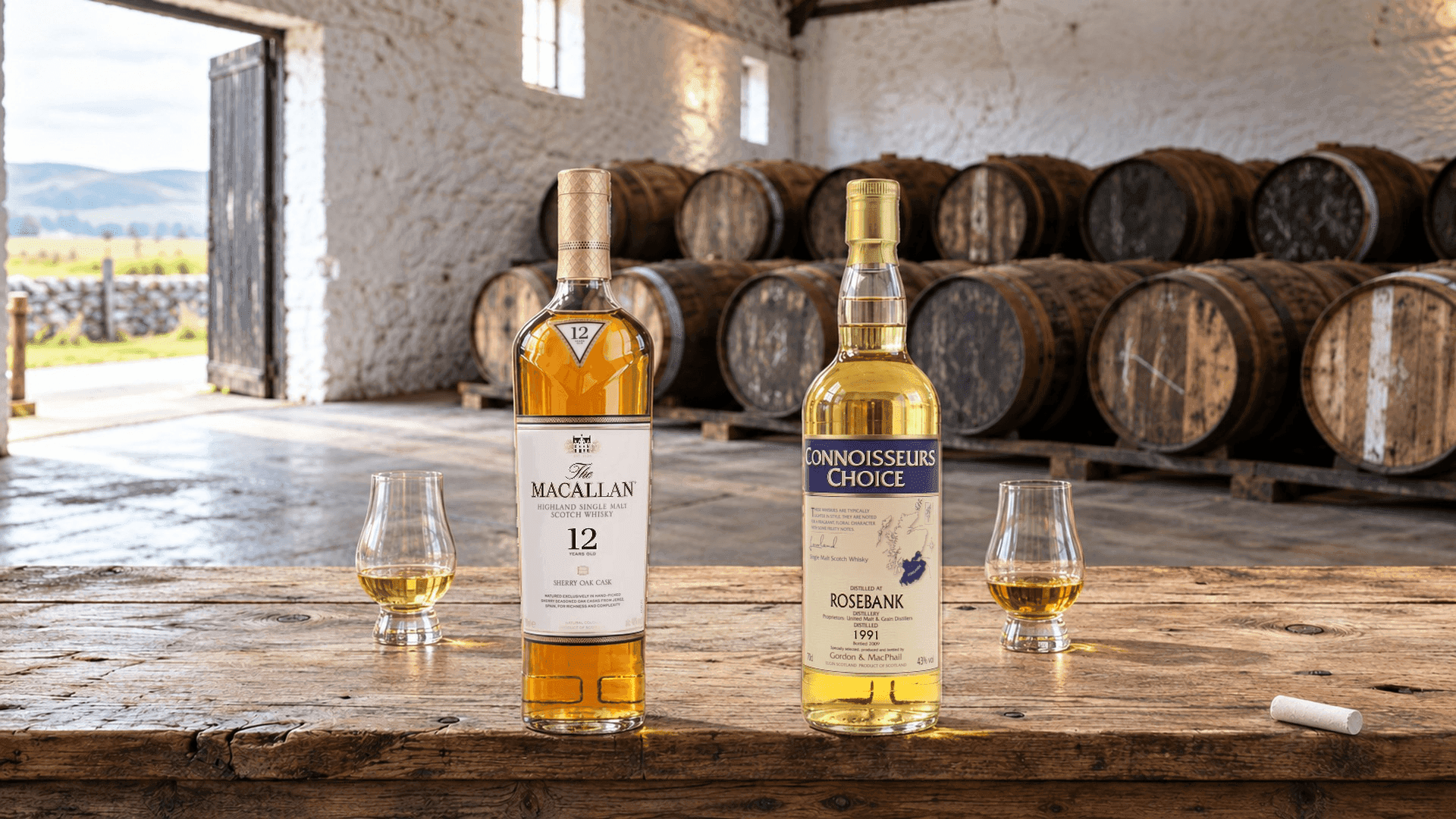
The Macallan describes a different policy. On its Sherry Oak pages, the brand describes hand picked casks of European oak seasoned with sherry in Jerez, and says the Master of Wood sources, crafts, toasts and seasons the oak to the specifications of the Whisky Mastery Team. It credits the oak with a major part of the whisky's natural colour. See Macallan 12 Years Old Sherry Oak.
Glenfarclas shows a third approach. The distillery has reportedly refused to embrace the fashion for cask finishes. In every case the logic is the same. A cask that is too dominant, too tired or simply off profile does not suit the core range, so a blender sets it aside or uses it in a small share.
How Does a Large Brand Owner Pick Exceptional Casks?
Owners of big inventories face the opposite problem. They hold millions of casks and must find the few that deserve a release of their own. Diageo’s Casks of Distinction programme is reported to start from more than 10 million maturing casks, and its whisky makers spend more than 4,200 hours a year assessing them.
According to the article by Greg Dillon, digital systems track casks by distillery, filling date and cask type, and lab methods such as gas chromatography are used, but the final decision stays with the whisky makers. Sensory assessment can override the analysis, and the article notes cases where a whisky passed the lab parameters and was still rejected after tasting. The twelve casks chosen each year are meant to show a range of distilleries and styles. One example is a Lagavulin 1991 that was moved into a Pedro Ximenez treated American oak hogshead. Diageo uses the term "select cask", not "single cask", for whiskies moved between vessels. The lesson is that a cask can be excellent and still wait years for the right release.
How Do Independent Bottlers Choose Casks?
An independent bottler has no house style to protect. It picks a cask because the whisky is good alone. That can mean a profile the distillery would never use in its core range, an unusual age, or a distillery whose own bottlings are rare. It also explains why many independent bottlings come from closed distilleries whose whisky still trades.
The big names built their business on this idea. Gordon & MacPhail opened in Elgin on 24 May 1895 as a grocer and wine and spirit merchant. John Urquhart reportedly began buying newly distilled malt and specifying the cask maturation, for example by requesting 15 first fill sherry casks to be filled at Glenlivet on 3 February 1940. George Urquhart created the Connoisseurs Choice range in 1968. The company said in July 2023 that from 2024 it would stop filling casks with spirit from third party distilleries and concentrate on Benromach and The Cairn. Try Rosebank 17 Years Old 1991 Connoisseurs Choice from Gordon & MacPhail.
Signatory Vintage was founded in 1988 by Andrew Symington, and the first cask he bottled was a 1968 sherry matured Glenlivet. He bought the Edradour distillery from Pernod Ricard in 2002. Its ranges include the Un Chill Filtered Collection and the Cask Strength Collection. See Glenburgie 27 Years Old 1995 Cask Nr.6530 from Signatory Vintage.
Cadenhead’s calls itself Scotland’s Oldest Independent Bottler, established in 1842. Its whisky is selected and bottled in Campbeltown, and it states "No Added Colour" and "Never Chill Filtered". See Talisker 15 Years Old 1979 from Cadenhead’s.
Why Is the Right Cask for One Whisky Wrong for Another?
The answer lies in what the cask is asked to do. A very active sherry cask can add so much colour, spice and dried fruit that it hides the distillery. A blender building a house style may find that too dominant. A single cask buyer may find the same cask exciting, because the whole bottle is that character.
The reverse also holds. A tired refill cask gives little flavour. Many whisky makers say such wood suits a light, delicate spirit, because it lets the spirit show. In a house blend that same cask can be useful as a quiet base. A peated spirit and a delicate one need different wood, since heavy oak can drown a gentle style while smoke can stand up to a strong one. These are general principles and each distillery sets its own rules, as the examples above show. If you want to see how finishes change the picture, our piece on the effect of each cask finish covers that ground.
What Does This Mean When You Read a Label?
A label tells you who made the choice. A distillery bottling was chosen to fit the house style. A bottling by Gordon & MacPhail, Signatory Vintage or Cadenhead’s was chosen by that bottler, for that cask. Look for the bottler name, the year of distillation and the year of bottling, the age, the strength and the cask number, written on Spiritory as "Cask Nr.XXXX". The cask number points to one specific cask. Read more in our guide to what single cask means on a label.
This is why two bottlings from the same distillery can taste so different. They may come from different woods, fill numbers and ages, and they were chosen by different people with different goals. A cask strength single cask is not a better version of the core range. It is a different answer to a different question.
Tip: Compare two bottlings from one distillery, one official and one independent. Note the cask type, strength and age on each label first, then taste. The label already explains much of the difference.
FAQ
Who chooses the casks for a distillery’s core range?
Whisky makers and blenders do, with long term wood planning. Glenmorangie’s Original, for example, relies on American oak casks used only twice, which needs planning years ahead.
Why would a distillery set a good cask aside?
Because it may be too dominant or off profile for the house style. A cask can be excellent and still wrong for a range that must taste the same year after year.
How do independent bottlers get their casks?
Historically they bought newly distilled malt or casks from distilleries and matured them, as Gordon & MacPhail did under John Urquhart. Gordon & MacPhail has said it will stop filling third party spirit from 2024.
Is a single cask always better than a core range bottle?
No. It is different. A single cask shows one cask, a core range bottle shows a house style built for consistency.
- Key Takeaways
- Why Is No Cask the Same as Another?
- What Does a Distillery Look for When It Builds a House Style?
- How Does a Large Brand Owner Pick Exceptional Casks?
- How Do Independent Bottlers Choose Casks?
- Why Is the Right Cask for One Whisky Wrong for Another?
- What Does This Mean When You Read a Label?
- FAQ
About the author

Christopher Deutsch
I drink and collect with intention, drawn to the sherried depth of Dalmore and the balance of Yamazaki.
To the author