

Reach thousands of whisky and spirits lovers every day.


What Is a Whisky Cask? Types, Wood, and Influence on Flavour
 by Max RinkI’m a whisky enthusiast and aspiring writer, exploring new flavours and the stories behind every bottle.
Follow Spiritory on Google News to get our latest guides and releases delivered straight to your feed.
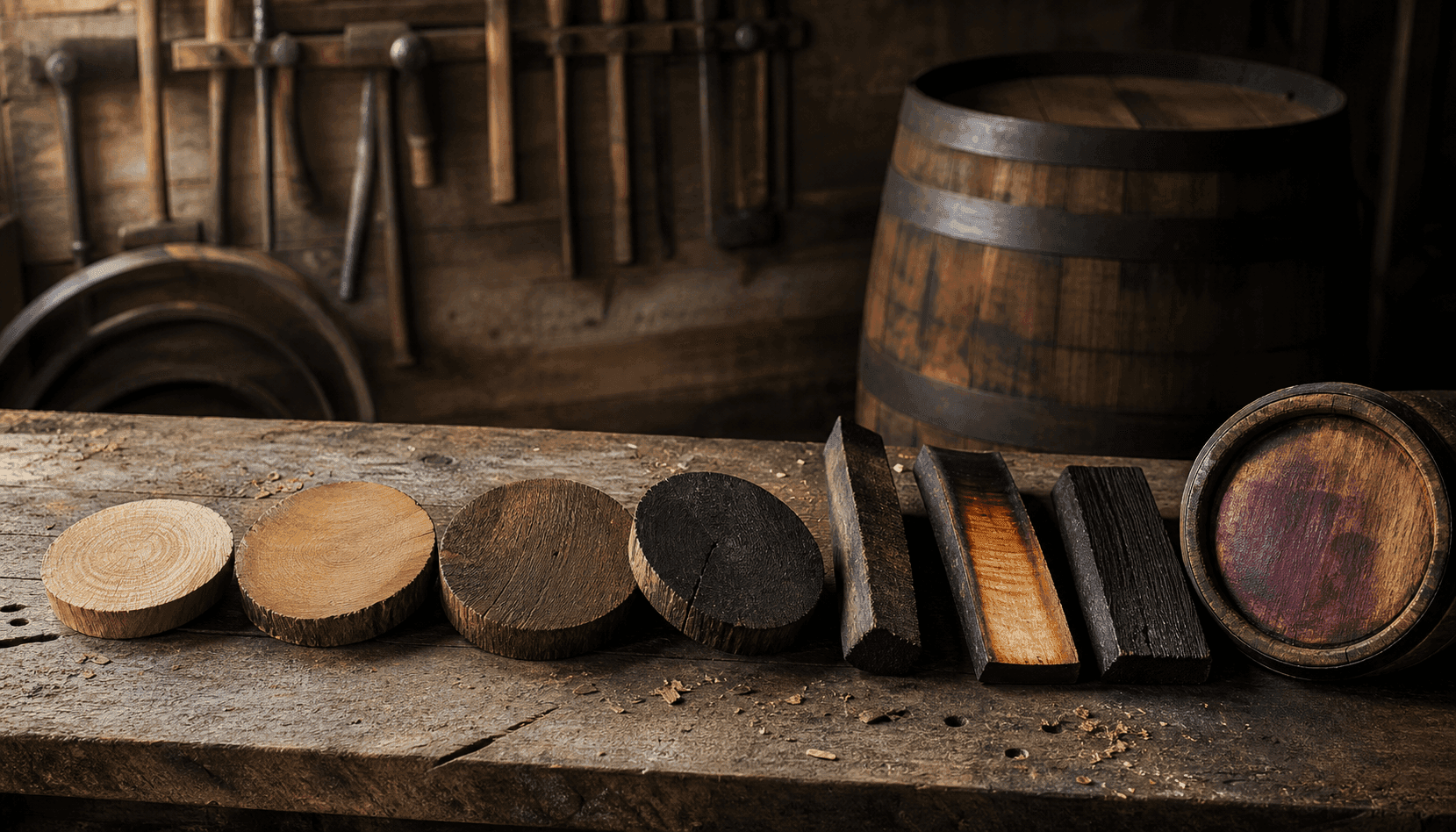
What Is a Whisky Cask? Types, Wood, and Influence on Flavour
Key Takeaways
Scotch whisky must mature for at least three years in Scotland, in oak casks of no more than 700 litres. EU rules for whisky in general set the same limits but require only wooden casks, without naming the wood.
The oak species, the size of the cask, what it held before and how many times it has been filled together shape the finished whisky.
Casks that previously held bourbon dominate Scotch maturation: by 2000 they made up more than 95% of all casks used. Sherry casks, long favoured in Scotland, remain the other classic choice.
Smaller casks put proportionally more spirit in contact with the wood and work faster; larger casks work more slowly and gently.
A first fill cask gives the most flavour. Each later fill gives less, so the character of the spirit itself comes through more clearly.
Cask finishing moves a mature whisky into a second type of cask for a final period. Balvenie 12 Years Old DoubleWood, for example, spends an additional nine months in European oak sherry casks.
Mizunara, a Japanese oak, is one of the rarest cask woods: the trees need more than 200 years to mature, and Mizunara casks make up less than 1% of the casks at The House of Suntory.
What a Cask Does to Whisky
New make spirit is clear when it goes into the cask. During maturation, the wood works on it in four ways at the same time: extraction, oxidation, evaporation and filtration. Cask size, the number of previous fills, warehouse temperature and humidity all influence how quickly this happens. Evaporation, known as the angel's share, slowly reduces the contents of every cask; in Scotland, the Scotch Whisky Association puts the average loss of ethanol at around 2% a year.
Extraction
The spirit dissolves compounds from the inner surface of the staves. Heating the wood, whether by charring or toasting, breaks down lignin towards vanillin and related aromatic aldehydes and caramelises wood sugars, which bring vanilla, caramel and toffee notes. Tannins add structure and a light astringency. Oak lactones give coconut notes, and American white oak contains much higher levels of them than European oak. A first fill cask gives up these compounds most readily; with every later fill, the wood has less left to give.
Oxidation
Oxygen slowly enters the cask through the wood. Inside, it drives reactions in the spirit: alcohols and aldehydes are oxidised, and acids react with ethanol to form esters. This slow chemistry is part of what separates a mature whisky from new make spirit. Its pace varies from cask to cask, partly because oak species differ in porosity: European oak (Quercus robur) is more porous than American white oak.
Filtration
Charring leaves a layer of active carbon on the inside of the cask. Like a charcoal filter, this layer removes some unwanted compounds from the spirit, including sulphur compounds. Because bourbon must be matured in charred new oak barrels, casks that previously held bourbon are already charred. In older casks, coopers can scrape out the inner surface and char it again to restore this layer.
Tip: To see the influence of the cask for yourself, compare two whiskies from the same distillery and of the same age, one from bourbon casks and one from sherry casks. With the distillery and the age held constant, much of the difference in the glass comes from the wood.
The Major Cask Types
Most whisky casks have held another drink before, most often bourbon, and otherwise sherry, port, wine or other spirits. The Scotch Whisky Association's guidance allows new oak casks and oak casks previously used to mature wine, beer or spirits, with some exceptions, such as casks that held drinks made from stone fruit. Knowing the main types makes a whisky label much easier to read.
Bourbon Barrels: American White Oak (Quercus alba)
Casks that previously held bourbon are the most widely used in Scotch whisky. According to Whisky Magazine, they made up more than 95% of the casks used by 2000, and thousands of used barrels are still shipped to Scotland every year. US rules require bourbon to be matured in charred new oak barrels, so a barrel can be used for bourbon only once. A standard American barrel holds about 200 litres. American oak tends to give a lighter colour, sweetness and vanilla, along with coconut notes from its oak lactones. A first fill bourbon cask shows this character most clearly; a second fill gives more muted oak flavours and lets the fruitier character of the spirit come through. Lagavulin 11 Years Old Sweet Peat, for example, is matured exclusively in first fill American oak casks that previously held bourbon.
Sherry Butts: European or American Oak
A sherry butt holds about 500 litres. Contrary to a common assumption, sherry casks are not always European oak: Spanish bodegas have long used American oak, and the coopers who build casks for seasoning select either American or European oak. European oak, chiefly Quercus robur and Quercus petraea, is richer in tannins than American oak and is associated with spice and dried fruit. Oloroso, a dry sherry aged in contact with oxygen, has a predominantly nutty character. Sherry casks used for whisky today are often seasoned with sherry specifically for the whisky trade rather than coming from bodega use.
Pedro Ximénez (PX) Sherry Casks
Pedro Ximénez is a naturally sweet sherry made from grapes dried in the sun until they turn to raisins, which gives a syrupy, intensely sweet wine. Casks that held PX add rich sweetness with notes of raisin, and distilleries use them both for full maturation and for shorter finishing periods. Glendronach 12 Years Old Original is matured for at least 12 years in a combination of Pedro Ximénez and Oloroso sherry casks.
Port Pipes
Port pipes are large casks of up to about 650 litres that have held port, the fortified wine from Portugal. Whisky matured or finished in them can take on red fruit notes and a reddish tint.
Cask Size and Its Effect
Because a cask's surface area grows more slowly than its volume, a smaller cask puts proportionally more of its spirit in contact with the wood. Cask size is therefore one of the most direct ways a distillery can influence how quickly a whisky matures and how much wood character it takes on.
Standard Cask Sizes
The main cask sizes in Scotch whisky are the barrel (about 200 litres), the hogshead (about 225 to 250 litres, often rebuilt from the staves of former bourbon barrels), the butt (about 500 litres) and the puncheon (about 500 litres or more). The quarter cask is a small cask, but published figures for its size vary between sources, from about 50 to 125 litres. Port pipes hold up to about 650 litres. Under the Scotch Whisky Regulations 2009, Scotch may only be matured in oak casks of no more than 700 litres, and EU Regulation 2019/787 sets the same maximum for the wooden casks used for any whisky. For the exact legal wording, check the official texts on legislation.gov.uk and EUR-Lex.
Small Casks: Faster Wood Influence
In a small cask, maturation moves faster and the influence of the wood shows sooner. Laphroaig Quarter Cask is a well known example: it is matured first in bourbon barrels and then in small American oak quarter casks, whose reduced size, as Laphroaig explains, gives the spirit more contact with the wood and amplifies its natural flavours.
Large Casks: Slower, Gentler Development
Butts and puncheons expose proportionally less of their contents to the wood, so they work more slowly and gently. Whisky matures more quickly in small casks, but many in the industry argue that it matures more gracefully in large ones. As always, the result also depends on what the cask held before and how often it has been filled.
Tip: When two whiskies of the same age come from casks of different sizes, expect the one from the smaller cask to show more wood character and often a deeper colour. That is not automatically better; what matters is whether the wood and the spirit are in balance.
Cask Finishing
Cask finishing means moving a mature whisky from the cask in which it spent most of its life into a different type of cask for a final period. William Grant & Sons, the owner of The Balvenie, credits David Stewart, the distillery's former malt master, with inventing the technique in the 1980s with the Balvenie Classic range, which was matured in American oak and finished in European oak. Finishing has since become widespread in Scotch whisky.
How Finishing Works
After its first maturation, often in bourbon casks, the whisky is transferred to a cask that previously held something else, such as sherry, port or wine. How long it stays depends on how active the cask is and how much influence the distiller wants. A short finish adds a layer of aroma and some colour; a longer one can reshape the whisky more substantially. Under the Scotch Whisky Technical File, the same rules on allowable casks apply to finishing as to the rest of maturation.
Notable Finished Expressions
Balvenie DoubleWood 12 matures in American oak casks and, after 12 years, moves to European oak sherry casks for an additional nine months. Lagavulin takes a similar route with Lagavulin Distillers Edition, which is double matured in Pedro Ximénez cask wood; the distillery describes the result as an intense, raisiny sweetness.
Unusual and Rare Cask Types
Beyond bourbon and sherry casks, distillers work with a wider range of woods and previous contents, from rare Japanese oak to casks that once held sweet or fortified wine.
Mizunara Japanese Oak
Mizunara is the Japanese name for Quercus crispula, an oak that some botanists class as a variety of Quercus mongolica and that grows in Japan and elsewhere in northeast Asia. Suntory describes its aromas in whisky as reminiscent of sandalwood, coconut and incense. It is a difficult wood for coopers: it is permeable and prone to leaking, so staves must come from wood with a perfectly straight grain, and the trees need more than 200 years to mature. Mizunara casks make up less than 1% of the casks at The House of Suntory, and the wood can fetch high prices at auction.
Wine Casks
Casks that held still or fortified wine, such as Sauternes, Marsala, port or Madeira, pass on some of the character of that wine. Sauternes, the sweet white wine from Bordeaux, can bring notes of honey and apricot. Ardbeg Dolce, the Ardbeg Day release for 2026, is matured in Marsala wine casks from Sicily together with bourbon barrels, pairing the sweetness of Marsala dolce, a sweet style of this fortified wine, with Ardbeg's peated spirit.
FAQ
Does all whisky have to be matured in oak?
No. Scotch whisky must be matured in oak casks. EU rules for whisky in general require wooden casks of no more than 700 litres without limiting them to oak, and the Irish whiskey rules also specify wooden casks, naming oak as an example. In the United States, whisky must be stored in oak barrels, with an exception for corn whisky, and bourbon requires charred new oak barrels. In practice, oak dominates because it is strong, can be worked into liquid tight casks and is rich in flavour compounds. For the exact and current rules, check the official texts: the Scotch Whisky Regulations 2009 on legislation.gov.uk, EU Regulation 2019/787 on EUR-Lex, and the US standards in 27 CFR 5.143 on ecfr.gov.
What is a first fill cask?
A first fill cask is being filled with spirit for maturation for the first time since it held its previous contents, such as bourbon or sherry. It gives the most flavour: a first fill bourbon barrel, for example, contributes more vanilla, sweetness and colour than a second fill. Each later fill gives less, and a cask can serve for up to three or four fills. An exhausted cask can be rejuvenated by scraping out the inner surface and charring it again, although at best this restores only part of the activity of a first fill cask.
Why do sherry casks cost more than bourbon barrels?
Several factors play a part. Because bourbon must be matured in charred new oak barrels, used bourbon barrels are available in large numbers. Sherry casks for whisky, by contrast, are often built new and then seasoned with sherry in Spain before they are shipped, which takes both wine and time. European oak, one of the woods used, grows more slowly than American white oak and is more expensive, and a butt of about 500 litres needs considerably more wood than a barrel of about 200 litres. The traditional supply also dried up: for more than a century, empty casks from sherry bottling lines in the south of England went to Scottish distilleries, until the Consejo Regulador, the body that regulates sherry, decided at the start of the 1980s to prohibit bottling outside the production zone.
Can I tell what cask a whisky was matured in from its colour alone?
Not reliably. Sherry casks often give a deeper amber or mahogany colour, bourbon casks a lighter gold, and port casks can add a reddish tint. However, whisky, including Scotch, may contain added plain caramel colouring, so colour alone cannot identify the cask. If a bottling states that it has natural colour, its shade is a better guide to the contribution of the wood, and the label or the producer's product page often names the cask types.
About the author

Max Rink
I’m a whisky enthusiast and aspiring writer, exploring new flavours and the stories behind every bottle.
To the author