

Reach thousands of whisky and spirits lovers every day.


What Does Each Cask Finish Actually Do to a Whisky?
 by Christopher Deutsch I drink and collect with intention, drawn to the sherried depth of Dalmore and the balance of Yamazaki.
Follow Spiritory on Google News to get our latest guides and releases delivered straight to your feed.
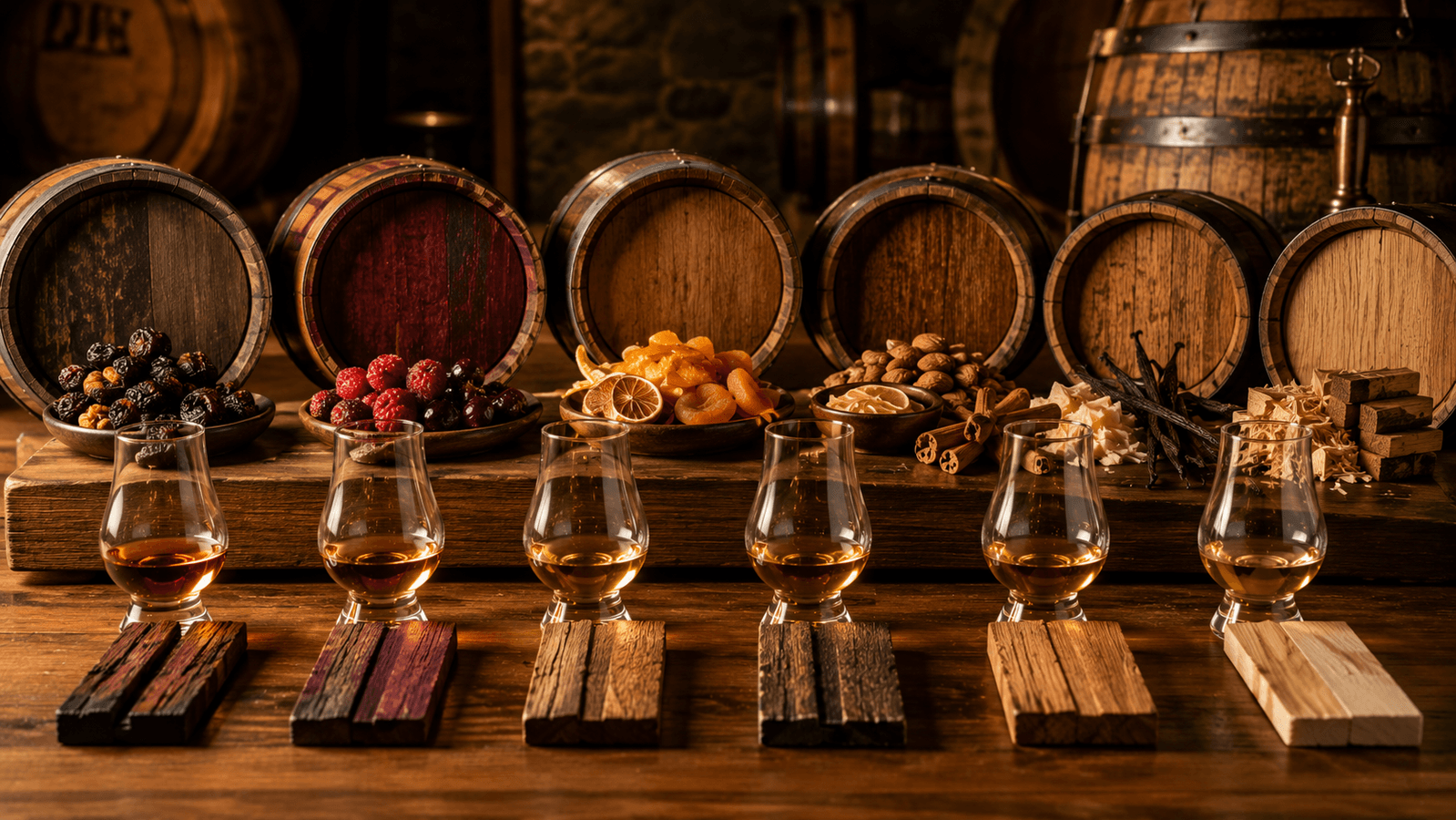
What Does Each Cask Finish Actually Do to a Whisky?
Most whisky labels name the cask. Few explain what it means. A cask finish is when a whisky moves from its primary maturation vessel into a second cask for an additional aging period before bottling. What that second cask previously held shapes the flavour change. Here is what each of the main finish types actually does to the whisky in the glass.
Key Takeaways
A cask finish means the whisky spends extra time in a second cask after primary maturation. The character of that second cask is what gets absorbed into the spirit.
Sherry cask finishes are the most common type in Scotch whisky. Oloroso adds dried fruit, structure, and spice. Pedro Ximénez adds intense sweetness and dark fruit.
Port cask finishes add red fruit and a rounder texture. Ruby Port casks give more fresh cherry and berry. Tawny Port casks give more oxidative, nutty notes.
Madeira cask finishes are rarer than Port or Sherry, and produce a lighter, more lifted character with honeyed citrus and almond.
A short finish of a few months adds subtle notes without changing the whole profile. A finish of a year or more can reshape a whisky significantly.
What Is a Cask Finish?
Cask finishing means moving a whisky from the cask where it matured into a different type of cask for a secondary period of aging. The whisky absorbs flavour and colour from the wood and from whatever the second cask previously held. How much it absorbs depends on three factors: the length of the finish, how active the wood still is, and how much residual liquid from the previous contents remains in the staves.
First-fill casks are the most flavour-active because they are being used for the first time and still carry significant amounts of their previous contents soaked into the wood. Second-fill and third-fill casks are gentler in influence because more of those compounds have already been extracted. The same whisky finished in different cask types can taste quite different as a result.
The term "double matured" is sometimes used instead of "finished." They mean the same thing. The practice is legal and well-established across Scotch whisky production.
Port Cask Finishes
Port is a fortified wine from the Douro Valley in Portugal. Port cask finishes add red fruit character and natural sweetness to whisky, without the heavy dried-fruit intensity of a sherry finish. The results tend to be lighter and brighter than sherry-finished expressions.
Ruby Port vs Tawny Port
The distinction matters. Ruby Port casks are younger and carry more fresh fruit character: dark cherry, red berry, and a slight tartness. Tawny Port casks are older and more oxidised, giving dried fruit, walnut, and caramel notes that sit closer to sherry in weight. Same family, quite different character.
Port finishes work well with peated Scotch because the sweetness and red fruit sit naturally against smoke. They also add complexity to lighter grain whiskies without overwhelming them.
Sherry Cask Finishes
Sherry cask finishing is the most established type in Scotch whisky and the one with the longest track record at secondary markets. Oloroso and Pedro Ximénez are the two styles most commonly used, and they behave very differently.
Oloroso Sherry Casks
Oloroso is a dry, nutty, oxidative sherry. Casks that previously held oloroso add dried fruit (raisins, figs, dates), dark chocolate, walnut, and baking spice to the whisky. The colour deepens noticeably. At higher concentrations, oloroso finishing brings in leather and savoury notes, making it one of the most complex finish types in regular use.
GlenDronach 12 Year Old Original is matured entirely in sherry casks, making it one of the clearest examples of what consistent oloroso and PX cask influence produces over time. Glenfarclas 15 Year Old comes from a family distillery that has held to this approach for generations, and the sherry cask influence runs deep in every expression across the range.
Pedro Ximénez (PX) Casks
Pedro Ximénez is a sweet, thick dessert sherry made from sun-dried grapes. PX cask finishing adds intense sweetness, dark dried fruit, and sometimes a viscous texture. Because PX itself is so rich, even a short finish leaves a clear mark. Longer PX finishes can make a whisky taste almost confectionery-like. It works well with heavily peated expressions, where the sweetness contrasts against the smoke, but it can divide opinion among drinkers who prefer drier profiles.
Many distilleries use both Oloroso and PX casks in combination to balance structure with sweetness. Oloroso brings complexity and grip. PX brings intensity and sweetness. Together they produce the classic sherry-matured profile that anchors the Highland and Speyside collector market.
Madeira and Moscatel
Madeira Casks
Madeira is a fortified, oxidised wine from the Portuguese island of Madeira. Finishing in Madeira casks gives whisky a floral and honeyed character with dried apricot, citrus peel, toasted almond, and a bright acidity that lifts the palate. The result is lighter than sherry, more lifted than Port, and more elegant than either. Madeira casks are rarer than Port or sherry casks, which gives Madeira-finished expressions a degree of collector interest when they appear from well-regarded distilleries.
Moscatel Casks
Moscatel (Muscat) wine is aromatic, floral, and sweet. Finishing in Moscatel casks adds fresh fruit and flower character: white peach, orange blossom, ripe grape, and light honeysuckle. It is one of the most delicate of the sweet wine finishes and works particularly well with lighter Speyside expressions where the goal is freshness rather than depth.
French Oak and Other Cask Types
French Oak Casks
French oak (Quercus petraea or Quercus robur) behaves differently from American oak (Quercus alba). Where American oak produces vanilla, coconut, and caramel, French oak is spicier, drier, and more structured. A French oak finish adds cinnamon, nutmeg, and a tighter wood spice. If the French oak cask previously held wine such as Cognac, Burgundy, or Bordeaux, those characteristics come through as well. Laphroaig's 2026 Càirdeas is a French Oak expression, showing how this finish interacts with a heavily peated spirit.
Rum Casks
Rum cask finishes add tropical fruit, vanilla, and a sweetness that is different in character from sherry sweetness. The results are often more approachable and lighter in style. Caribbean and Jamaican rum casks behave differently, with Jamaican rum casks tending to add more funky, ester-heavy character. Rum finishes are common across multiple categories and popular with producers targeting a wider audience.
Mizunara Oak Casks
Mizunara (Japanese oak, Quercus crispula) gives a distinctly exotic character: incense, sandalwood, coconut, and oriental spice. It is highly distinctive and almost unmistakable in the glass. Mizunara also has poor watertightness compared to American or European oak, which means higher evaporation losses and more challenges in the warehouse. Very few distilleries outside Japan use it regularly, which makes Mizunara-finished or Mizunara-matured expressions genuinely rare when they appear from non-Japanese producers.
Quick Reference
Ruby Port: Fresh cherry, red berry, medium-high sweetness, full body. Works well with peated Scotch.
Tawny Port: Dried fruit, walnut, caramel, medium sweetness, full body. Suits grain or Highland expressions.
Oloroso Sherry: Raisin, fig, dark chocolate, walnut, low to medium sweetness, heavy body. Works across Speyside and Highland.
Pedro Ximénez: Molasses, Christmas cake, dark fruit, very high sweetness, heavy body. Pairs well with heavily peated whisky.
Madeira: Apricot, citrus peel, almond, medium sweetness, medium body. Best with fruity Scotch where lightness is the goal.
Moscatel: White peach, orange blossom, honeysuckle, medium sweetness, light to medium body. Suited to light Speyside expressions.
French Oak: Cinnamon, nutmeg, dry spice, low sweetness, firm body. Best with complex, structured single malts.
Mizunara: Sandalwood, incense, coconut, low to medium sweetness, light body. Primarily Japanese whisky.
How to Read a Finish on the Label
Look for phrases like "finished in [cask type] casks" or "double matured in [cask type]." The word "matured" on its own refers to the primary cask. When two cask types appear, the second is the finish. Labels that say "aged in" without specifying the type give less useful information, though the tasting notes usually fill in the gaps.
The duration of the finish is rarely stated on the label. Distilleries do not typically publish how long the whisky spent in the finishing cask. As a rough guide: if the finish character is subtle, the period was likely short. If it dominates the profile, the cask was either very active or the finish ran long enough to significantly reshape the spirit.
GlenAllachie 12 Year Old uses a combination of cask types across its range and is a useful reference for how a thoughtful finishing program can build complexity at an accessible price. The distillery's approach to cask selection is one of the reasons it has drawn serious collector attention since Billy Walker's takeover in 2017. For the full picture of what makes a finished or cask-matured whisky collectible, What Makes a Whisky Collectible in 2026? covers all the main criteria.
FAQ
Does a cask finish make a whisky better?
Not automatically. A finish that complements the base spirit adds complexity. A poorly matched finish, or one that runs too long, can mask what made the base whisky interesting. The best finished whiskies work because the finishing cask and the base spirit bring something out in each other.
Do finished whiskies perform well as collectibles?
Some do. It depends on the distillery, the specific expression, and how the collector market views that producer's finishing program. GlenDronach 12 Year Old Original and GlenAllachie 12 Year Old are both sherry-forward bottles with genuine collector followings. Single cask finished expressions from well-regarded distilleries tend to hold value better than standard range releases. For the broader framework, What Makes a Whisky Collectible in 2026? covers the full criteria.
What is the difference between a finish and full sherry maturation?
A finish means the whisky spent its primary aging in one cask type and then moved to sherry casks for an additional period. Full sherry maturation means the whisky spent its entire aging life in sherry casks. The difference is integration and intensity. A fully sherry-matured whisky like GlenDronach has deeper, more integrated sherry character. A finished whisky typically shows the sherry character as a distinct layer over the base spirit rather than running through the whole thing.
How long does a cask finish typically last?
There is no single standard. Finishes range from a few months to several years. Short finishes (three to six months) add subtle notes without reshaping the character. Longer finishes (a year or more) can significantly change the colour, aroma, and palate. Producers rarely state the exact duration on the label.
About the author

Christopher Deutsch
I drink and collect with intention, drawn to the sherried depth of Dalmore and the balance of Yamazaki.
To the author