

Reach thousands of whisky and spirits lovers every day.


How Do You Find a Whisky From Your Birth Year?
 by Christopher Deutsch I drink and collect with intention, drawn to the sherried depth of Dalmore and the balance of Yamazaki.
Follow Spiritory on Google News to get our latest guides and releases delivered straight to your feed.
How Do You Find a Whisky From Your Birth Year?
You find a whisky from your birth year by looking for a vintage dated single cask, a bottling that names the exact year the spirit was distilled rather than just an age in years, most often from an independent bottler such as Gordon & MacPhail, a distillery's own vintage series, or an auction house or marketplace listing. Gordon & MacPhail's new Anniversary Releases collection, four single casks named after 1966, 1976, 1986 and 1996, is a current example of how this kind of dating works.
Key Takeaways
A vintage dated whisky is labelled with the year the spirit was distilled, sometimes alongside the year it was bottled, rather than only a generic age statement.
Gordon & MacPhail's Anniversary Releases collection bottles single casks under the year each one was distilled: 1966 Longmorn, 1976 Glen Grant, 1986 Miltonduff and 1996 Linkwood.
Gordon & MacPhail, a family owned independent bottler that opened in Elgin in 1895, has built vintage dated single malts since launching its Connoisseurs Choice range in 1968.
Vintage dated whisky mainly comes from independent bottlers, a distillery's own vintage releases, and auction houses or marketplaces such as Spiritory.
Check the fill level, seal, original box and provenance before buying, and expect fewer options the older or the more recent the year you are searching for.
Tip: Search by the year the whisky was distilled, not the year it was released. A bottle can sit in a cask for decades before it reaches the market, so the vintage year on the label, not the release date, is what matches a birth year or wedding year.
How to Read Distillation Year, Bottling Year and Age Statement on a Label
Three pieces of information tell you when a whisky was made. The distillation year is when the spirit first went into a cask. The bottling year is when it was taken out and put into the bottle. The age statement is simply the difference between the two, the number of years the whisky spent maturing in wood.
An age statement always reflects the youngest whisky in the bottle, a rule that applies across Scotch whisky, according to Whisky Advocate. For a single cask bottling like the ones discussed here, there is only one whisky involved, so the age statement is exact. A whisky distilled in 1976 and bottled in 2026 after 50 years in cask can carry an age statement of 50 Years Old, and the distillation year, not the bottling year, is the one that matches a birth year or an anniversary.
Some labels show both years directly, others show only the age statement and the bottling year, in which case you can work out the distillation year yourself by subtracting the age from the bottling year.
Why Gordon & MacPhail's Anniversary Releases Show How Vintage Dating Works
Gordon & MacPhail, a family owned independent bottler founded in Elgin in 1895, has released vintage dated single malts like these for decades. The company launched its Connoisseurs Choice range in 1968, one of the first regular independent bottling series, and has continued to release whiskies named for their year of distillation ever since.
Its new Anniversary Releases collection, announced in September 2026, is a current example. The collection is four single casks, each named after the year it was distilled: a 1966 Longmorn, a 1976 Glen Grant, a 1986 Miltonduff and a 1996 Linkwood, each bottled at its natural cask strength rather than diluted to a round number. Gordon & MacPhail's Stephen Rankin, its Director of Prestige, described the range as built around beginnings, birthdays and milestones, the exact occasions a vintage dated bottle is bought to mark.
The four releases also show how bottle counts and prices track the year. The 1966 Longmorn, the oldest vintage in the set, was limited to 30 bottles, while the 1996 Linkwood, the youngest, was released in 100 bottles. Older distillation years generally mean fewer surviving casks and a higher price, a pattern that holds across vintage dated whisky in general, not only this one collection.
Where Vintage Dated Whisky Usually Comes From
Four main sources carry whisky labelled by the year it was distilled.
Independent bottlers
Firms such as Gordon & MacPhail buy or fill casks from working distilleries, mature them under their own control, and bottle them under their own label with the distillation year on the front. Because they hold casks across many decades, they are often a reliable source for an older or unusual birth year.
Distillery vintage releases
Some distilleries bottle their own vintage dated single casks or limited series, usually to mark an anniversary of the distillery itself rather than a customer's milestone, though the bottles work the same way for gifting purposes.
Auction houses
Older vintages that are no longer sold new usually resurface at auction. Prices there reflect what a bidder is willing to pay on the day, so the same year and distillery can sell for different amounts at different auctions.
Marketplaces
A bid and ask marketplace such as Spiritory lists vintage dated bottles from collectors and specialist sellers alongside a visible asking price, rather than only a live auction. For a fuller comparison of the two routes, see Buying Whisky at Auction vs From a Store and Independent Bottlings vs Official Releases.
What to Check Before You Buy an Older Bottle
A vintage dated whisky can be decades old by the time it reaches a buyer, so condition and paperwork matter as much as the year on the label.
Fill level: whisky evaporates slowly even in a sealed bottle, so a level noticeably below the shoulder on an old bottle is worth asking about.
Seal and capsule: look for an intact original seal with no sign of tampering or reseal.
Original box and paperwork: a certificate, presentation box or original carton is not required, but it supports the bottle's value and makes it easier to resell later.
Provenance: ask where the bottle has been stored and who has owned it. A clear ownership history, or authentication from the seller, matters more the older or rarer the bottle.
What to Expect if Your Birth Year Is Hard to Find
Not every distillation year survives in bottle form. Some years produced fewer casks, some casks were used up in blends decades ago, and some distilleries closed before certain years could be bottled as single malts. The older the year, the smaller the remaining pool, which is why a 1966 Longmorn was limited to 30 bottles while a 1996 Linkwood reached 100.
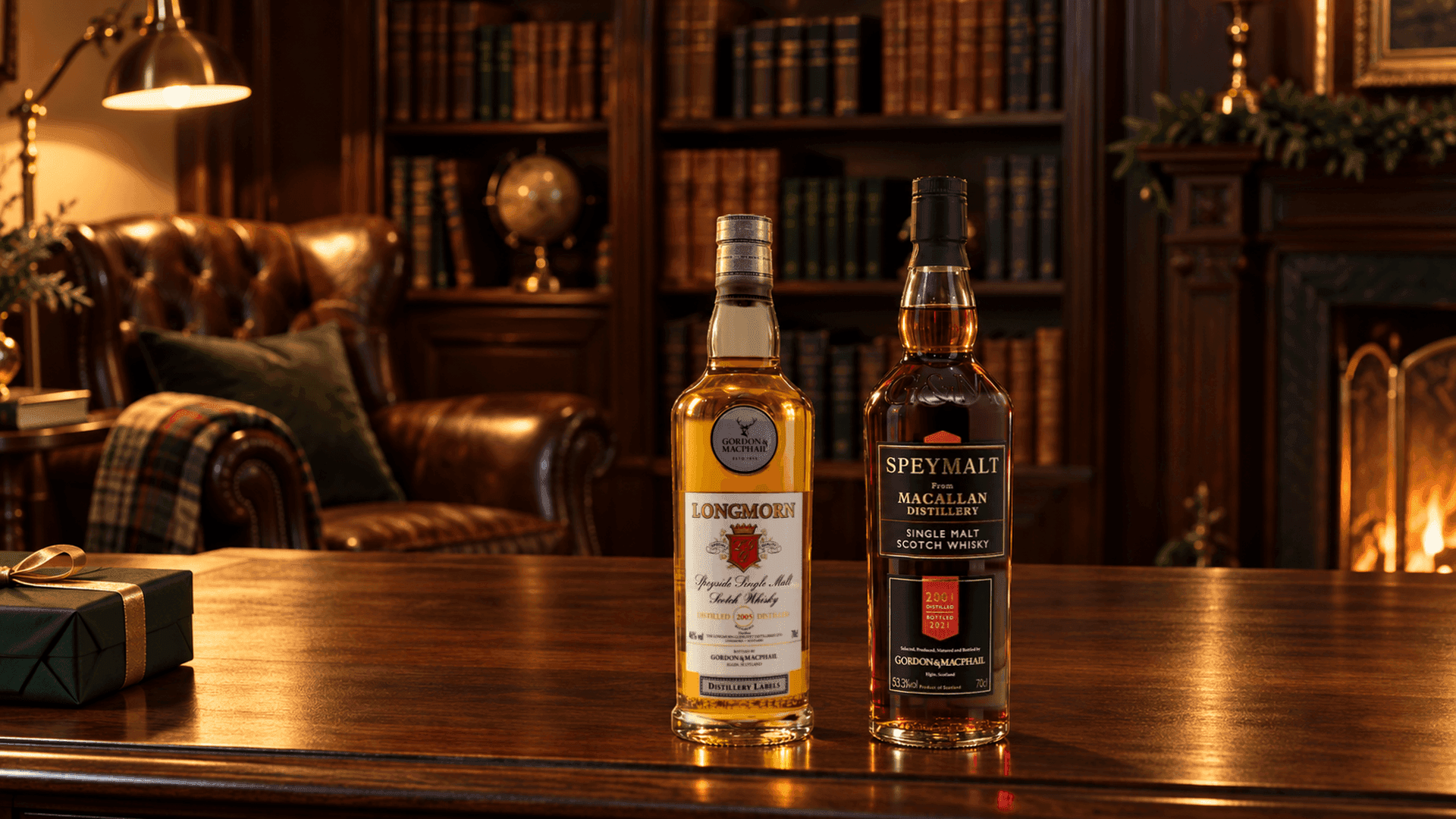
Very recent birth years bring a different limit. Whisky needs years in cask before it is ready to bottle, so a year like 2010 or later may only be available as a young single cask, if it exists at all yet. A useful middle ground is a distillation year with 15 to 20 years in cask already behind it, old enough to be bottled and released, like Longmorn 15 Years Old 2005 Gordon & MacPhail or Macallan 2001 Gordon and MacPhail Speymalt. Where an exact year cannot be found, the nearest available vintage, or a whisky bottled in the birth year instead of distilled in it, is a reasonable substitute.
Tip: If the exact year is not available, widen the search to the whisky's bottling year instead of its distillation year. A whisky bottled in your birth year still marks the date, even if the spirit inside is older.
FAQ
What is the difference between a distillation year and an age statement?
The distillation year is the calendar year the spirit went into cask. The age statement is the number of years it matured before bottling. A whisky distilled in 1986 and bottled 40 years later can carry an age statement of 40 Years Old, and the distillation year is the one that matches a birth year.
Is a vintage dated whisky always more expensive than one with just an age statement?
Not always, but older distillation years tend to cost more because fewer casks from that year remain. Gordon & MacPhail's Anniversary Releases show the pattern directly: the 1966 Longmorn, limited to 30 bottles, costs far more than the 1996 Linkwood, released in 100 bottles.
Where can you find an older vintage year?
Independent bottlers such as Gordon & MacPhail hold casks across many decades and are often a good place to start. Auction houses and marketplaces such as Spiritory also list older vintages that are no longer sold new.
Can I buy a whisky from a very recent birth year, like the 2020s?
Only as a young single cask, since whisky needs years in wood before it is bottled. For a recent milestone, a bottling year match, rather than a distillation year match, is usually the more realistic option.
What should I check before buying an old bottle as a gift?
Check the fill level, the condition of the seal, whether the original box or paperwork is included, and the bottle's provenance. These details matter more the older the bottle is.
- Key Takeaways
- How to Read Distillation Year, Bottling Year and Age Statement on a Label
- Why Gordon & MacPhail's Anniversary Releases Show How Vintage Dating Works
- Where Vintage Dated Whisky Usually Comes From
- What to Check Before You Buy an Older Bottle
- What to Expect if Your Birth Year Is Hard to Find
- FAQ
About the author

Christopher Deutsch
I drink and collect with intention, drawn to the sherried depth of Dalmore and the balance of Yamazaki.
To the author