

Reach thousands of whisky and spirits lovers every day.


Independent Bottlings vs Official Releases: Which Offers Better Value?
 by Christopher Deutsch I drink and collect with intention, drawn to the sherried depth of Dalmore and the balance of Yamazaki.
Follow Spiritory on Google News to get our latest guides and releases delivered straight to your feed.
Independent Bottlings vs Official Releases: Which Offers Better Value?
Key Takeaways
Independent bottlings typically cost substantially less than official releases from the same distillery and age bracket, often at cask strength.
Official releases deliver brand consistency, secondary-market liquidity, and institutional quality gates; value compounds if the distillery gains prestige or prices rise.
Independent bottlers (Cadenhead's, Gordon MacPhail, Signatory, Wm. Cadenhead) emphasize single-cask character; each cask is distinct, creating discovery but also variable consistency.
Official releases see annual secondary-market appreciation on discontinued age statements; independent bottles appreciate slowly or not at all (except rare, early releases now discontinued).
Value strategy: Independent bottlings for drinking and daily palate education; official releases for holdings and secondary-market participation.
The Independent Bottling Advantage: Depth Over Recognition
Cask Character and Single-Cask Authenticity
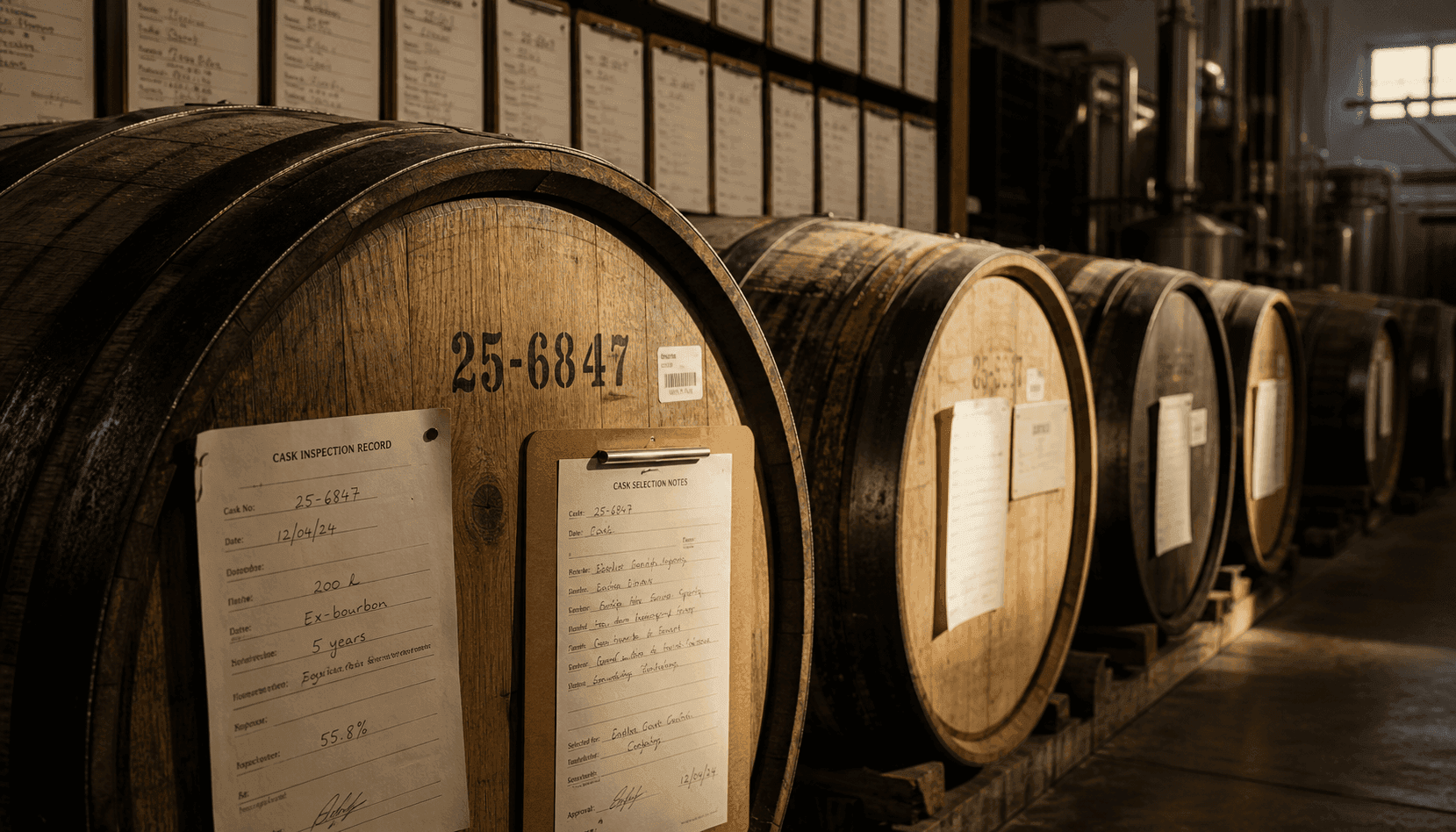
Independent bottlers purchase casks directly from distilleries, age them off-site in rented warehouses, and bottle in small runs (100-500 bottles per cask is typical). A 25-year-old Mortlach from Gordon MacPhail represents a specific cask: barrel number 12345, filled 1995, matured entirely in Gordon MacPhail's Leith warehouse, bottled 2020. That bottling will never be replicated. The next Gordon MacPhail Mortlach 25 may come from a different cask, a different cooperage, different warehouse microclimate, and taste distinctly different. For collectors, this individuality is profound: every bottle is a micro-experiment in terroir and cask quality. An official Mortlach 25 (if one existed) would taste consistent across all 5,000 bottles released; an independent Mortlach 25 tastes unique within its cask, unrepeatable.
Economics and Price-Per-Quality
A Gordon MacPhail or Signatory independent 25-year whisky typically costs a fraction of what an equivalent official 25-year from a major distillery (Glenmorangie, Glenfiddich, Macallan) commands. The price differential reflects brand markup: Macallan's name, advertising, retail placement, and secondary-market momentum command a premium. But the whisky itself, 25 years in oak, single distillery, is materially similar. A collector drinking daily or learning palate achieves faster, cheaper discovery via independent bottlings. Rotating through three Gordon MacPhail Mortlach casks (across three bottles) teaches more about distillery character, cask variation, and aging chemistry than a single official Glenfiddich 25.
Availability and Continuous Discovery
Independent bottlers release new stock continuously. Cadenhead's and Signatory each produce 50-100+ bottlings per year, spanning decades of distillery history, rare closed distilleries, and micro-expressions. An official release follows a marketing calendar: the new Macallan Fine Oak is August, the limited Red Dot series is December. Independent releases flow year-round, keyed to warehouse inventory and bottling schedules. For collectors, this constant flow creates ongoing discovery. Where you might check spiritory.com or auction houses monthly for official releases, independent bottler inventory invites regular checking, surprising finds, and the thrill of acquiring something rare (a 1970s Bowmore, a long-closed Roseisle) at competitive pricing.
Tip: Independent bottlings rarely appreciate on secondary market unless they're early-era releases from especially rare casks, which can command premium prices. Buy independent bottlings to drink them and discover distillery character. Buy official releases to hold and participate in brand-driven appreciation.
Official Releases: Brand Equity and Secondary-Market Momentum
Consistency, Recognition, and Marketing Machinery
An official Macallan 25-year releases every year in similar quantity (10,000+ bottles annually). Macallan's marketing emphasizes heritage, quality gates, sherry cask innovation, and artist-designed packaging. The distillery controls the narrative: Macallan whisky is luxury, prestigious, collectible. This narrative compounds on itself; secondary-market dealers, auction houses, and collectors treat Macallan 25 as an asset class, driving demand, liquidity, and appreciation. Compare this to an equivalent Gordon MacPhail Mortlach 25: the same whisky, but it carries no narrative, no secondary-market momentum, no brand prestige. An eBay search for "Macallan 25" returns hundreds of listings; "Gordon MacPhail Mortlach 25" returns a handful. Official releases benefit from institutional recognition and secondary-market liquidity that independent bottlings simply don't possess.
Allocation Access and Secondary-Market Momentum
Official releases are rationed by distributors and retailers. A Hibiki Harmony allocation might come to spiritory.com or a local retailer in blocks of 10-20 bottles per month; collectors compete for retail access, creating immediate secondary-market demand. A retail-priced Hibiki Harmony can flip on auction for a significant premium within weeks. This secondary-market momentum is entirely driven by official-release scarcity and brand demand. Independent bottlings, by contrast, are continuously available (another cask is always coming) and carry no scarcity narrative. Collectors seeking secondary-market appreciation or quick flips buy official releases at allocation; collectors seeking long-term education buy independent bottlings.
Brand Prestige and Holding Value
Official releases from premium distilleries (Macallan, Dalmore, Balvenie, Yamazaki) hold secondary-market value by brand prestige alone. A 2010 Macallan 12 bought at retail now commands a substantial premium on auction, despite being a current-release age statement; the bottle appreciates because Macallan brand prestige has risen globally. An independent Macallan 12 (if one existed) from the same year would show no comparable appreciation; brand prestige doesn't translate across independent bottler names (few collectors have heard of Wm. Cadenhead). For wealth preservation, official releases from prestige distilleries perform better. For palate education and daily drinking, independent bottlings outperform at every price point.
Value Pricing by Range and Strategy
Daily Drinkers (Entry-Level Pricing)
In this range, independent and official offerings overlap and cost similarly. A new-make independent 4-7 year-old whisky from Cadenhead's or Signatory is accessibly priced, delivers cask character and often higher ABV, and teaches palate quickly. An official 12-year from a smaller distillery (Glen Scotia, Talisker, Oban) sits at a similarly accessible price point and offers brand consistency and heritage messaging. Value calculation: If you're drinking 1-2 bottles per month, independent bottlings deliver more variety and discovery per euro. If you value consistency and brand story, official releases are worth the slight premium.
Mid-Range Holdings
This is where value diverges most sharply. An independent bottling of 18-25 years costs noticeably less than an aged official equivalent but is unlikely to appreciate meaningfully even over a decade. An official 15-18 year from a prestige distillery (Glenlivet, Highland Park, Glenfiddich) costs more up front, but if discontinued, appreciates annually on the secondary market. Strategic choice: Buy independent for drinking and education; buy official from prestige distilleries for holdings and secondary-market participation. A balanced portfolio might be 60% independent (enjoyment), 40% official (appreciation).
Rare Casks and Limited Releases (Premium Tier)
At the premium tier, the value proposition shifts decisively toward official releases, especially limited releases and discontinued age statements. A rare Yamazaki 25 or Macallan Fine Oak 25 appreciates annually and commands secondary-market demand globally. Independent bottlings at this price point are rare (special cask selections, museum pieces) but don't perform as investments. For a significant single-bottle spend, official limited releases from prestigious distilleries outperform independent bottlings on the secondary market by 5-10x.
FAQ
Is independent bottling quality lower than official releases?
No. Quality depends on cask condition, warehouse storage, and bottler expertise, not bottler type. A Gordon MacPhail whisky from a perfectly stored ex-bourbon cask can be exceptional. An official Macallan from a damaged sherry cask can be mediocre. That said, independent bottlers have less institutional quality control than official distilleries; inconsistency between casks is expected and part of the appeal. If you want guaranteed consistency, buy official. If you enjoy micro-variation and cask discovery, buy independent.
Do independent bottlings age better than official releases?
No meaningful difference. Age and storage conditions determine aging, not bottler type. A 25-year whisky in a well-sealed bottle stays 25 years old, whether bottled by Cadenhead's or the distillery. Provenance and storage temperature matter more than bottler. In fact, official releases from major distilleries (Macallan, Glenfiddich, Glenlivet) have better documented provenance and retail chains, reducing storage-damage risk.
Should I collect only independent bottlings to save money?
No. Independent bottlings save money on drinking and learning, but official releases from prestige distilleries offer secondary-market upside that independent bottlings rarely match. Recommendation: 70% independent for daily rotation and education, 30% official releases from prestige distilleries for holdings. This strategy balances cost efficiency with participation in brand-driven appreciation.
Are discontinued official releases a better investment than independent bottlings?
Yes, consistently. Discontinued official age statements (Macallan 25, Yamazaki 18, Hibiki 30) show consistent annual appreciation. Independent bottlings, even rare ones, rarely appreciate beyond annually unless they're vintage Cadenhead's from the 1980s-1990s. If you're investing for appreciation, prioritize official discontinued releases.
What if I want to flip bottles for profit?
Buy official releases at retail allocation, hold 2-3 years, sell when brand momentum peaks. Hibiki Harmony bought at retail has historically sold for a significant premium once hype builds. Yamazaki 12 has shown similar patterns following discontinuation announcements. Independent bottlings rarely flip profitably unless they're genuinely rare (pre-1990s Cadenhead's). If profit is the goal, focus entirely on official allocation releases from brands with global demand and scarcity narratives.
About the author

Christopher Deutsch
I drink and collect with intention, drawn to the sherried depth of Dalmore and the balance of Yamazaki.
To the author