

Reach thousands of whisky and spirits lovers every day.


How Do Whisky Scammers Fool Buyers, and Can a Seal or QR Code Stop Them?
 by Christopher Deutsch I drink and collect with intention, drawn to the sherried depth of Dalmore and the balance of Yamazaki.
Follow Spiritory on Google News to get our latest guides and releases delivered straight to your feed.
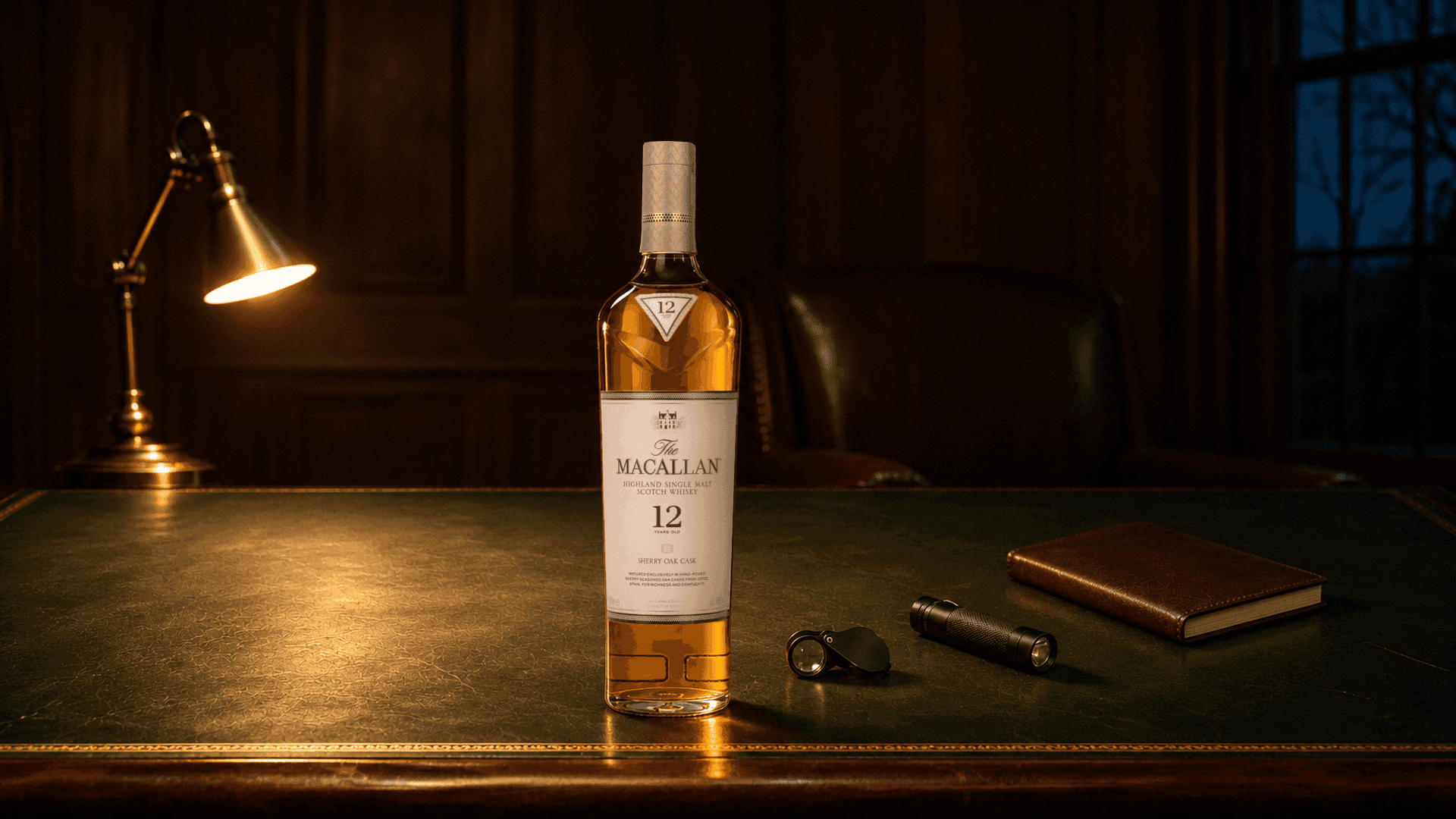
How Do Whisky Scammers Fool Buyers, and Can a Seal or QR Code Stop Them?
Whisky scammers fool buyers with nine common tricks: refilled genuine bottles, resealed capsules, borrowed photos, printed certificates, a tempting price, a move to private chat and bank transfer, a fresh seller account, a family story and pressure to decide fast. Seals, holograms and QR codes make the job harder but cannot stop it alone, because a code can be copied and a genuine bottle can be refilled.
In the summer of 2017, a guest at the Hotel Waldhaus am See in St. Moritz ordered a small glass from a bottle labelled Macallan 1878. It cost around €10,900 (CHF 9,999). The owner's father had paid a five figure sum for the bottle about 25 years earlier.
Collectors raised doubts, and the hotel had the whisky tested. The consultant Rare Whisky 101 arranged the work. Carbon dating at the University of Oxford gave a 95 percent chance that the liquid was made between 1970 and 1972, more than 90 years after the date on the label. A second firm, Tatlock and Thomson, found a likely blend of 60 percent malt and 40 percent grain whisky. The hotel owner called it "a big shock to the system" and travelled to Asia to hand the money back.
Here is the strange part. The Macallan bought up to 100 bottles labelled as 19th century in the early 2000s, until tests showed the whisky inside was counterfeit. The company said other tests dated the glass and label paper to the 19th century. So a bottle can pass tests on the outside while the inside is wrong.
Key Takeaways
In tests published in 2018 by Rare Whisky 101 and the Scottish Universities Environmental Research Centre, 21 of 55 rare bottles were fake or not distilled in the year stated. That covers old rare bottles, not whisky in general.
The Macallan's owner Edrington wrote in June 2025 of traceability and further product insight through a unique QR code. It did not say that a scan proves what is inside.
On many other marketplaces, the deal is seller to buyer, and making sure the bottle is real is the buyer's job.
Every bottle on Spiritory is authenticated before the buyer pays. The check works from photos, and no photo can prove what is inside a sealed bottle.
Tip: Ask the seller for a photo of the bottle beside a slip of paper with today's date and your name on it. A seller who holds the bottle can do this in a minute. A seller using borrowed pictures cannot.
Four Tricks Played on the Bottle
Rare Whisky 101 valued the bottles in the 2018 tests at about €760,000 (£635,000) if genuine, and put high end fakes on the world market at around €49 million (£41 million), one firm's estimate. Our seven checks for inspecting a rare bottle cover the physical signs. These are the tricks behind them, and four of them work on the bottle.
1. The refilled genuine bottle
The outside can be real while the inside is not. In 2018, police in Mie, Japan, arrested two men over fake Hibiki 30 sold through a flea market app. The bottles and boxes were genuine, but the whisky was not. Both said they had not known. In the United States, a California man bought empty Pappy Van Winkle bottles online in 2018 and 2019, refilled and sealed them, and sold them to two British auction houses. He was ordered to pay about €32,100 ($36,000).
2. The resealed capsule
A refill needs a new seal. In December 2023, an Australian auction house published a study of a fake Yamazaki 18 in what it described as an original Yamazaki glass bottle. The capsule was glossy black where the genuine one is matt black.
3. The borrowed photo
A studio picture tells you nothing about the bottle for sale. In February 2025, Suntory warned of fake websites that impersonate the company and use its whisky images without permission. If every picture looks like an advert, you have not seen the bottle.
4. The printed certificate
A certificate is only paper. The same fake Yamazaki carried a lot number whose print pattern, the auction house said, suggested a home laser printer. Ask who issued it, and contact that issuer using details you found yourself.
Five Tricks Played on You
5. The price that looks too good
The fake Hibiki 30 reportedly sold for less than half of a resale price of up to €2,800 (¥500,000). But the glass in St. Moritz shows the other side, since a very high price protected nobody. A low price is a warning. A high price is no guarantee.
6. The private chat and the bank transfer
A typical message says: pay me directly and we both save the fees. It can remove your protection in one step. The consumer centre Verbraucherzentrale NRW advises buyers to pay and talk only through the portal, and warns that transfers to someone else's account are often lost.
7. The fresh seller account
A typical example is a profile opened last month, with no sales, or a sudden change from phone cases to rare malt. No history means nobody has tested this seller yet.
8. The family story
"It comes from my grandfather's collection" is a sentence you cannot check. An Ardbeg 1885 from a private owner was among the fakes in the 2018 tests. A story tells you what the seller believes, not what is in the glass.
9. The pressure to decide
A typical line is: "Another buyer is ready, so I need the money tonight." Verbraucherzentrale NRW calls haste and unusual demands a warning sign. A good bottle will survive one more day of questions.
What The Macallan Says Its Closures and QR Codes Do
In 2018, when The Macallan launched a new look, marketing director Glen Gribbon said the brand had invested in anti refill and anti counterfeit technology to help protect consumers.
In June 2025, its owner Edrington announced the redesign of the Double Cask, Sherry Oak and Colour Collection ranges with the designer David Carson. The release speaks of continued investment in anti counterfeit technology to provide "greater traceability", and of "further insight into the expression" through a unique QR code.
Read those words slowly. They promise tracing and information. They do not explain the technology, say that a scan proves the whisky is genuine, or mention NFC or a hologram. The Macallan's support pages have a section on verifying a bottle, so start there if you hold a recent one. What such measures can and cannot do:
A real QR code can be photographed and printed again, so a scan can succeed on the wrong bottle.
An anti refill closure makes refilling harder. It says nothing about a bottle whose whole closure was replaced well.
What Other Brands and Labs Have Tried
Suntory confirmed to a Japanese news report in 2022 that it puts hologram seals on its aged Hibiki, Yamazaki and Hakushu products as an anti counterfeit measure. Products with the seals have shipped since February 2022; timing varies by product. It keeps the details of its labels, bottles and caps private for the same reason, and its customer page says it cannot say whether a bottle bought on an auction site is real. It points you to the seller or previous owner.
Johnnie Walker Blue Label showed a smart bottle prototype with the technology firm Thinfilm in March 2015. A phone tap showed whether the bottle was sealed or opened, and 500 bottles were reported on trial in Thailand in December 2015. It showed opening, not what went in before sealing.
Bowmore ARC-54, a 54 year old whisky, reportedly carries an NFC chip in the neck for physical verification, paired with a digital ownership record, according to a December 2025 report.
The University of Glasgow has the most direct test. Its Scottish Universities Environmental Research Centre draws small samples through the cork and carbon dates the liquid, in many cases to within a couple of years. Its researchers estimated in 2020 that as many as 40 percent of rare vintage whiskies in circulation could be fake, and that year it agreed to fit tested bottles with tamper detecting closures carrying NFC tags. A date only dates the liquid. It does not name the distillery.
How Buying Whisky on Other Marketplaces Works
Other marketplaces are not unsafe. They simply work in a different way.
On many large marketplaces, nobody authenticates the bottle. Some run authenticity checks for items such as sneakers, handbags or watches, but whisky is usually not among them. The deal is seller to buyer, and it is the buyer's job to make sure the seller is selling a real bottle. The nine tricks above help with that.
The rules differ from one marketplace to the next, so read them before you buy:
Alcohol can usually be sold only under conditions, such as an adult buyer and an age check on delivery.
A rule that bans fakes is not the same as a check that finds them.
Buyer protection often covers items that do not arrive, arrive damaged or are not as described. Look up how long you have to report a problem.
That protection usually ends when you pay outside the marketplace, such as by bank transfer or cash, which is one more reason to ignore trick six.
For another route, see our guide to buying at auction or from a store.
What Spiritory Adds: A Check Before You Pay, and Where It Stops
Spiritory is a bid and ask marketplace for whisky and spirits. It adds one layer of security on top of the deal between seller and buyer: a check before the buyer pays. That check is the difference, and every bottle is authenticated before the buyer pays.
The seller uploads photos of the labels, filling level, neck, seal, bottle code and box. Spiritory's experts review them within 60 minutes to 48 hours. They look for an intact seal, the fill level in the neck, the condition of the label and all the original packaging. If a bottle fails, the sale is cancelled and the buyer owes nothing.
If it passes, the buyer pays and the money is held in escrow. The buyer then has a 3 day inspection window, and suspected damage or forgery should be reported to support within 24 hours. Only new, unopened bottles trade.
Now the limit, stated plainly. This check works from photos. No photo check can prove what is inside a sealed bottle. For a very old or rare bottle, an independent specialist is worth paying for, wherever you buy.
Tip: Before you pay for an expensive bottle, answer three questions. Who is selling it, how does your money travel, and who has checked it? If you cannot answer the third, wait until you can.
FAQ
Does a QR code prove a whisky bottle is genuine?
No. A code can be photographed and printed again, and a genuine bottle with a real code can be refilled.
Does The Macallan use NFC chips?
We found no statement from the brand that it does. Its owner's June 2025 release names anti counterfeit technology and a unique QR code.
Do other marketplaces check whisky for authenticity?
Many do not. Some check items such as sneakers, handbags or watches, but whisky is usually not among them. The deal is then seller to buyer, so ask what the marketplace checks before you buy.
Does Spiritory authenticate every bottle?
Yes. Every bottle is authenticated before the buyer pays. The check works from photos, so it cannot prove what is inside a sealed bottle.
About the author

Christopher Deutsch
I drink and collect with intention, drawn to the sherried depth of Dalmore and the balance of Yamazaki.
To the author