

Reach thousands of whisky and spirits lovers every day.


Does Whisky Age Matter? Why a 12 Year Old Can Beat an 18
 by Janis WilczuraI'm one of Germany's leading whisky experts, featured in Handelsblatt and BILD. To me, whisky is craftsmanship and art.
Follow Spiritory on Google News to get our latest guides and releases delivered straight to your feed.
Does Whisky Age Matter? Why a 12 Year Old Can Beat an 18
Whisky age matters less than most buyers expect, because an age statement only shows how long the youngest whisky in the bottle spent in cask, not how good it is. A 12 year old from well chosen casks can taste richer than an 18 year old from tired wood, since cask quality, climate and distillery style shape flavour as much as years.
Key Takeaways
Under Scotch whisky law, an age statement is the age of the youngest whisky in the bottle. It is a time record, not a quality score.
Cask quality can outweigh years: first fill and active wood give more flavour than tired refill wood.
Warm climates mature whisky faster. Amrut reports losing 10 to 15 percent a year in Bangalore against 1 to 2 percent in Scotland.
Too much time in oak, or the wrong cask, can overpower the spirit, so a higher number is not automatically a better balance.
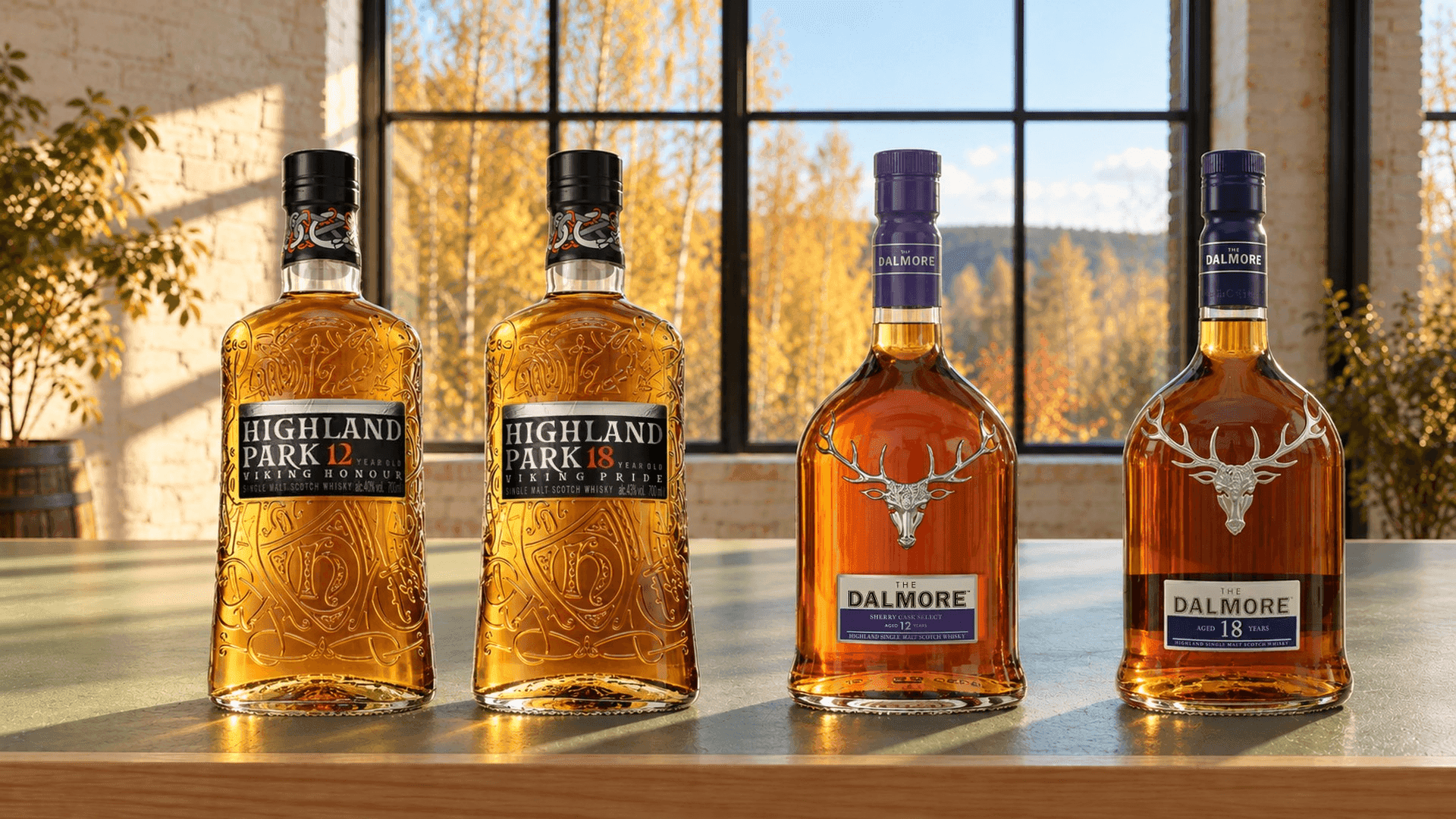
Highland Park and Dalmore show that a 12 and an 18 are two styles, not a ranking.
Tip: When you compare two ages, keep everything else equal. Choose the same distillery, pour both at the same strength and temperature, and taste the younger one first.
What Does an Age Statement Actually Measure?
An age statement measures time in cask, and nothing else. The Scotch Whisky Regulations 2009 require any age on the label to be given in years and to refer to the youngest whisky in the bottle, and Scotch must be matured for at least three years in oak casks. If an 18 year old contains a few older casks, the label still says 18. If it contains one younger cask, the label cannot say 18 at all.
The rule protects buyers from false claims, but it says nothing about how the whisky tastes. Two bottles with the same number can come from very different wood, warehouses and recipes. For the science of what happens year by year, read our guide to how long whisky needs to mature. For bottles that carry no number, see what a no age statement means for quality.
Why Can Cask Quality Matter More Than Years?
The cask does most of the flavour work, so a good cask can do in 12 years what a tired one cannot do in 18. A first fill cask has not held Scotch before and gives up vanilla, spice, sweetness and colour freely. A refill cask has already given much of that away, so it works more gently and more slowly, and it leaves more of the job to time.
Wood type matters too. Bourbon casks tend to add vanilla and coconut, while sherry seasoned casks tend to add dried fruit, chocolate and spice. Our guide to how cask types affect flavour goes through the main types. A young whisky from active wood can taste fuller than an older one from quiet wood, which is the idea behind seven young whiskies that drink above their age.
Does a Hot Climate Make Whisky Age Faster?
Yes, according to producers in warm countries. Amrut in Bangalore, India, says its angel's share runs at 10 to 15 percent a year, against 1 to 2 percent in Scotland, as VinePair reported in 2020. In such heat the spirit works against the wood faster, so a few years in a hot warehouse can give colour and flavour that take longer in a cool Scottish one.
VinePair adds that Starward in Melbourne, Australia, ages its whisky through big daily and seasonal temperature swings. Amrut's Raj Sabharwal puts it this way: "I prefer to talk about maturity versus age." A young bottle from a hot country and an old bottle from a cool one cannot be compared by number alone.
Can Whisky Spend Too Long in Oak?
It can. VinePair quotes the point that at a certain stage oak character can overpower the flavours of the base ingredients and knock the profile out of balance. That is the risk of long maturation: the wood keeps adding, and the distillery character can recede behind it. Producers therefore taste their casks over time and decide when each one is ready.
The same article reports that Starward learned that barrels from bolder, more extracted wines were more likely to overpower its spirit. A producer who bottles at 12 years because a cask is at its best has made a quality decision. A producer who waits for 18 years has made a different one. The number alone does not say which cask was right, which is why the age statement works best as a starting point for reading a label, not the last word.
How Do a Highland Park 12 and 18 Differ?
Both come from Orkney, and both belong to Highland Park's Viking range. Highland Park 12 Years Old Viking Honour is bottled at 40% ABV, and Highland Park 18 Years Old Viking Pride at 43% ABV. Whisky Magazine's reviewer describes the 12 as sweet, with vanilla, caramel, orange zest, grated nutmeg, oak spices and sticky toffee pudding.
For the 18, the same reviewer lists orange zest, madeira cake, sultanas, raisins, caramelised brown sugar and baking spices such as cinnamon, nutmeg and clove, with a fruity, Cognac like note. These are one taster's notes, and other tasters will find other things, but the pattern is useful. Orange and nutmeg appear in both, while the 18 moves towards dried fruit and cake. That is a change of style, not a higher grade, and a drinker who likes sweet, easy vanilla and caramel may well prefer the younger bottle.
How Do a Dalmore 12 and 18 Differ?
Dalmore, in the Highlands, makes a similar case, and its current 12 is not the classic one. Dalmore 12 Years Old Sherry Cask Select is bottled at 43% ABV. Dalmore says the spirit first matures in American white oak ex bourbon barrels and is then fully finished in casks that held a blend of aged Oloroso and Pedro Ximenez sherry. Its notes are caramelised orange, ginger and sultanas on the nose, dark chocolate and crushed almonds on the palate, and sweet mango, panna cotta and lemon sponge in the finish. Master Distiller Richard Paterson calls it "elegance personified."
Dalmore 18 Years Old is also bottled at 43% ABV. Dalmore says it is matured in American white oak ex bourbon casks and Matusalem Oloroso sherry casks, with vanilla, dark chocolate, English marmalade and sweet liquorice on the nose, and chocolate raisins, citrus, coffee and nutmeg on the palate. Master Whisky Maker Gregg Glass calls it "an evolution of our house style" with "bolder notes." Editions change over the years, so details can differ slightly between bottlings. The two share orange and chocolate, and the 18 adds coffee and liquorice.
When Is an Older Whisky Worth It?
An older whisky is worth it when you want a specific style: deeper, softer and more layered, with the rounded character that long maturation can give. It is also a natural choice for a milestone gift, where the number itself carries meaning. Amrut puts Scottish evaporation at 1 to 2 percent a year, so every extra year means a little less whisky in the cask, which is one reason older bottles usually cost more.
A younger whisky is the better choice when you like freshness, fruit, spice or peat that still sounds clear, or when you want to taste a distillery without paying for decades of storage. There is no need to pick a side. Try the 12 and the 18 of a house you like, and let your own taste decide. For more of the 12 year old class, see our list of the best 12 year old single malts, and for the market side, see how age stated and NAS bottles compare.
Tip: Read the cask description before the number. Wording such as first fill, sherry seasoned or refill tells you more about the style of a bottle than the age statement alone.
FAQ
Does an older whisky always taste better?
No. The age statement shows time in cask, not quality. Cask type, warehouse climate and distillery style shape the whisky as much as years do, so a well matured 12 year old can suit your taste better than an 18 year old.
What does the age on a Scotch label mean?
Under the Scotch Whisky Regulations 2009, any age on the label refers to the youngest whisky in the bottle. Scotch must also be matured for at least three years in oak casks.
Why do whiskies from hot countries age faster?
Producers say heat and temperature swings make the spirit work against the wood faster. Amrut says its angel's share is 10 to 15 percent a year in Bangalore, against 1 to 2 percent in Scotland.
Can whisky be too old?
Yes. VinePair notes that oak character can overpower the flavours of the base ingredients at a certain point, which is why producers watch their casks as they mature.
How do the Highland Park and Dalmore 12 and 18 differ?
The Highland Park 18 is bottled at 43% against 40% for the 12, while both Dalmore bottles are 43%. Whisky Magazine's reviewer finds orange, nutmeg and toffee in the Highland Park 12 and dried fruit and cake in the 18. Dalmore moves from citrus, almonds and dark chocolate in the 12 towards marmalade, liquorice and coffee in the 18.
About the author

Janis Wilczura
I'm one of Germany's leading whisky experts, featured in Handelsblatt and BILD. To me, whisky is craftsmanship and art.
To the author