

Reach thousands of whisky and spirits lovers every day.


The 10 Best 12 Year Old Single Malts, One for Every Style
 by Christopher Deutsch I drink and collect with intention, drawn to the sherried depth of Dalmore and the balance of Yamazaki.
Follow Spiritory on Google News to get our latest guides and releases delivered straight to your feed.
The 10 Best 12 Year Old Single Malts, One for Every Style
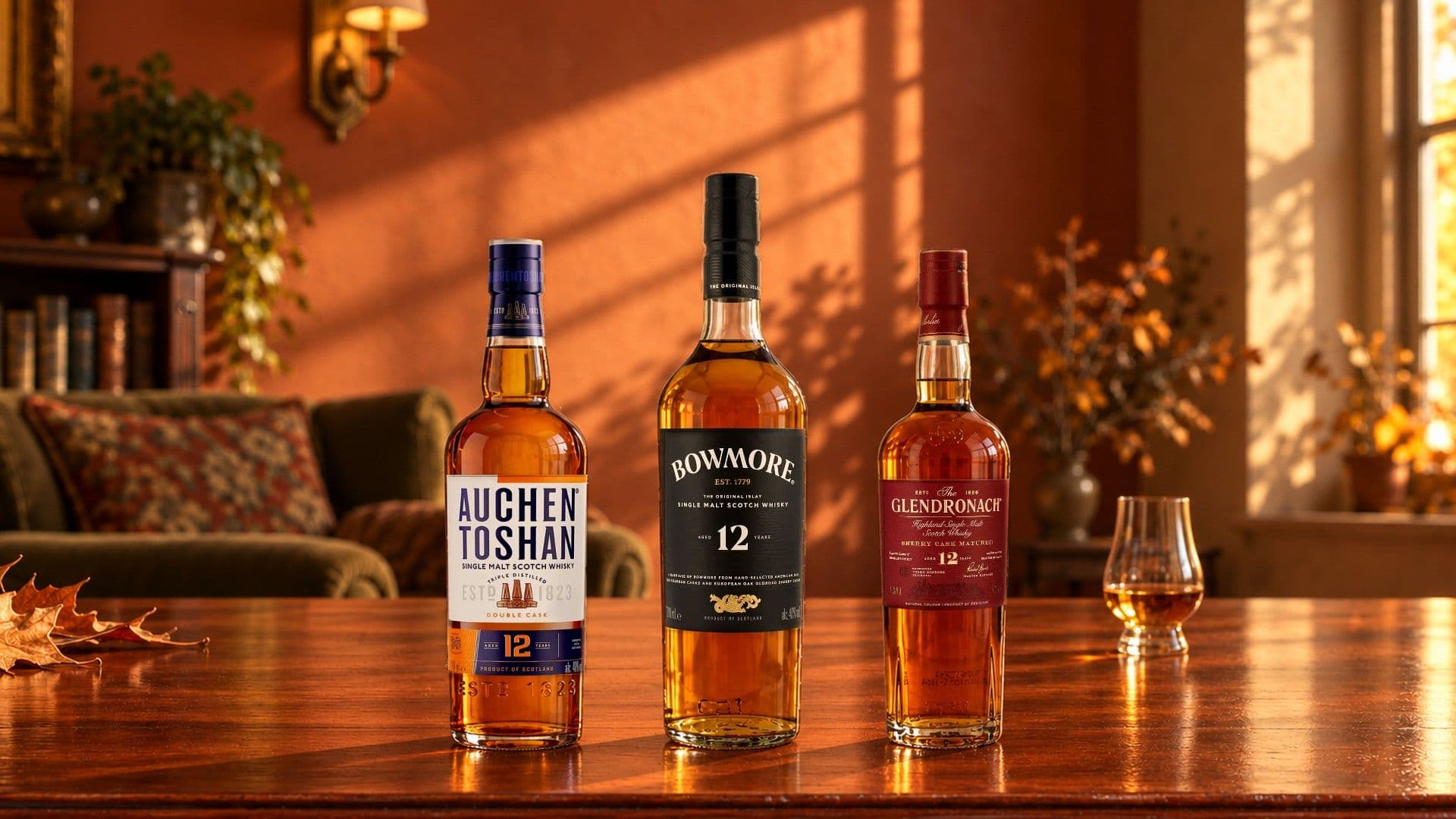
The best 12 year old single malts cover ten different styles: sherried GlenDronach, fruity Glenfiddich, honeyed Balvenie and Aberfeldy, smoky Bowmore and Highland Park, coastal Old Pulteney, green Hakushu, triple distilled Auchentoshan and cask strength Springbank. On a Scotch label the 12 is the age of the youngest whisky in the bottle, a rule set by the Scotch Whisky Regulations and explained by the Scotch Whisky Association.
Key Takeaways
Twelve years is the classic entry age statement, and it is the youngest whisky in the bottle that counts.
Style matters more than age here: choose by sherry, honey, smoke, coast, fruit or strength.
Most bottles on this list are 40% ABV. GlenDronach and Hakushu are 43%, and Springbank Cask Strength changes with each batch.
Tasting notes below come from the brands or named retailers, not from us.
For a wider view of the category, read our guide to single malt versus blended Scotch.
Tip: Pick the style you already enjoy, then change one thing at a time. If you like sherry, move from GlenDronach to Balvenie. If you like smoke, move from Bowmore to Highland Park.
GlenDronach 12: Sherry Richness at 43% ABV
GlenDronach is the pick for readers who want sherry first. The Original 12 is matured in Pedro Ximenez and Oloroso sherry casks, bottled at 43% ABV, and sold non chill filtered and without added colouring. Those details matter because a higher strength and no chill filtration leave more texture in the glass.
Retailers repeating the brand notes describe creamy vanilla, warm oak and raisins, with a dry and spicy finish. It suits drinkers who already like dried fruit and baking spice, and it is a sensible first step into the sherried Highland style.
Because it carries sherry weight at a moderate age, it is also a useful bottle for comparing against lighter styles on this list. Pour it next to Glenfiddich 12 and the difference in colour and body is easy to see.
Who it suits: anyone who finds lighter malts too thin. See it on Spiritory: GlenDronach 12 Original.
Glenfiddich 12: Pear and Cream From American and European Oak
Glenfiddich 12 is the reference point for Speyside. The distillery states a strength of 40% ABV and a maturation in American and European oak sherry casks, with the nose led by fresh pear. It is one of the best known single malts, so it is easy to compare with every other bottle on this list.
Retailer notes add a sweet, fruity palate that moves towards butterscotch, cream and malt, with light oak. That is a gentle profile, which is the point: it does not ask for experience.
Its wide distribution is a practical advantage. Reviews, tasting notes and serving ideas are easy to find, which makes it a good benchmark before you move to the more distinctive bottles further down the list.
Who it suits: first time single malt drinkers and anyone buying a safe gift. See it on Spiritory: Glenfiddich 12.
The Balvenie DoubleWood 12: Honey From a Second Cask
The DoubleWood is named for its two stage maturation. Retailer copy describes years in traditional oak casks, followed by a further period in European oak sherry casks. The first stage softens the spirit, and the second adds depth and fullness.
Listed notes include honey and vanilla with sweet fruit and a touch of Oloroso sherry. The strength is usually 40% ABV, though one retailer lists 43%, so it is worth checking the label of the bottle you buy.
The idea of finishing in a second cask is common today, but the DoubleWood is a clear, affordable example of it. Compare it with a single cask bottling to see how much the sherry stage changes the spirit.
Who it suits: drinkers who like a soft, sweet Speyside with a little sherry on top. See it on Spiritory: Balvenie DoubleWood 12.
Aberfeldy 12: Heather Honey From Perthshire
Aberfeldy gives the list its Highland honey style. The distillery in Perthshire was founded by the Dewar family in 1896 and began distilling in 1898, according to retail and review sources. The 12 Year Old, launched in 1999, is bottled at 40% ABV.
The distiller's notes, as republished by retailers, describe a heather honey nose with a fruity softness, then pineapple, toast and cereal. The palate is syrupy, and the finish is dry with spice and a hint of Seville orange.
Most of the distillery's output goes into Dewar's blends, so the 12 Year Old is a way to taste the malt on its own. It sits close to Balvenie in sweetness, but with a more floral and fruity edge.
Who it suits: readers who want honey and fruit without sherry or smoke. See it on Spiritory: Aberfeldy 12.
Bowmore 12: Lemon, Heather Honey and Soft Islay Smoke
Bowmore sits in the middle of the Islay range, so its smoke is easier to approach than the heavy peat of some neighbours. Brand copy republished by retailers describes a 12 year maturation in American oak ex bourbon barrels and European oak Oloroso sherry butts and puncheons, bottled at 40% ABV.
The same notes mention fresh lemon juice and heather honey on the nose, balanced by a soft, earthy smokiness, with a lingering puff of sweet smoke on the finish.
Because the smoke is soft rather than medicinal, it works as a bridge bottle. Drinkers who find heavy Islay peat too much often use it as their first step towards the island's stronger malts.
Who it suits: anyone curious about Islay who wants smoke with sweetness. See it on Spiritory: Bowmore 12. For more on the island, read which Islay whiskies are worth collecting.
Highland Park 12: Orkney Heather Honey and Smoky Peat
Highland Park is the island malt on this list. It is distilled in Kirkwall on Orkney, where distilling has been recorded since 1798. The 12 Year Old is bottled at 40% ABV and matured mainly in sherry seasoned European and American oak, according to Whiskybase and Master of Malt.
The distillery's own notes list heather honey, rich fruitcake, winter spices, Seville oranges and aromatic smoky peat. That mix of sweet, spicy and lightly smoky is why many drinkers call it a good all rounder.
The brand notes above name both heather and peat, which ties the whisky to its island home. They use both words, which is a useful detail when you compare it with Bowmore.
Who it suits: readers who want something between sherry and smoke. See it on Spiritory: Highland Park 12.
Old Pulteney 12: Sea Air From Wick
Old Pulteney is the coastal choice. It is made in Wick, a town that was once one of the main herring fishing hubs in Europe, and the 12 Year Old is bottled at 40% ABV. Producer notes say it is matured in air dried, hand selected ex bourbon casks.
Those notes, as listed by The Whisky Exchange, describe a deep amber colour, a dry nose with a briny hint of sea air, and a palate of lemon, lime and dry banana skin. Another listing adds honey, cream and a faint salt note.
A salty, dry style is the clearest contrast to the sherried bottles in this list. If GlenDronach is the richest dram here, Old Pulteney is the leanest, and that contrast is the reason it earns a place.
Who it suits: drinkers who like dry, fresh, slightly salty whisky. See it on Spiritory: Old Pulteney 12.
Hakushu 12: A Forest Distillery in Japan
Hakushu stands for the green side of Japanese whisky. Suntory calls the distillery the Forest Distillery. It was built in 1973 in pine forest at the foot of Mount Kaikomagatake, near the Japanese Alps, and the 12 Year Old is bottled at 43% ABV.
Producer notes listed by The Whisky Exchange describe pear and crushed bracken on the nose with a hint of citrus, then subtle smokiness and poached pears on the palate.
Japanese whisky is often judged against Scotch, and Hakushu shows how a different climate and a different house style lead to a lighter result. It is a strong pick when you want something unlike the rest of the list.
Who it suits: readers who prefer fruit and herbs over sherry. See it on Spiritory: Hakushu 12. For background, read Yamazaki and Hakushu guide.
Auchentoshan 12: Triple Distilled in the Lowlands
Auchentoshan is the Lowland entry. Unlike many Lowland distilleries that gave up the method, it still triple distils, which tends to give a lighter and cleaner spirit. Retailers list the 12 Year Old at 40% ABV.
The distillery describes it as double matured in ex bourbon American oak and Spanish Oloroso sherry casks. Its notes mention sweet pastry and citrus on the nose, vanilla with hazelnut, tangerine and lime on the palate, and a gingery, slightly dry finish. The distillery does not state the split between the two cask types.
The Lowlands are often overlooked in favour of Islay and Speyside, so a Lowland malt gives the list balance. Its light body also makes it easy to drink on its own or with a little water.
Who it suits: anyone who wants a soft, easy dram, or a first Lowland malt. See it on Spiritory: Auchentoshan 12 Double Cask.
Springbank 12 Cask Strength: Campbeltown at Full Power
Springbank closes the list with the strongest bottle. The cask strength 12 is released in numbered batches, and each batch has its own strength, so the label matters. Just Whisky lists the 28th release at 55.5% ABV, bottled on 3 September 2025, and the 27th at 55.9%, from 60% bourbon, 35% sherry and 5% rum casks. Retailers list batch 29 at 56.1% or 56.6%, so check the label.
Because every batch differs, one tasting note cannot cover the whole series. Campbeltown whisky is known for a salty, oily and lightly smoky character, and our guide to the three Campbeltown distilleries explains why.
Add water a few drops at a time, since the high strength can hide detail when poured neat. Take a small sip first, then adjust until the whisky opens up and the salt and fruit come forward.
Who it suits: experienced drinkers who want strength and character. See it on Spiritory: Springbank 12 Cask Strength, Batch 29.
Tip: Taste any 12 year old neat first, then add a few drops of water. Lower strength bottles open up less, so use only a little.
FAQ
What does 12 years old mean on a whisky label?
For Scotch, it is the age of the youngest whisky in the bottle. The Scotch Whisky Association publishes the rule, which comes from the Scotch Whisky Regulations.
Is a 12 year old single malt a good first bottle?
Yes. It is the most common entry age statement, and this list shows ten styles, so you can start with the one closest to what you already like.
Which 12 year old is best for smoke lovers?
Bowmore 12 offers soft Islay smoke with lemon and honey, and Highland Park 12 adds heather honey with smoky peat. Springbank Cask Strength is a stronger, salty option.
Do all of these bottles have the same strength?
No. Most are 40% ABV, GlenDronach and Hakushu are 43%, and Springbank Cask Strength is bottled in batches in the mid 50s. Always check the label.
- Key Takeaways
- GlenDronach 12: Sherry Richness at 43% ABV
- Glenfiddich 12: Pear and Cream From American and European Oak
- The Balvenie DoubleWood 12: Honey From a Second Cask
- Aberfeldy 12: Heather Honey From Perthshire
- Bowmore 12: Lemon, Heather Honey and Soft Islay Smoke
- Highland Park 12: Orkney Heather Honey and Smoky Peat
- Old Pulteney 12: Sea Air From Wick
- Hakushu 12: A Forest Distillery in Japan
- Auchentoshan 12: Triple Distilled in the Lowlands
- Springbank 12 Cask Strength: Campbeltown at Full Power
- FAQ
About the author

Christopher Deutsch
I drink and collect with intention, drawn to the sherried depth of Dalmore and the balance of Yamazaki.
To the author