

Reach thousands of whisky and spirits lovers every day.


How Do Campbeltown's Three Distilleries Differ? Springbank, Glen Scotia and Glengyle
 by Max RinkI’m a whisky enthusiast and aspiring writer, exploring new flavours and the stories behind every bottle.
Follow Spiritory on Google News to get our latest guides and releases delivered straight to your feed.
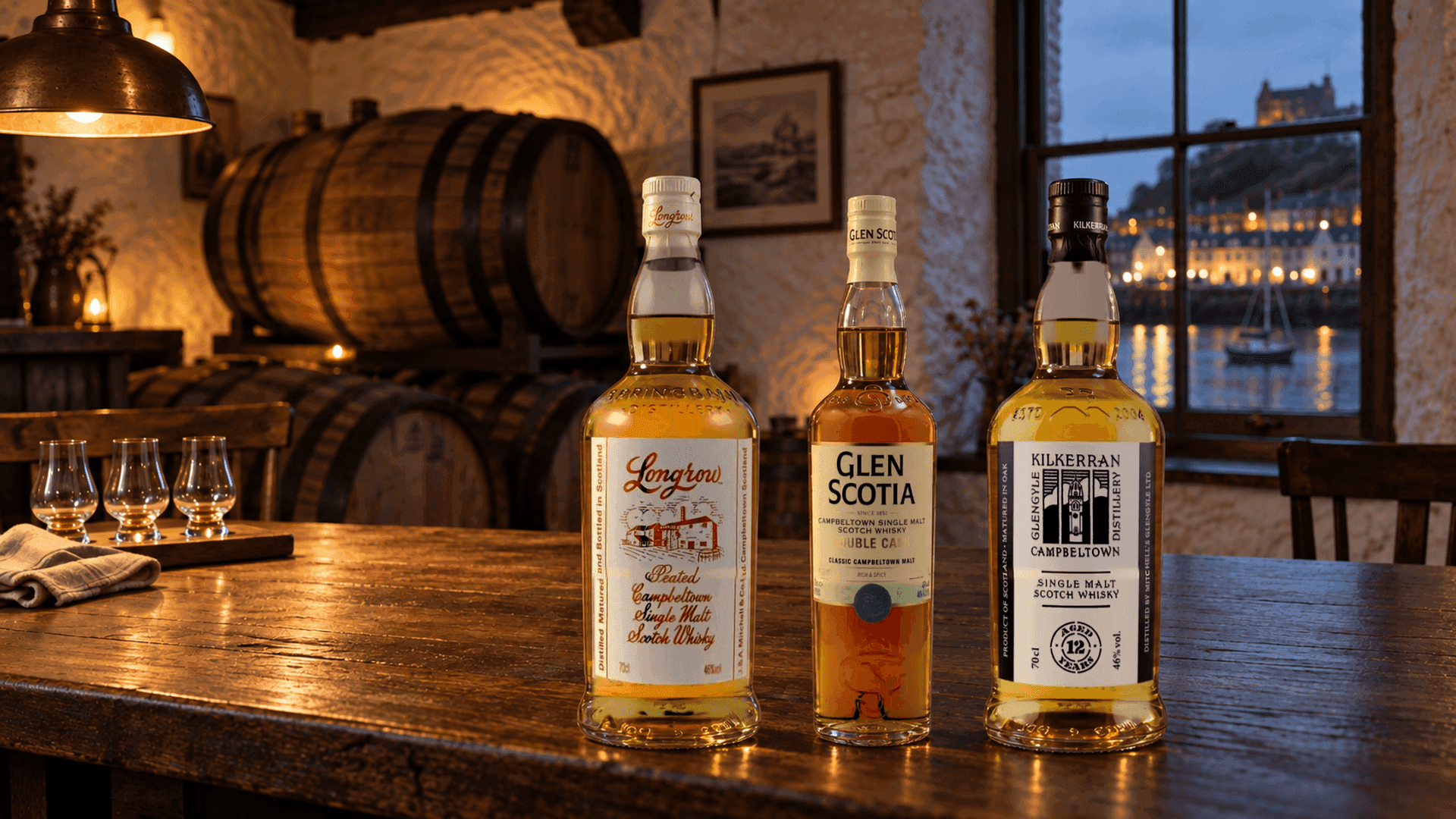
How Do Campbeltown's Three Distilleries Differ? Springbank, Glen Scotia and Glengyle
Campbeltown's three working distilleries, Springbank, Glen Scotia and Glengyle, each take a different approach to Scotch whisky: Springbank produces three separate spirits from its own floor malted barley, Glen Scotia makes a single lighter, coastal style, and Glengyle, reopened in 2004, bottles the lightly peated Kilkerran. The differences come down to distillation method, peat level and cask choice rather than geography, since all three distilleries sit within a few miles of each other on the Kintyre peninsula.
Key Takeaways
Campbeltown is home to three working distilleries today: Springbank, Glen Scotia and Glengyle, which sells its whisky under the Kilkerran name.
Springbank distillery produces three different spirits under one roof: Springbank, lightly peated and distilled two and a half times; Longrow, heavily peated and double distilled; and Hazelburn, unpeated and triple distilled.
Springbank malts its own barley on a traditional malting floor, a step most other Scottish distilleries no longer carry out themselves.
Glen Scotia, founded in 1832, focuses on a single house style built around tropical fruit, coastal salinity and a rich, oily mouthfeel rather than a range of spirits.
Glengyle reopened in 2004 under J&A Mitchell, the same family company that owns Springbank, and its whisky, sold as Kilkerran, is described by the distillery as lightly peated.
All five starting bottles below are listed on Spiritory, where stock depends on what collectors are currently offering for sale.
Tip: To taste how much distillation method alone can change a whisky, compare Longrow and Hazelburn side by side. Both come from Springbank distillery and similar cask types, so the heavier, double distilled peat of Longrow against the lighter, triple distilled Hazelburn shows the effect of the stills rather than the barley or the wood.
Springbank Makes Three Different Spirits In One Distillery
Campbeltown was once home to more than 30 distilleries during a whisky boom in the 19th century that collapsed by the 1920s, and today only three remain in the town. Springbank is the oldest of the three still in continuous family ownership, and it is also the only Scottish distillery that carries out every step of production itself, from malting the barley to bottling the finished whisky.
Springbank malts its own barley on a traditional malting floor, which the distillery reopened in 1992. That floor malted barley supplies all three of the spirits the distillery produces under different names, since each one changes the peat level and the number of times the spirit passes through the stills rather than coming from a separate distillery.
Springbank 10 Years Old is the distillery's namesake spirit, lightly peated at around 8 to 10 parts per million and distilled two and a half times, a method where the spirit moves between Springbank's three stills in different proportions rather than following a simple double or triple distillation. It is bottled at 46% ABV.
Longrow is heavily peated at around 50 parts per million and double distilled, using a direct fired wash still and slow cooling through a worm tub rather than the modern condensers used at most distilleries, which gives it a heavier, smokier character than Springbank. For a closer look at one of Longrow's wine cask finished editions, see What Is Longrow Red? Springbank's Wine Cask Whisky.
Hazelburn 10 Years Old is unpeated and triple distilled, matured in bourbon casks. Hazelburn was first distilled in 1997 and is produced light and fruity in style compared with the smokier Springbank and Longrow.
Glen Scotia Brings A Lighter Coastal Style To Campbeltown
Glen Scotia was founded in 1832 in the centre of Campbeltown and has operated on the same site ever since, though ownership has changed hands several times across almost two centuries, and the distillery is now owned by Loch Lomond Group. Unlike Springbank, Glen Scotia does not malt its own barley or run three separate spirits under different names. Instead the distillery focuses on a single house style built around tropical fruit, coastal salinity and a rich, oily mouthfeel. Glen Scotia was named Scotland's Whisky Distillery of the Year in 2021, recognition of that consistent house style.
The current core range runs from Glen Scotia Double Cask, matured first in bourbon casks before finishing in Pedro Ximenez sherry casks, up through 15 Years Old, Victoriana and 18 Years Old to a 25 Years Old at the top of the range. Double Cask sits at the entry point of that range and is bottled at 46% ABV, which makes it a starting bottle for readers who want to compare Glen Scotia's fruitier, more coastal profile against Springbank's smokier range.
Glengyle Reopened In 2004 To Make Kilkerran
Glengyle distillery was established in 1872, closed in 1925 along with most of Campbeltown's distilleries during the town's collapse as a whisky region, and stood silent for the rest of the 20th century. In 2000, J&A Mitchell & Co, the family company that also owns Springbank, bought the site, and production resumed in 2004. The first release was a 5 Years Old work in progress bottling in 2009, and the 12 Years Old that now anchors the range arrived as a permanent expression in 2016.
The whisky is not sold under the Glengyle name, because that trademark had already been sold to a different company when the distillery closed. Instead it is bottled as Kilkerran, taken from the Gaelic name for Campbeltown. The distillery's own site describes its core Kilkerran 12 Years Old as lightly peated, matured in a mix of bourbon and sherry casks and bottled at 46% ABV. Readers who want a fully unpeated Campbeltown malt should look to Hazelburn instead, since Kilkerran's standard range carries a light smokiness that Hazelburn does not.
Tip: Peat level is the fastest way to sort Campbeltown's whiskies by style. Hazelburn is unpeated, Springbank and Kilkerran are lightly peated, and Longrow is heavily peated, so lining up a dram from each shows the region's range in a single sitting.
FAQ
How many distilleries are left in Campbeltown?
Three: Springbank, Glen Scotia and Glengyle, which sells its whisky under the Kilkerran name. Campbeltown once had more than 30 distilleries during a 19th century boom that collapsed by the 1920s.
What is the difference between Springbank, Longrow and Hazelburn?
All three come from Springbank distillery but use different peat levels and distillation methods. Springbank is lightly peated and distilled two and a half times, Longrow is heavily peated and double distilled, and Hazelburn is unpeated and triple distilled.
Is Kilkerran peated or unpeated?
Kilkerran's official site describes its core 12 Years Old as lightly peated. It is produced at Glengyle distillery, which reopened in 2004 under J&A Mitchell, the same family company that owns Springbank.
What makes Glen Scotia different from Springbank and Glengyle?
Glen Scotia, founded in 1832, does not malt its own barley or produce multiple spirits under different names. It focuses on a single house style built around tropical fruit, coastal salinity and a rich, oily mouthfeel, with Double Cask as its entry level bottle.
Where can I buy these Campbeltown bottles?
All five are listed on Spiritory, a bid and ask marketplace for whisky and spirits based in Munich that ships within the EU. Buyers pay a 3% buyer protection fee plus shipping, and availability depends on what collectors are currently selling.
About the author

Max Rink
I’m a whisky enthusiast and aspiring writer, exploring new flavours and the stories behind every bottle.
To the author