

Reach thousands of whisky and spirits lovers every day.


Bruichladdich, Port Charlotte and Octomore: 9 Bottles That Show All Three Styles
 by Janis WilczuraI'm one of Germany's leading whisky experts, featured in Handelsblatt and BILD. To me, whisky is craftsmanship and art.
Follow Spiritory on Google News to get our latest guides and releases delivered straight to your feed.
Bruichladdich, Port Charlotte and Octomore: 9 Bottles That Show All Three Styles
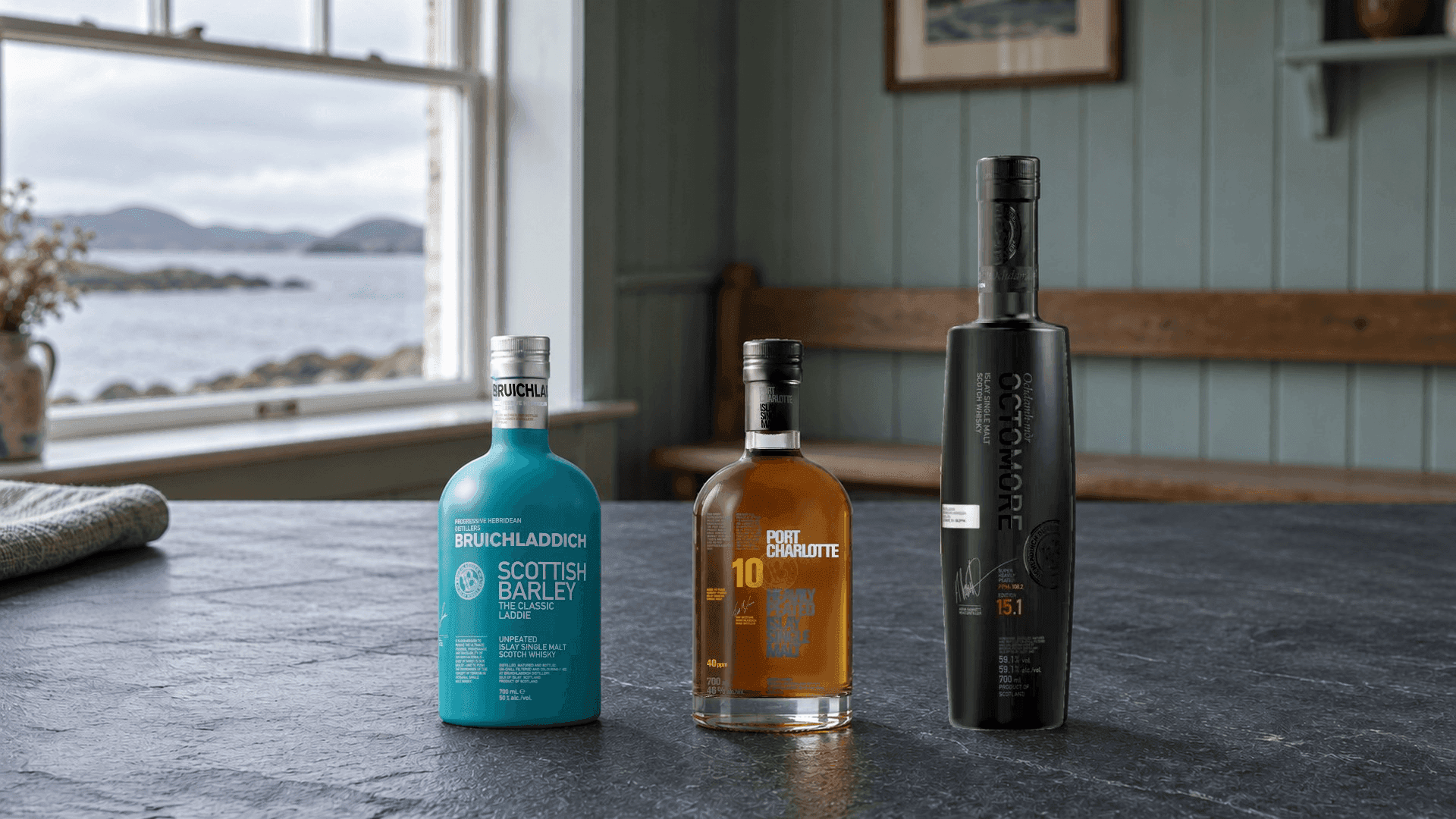
Bruichladdich, Port Charlotte and Octomore are three whisky styles from one Islay distillery, separated by peat: Bruichladdich is unpeated, Port Charlotte is peated to 40 ppm and Octomore is the distillery's super heavily peated range. This list picks three bottles from each, from the 10 year old Classic Laddie at 50% to Octomore 15.1 at 108.2 ppm, so you can taste the whole scale in order.
Key Takeaways
Bruichladdich is unpeated, Port Charlotte is peated to 40 ppm and Octomore goes past 100 ppm.
The unpeated bottles show barley and cask: the Classic Laddie, Islay Barley 2014 and Bere Barley 2013.
Port Charlotte moves from a 10 year old to an 18 year old limited to 8,000 bottles.
Octomore 17.1 has a lower ppm (81.0) than 15.1 (108.2) and has a gentler smoke profile, according to the distillery.
Always check the label on each Spiritory listing, because some bottles are older releases than the current distillery version.
Tip: Taste in order, from unpeated to heavily peated, with a clean glass and a sip of water between each dram. Starting with Octomore will make the earlier bottles taste thin.
The Classic Laddie 10 Aged Years: unpeated, 50% and 100% Scottish barley
The Classic Laddie is the front door to the distillery. The distillery lists it as a 10 year old unpeated single malt at 50%, made from 100% Scottish grown barley. It is trickle distilled, non chill filtered and free of added colour. Master Blender Adam Hannett selects the casks, and the distillery describes the house style as classic, floral and elegant, with a citrus and floral profile.
It suits anyone who thinks Islay always means smoke. This bottle shows what the island tastes like without peat, and it makes a fair reference point for the other eight. The distillery selects a suite of casks for each batch, so check the label on the Bruichladdich The Classic Laddie listing for the bottle you are looking at.
Bruichladdich Islay Barley 2014: eight farms, all grown on Islay
This is the Bruichladdich range at its most local. The distillery describes the 2014 vintage as 8 years old at 50%, with barley from eight farms within 11 miles of the distillery: Coull, Rockside, Island, Mulindry, Cruach, Dunlossit, Craigens and Sunderland. The casks are a mix of first fill bourbon, sherry butts and second fill wine casks.
The distillery names apricot, peach, malty digestive biscuit, fresh grass and a subtle maritime note. It is non chill filtered and colour free. It suits readers who care where barley comes from and want to taste the effect of a single harvest year. See the Bruichladdich 8 Years Old 2014 Islay Barley listing.
Bruichladdich Bere Barley 2013: an old Orkney grain at 50%
Bere barley is a heritage grain, and Bruichladdich has worked since 2005 with the Agronomy Institute of the University of the Highlands and Islands to bring it back. The 2013 release is 10 years old at 50% and uses bere grown on Orkney farms, including Weyland and Watersfield in St Ola and Westermill and the Northfield on Burray. It matured in first fill bourbon barrels and second fill Pauillac wine casks.
The distillery points to cereal notes, malty sweetness, oak, hints of fresh green fruit and lightly spiced gingerbread. It is another unpeated bottle, so the flavour comes from the grain and the wood alone. It suits drinkers who enjoy bread, biscuit and cereal notes in whisky. Find it as Bruichladdich Bere Barley 2013.
Port Charlotte 10: heavily peated at 40 ppm, with barbecue smoke
Port Charlotte is the middle step. The distillery says the range is peated to a heavyweight 40 ppm, and describes the 10 year old as a balanced, heathery style of barbecue smoke. The current distillery bottling is 50% and made from 100% Scottish barley.
One detail matters here. The Port Charlotte 10 Years Old Heavily Peated listing on Spiritory describes an earlier bottling from 2012 at 46%, so it is not the same bottle as the current 50% version. That makes it interesting for readers who like to compare how a core whisky changes over the years. It suits anyone ready to move from unpeated whisky to a first proper smoky dram. For background on the numbers, read our guide to what peated means in whisky.
Port Charlotte Islay Barley 2014: 40 ppm smoke with Islay grain
This bottle puts peat and place together. The distillery lists it at 50% and 40 ppm, with barley from eight farming partners within 15 miles of the distillery. The casks are 84% first fill bourbon, 8% second fill virgin oak and 8% second fill Bordeaux wine casks.
The distillery describes malty digestive biscuits and peat on the palate, followed by apricot, peach and ripe melon, with fruit and smoke in balance. Spiritory lists it as a 7 year old, while the distillery page gives only the 2014 vintage. It suits readers who liked the Islay Barley bottle above and now want to taste what the same farm barley does once it is peated. See Port Charlotte 7 Years Old 2014 Islay Barley.
Port Charlotte 18 (2025 edition): 51.5%, limited to 8,000 bottles
The oldest Port Charlotte on this list is also the one with the clearest official facts. The distillery lists the 2025 edition as 18 years old at 51.5%, peated to 40 ppm and made from 100% Scottish barley. It was limited to 8,000 bottles, and the distillery says its character is shaped by sherry and wine cask maturations.
The distillery's tasting note reads honey, hazelnut and salted caramel mingling with peat smoke, with a subtle minerality in the finish. The listing adds that it is non chill filtered with no added colour. It suits readers who want to see how long maturation softens a heavily peated spirit without removing the smoke. Look for Port Charlotte 18 Years Old 2025 Edition.
Octomore 10 Years Old, fifth Ten Aged Years edition: 90.3 ppm
Octomore is where the peat numbers climb. The distillery describes the fifth Ten Aged Years edition as originally malted to 90.3 ppm, aged for ten years and limited to 3,500 bottles. The first five years were in first fill ex American oak, and the final five in wine barriques from a Spanish bodega that previously held Ribera del Duero wine.
The distillery calls it viscous, sweet and well structured, with some dryness from the tannic European oak. Adam Hannett is quoted saying that at that age, with the quality of those casks, this Octomore is absolutely singing. The Spiritory listing carries the same fifth edition name and 90.3 ppm and gives 56.3% as the strength, a figure that whisky media reviews of this release also report. The distillery page itself states no strength, so check the label for the exact bottle. It suits patient collectors. See Octomore 10 Years Old 5th Limited Edition Release 90.3 ppm.
Octomore 15.1: 108.2 ppm, 59.1% and 100% Scottish barley
Octomore 15.1 is the first expression of the distillery's 15th annual Octomore series. The distillery lists it at 59.1% and 108.2 ppm, made from 100% Scottish barley and matured in first fill bourbon barrels and re charred ex bourbon casks. The distillery says the limited bottlings in its Series 15 matured for 5 years, and the Spiritory listing also gives 5 years.
The distillery describes smooth vanilla custard and sweet charred oak with heady peat smoke. That pairing is the point of the range: a very high peat number sits next to a sweet, creamy cask. It suits drinkers who already enjoy Port Charlotte and want the next step up. Read what the number means in our explainer on 80 ppm and heavily peated whisky, then see Octomore 5 Years Old Edition 15.1.
Octomore 17.1: 5 years, 59.7% and a gentler 81 ppm
A higher ppm does not always mean a harsher whisky. Octomore 17.1 is listed by the distillery at 5 years old, 59.7% and 81.0 ppm, which is lower than 15.1, and it matured in charred American oak. The same 17 series includes 17.3 at 132.1 ppm, so the range shows how much the peat level can change within one year.
The distillery describes it as clean and sweet, with malt, vanilla custard and citrus peel, gentle coastal smoke, a viscous palate and a long finish that dries to mineral salt and smoke. It is a fitting last bottle for readers who want to see that Octomore is about balance as much as numbers. It suits curious drinkers who want a cask strength dram with a calm centre. See Octomore 5 Years Old Edition 17.1 81 ppm.
Tip: The ppm figure measures the phenols in the malted barley, not in the finished whisky, so two bottles with the same ppm can taste different. Cask, age and strength change how the smoke arrives. Our guide to peated versus unpeated whisky explains how to choose.
FAQ
What is the difference between Bruichladdich, Port Charlotte and Octomore?
They are made at the same Islay distillery. Bruichladdich is unpeated, Port Charlotte is peated to 40 ppm and Octomore is super heavily peated, with 15.1 at 108.2 ppm.
Is Bruichladdich peated?
The Bruichladdich range is unpeated. The Classic Laddie, Islay Barley 2014 and Bere Barley 2013 on this list taste of barley, fruit and cask rather than smoke.
Which bottle should I try first?
Start with the unpeated Classic Laddie, then move to Port Charlotte 10 and finish with Octomore 17.1, which has a lower ppm than 15.1.
Does a higher ppm mean a stronger smoky taste?
Not always. Ppm measures phenols in the malt, and the cask and age change the result. Octomore 17.1 at 81.0 ppm is described as having gentle smoke.
Are the Spiritory listings the same as the current distillery bottles?
Not always. The Port Charlotte 10 listing is a 2012 release at 46%, while the current distillery bottling is 50%, so read each listing before you bid.
- Key Takeaways
- The Classic Laddie 10 Aged Years: unpeated, 50% and 100% Scottish barley
- Bruichladdich Islay Barley 2014: eight farms, all grown on Islay
- Bruichladdich Bere Barley 2013: an old Orkney grain at 50%
- Port Charlotte 10: heavily peated at 40 ppm, with barbecue smoke
- Port Charlotte Islay Barley 2014: 40 ppm smoke with Islay grain
- Port Charlotte 18 (2025 edition): 51.5%, limited to 8,000 bottles
- Octomore 10 Years Old, fifth Ten Aged Years edition: 90.3 ppm
- Octomore 15.1: 108.2 ppm, 59.1% and 100% Scottish barley
- Octomore 17.1: 5 years, 59.7% and a gentler 81 ppm
- FAQ
About the author

Janis Wilczura
I'm one of Germany's leading whisky experts, featured in Handelsblatt and BILD. To me, whisky is craftsmanship and art.
To the author