

Reach thousands of whisky and spirits lovers every day.


The 8 Best Peated Whiskies Under €60
 by Christopher Deutsch I drink and collect with intention, drawn to the sherried depth of Dalmore and the balance of Yamazaki.
Follow Spiritory on Google News to get our latest guides and releases delivered straight to your feed.
The 8 Best Peated Whiskies Under €60
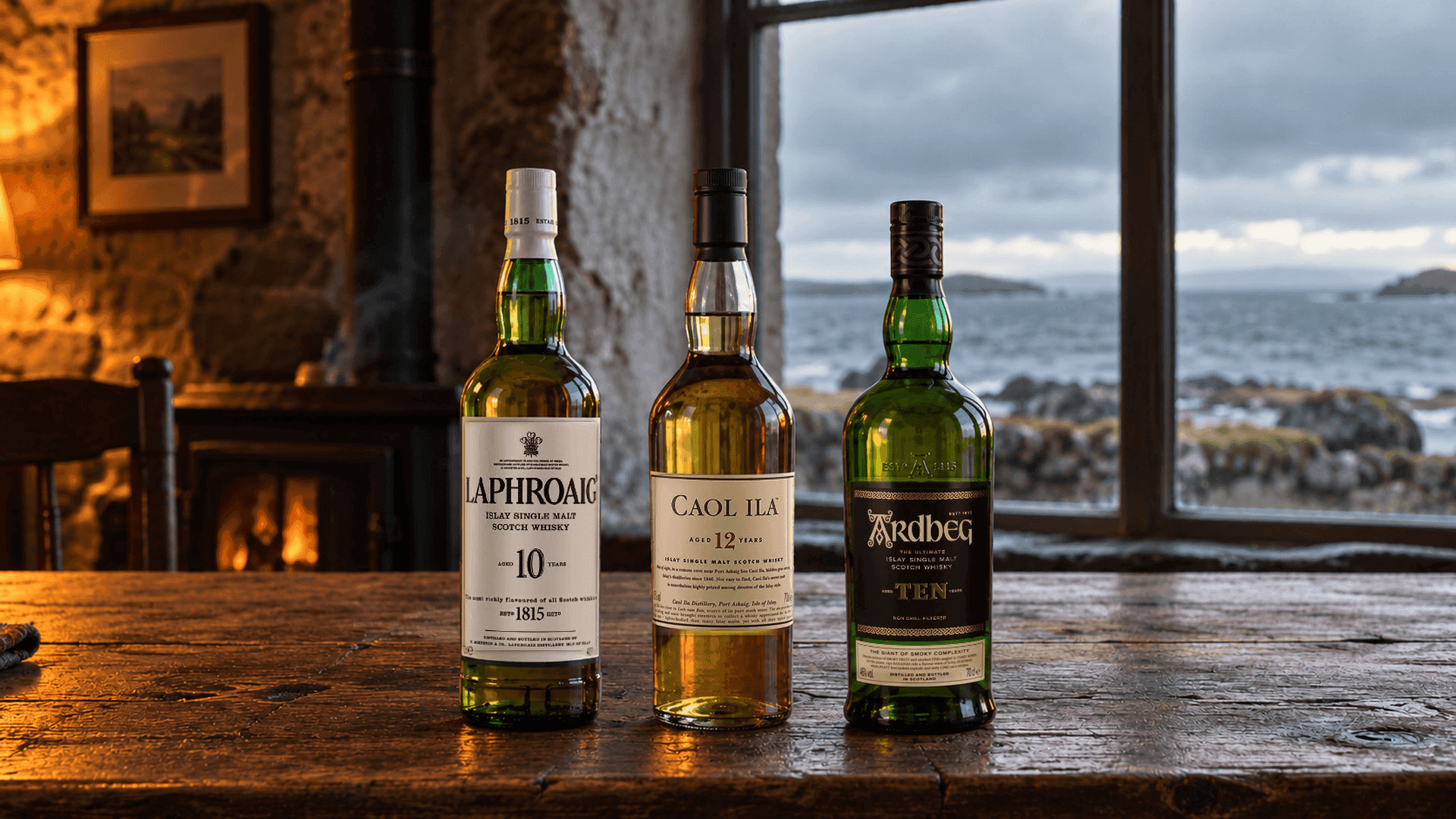
The best peated whiskies under €60 in Germany are eight widely sold single malts that usually cost between about €37 and €48, including Talisker 10, Laphroaig 10, Bowmore 12, Ardbeg 10 and Kilchoman Machir Bay. They run from the light smoke of Caol Ila 12 Years Old to the heavier, saltier styles of Ledaig 10 Years Old and Ardbeg 10 Years Old, so there is a bottle for a first taste and one for a regular smoke drinker.
Key Takeaways
Eight peated single malts are covered, and each one usually sells for under €50 in Germany in October 2026, though prices change with shops and promotions.
The ppm figure on a label measures the malted barley, not the finished whisky, so use it as a rough guide only.
Caol Ila 12 Years Old is described officially as lightly smoky, while Kilchoman Machir Bay lists a peat level of 50 ppm.
Talisker 10 Years Old is the only Skye bottle, and Ledaig 10 Years Old is the only one from the Isle of Mull.
Ardbeg 10 Years Old and Ledaig 10 Years Old are bottled at 46% ABV or a little above, stronger than the 40% of Laphroaig 10 Years Old and Bowmore 12 Years Old.
Tip: Start with a gentle bottle, such as Caol Ila 12 Years Old, whose official notes describe a light, fragrant smokiness, and move up from there. A first bottle that is too smoky can put people off peat.
How ppm Is Measured
The ppm number on a label describes phenols in the malted barley as it arrives at the distillery, not in the whisky in the glass. Phenols are lost during mashing, distillation and maturation, which is why the finished whisky always carries less than the malt did. The distillers at St. Kilian in Germany make the same point on their own site, saying that the ppm figure on a label usually refers to the phenols in the peat dried malt, although it can also refer to the new make or the bottled whisky if that is stated. For the full background, see why ppm is only a rough guide, and for the basics read what peated means.
Coastal and Inland Smoke
Where a distillery stands does not decide how smoky it tastes. Caol Ila and Lagavulin, both on Islay, differ because of fermentation, still shape, fill level and cut points. Coastal bottles do tend to be described with sea words, such as the briny sea air in Talisker's notes or the seaweed in Laphroaig's. When you read a label, look for the tasting notes first and the ppm second.
Peat Beyond Islay
Peat is not an Islay monopoly. Highland Park on Orkney floor malts about a fifth of its barley on site and fires its kilns with peat cut from Hobbister Moor, where heather roots are said to give the grain a heathery flavour. Nikka describes its Yoichi single malt in Japan as having a bold peatiness with a firm smokiness, while Suntory calls peat an essential part of all Hakushu expressions. In Germany, the St. Kilian distillery reports that its Scottish peated malt measured 54 ppm by the older colorimetric method and 80 ppm of total phenols by HPLC, which shows how the testing method changes the number. All eight bottles below are Scotch single malts.
Caol Ila 12 Years Old Offers Light, Fragrant Smoke at 43% ABV
Caol Ila 12 Years Old is an Islay single malt bottled at 43% ABV. Its official tasting notes describe a subdued, citric fruitiness on the nose, a sweet start on the palate with a light, fragrant smokiness, and a lingering, sweetly smoky finish. It usually sells for around €44 in Germany.
That gentle profile is the reason to pick it. Caol Ila suits someone who wants to test the water with Islay whisky. The producer suggests serving it neat in a rocks glass, with ice or with a splash of water.
Bowmore 12 Years Old Pairs Lemon and Heather Honey With Soft Smoke at 40% ABV
Bowmore 12 Years Old is matured in American oak former bourbon barrels together with European oak Oloroso sherry casks and bottled at 40% ABV, the strength German retailers list. Bowmore describes fresh lemon juice and heather tinged honey on the nose with a soft, earthy smokiness, flakes of dark chocolate on the palate and a lingering, sweet puff of smoke in the finish. It usually sells for around €40 in Germany.
It is a good first step for drinkers who like sweetness and fruit with their smoke. In the official notes the smoke supports the fruit and sweetness rather than leading.
Talisker 10 Years Old Brings Briny Sea Air and Pepper From Skye at 45.8% ABV
Talisker 10 Years Old is the only Isle of Skye whisky on this list. It is double distilled, aged for at least a decade in American oak and bottled at 45.8% ABV, as listed by retailers. The official notes describe intense peat smoke, a touch of briny sea air and citrusy sweetness on the nose, dried fruit sweetness and heavy smoke on the palate, and a long, warming finish with pepper. It usually sells for around €37 in Germany, which makes it the cheapest bottle here.
Talisker is a sensible pick for people who want smoke and pepper in the same glass.
Lagavulin 8 Years Old Began as a 200th Anniversary Release and Is Bottled at 48% ABV
Lagavulin 8 Years Old was first released in 2016 as a limited edition for the distillery's 200th anniversary and was later added to the permanent range, according to reviewer and retailer descriptions. At 48% ABV, those descriptions mention milk chocolate and lemon on the nose, mint and dark chocolate on the palate, and a long, smoky finish. It usually sells for around €48 in Germany, though some marketplaces list it lower.
It suits a buyer who is curious about Lagavulin but wants to stay under €60, because the 16 Years Old usually sells for around €70 or more.
Ledaig 10 Years Old Is the Island Alternative to Islay at 46.3% ABV
Ledaig 10 Years Old is the peated single malt from Tobermory Distillery on the Isle of Mull. The distillery lists it at 46.3% ABV, non chill filtered and with natural colour. Its notes describe a sweet, briny smokiness with soft peat on the nose, sweet and medicinal flavours with spicy pepper and dried fruit on the palate, and a finish of white pepper, liquorice and clove. It usually sells for around €47 in Germany.
Tobermory Distillery makes both the fruity, unpeated Tobermory and the smoky, peated Ledaig. It suits Islay fans who want an island malt with a briny, spicy side.
Laphroaig 10 Years Old Is Matured for 10 Years in Former Bourbon Barrels
Laphroaig 10 Years Old spends 10 years in former bourbon barrels, and the distillery's notes describe peat smoke and seaweed on the nose, surprising sweetness with hints of salt on the palate and a long finish with a sweet seaweed afterglow. Laphroaig's own FAQ says its classic 10 year old is brought down to 40%, which matches German retailer listings, though other markets may differ. It usually sells for around €40 in Germany.
Laphroaig is a bold Islay style. It suits drinkers who already enjoy peat smoke and seaweed, and the price makes it a low risk way to find out.
Ardbeg 10 Years Old Is Non Chill Filtered at 46% ABV
Ardbeg 10 Years Old is bottled at 46% ABV without chill filtration, according to retailer and database listings. Those descriptions mention lemon and lime, cinnamon spiced toffee and black pepper on the palate, and a long, smoky finish. It usually sells for around €44 in Germany.
It is the bottle for a buyer who wants strong smoke with citrus and sweetness around it.
Kilchoman Machir Bay Lists 50 ppm Malt and Mixes Bourbon and Sherry Casks
Kilchoman Machir Bay is a vatting of Kilchoman whisky matured in bourbon and sherry casks, with a high share of bourbon barrels. The distillery lists its peat level at 50 ppm and names it after a beach on Islay. Retailers list it at 46% ABV, and it usually sells for around €45 in Germany. The official notes describe lemon zest, vanilla, peaches and pears on the nose, tropical fruit, sultanas and warming smoke on the palate, and a finish of black pepper, sea salt and maritime peat smoke.
Machir Bay is for drinkers who want more fruit and freshness with their smoke.
Tip: Prices for all eight bottles move with promotions, bottle designs and shipping, so compare the final price including delivery before you buy. Treat the figures here as a guide to the band, not a quote.
FAQ
Which peated whisky under €60 is best for beginners?
Caol Ila 12 Years Old is a sensible first pick. Its official notes describe a subdued, citric nose and a light, fragrant smokiness on the palate, and it usually sells for around €44 in Germany.
Does a higher ppm mean a smokier whisky?
Not always. The ppm figure measures phenols in the malted barley, and some are lost in mashing, distillation and maturation. Cut points, stills and casks also change how smoky the whisky tastes.
Is Lagavulin 16 Years Old under €60?
It usually sells for around €70 to €76 in German shops in October 2026, which is why this list uses Lagavulin 8 Years Old, bottled at 48% ABV and usually around €48, instead. Check current prices because they change.
Which bottle on this list has the most peat?
Kilchoman states a peat level of 50 ppm for Machir Bay on its official page. For the other bottles, compare the official tasting notes rather than a ppm figure.
Are these prices fixed?
No. Each price is what the bottle usually sells for in Germany in October 2026 at established retailers. Promotions, bottle designs and shipping costs can move them up or down.
- Key Takeaways
- Caol Ila 12 Years Old Offers Light, Fragrant Smoke at 43% ABV
- Bowmore 12 Years Old Pairs Lemon and Heather Honey With Soft Smoke at 40% ABV
- Talisker 10 Years Old Brings Briny Sea Air and Pepper From Skye at 45.8% ABV
- Lagavulin 8 Years Old Began as a 200th Anniversary Release and Is Bottled at 48% ABV
- Ledaig 10 Years Old Is the Island Alternative to Islay at 46.3% ABV
- Laphroaig 10 Years Old Is Matured for 10 Years in Former Bourbon Barrels
- Ardbeg 10 Years Old Is Non Chill Filtered at 46% ABV
- Kilchoman Machir Bay Lists 50 ppm Malt and Mixes Bourbon and Sherry Casks
- FAQ
About the author

Christopher Deutsch
I drink and collect with intention, drawn to the sherried depth of Dalmore and the balance of Yamazaki.
To the author