

Reach thousands of whisky and spirits lovers every day.


7 English Whiskies Worth Knowing After the New Protected Name
 by Max RinkI’m a whisky enthusiast and aspiring writer, exploring new flavours and the stories behind every bottle.
Follow Spiritory on Google News to get our latest guides and releases delivered straight to your feed.
7 English Whiskies Worth Knowing After the New Protected Name
The seven English whiskies worth knowing right now come from Cotswolds, Bimber, The Lakes, Spirit of Yorkshire, White Peak, Cooper King and The London Distillery Company, each with a different location, cask style and story. English Whisky became a protected name on 1 October 2026, so these are distilleries to know as bottles start to carry it, and this guide follows our explainer on what English Whisky means under the new protected name.
Key Takeaways
The seven distilleries sit across England, from Cumbria and Yorkshire to Derbyshire, the Cotswolds and London.
Most of these bottles were released before the protected name existed, so the label may not say English Whisky. Ask the producer how a bottle relates to the specification.
Cask style varies widely: Port and Bourbon, Oloroso and Pedro Ximénez, Tawny Port barriques and sherry octaves.
Strengths run from 48% to 59.8% ABV, so check the label before you pour.
One of the seven is a rye whisky, which shows that English whisky is not only single malt.
Tip: Do not assume an English distillery means the bottle follows the new rules. Read the label for the category and age, and check the producer's site for how that specific release was made. The rules are explained in what English Whisky means under the new protected name.
The Cotswolds Wychwood Harvest Edition Is a Limited Release of 1,500 Bottles
The Cotswolds Distillery was founded in 2014 by Dan Szor and sits in Stourton, near Shipston on Stour. Its first single malt came out in 2017, and the barley is grown on Cotswold farms and malted at Warminster Maltings. Szor is also named as chair of the English Whisky Guild, which applied for the protected name.
The Wychwood Harvest Edition was announced on 17 October 2025. It is bottled at 50% ABV from a parcel of Port and Bourbon casks laid down nearly ten years earlier, and Alice Pearson, one of its distillers, helped select the Port casks. The distillery limited it to 1,500 bottles. Reported tasting notes mention stewed berries, blackcurrant and dark fruit compote, with soft vanilla from the Bourbon casks and a gentle wisp of peat.
It suits drinkers who like a fruit forward style. It was released before the name was protected, so ask the distillery how it relates to the specification.
Bimber Floor Malts Its Barley and Ferments for Seven Days in London
Bimber is a London distillery founded in 2015 by a couple who moved from Poland to London in 2003. Trade reports say its barley is floor malted at Warminster Maltings, that it ferments for seven days and that it distils in direct fired pot stills. Its first edition was distilled in 2016.
The Bimber 2018 Small Batch carries the distillery name and the year 2018, and its listed strength is 51.8% ABV. That makes it a young whisky from a distillery founded in 2015, which is part of the appeal for people who like to follow a new producer from the start.
It suits curious drinkers who want an English single malt from a city distillery rather than a country estate. Bimber releases vary a lot from batch to batch, so read the label of the exact bottle. A 2018 date also predates the protected name, so ask the producer about its status.
The Lakes Whiskymaker's Reserve No.6 Was Matured in Oloroso, Pedro Ximénez and Red Wine Casks
The Lakes Distillery is in Cumbria and has used a series of Whiskymaker's Reserve releases to define what it calls a signature style. The Whiskymaker's Reserve No.6 is reportedly the penultimate release in that series.
The whisky is bottled at 52% ABV, non chill filtered and with natural colour. It was matured in bespoke Oloroso, Pedro Ximénez and red wine casks made from Spanish and American oak. The distillery describes exotic spice notes and a gentle rose fragrance.
It suits anyone who enjoys sherry and wine cask whisky and wants to see how an English distillery handles it. It was bottled in 2023, well before the protected name, so the label will not follow the new rules. That says nothing about quality.
Filey Bay Uses Barley Grown on a Family Farm in Yorkshire
Spirit of Yorkshire Distillery stands in Hunmanby, between Bridlington and Filey. It was founded in 2016 by Tom Mellor and David Thompson, and its barley grows on a nearby farm that has been in the Mellor family since 1945. Milling, mashing and fermentation take place at the Wold Top brewery, a couple of miles away, and the distillery runs two copper pot stills and a four plate column still.
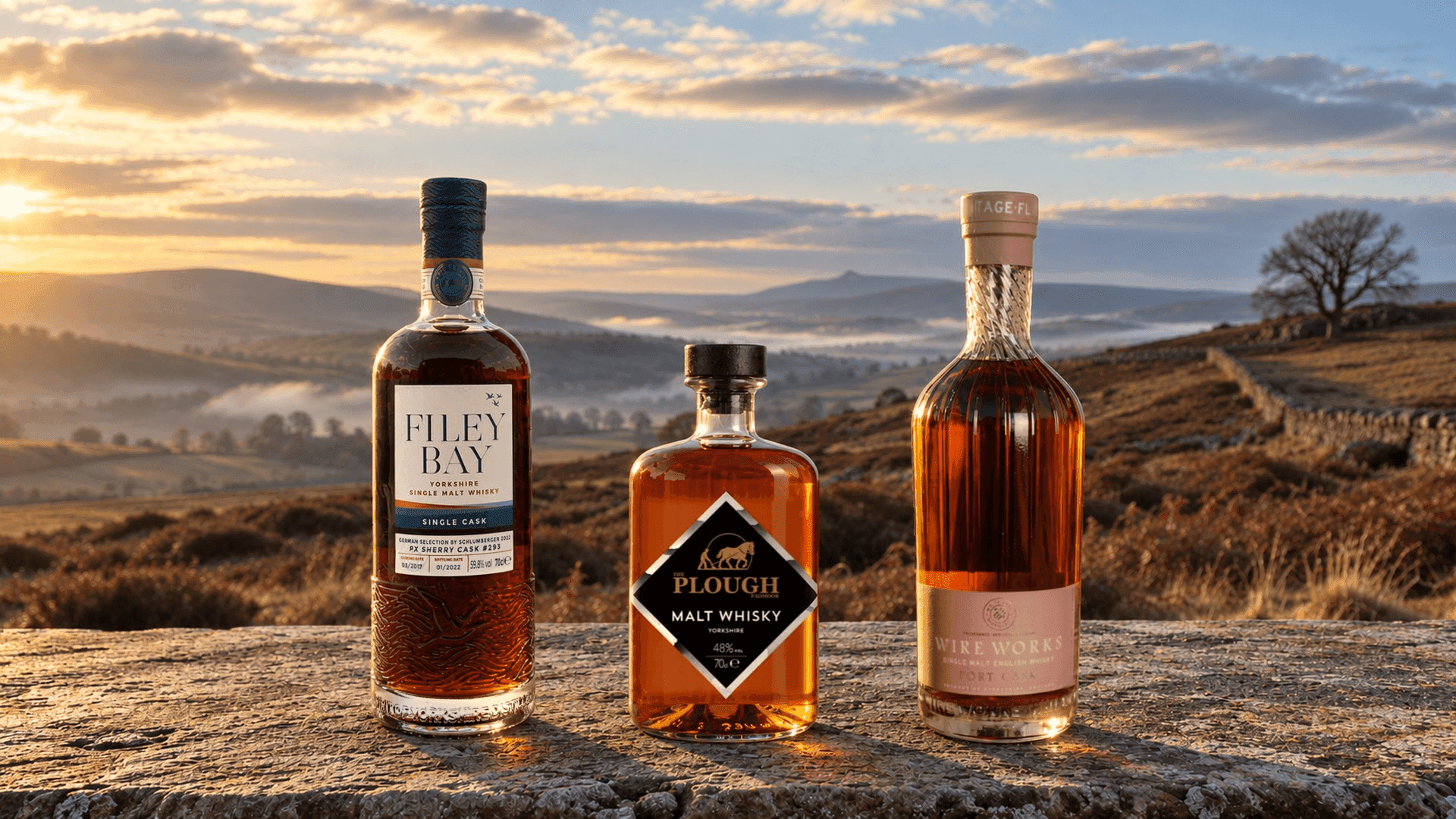
Its first release was Filey Bay Flagship in 2019. The Filey Bay 2017 is listed on Spiritory as distilled in 2017 and bottled in 2022 at 59.8% ABV, which the listing describes as showing the distillery's early maturation character.
It suits drinkers who want a farm to bottle story and are comfortable with high strength. Because mashing happens off the distillery site, it is a good example of why the rules on where each step happens matter, and the Scotch Whisky Association appeal covered in our explainer touches on exactly that point.
White Peak Wire Works Port Cask Combines Tawny Port Barriques and First Fill Ex Bourbon Barrels
White Peak Distillery works from the Wire Works in Derbyshire, on the banks of the River Derwent. Its stills are traditional copper pot stills, designed in house and hand built in Scotland.
The Wire Works Port Cask became available on 17 October 2025 as the third release in the Wire Works Provenance Core Range, alongside Caduro and Bourbon Barrel. It is a vatting of fresh Tawny Port barriques from Dias Cooperage and first fill American oak barrels that held bourbon. It is bottled at 50.2% ABV, non chill filtered, with natural colour.
The distillery describes Bakewell pudding and milk chocolate on the nose, strawberries and cream with marzipan on the palate, and cherry pie filling with bonfire toffee in the finish. It suits people who like a dessert style dram with a clear Port influence, and as a Core Range bottle it is easier to compare with later batches than a one off.
Cooper King The Plough Sends £10 From Every Bottle to a Village Pub
Cooper King Distillery is in Sutton on the Forest, near York. Its whisky is made from floor malted heritage grains, hand mashed, long fermented and distilled in copper pots, according to the distillery.
The Plough is a special edition made with a community pub in Fadmoor, Yorkshire, that local residents are reviving. The distillery donates £10 from each bottle sold to the pub's renovation. It is bottled at 48% ABV, and the distillery does not name the cask types on its product page.
Its notes list maple syrup, rum and raisin ice cream and sticky prunes on the nose, muscovado, marmalade and liquorice root on the palate, and coffee crema, chocolate cherries and tobacco in the finish. It suits buyers who like a bottle with a story and a rich, sweet profile. It is a 2026 release, so ask Cooper King how it sits against the new specification.
The London Distillery Company Yesteryear Is a Six Year Old Rye, Not a Malt
Not every English whisky is single malt, and this one shows why the new categories matter. The London Distillery Company's Yesteryear is described as a six year old single London rye whisky, made from 100% Warminster Rye.
The Yesteryear began as spirit laid down in English oak in October 2014. It then spent 18 months in first fill sherry octaves and six months in a refill sherry quarter cask. It is bottled at 52.3% ABV, and the launch listed 188 bottles. The company was bought by Gleann Mòr Spirits, which inherited the whisky with the purchase.
The Defra specification sets separate categories, including Malt, Grain and Malted Grain, each with its own labelling rules, so the category on a rye label matters. It suits drinkers who want something different from barley, with a spicy rye character and sherry influence. As with the others, check the label and ask the producer how it relates to the name.
Tip: Pick a bottle by cask style first, such as Port, sherry or Bourbon, and by strength second. A 48% bottle and a 59.8% bottle behave very differently, and a drop of water can help at the higher end. For more distilleries outside the usual regions, see the best distilleries from new whisky regions.
FAQ
Is every bottle on this list English Whisky under the new name?
Not necessarily. English Whisky has been a protected name since 1 October 2026, but most of these bottles were released earlier. Whether a bottle meets the specification is something the producer states.
Which English whisky is a good starting point?
The White Peak Wire Works Port Cask is a Core Range bottle at 50.2% ABV with a clear Port influence, and The Lakes Whiskymaker's Reserve No.6 shows sherry and wine cask maturation at 52% ABV.
Are all English whiskies single malt?
No. The London Distillery Company Yesteryear is a six year old rye whisky, and the Defra specification also has categories for grain whisky.
Does the new name say anything about quality?
No. It describes where and how a whisky is made, not how good it tastes.
Where can I read the official rules?
The product specification and decision notice are on GOV.UK, published by Defra, and the English Whisky Guild publishes news on the name.
- Key Takeaways
- The Cotswolds Wychwood Harvest Edition Is a Limited Release of 1,500 Bottles
- Bimber Floor Malts Its Barley and Ferments for Seven Days in London
- The Lakes Whiskymaker's Reserve No.6 Was Matured in Oloroso, Pedro Ximénez and Red Wine Casks
- Filey Bay Uses Barley Grown on a Family Farm in Yorkshire
- White Peak Wire Works Port Cask Combines Tawny Port Barriques and First Fill Ex Bourbon Barrels
- Cooper King The Plough Sends £10 From Every Bottle to a Village Pub
- The London Distillery Company Yesteryear Is a Six Year Old Rye, Not a Malt
- FAQ
About the author

Max Rink
I’m a whisky enthusiast and aspiring writer, exploring new flavours and the stories behind every bottle.
To the author