

Reach thousands of whisky and spirits lovers every day.


What Is English Whisky? The New Protected Name Explained
 by Christopher Deutsch I drink and collect with intention, drawn to the sherried depth of Dalmore and the balance of Yamazaki.
Follow Spiritory on Google News to get our latest guides and releases delivered straight to your feed.
What Is English Whisky? The New Protected Name Explained
English whisky is whisky made in England under a protected geographical indication that the Secretary of State for Defra approved, with protection starting when the name was entered on the register on 1 October 2026. Under the approved specification it must be made from cereal grown in the UK, distilled and matured in England for at least three years in wooden casks of no more than 700 litres, and bottled at 40% ABV or higher.
Key Takeaways
Only whisky made to the approved specification may be sold as English Whisky or English Whiskey, and the rules cover mashing, fermentation, distillation and at least three years of maturation, all in England.
Cereal must be grown in the UK, not necessarily in England, because the specification notes that some distilleries sit close to the Scottish border.
Plain caramel (E150a) is the only permitted additive, and only for colour. The finished colour should not go beyond what maturation casks can give.
Labels must state a category such as Malt English Whisky or Grain English Whisky, and the word Single means one distillery site.
An appeal has been reported, so the final shape of the rules may not be settled yet. Check GOV.UK and the English Whisky Guild for current details.
Tip: Look for the category on the front label, such as Malt English Whisky or Grain English Whisky. The specification requires the category to be stated, so a missing one is a reason to ask the seller.
What Rules Does the English Whisky Name Set?
The rules sit in a product specification published by Defra, the UK government department that acts as the competent authority for spirit drink geographical indications. The English Whisky Guild applied for the name, and the specification lists the following requirements.
The cereal must be grown in the UK, and the water must come from a supply local to the distillery for mashing and distilling.
The mash, the fermentation and the distillation must all happen in England, with every distillation below 94.8% ABV so the spirit keeps the aroma and taste of its raw materials.
The spirit must mature in England for at least three years in wooden casks of no more than 700 litres.
The finished whisky must be at least 40% ABV, with no added alcohol, no sweetening and no flavouring.
Two details stand out. Maturation must stay in England, so the specification prohibits exporting casks of English Whisky. Bottling, however, may take place outside England once maturation is complete, provided the whisky travels in inert bulk containers and is covered by company controls and official verification.
The wood does not have to be oak. The specification speaks of wooden casks, such as oak but not limited to it. HMRC is named as the inspection body.
How Did English Whisky Get Its Protected Name?
The English Whisky Guild applied in February 2022. Defra published the application on 19 February 2025, which opened a period in which others could oppose it. According to Defra's decision notice, it received seven notices of opposition. Three were inadmissible and four were admissible.
The main point of contention was a rule requiring copper stills for malt whisky. Several objectors said it would rule out stills made of other materials. The applicant amended the wording to require sufficient copper contact in the vapour path instead of wholly copper stills. Agreement was still not reached with all objectors, so the Secretary of State decided on registration, concluding that the conditions were met.
Dan Szor is chair of the English Whisky Guild. Morag Garden, the Guild's chief executive, called the grant a landmark achievement. English whisky now joins Scotch, Welsh and Irish whisky as a protected name, and more than 70 distilleries are reported to operate in England, up from 46 in 2023.
What Does a Label Have to Say?
The specification sets labelling rules as well as production rules. The category must appear on the container, and it comes in two forms: Malt English Whisky and Grain English Whisky.
Malt and Grain
Malt English Whisky is made from 100% malted barley, batch distilled at least twice, with at least one distillation in a pot still that has sufficient copper contact in the vapour path. Grain English Whisky covers whisky made with other cereal or with some unmalted grain. Where a mash uses malted grains other than barley, the term Malted Grain English Whisky can be used.
Single and Blended
Single means all of the whisky was distilled at one distillery site, possibly in several batches. Blended means whisky from more than one distillery site. Pure Malt is a prohibited description, to avoid confusing buyers.
Age and distillation year
An age or maturation period may only refer to the youngest component and must be stated in years. A distillation year can appear only if all of the whisky was distilled in that single calendar year, and the label must also give the bottling year, the maturation period or the age in the same field of vision. For more on age labels, see what a no age statement label means.
How Do the English Rules Compare With Scotch?
The two share a core. Both require at least three years of maturation in casks of no more than 700 litres. The differences lie elsewhere.
Grain is one. Single malt Scotch can use barley from outside Scotland, while the English specification requires cereal grown in the UK. Casks are another. The English specification allows woods other than oak, and for Malt English Whisky it requires the type of wood to be named on the front label when oak is not used.
The English text also shows how a young category thinks about itself. It describes English whisky as a New World style, with an emphasis on young whisky of three to five years, batch releases and limited editions rather than age statements. That is the Guild's own description in the specification, not a ruling on quality. For other categories finding their own identity, see Which New Whisky Regions Could Shape the Future?.
What Does the Colour Rule Allow?
Plain caramel (E150a) is the only additive the specification allows, and only for colour. It may not be used for flavouring or sweetening. The text says colour comes mainly from the maturation cask, with English whisky ranging from pale yellow to dark amber or mahogany.
The specification also sets a limit. Any colour adjustment should not push the whisky beyond the natural range that casks can produce, from new casks through to wine, sherry and port casks. It gives the reason that many distilleries want a consistent colour across batches and years, and that very small quantities of E150a can achieve this. Where caramel colouring is added, it must be added in England.
The rule does not ban caramel. It confirms that E150a is allowed, caps what it may do, and puts it in writing for the English category.
What Is Still Open?
The decision notice allowed an appeal to the First tier Tribunal until 5 p.m. on 8 October 2026. On 8 October the Scotch Whisky Association was reported to have appealed, arguing that the English single malt definition is less strict than the Scotch one and that the GI lets single malt be mashed and fermented away from the distillery. It was also reported that the Irish and Welsh whisky associations signed the appeal and that Defra has until 5 November to respond. No outcome had been reported as of 20 October 2026.
Two practical points follow. First, the name protects English whisky as a category, but it says nothing about quality, and a bottle from an English distillery is not better or worse because of it. Second, the specification and decision notice do not describe a transition period for bottles made before the name was registered. Whether a particular older release meets the specification is something the producer states. The Guild's Tagore Ramoutar said the next challenge is to help English whisky makers transition to the GI.
How Can You Check an English Whisky?
Start with the label. Look for the category, the distillery and any age shown in years. Then check the producer's own site for how the whisky was made, because the specification covers raw materials, location and maturation, not taste.
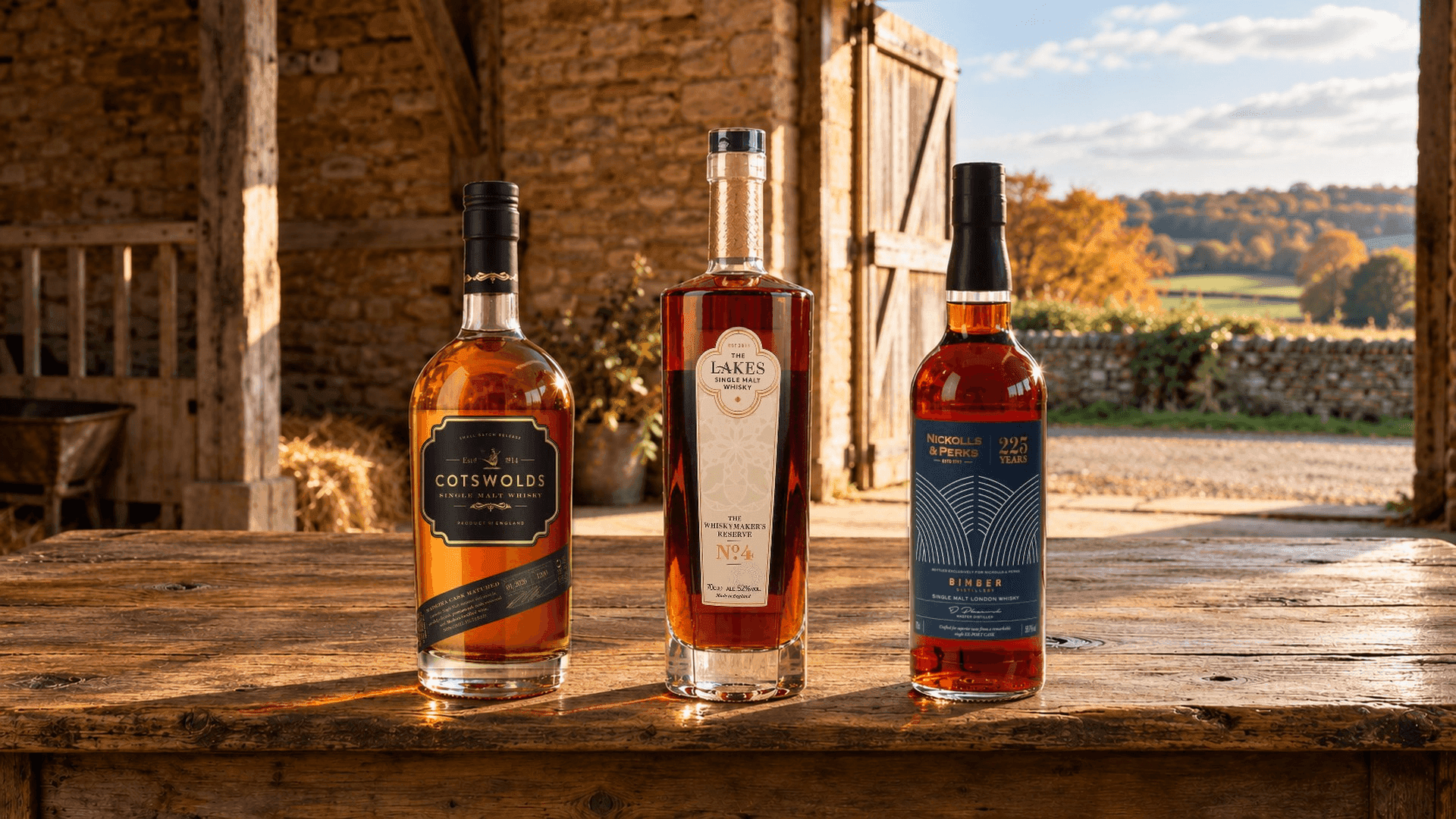
Spiritory lists bottles from English distilleries, for example a Bimber 5 year old from 2017, a Cotswolds Distillery edition, a Filey Bay release from Spirit of Yorkshire, a White Peak Wire Works release and a Whiskymaker's Reserve from The Lakes Distillery. Whether any given release was made to the new specification depends on when it was made and filled, so read the label and ask the producer when it matters to you.
For the official text, read the product specification and decision notice on GOV.UK, published by Defra. The English Whisky Guild also publishes news on the name on its own website.
Tip: Treat an older English bottle as a product of its time. The GI describes how whisky is made from now on, so check the producer for details on a specific release before you assume it fits the rules.
FAQ
Is English whisky now a protected name?
Yes. Defra approved English Whisky and English Whiskey as a geographical indication, and the notice set the register entry for 1 October 2026. An appeal has been reported, so check GOV.UK for the current position.
How long must English whisky mature?
At least three years, in England, in wooden casks of no more than 700 litres. The casks do not have to be oak.
Can English whisky contain colouring?
Yes, but only plain caramel (E150a), and only for colour. The specification says the colour should not go beyond what maturation casks can give.
Does the grain have to come from England?
No. The cereal must be grown in the UK. The specification explains that some distilleries are near the Scottish border and that maltings do not keep individual loads of grain separate.
Can English whisky be bottled outside England?
Yes. Bottling may take place outside England after maturation, using inert bulk containers, but casks of English Whisky may not be exported.
About the author

Christopher Deutsch
I drink and collect with intention, drawn to the sherried depth of Dalmore and the balance of Yamazaki.
To the author