

Reach thousands of whisky and spirits lovers every day.


Whisky Collecting in Germany: Tax, VAT, and Storage Explained
 by Christopher Deutsch I drink and collect with intention, drawn to the sherried depth of Dalmore and the balance of Yamazaki.
Follow Spiritory on Google News to get our latest guides and releases delivered straight to your feed.
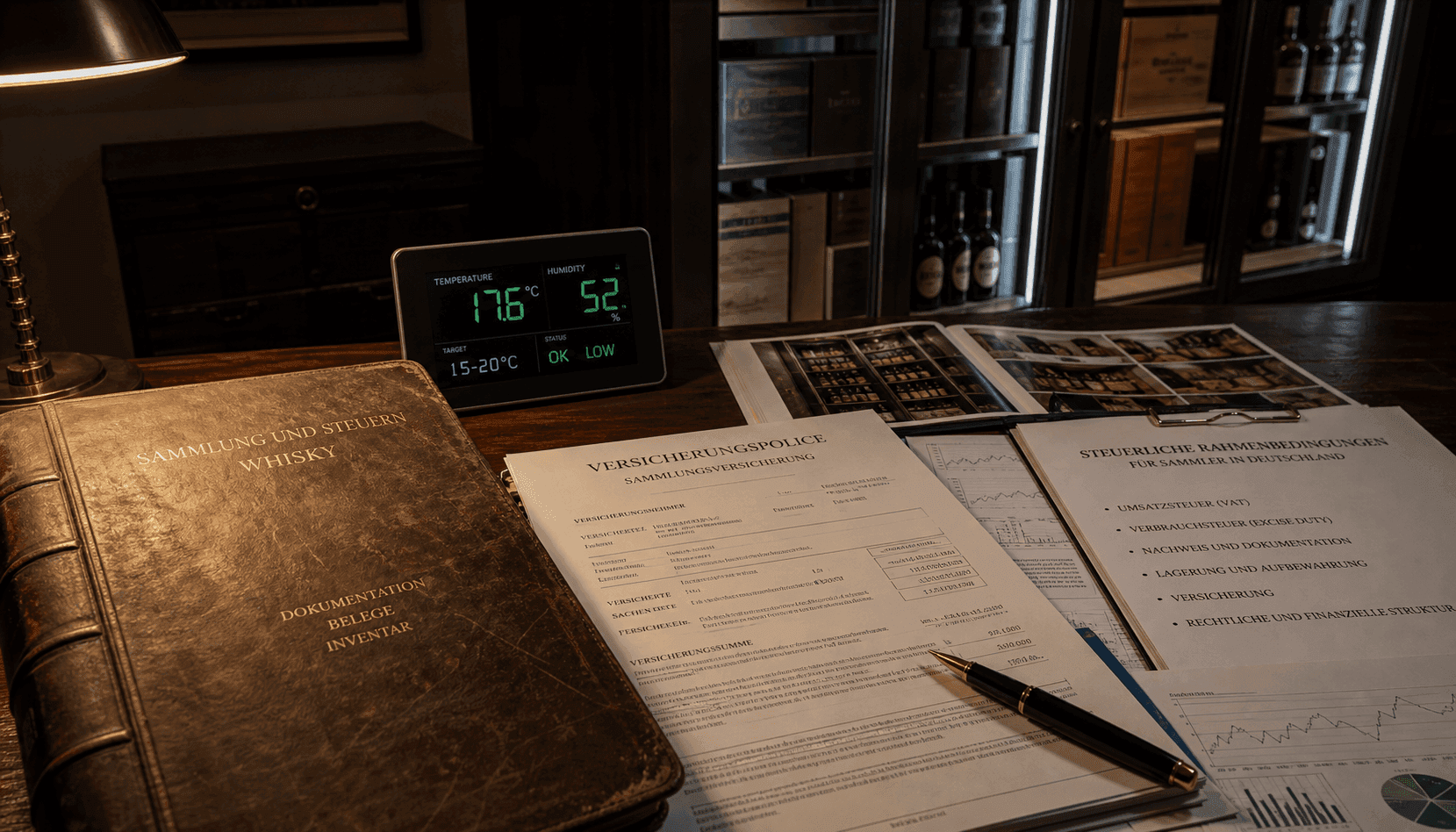
Whisky Collecting in Germany: Tax, VAT, and Storage Explained
Key Takeaways
German VAT at the standard rate applies to spirit purchases. Collectors should factor this into total acquisition cost when comparing domestic and cross-border prices.
Excise duty on spirits is already included in the retail price. Collectors buying sealed bottles from authorised retailers carry no separate duty liability.
Private collection resale occupies a nuanced position in German tax law; gains from systematic selling can be treated as taxable income if the activity crosses into commercial territory.
Storage conditions matter practically as well as for insurance purposes; bottles stored as investment assets have different documentation requirements than personal consumption stock.
Cross-border purchases from within the EU generally do not incur additional duties but carry VAT implications depending on the transaction structure.
Professional advice from a tax specialist familiar with both spirits and collectables is recommended for collectors maintaining portfolios above a significant value threshold.
The German Tax Framework for Spirits
How Spirits Are Taxed at Point of Sale
When a consumer in Germany purchases a bottle of whisky from a retailer, whether a specialist shop, supermarket, or online store, the price paid includes both the standard VAT rate and the applicable excise duty (Alkoholsteuer). These taxes are embedded in the retail price and are not separately itemised on a standard consumer receipt. For the collector buying for personal consumption, this is simply the cost of the bottle: there is no additional tax administration required at the point of purchase.
The standard German VAT rate applies to whisky. For collectors who are VAT-registered businesses, some retail purchases may be eligible for VAT reclaim in the context of legitimate commercial activity, but for private collectors, the price paid is the all-in cost.
Excise Duty and What It Means in Practice
Germany levies an alcohol excise tax on distilled spirits, calculated per litre of pure alcohol. Like VAT, this duty is paid along the supply chain and is reflected in the retail price. A collector purchasing a sealed bottle from a retailer has no ongoing duty liability: the tax obligation was discharged at the point of production and sale. The practical implication is that the price differential between German domestic retail and cross-border purchases reflects not ongoing duty exposure, but the structural cost of the supply chain.
Tip: When comparing the price of a bottle on a secondary market platform against domestic retail, ensure you are comparing on a like-for-like basis, checking whether shipping, insurance, and applicable VAT adjustments are included in both numbers before drawing conclusions.
VAT on Cross-Border Purchases
Buying from Within the EU
For collectors purchasing from sellers or platforms based within the European Union, the relevant VAT framework depends on whether the seller is a business or a private individual and whether the platform operates as an intermediary. In practice, most EU-based spirits marketplaces charge VAT at the applicable rate and handle the compliance themselves. German collectors should check whether the displayed price is inclusive or exclusive of VAT, particularly when purchasing from platforms based outside Germany but within the EU.
Buying from Outside the EU
Purchases from UK-based sellers (post-Brexit) or other non-EU vendors require careful attention to import VAT and customs duty. Bottles imported into Germany from outside the EU are subject to import VAT and may attract customs duty depending on the applicable trade agreement. A collector importing a single bottle for personal use is in a different position to one importing commercially, but the paperwork and cost implications of cross-border purchasing outside the EU should be understood before placing orders.
The Resale Question: When Collecting Becomes Trading
Private Sale vs. Commercial Activity
German tax law distinguishes between the occasional private sale of personal property and systematic commercial activity. A collector who buys whisky for personal enjoyment and occasionally sells bottles from their collection is generally in a different category from one who is systematically acquiring bottles with the primary intention of resale. The line is not always clear, and German tax authorities have become more attentive to the secondary spirits market as volumes and values have grown.
The general principle is that private asset sales below certain annual thresholds are not subject to income tax, but gains from speculative activity, defined partly by the frequency and systematic nature of transactions, can be treated as taxable income. Collectors who are actively trading, rather than occasionally selling, should seek advice from a Steuerberater (tax adviser) familiar with collectables and alternative assets.
Documentation Best Practices
Regardless of the tax position, maintaining clear documentation of all purchases, receipts, platform transaction records, and provenance certificates, is important for collectors building a significant portfolio. This documentation serves multiple purposes: it supports any VAT reclaim for business-registered collectors, establishes provenance for secondary market sales, and provides the audit trail necessary if questions arise about the investment nature of the collection. Platforms like Spiritory provide transaction records that contribute to this documentation trail.
Tip: Keep all purchase receipts for sealed bottles, including digital confirmations. When selling through a secondary market platform, retain the platform transaction confirmation as part of your records; this documentation matters both for tax purposes and for establishing provenance to future buyers.
Storage Considerations for German Collectors
Domestic Storage
Most German collectors store their bottles at home. The practical requirements for quality storage are well-established: bottles should be stored upright to prevent the cork from degrading in contact with high-alcohol spirit, away from direct light, and in conditions with relatively stable temperature and low humidity. A cellar, a dedicated spirits cabinet, or a cool interior room all serve this purpose. Home storage does not create additional tax or regulatory obligations for private collectors, though it may be relevant to home insurance policies if the collection reaches significant value.
Professional Storage
For collectors with portfolios above a certain value, professional storage in bonded or specialist facilities offers additional advantages. Insurance coverage is typically more straightforward to arrange, security is higher, and the provenance chain is documented in a way that supports secondary market sales. Professional storage is more commonly used for wine collections in Germany than for whisky, but specialist facilities do exist and are worth investigating for collectors managing significant holdings.
Insurance
Standard household contents insurance may not cover a whisky collection at replacement value, particularly as individual bottles increase in worth. Collectors should review their policies to understand coverage limits for collectables and, if necessary, arrange specialist insurance. Some insurers offer dedicated collectables policies that cover spirits; others treat whisky under a general collectables clause. The key questions are whether coverage extends to secondary market value and whether the policy handles sealed bottles of increasing worth appropriately.
FAQ
Do I need to pay VAT when buying whisky on Spiritory?
VAT applicability depends on the transaction structure and the location of the seller. Spiritory handles the relevant compliance for transactions carried out through its platform. If you are purchasing as a private consumer from a business seller, VAT will typically be included in the price. The platform's transaction records confirm the applicable tax treatment for each purchase.
Are whisky investment gains taxable in Germany?
The tax treatment of gains from whisky sales depends on the nature of the activity. Occasional private sales of personal property below relevant annual thresholds are generally not subject to income tax. Systematic buying and selling for profit may be treated differently. The safest approach for active collectors is to consult a tax adviser with experience in collectables or alternative assets.
What documentation should I keep for my whisky collection?
At minimum, retain purchase receipts, platform transaction records, and any provenance documentation, original box, certificate of authenticity, distillery paperwork, for all bottles. For significant individual purchases, a written description of condition at the time of acquisition is also useful. This documentation supports any future secondary market sale and ensures you can establish the cost base if tax questions arise.
Can I insure my whisky collection?
Yes. Standard home contents policies may provide some coverage, but specialist collectables insurance is often more appropriate for collections of meaningful value. Check with your insurer whether the policy covers replacement at secondary market value and whether there are per-item or aggregate limits that would leave portions of the collection underinsured.
About the author

Christopher Deutsch
I drink and collect with intention, drawn to the sherried depth of Dalmore and the balance of Yamazaki.
To the author