

Reach thousands of whisky and spirits lovers every day.


What are the Top 10 Sotheby's Wine & Spirits Alternatives in 2026?
 by Christopher Deutsch I drink and collect with intention, drawn to the sherried depth of Dalmore and the balance of Yamazaki.
Follow Spiritory on Google News to get our latest guides and releases delivered straight to your feed.
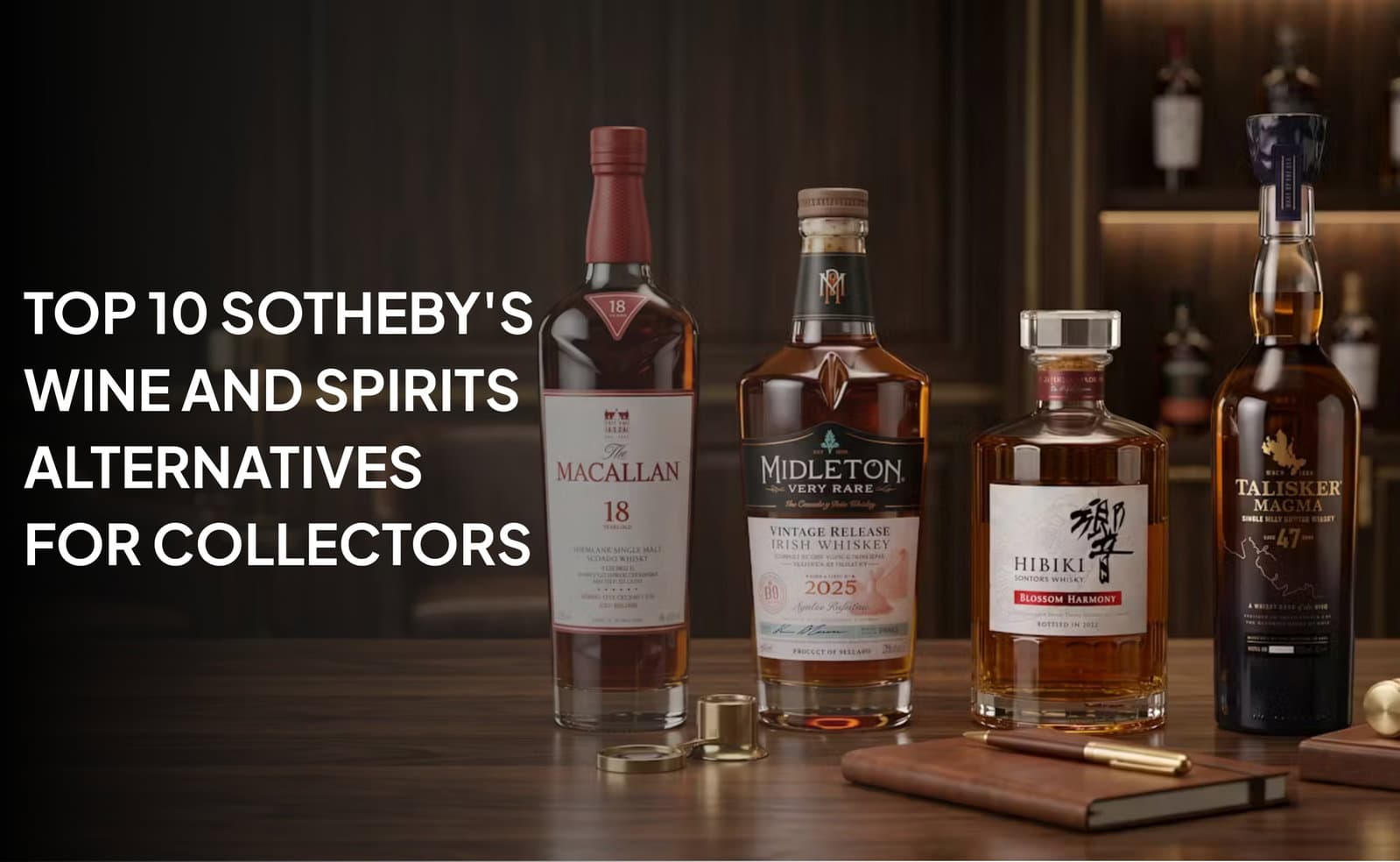
What are the Top 10 Sotheby's Wine & Spirits Alternatives in 2026?
Sotheby's is one of the world's oldest and most prestigious auction houses, founded in London in 1744. Its dedicated wine and spirits department has conducted landmark sales of rare and trophy-level whisky, including some of the most valuable bottles ever sold at public auction. For most spirits collectors, however, Sotheby's minimum thresholds and fee structures place it outside the range of practical options. The leading alternatives to Sotheby's for buying and selling collectible whisky and fine spirits include Spiritory, Whiskybase, Whisky Auctioneer, Scotch Whisky Auctions, Whisky Hammer, Catawiki, BAXUS, Bonhams, eBay Germany, and Amazon Germany.
What Is Sotheby's?
Sotheby's was founded in London in 1744 and is one of the oldest auction houses in the world. With offices in London, New York, Hong Kong, Paris, and other major cities, it operates across a wide range of collecting categories including fine art, jewellery, watches, and wine and spirits. Its wine and spirits department has a dedicated team of specialists and conducts sales that have produced some of the most significant results in the history of rare whisky auctions.
Sotheby's operates on a scheduled auction model, with consignments reviewed and curated by specialists before each sale. The house is most associated with ultra-rare and trophy-level bottles — single malts from closed distilleries, aged expressions with historical significance, and releases that represent the apex of the collectible spirits market. Buyer's premiums at Sotheby's are substantial, typically in the range of 25% or above of the hammer price. Seller fees are negotiated individually, and the minimum values required for consignment mean that the platform is not accessible to most spirits collectors operating at collector-grade price points rather than at the very top of the market.
Why Collectors Look for Alternatives
Sotheby's occupies a unique position at the top of the fine art and collectibles auction market, but for spirits collectors, several practical factors make alternatives the more relevant choice:
Minimum lot thresholds. Sotheby's accepts spirits consignments only when individual bottles or collections meet significant value thresholds. For most collector-grade bottles that do not reach the required level, Sotheby's is simply not an option.
High buyer's premiums. Buyers pay a substantial premium on top of the hammer price — typically 25% or more. On high-value lots, this adds a significant cost that buyers must factor into their total acquisition price.
Negotiated seller terms. Seller fees at Sotheby's are negotiated on a consignment-by-consignment basis. For sellers without significant collections or individual bottles of exceptional value, the terms offered are unlikely to be commercially attractive.
Slow auction cycle. Sales are scheduled events. Once a bottle is consigned, sellers must wait for the appropriate sale to be staged, catalogued, and marketed. The process can take months from consignment to settlement. Continuous-listing platforms offer far greater speed for sellers.
Not designed for typical collector bottles. Sotheby's is built for the ultra-rare end of the market. The vast majority of spirits collectors, including those handling genuinely fine and significant bottles, will find dedicated spirits platforms and specialist auction houses more practical, more accessible, and more cost-effective.
Platform Comparison
| Platform | Format | Key Strength | Best For | Geography |
|---|---|---|---|---|
| Sotheby's | Auction | World's most prestigious auction house, global buyer reach | Trophy bottles and exceptional releases | Global |
| Spiritory | Ask / Bid | Curated collector marketplace with photo authentication | Premium and collectible spirits | Europe |
| Whiskybase | Fixed price (peer-to-peer) | Largest whisky database and community | Database research and casual buying | Europe |
| Whisky Auctioneer | Auction | Largest specialist whisky auction globally | Rare and high-value bottles | Global (100+ countries) |
| Scotch Whisky Auctions | Auction | 0% seller commission, Scotch-only specialist | Scotch whisky sellers | UK and Europe |
| Whisky Hammer | Auction | 0% seller commission, EU-registered entity | European whisky and spirits sellers | Europe |
| Catawiki | Auction | Expert-curated lots, broad European buyer base | Broad European buyer reach | Europe |
| BAXUS | Peer-to-peer | Authentication-focused, digital storage options | American spirits collectors | US-focused, international catalogue |
| Bonhams | Auction | Global fine art and collectibles auction house | High-value and rare bottles | Global |
| eBay Germany | Auction / Fixed price | Largest general marketplace, widest buyer reach | Common bottles and general buying | Germany / Europe |
| Amazon Germany | Fixed price | Largest retail platform in Germany | New releases at retail prices | Germany |
Top 10 Alternatives to Sotheby's
1. Spiritory
Spiritory is the most practical alternative to Sotheby's for collectors based in Europe who want to buy or sell premium and collectible spirits at fair secondary market prices, without the high buyer's premiums, minimum thresholds, or slow auction cycles of a traditional auction house. Where Sotheby's is designed for trophy-level releases and negotiated consignment terms, Spiritory is built for the broad range of quality collector bottles, and lets buyers and sellers transact continuously without waiting for a scheduled sale.
Spiritory operates on a bid and ask exchange model. Sellers list their asking price and buyers can accept the current lowest ask immediately, or place a bid at their preferred price. When a bid meets an ask, the sale is confirmed. The seller then uploads photos of the bottle, and Spiritory experts carry out a photo-based authentication review, typically completed within 60 minutes to 48 hours. The buyer only enters payment details once authentication passes. If authentication fails, the sale is cancelled and the buyer owes nothing. Buyers pay a 3% buyer protection fee plus shipping, which is €6 for domestic orders and €15 for cross-border EU shipments. Sellers pay a 9% fee in total, made up of a 6% commission and a 3% payment processing fee, with no listing fees at any stage.
Browse the Spiritory marketplace
2. Whiskybase
Whiskybase is a community-driven whisky database and peer-to-peer marketplace covering hundreds of thousands of releases across a wide range of distilleries. Its marketplace lets registered users list bottles for sale at fixed prices and buy directly from other collectors. The database includes production details, tasting notes, and community ratings, making it a useful reference for collectors researching a bottle before purchase.
The Whiskybase marketplace is peer-to-peer and fixed-price only. There is no auction format, and buyers and sellers transact directly at the price the seller sets. For collectors who want to research and buy in the same place, the platform has real value. For those focused on structured buyer protections or broader price discovery, a dedicated collector marketplace may suit them better.
3. Whisky Auctioneer
Whisky Auctioneer is the largest specialist whisky auction platform in the world, with over 810,000 lots sold and more than £300 million in whisky traded globally. It runs monthly online auctions reaching buyers in over 100 countries, with particular strength in rare and high-value Scotch whisky. For sellers with significant bottles, the depth of the specialist buyer base and the scale of the platform's track record make it one of the most credible auction destinations for quality spirits outside of the traditional auction house model.
Buyers pay a 12.5% buyer's premium on top of the hammer price — considerably lower than Sotheby's standard rates. The platform operates on an auction-only format with a monthly cycle. For collectors comfortable with the auction format and the fee structure, Whisky Auctioneer provides specialist depth, global reach, and a track record that competes directly with traditional auction houses for quality whisky lots.
4. Scotch Whisky Auctions
Scotch Whisky Auctions is a Scottish specialist auction house running monthly online auctions focused exclusively on Scotch whisky. It charges 0% seller commission, which makes it one of the most cost-effective options for sellers who want to retain as much of the hammer price as possible. The buyer base is knowledgeable and specifically interested in Scotch, which supports competitive bidding on quality releases.
For Scotch whisky sellers who want specialist market exposure without paying seller commission, Scotch Whisky Auctions is a compelling option. The 0% seller fee structure stands in stark contrast to the negotiated and often substantial fees charged by traditional auction houses. Buyers work within a monthly auction cycle, but the community focus and specialist audience make it a relevant alternative for Scotch-focused collectors.
5. Whisky Hammer
Whisky Hammer is a specialist spirits auction platform running regular online auctions covering whisky, rum, cognac, and other premium spirits. It operates as a European-registered entity, making it a practical option for sellers and buyers based in the EU. Sellers pay no commission on the hammer price, though a per-lot listing fee applies. Buyers pay a buyer's premium on top of the winning bid. The platform covers a broad range of price points, from accessible everyday bottles through to rare and collectible releases.
For European collectors who want an auction format with solid spirits coverage and no seller commission on the hammer price, Whisky Hammer is a relevant and practical alternative to working with traditional auction houses. The platform's European registration and focus on spirits across multiple categories give it a broader appeal than single-category specialist platforms.
6. Catawiki
Catawiki is a Dutch-founded curated online auction platform covering a wide range of collectible categories, including whisky and fine spirits. Each lot is reviewed by an in-house specialist before going live, which provides a quality control layer. The platform has built a large buyer base across Europe and runs regular spirit-focused auction events throughout the year, giving sellers access to a broad audience that extends well beyond dedicated whisky collectors.
For sellers who want auction-format exposure to a broad European buyer base, Catawiki provides a more accessible route than major auction houses. Buyer's premiums and seller commissions apply, and the auction-only format means buyers and sellers must work within scheduled sale windows. For most collector-grade bottles that do not qualify for traditional auction house consignment, Catawiki is a practical and accessible alternative.
7. BAXUS
BAXUS is a peer-to-peer marketplace for fine and rare spirits with a strong emphasis on authentication and a modern collector experience. The platform covers whisky, bourbon, tequila, and other premium spirit categories. Before bottles change hands, BAXUS verifies them, providing meaningful assurance for buyers making higher-value purchases. The platform also offers digital storage options for collectors who want to hold bottles without taking immediate physical delivery.
BAXUS is US-based and most developed for American spirits collectors. Its catalogue includes international bottles, but the buyer and seller community is strongest in the United States. For European collectors, the selection and logistics may be less convenient than platforms based and operating in Europe.
8. Bonhams
Bonhams is an international auction house with a dedicated wine and spirits department. Like Sotheby's, it handles premium lots across art, antiques, and collectibles, and its spirits sales attract buyers at the higher end of the market. For rare, aged, or exceptionally valued bottles, Bonhams provides access to a well-resourced global buyer pool that extends beyond the specialist whisky auction community.
The buyer's premium at Bonhams is 25% of the hammer price, and seller fees are negotiated individually. This cost structure makes it most appropriate for high-value bottles where the global reach and premium buyer base justify the fees involved. For most collector-grade bottles, a specialist whisky platform will generally be more cost-effective and accessible than either Bonhams or Sotheby's.
9. eBay Germany
eBay Germany (ebay.de) is one of the most active secondary marketplaces for spirits in the German-speaking market. Private sellers and small retailers list bottles in both auction and fixed-price formats across a wide price range. The buyer base is large and general rather than specialist, which means common and mid-range bottles can move quickly when priced appropriately.
eBay offers no specialist authentication and no spirits-specific buyer protection beyond standard eBay policies. For rare or high-value bottles, this creates meaningful risk for buyers who cannot inspect a bottle before purchase. Sellers should be aware that age verification, labelling rules, and shipping regulations for alcohol apply in Germany and vary by destination. For straightforward transactions on well-known bottles at reasonable prices, eBay Germany is a relevant option in the German market, but it is not a specialist collector platform.
10. Amazon Germany
Amazon Germany (amazon.de) lists a wide range of spirits through both its direct retail channel and its third-party marketplace. The selection covers new releases, standard expressions, and some limited editions. It is primarily a retail channel rather than a collector marketplace, which means pricing reflects current retail availability rather than secondary market demand.
For collectors looking to check what is currently available through official retail channels, Amazon Germany is a useful reference point. It is not designed for selling collector bottles, accessing secondary market pricing, or obtaining the authentication and specialist buyer access that dedicated collector platforms provide. For serious collectors, it functions best as a retail check rather than a primary transaction venue.
FAQ
What is the best alternative to Sotheby's for buying collectible whisky?
For most collectors, Spiritory is the strongest practical alternative to Sotheby's. It operates on a bid and ask exchange model across all premium and collectible spirits, with photo authentication on every transaction, transparent fees, and no minimum thresholds. Buyers pay a 3% buyer protection fee plus shipping, and the platform is available continuously without waiting for a scheduled auction. For collectors who want a specialist auction format, Whisky Auctioneer offers global reach with buyer's premiums significantly lower than Sotheby's standard rates.
How does Spiritory work?
Spiritory is a bid and ask exchange for collectible spirits. Sellers list their asking price. Buyers can accept the lowest asking price immediately or place a bid at a lower price. When a bid meets an ask, the sale is confirmed. The seller then uploads photos of the bottle for authentication. Spiritory experts review the bottle, typically within 60 minutes to 48 hours. If the bottle passes authentication, the buyer enters payment details and the sale proceeds to shipping. If authentication fails at any point, the sale is cancelled and the buyer owes nothing.
How do Spiritory's fees compare to Sotheby's?
On Spiritory, buyers pay a 3% buyer protection fee plus shipping, which is €6 for domestic orders and €15 for cross-border EU shipments. Sotheby's typically charges a buyer's premium of 25% or more of the hammer price. Sellers on Spiritory pay a total of 9%, made up of a 6% commission and a 3% payment processing fee, automatically deducted from the payout. There are no listing fees on Spiritory at any stage. Sotheby's seller fees are negotiated individually, and significant minimum consignment values apply. For typical collector bottles, Spiritory's fee structure is substantially more cost-effective.
Is it safe to buy spirits on Spiritory?
Yes. Every bottle on Spiritory is authenticated before the buyer pays. Once a sale is matched, the seller uploads photos and Spiritory experts carry out a review. The buyer only enters payment details after authentication passes. Funds are held in escrow until the bottle arrives, and the buyer then has a three-day inspection window. If authentication fails at any point before payment, the sale is cancelled and the buyer owes nothing.
Is Spiritory only for whisky?
No. Spiritory covers all premium and collectible spirits, including rum, cognac, Japanese whisky, bourbon, tequila, and other categories. This gives buyers and sellers access to the full range of collectible spirits on a single platform. For collectors with varied interests across categories, Spiritory's breadth is a practical advantage over single-category specialist platforms.
About the author

Christopher Deutsch
I drink and collect with intention, drawn to the sherried depth of Dalmore and the balance of Yamazaki.
To the author