

Reach thousands of whisky and spirits lovers every day.


Peated or Sherried: Which Whisky Makes the Better Winter Gift?
 by Janis WilczuraI'm one of Germany's leading whisky experts, featured in Handelsblatt and BILD. To me, whisky is craftsmanship and art.
Follow Spiritory on Google News to get our latest guides and releases delivered straight to your feed.
Peated or Sherried: Which Whisky Makes the Better Winter Gift?
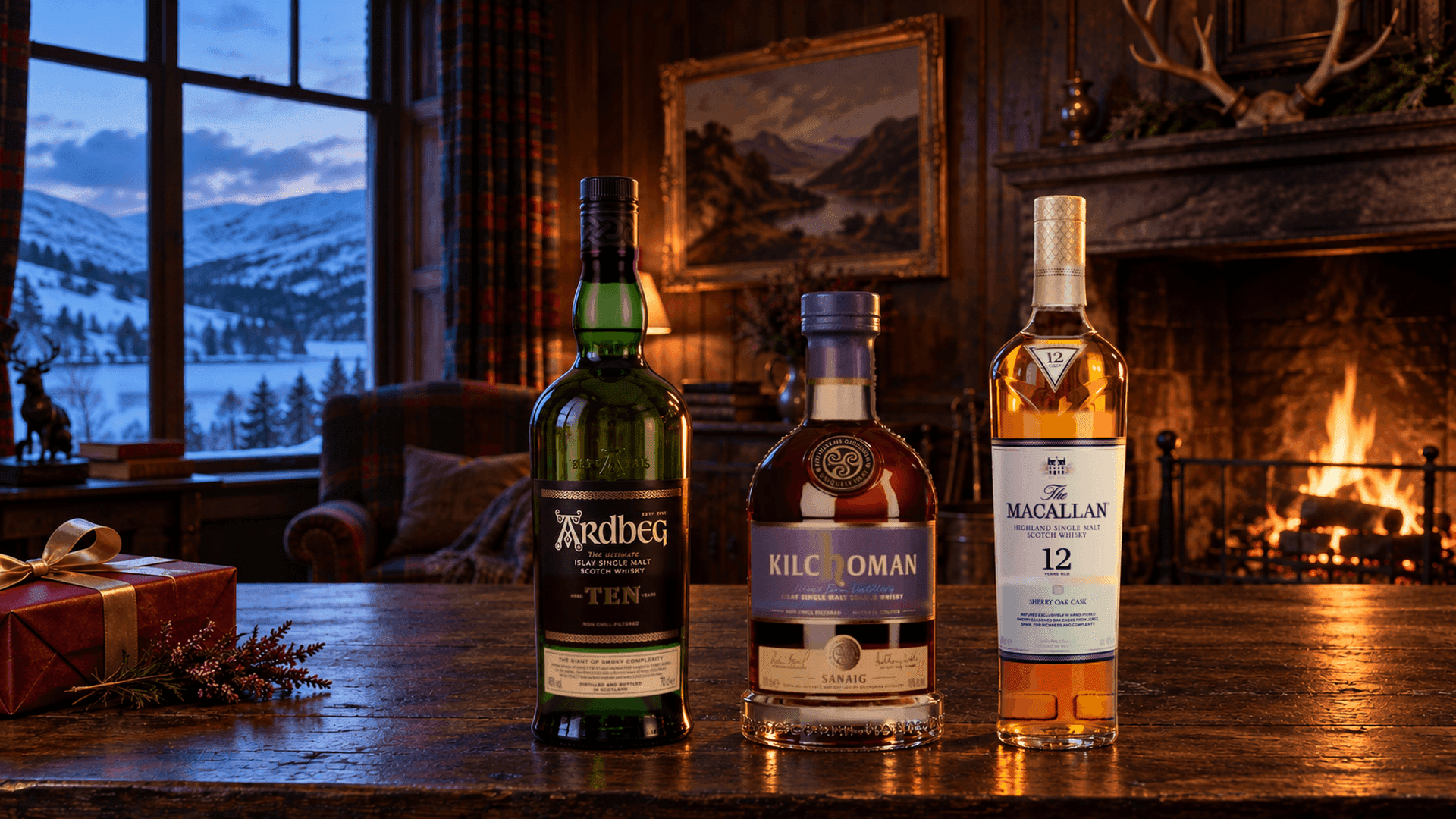
The better winter whisky gift depends on the recipient rather than on the style itself: a peated whisky such as Ardbeg 10 Years Old suits someone who already drinks bold, smoky spirits, while a sherry cask whisky such as The Macallan 12 Years Old Sherry Oak suits someone who prefers rich, fruit driven sweetness, and a handful of bottles, including Highland Park 12 Years Old, combine both styles in one whisky. Peat is measured in parts per million of phenol in the malted barley, not in the glass, while sherry cask character comes from casks previously seasoned with Oloroso or Pedro Ximénez sherry in Spain.
Key Takeaways
Peated whiskies get their smoke from phenols in malted barley, measured in parts per million, but that figure describes the malt, not how smoky the whisky tastes once it reaches the glass.
Sherry cask whiskies get their richness from casks previously seasoned with Oloroso or Pedro Ximénez sherry in Jerez, Spain, in either American or European oak.
The better gift depends on what the recipient already drinks and how they drink it, not on which style is more expensive or more talked about.
A small number of whiskies combine both styles, peated malt matured or finished in sherry casks, which works well when you are unsure which way to lean.
Below are three peated whiskies, three sherry cask whiskies and two that combine both, across a range of price points.
All eight bottles are listed on Spiritory, where stock depends on what collectors are currently offering for sale.
Tip: If you are unsure how much smoke someone can handle, a gently peated bottle such as Highland Park 12 Years Old is easier to build up from than a full strength Islay malt is to walk back.
What Peat Actually Does to a Whisky
Peated whisky gets its smoke from phenols, a family of aromatic compounds that form when malted barley is dried over a peat fire during malting. Distilleries measure the result in parts per million, or ppm, a figure that describes the phenol content of the malted barley itself, not the finished whisky in the bottle. Much of that phenol content is lost during mashing, fermentation and distillation, so a higher ppm figure in the malt does not translate directly into an equally smoky glass. Ardbeg states that its malt is peated to a minimum of 55 ppm, while Caol Ila and Lagavulin both use malt peated to around 35 ppm, yet the whiskies taste noticeably different from each other because still shape, cut points and cask maturation all shape the result as much as the malt specification does. For a fuller explanation of why more smoke on paper does not always mean more flavour in the glass, see The PPM Myth.
What Sherry Casks Actually Do to a Whisky
Sherry cask whiskies get their character from casks that previously held sherry, a fortified wine from Jerez in southern Spain. Bodegas season new oak casks with sherry for one to several years before the wine is sold off and the emptied cask is filled with whisky, so what the cask held, and for how long, shapes what the whisky absorbs. Oloroso sherry casks are the most common and tend to give dried fruit, a firmer structure and warm spice, while Pedro Ximénez casks are rarer and give a darker, more intense sweetness closer to raisins and figs. The oak itself matters too: European oak is more tannic and gives up colour and spice faster, while American oak leans sweeter, with more vanilla underneath the fruit. Several of the bottles below use a marriage of both sherry types and both kinds of oak in the same recipe. For more on how different cask types shape a whisky, see What Does Each Cask Finish Actually Do to a Whisky?
How to Read the Recipient
The easiest way to choose between the two styles is to think about what the person already drinks, rather than which style looks more impressive as a gift. Someone who reaches for an Islay Scotch, a mezcal or a barbecue focused spirit is a safer bet for a peated whisky, since they already enjoy the assertive, savoury character smoke brings. Someone who enjoys port, a sweet sherry, a dark rum or a rich red wine is more likely to enjoy a sherry cask whisky, since the dried fruit and spice sit closer to flavours they already choose. How they drink it matters too. Someone who takes whisky neat, in a single small glass at the end of the evening, can generally handle a higher proof or a more intense style, while someone who prefers a splash of water or a cocktail tends to do better with a gentler, lower proof bottle. If none of that is clear, a whisky that leans only lightly into either style is the safer choice.
Three Peated Whiskies Worth Considering
Ardbeg 10 Years Old
Ardbeg 10 Years Old is an Islay single malt matured mainly in casks that previously held bourbon, bottled at 46% ABV without chill filtration. Ardbeg states that its malt is peated to a minimum of 55 parts per million phenol, among the higher published figures in Scotch whisky, giving a whisky built around smoke, with citrus and black pepper underneath. It suits someone who already asks for an Islay malt by name.
Talisker 10 Years Old
Talisker 10 Years Old comes from the Isle of Skye, matured in American oak casks and bottled at 45.8% ABV. Its smoke is more maritime and peppery than the heavier peat of an Islay malt, with a savoury, saline edge from the distillery's coastal setting. It suits a recipient who wants some peat with spice and salt, rather than the full weight of an Ardbeg.
Caol Ila 12 Years Old
Caol Ila 12 Years Old is matured in refill oak casks and bottled at 43% ABV, from malt peated to around 35 parts per million phenol, the same specification used for Lagavulin. Because Caol Ila uses gentler stills and lighter cuts than some of its Islay neighbours, the smoke reads as softer and more restrained, closer to a starting point for peat than a full statement of it. It suits a recipient who is curious about Islay whisky but has not settled into it yet.
Three Sherry Cask Whiskies Worth Considering
The Macallan 12 Years Old Sherry Oak
The Macallan 12 Years Old Sherry Oak is matured entirely in sherry seasoned European oak casks from Jerez and bottled at 40% ABV. The result is a whisky built on dried fruit, chocolate and toasted oak, a widely recognised entry point into sherry cask Macallan without the price of an older release. It suits a recipient who already knows the name Macallan or values a classic, recognisable label.
GlenAllachie 12 Years Old
GlenAllachie 12 Years Old is a Speyside single malt matured in a combination of Oloroso sherry, Pedro Ximénez and virgin oak casks, bottled at 46% ABV without chill filtration or added colour. The three cask types give it more layers than a single sherry style alone, with the virgin oak adding spice underneath the dried fruit and honey. It suits a recipient who already owns a Macallan or a GlenDronach and wants to try a less mainstream sherry cask malt.
Tamdhu 12 Years Old
Tamdhu 12 Years Old is matured exclusively in Oloroso sherry casks, a mix of first fill and refill American and European oak, and bottled at 43% ABV. Because every cask has held sherry, the whisky carries a consistent, fruit forward character from first sip to last, in the same family as a full sherry maturation such as GlenDronach but from a different distillery and region. It is a dependable, mid priced pick for a recipient who wants sherry cask character without paying for the best known name on the shelf.
When Both Styles Work Better Than One
A small number of whiskies mature peated malt in sherry casks, or combine the two influences in the same recipe, which gives a gift that leans into both styles at once rather than forcing a choice. These tend to work well when the recipient's taste is genuinely mixed, or when you are buying for someone whose preferences you do not know in detail.
Highland Park 12 Years Old
Highland Park 12 Years Old comes from Orkney, matured predominantly in sherry seasoned American and European oak casks and bottled at 40% ABV. Its malt is gently peated with local Orkney peat, which is drier and more heather like than the wetter, more medicinal peat of Islay, so the smoke sits underneath honey, dried fruit and citrus rather than leading the whisky. It is one of the more balanced gifts on this list, since neither the peat nor the sherry dominates.
Kilchoman Sanaig
Kilchoman Sanaig carries no age statement and is bottled at 46% ABV. Sanaig is made from malt peated to around 50 parts per million phenol and matured in a vatting of bourbon barrels and Oloroso sherry butts, with a high proportion of sherry influence alongside the distillery's citrus and peat smoke character. It sits closer to the peated end of the combined style than Highland Park does, so it suits a recipient who wants sherry richness but still expects a clearly smoky whisky.
Tip: If you are buying without a strong sense of the recipient's taste, Highland Park 12 Years Old or GlenAllachie 12 Years Old are safer choices than a cask strength or heavily peated bottle, since both stay balanced rather than leaning hard into one direction.
FAQ
Which is better as a gift, peated or sherried whisky?
Neither style is better on its own; it depends on the recipient. A peated whisky such as Ardbeg 10 Years Old suits someone who already enjoys smoky, savoury spirits, while a sherry cask whisky such as The Macallan 12 Years Old Sherry Oak suits someone who prefers rich, fruit driven sweetness.
What does ppm mean on a peated whisky?
Ppm stands for parts per million and measures the phenol content of the malted barley before distillation, not the smokiness of the finished whisky. Much of that phenol content is lost during production, which is why two whiskies with a similar ppm figure, such as Caol Ila and Lagavulin at around 35 ppm each, can still taste noticeably different.
What is the difference between Oloroso and Pedro Ximénez sherry casks?
Oloroso sherry casks are more common and tend to give dried fruit, structure and spice, while Pedro Ximénez casks are rarer and give a darker, more intense sweetness closer to raisins and figs. Several whiskies, including GlenAllachie 12 Years Old, use both types together.
Is there a whisky that combines peat and sherry?
Yes. Highland Park 12 Years Old and Kilchoman Sanaig both combine peated malt with sherry cask maturation, which makes either a safer choice when a gift buyer is unsure which single style to pick.
Where can I buy these bottles?
All eight are listed on Spiritory, a bid and ask marketplace for whisky and spirits based in Munich that ships within the EU. Buyers pay a 3% buyer protection fee plus shipping, and availability depends on what collectors are currently selling.
About the author

Janis Wilczura
I'm one of Germany's leading whisky experts, featured in Handelsblatt and BILD. To me, whisky is craftsmanship and art.
To the author