

Reach thousands of whisky and spirits lovers every day.


 MagazineMidleton Very Rare Irish Chestnut Edition: 5 Things to Know About the First Rare Wood Release
Midleton Very Rare Irish Chestnut Edition: 5 Things to Know About the First Rare Wood Release
 by Janis WilczuraI'm one of Germany's leading whisky experts, featured in Handelsblatt and BILD. To me, whisky is craftsmanship and art.
Follow Spiritory on Google News to get our latest guides and releases delivered straight to your feed.
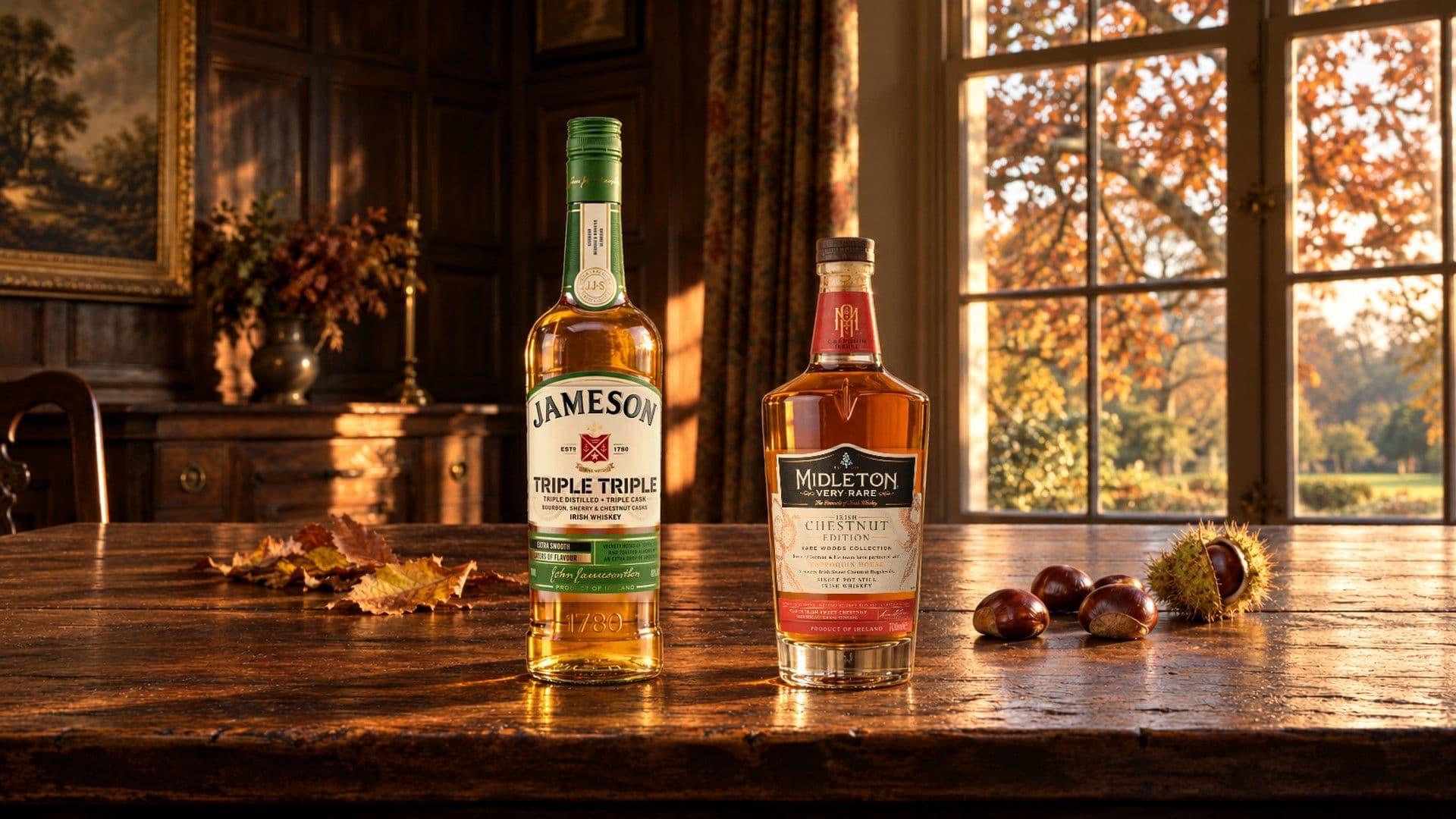
Midleton Very Rare Irish Chestnut Edition: 5 Things to Know About the First Rare Wood Release
Midleton Very Rare Irish Chestnut Edition is a limited single pot still Irish whiskey, bottled at 56.1% ABV with a recommended retail price of €440, and it is the first release in the new Rare Wood Collection. It was announced on 8 October 2026 and is finished for five years in casks made entirely from Irish sweet chestnut, grown on a single estate in County Waterford.
Key Takeaways
The Irish Chestnut Edition is the first release in the Rare Wood Collection, a new limited series from Midleton Very Rare that explores woods beyond oak.
Six Irish sweet chestnut trees from the Cappoquin Estate in County Waterford were harvested in 2017, then seasoned and coopered in Spain.
The whiskey is single pot still, matured first in bourbon barrels and then finished for five years in the chestnut casks. It is bottled at 56.1% ABV.
Chestnut is more porous than oak, so more spirit is lost during the finish. The Spirits Business reports about 29% over the five years.
The annual Midleton Very Rare vintage is a different product. It is a separate 40% bottling released as a new vintage every year.
Tip: Check the full name on the label before you buy. "Midleton Very Rare" appears on both the annual 40% vintage and the 56.1% Rare Wood release, and they are different bottles at different prices.
It Is the First Release in the Rare Wood Collection
The brand describes the Rare Wood Collection as a new limited edition series within Midleton Very Rare. Its aim is to show how unconventional woods can shape Irish whiskey. The chestnut release comes first, and Master Distiller Kevin O'Gorman has called it the inaugural expression in the collection.
The producer also calls it the world's first whiskey finished in casks crafted entirely from Irish sweet chestnut from a single estate. That is a claim made by the brand, and the trade press has reported it as such. The recommended price is €440, and the bottling is 70cl at 56.1% ABV, which is natural cask strength.
How many bottles exist?
The Whisky Wire describes the release as limited. Trade outlets give different quantity details and none comes from a confirmed Midleton or Irish Distillers statement, so this article does not print a bottle count.
You can look up the Midleton Very Rare Irish Chestnut Edition on Spiritory, where bids and asks show what buyers and sellers are actually agreeing on.
The Casks Come From Six Trees Harvested in 2017
The wood comes from the Cappoquin Estate in County Waterford, which overlooks the Blackwater Valley and has been owned by the Keane family since 1735. According to The Whisky Wire, six Irish sweet chestnut trees were harvested there in 2017, which is when the project began. Sir Charles Keane of the estate said his family has cared for these woodlands for generations.
The timber did not stay in Ireland for the next step. It was shipped to Spain, where it was naturally seasoned and traditionally coopered into casks, and the casks then returned to Ireland to be filled. The Spirits Business reports the same route.
The producer says the casks are made entirely from Irish sweet chestnut. For more on why cask wood changes flavour, see our guide to what a whisky cask is and how wood shapes flavour.
The Whiskey Is Single Pot Still, Finished for Five Years
The base is single pot still Irish whiskey. It was first matured in first fill and refill bourbon barrels. The producer then blended light, medium and heavy style Midleton single pot still whiskeys and finished them for five years in the chestnut casks.
The finish lasted five years, according to both The Whisky Wire and The Spirits Business.
What the brand says it tastes like
Tasting notes below come from the brand's launch material as reported by The Whisky Wire and The Spirits Business, not from our own tasting.
Nose: baked or honey drizzled red apple, candied or caramelised orange peel, toffee and warm spices.
Palate: sweet orchard fruit, citrus, vanilla, chocolate and soft wood tannins, with pot still spice.
Finish: lingering fruit that fades to pot still spice and chestnut wood, as described by The Spirits Business.
If you want a point of comparison for the base style, Redbreast 12 Years Old is another single pot still from the Midleton stable.
Chestnut Is More Porous Than Oak, So More Spirit Is Lost
Sweet chestnut is more porous than oak. The Spirits Business explains that this allows more interaction between the spirit and the wood, but it also means more whiskey escapes through the cask over time. The loss to evaporation, known as the angel's share, is reported at about 29% over the five years.
That figure comes from The Spirits Business alone, so treat it as reported rather than independently confirmed.
Midleton has worked with unusual wood before. The Midleton Very Rare Dair Ghaelach Knockrath Forest series used virgin Irish oak, and Spiritory also lists the Jameson Triple Triple Chestnut Edition for readers who want to see another chestnut named Irish bottling. The chestnut release is the first in Midleton's new Rare Wood line, not the first time Midleton has experimented with wood.
The Annual Midleton Very Rare Vintage Is a Separate 40% Bottling
The name causes confusion, so it is worth being direct. Midleton Very Rare is an annual vintage release, bottled at 40% ABV. The Whiskey Wash describes the 2025 edition as a blend of pot still and grain whiskeys, and a new vintage appears every year.
The Irish Chestnut Edition is not that vintage. It is a separate release in the Rare Wood Collection, bottled at 56.1% ABV and made from single pot still whiskey finished in chestnut. It shares a brand name with the annual vintage, but the two are different whiskeys with different strengths and different prices.
For wider context on where Irish whiskey sits with collectors, read Irish whiskies collectors are watching in 2026.
Tip: Do not assume a Rare Wood bottle will follow the same pattern as a Midleton Very Rare vintage. This is a new line with no track record yet, so judge it on the whiskey and the price you are willing to pay.
FAQ
What is Midleton Very Rare Irish Chestnut Edition?
It is a limited single pot still Irish whiskey bottled at 56.1% ABV. It was finished for five years in casks made entirely from Irish sweet chestnut and is the first release in the Rare Wood Collection.
How many bottles were made?
The release is described as limited. No bottle count has been confirmed by Midleton or Irish Distillers, so none is printed here.
Is it the same as the annual Midleton Very Rare vintage?
No. The annual vintage is a separate 40% bottling released as a new vintage every year. The Irish Chestnut Edition is a different whiskey at 56.1% ABV, released as part of the Rare Wood Collection.
Where does the chestnut wood come from?
From six Irish sweet chestnut trees on the Cappoquin Estate in County Waterford, harvested in 2017. The wood was seasoned and coopered in Spain before the casks returned to Ireland.
What does it cost?
The recommended retail price is €440. Prices on the secondary market depend on what buyers and sellers agree, which you can follow through bids and asks on Spiritory.
About the author

Janis Wilczura
I'm one of Germany's leading whisky experts, featured in Handelsblatt and BILD. To me, whisky is craftsmanship and art.
To the author