

Reach thousands of whisky and spirits lovers every day.


How Do You Start a Whisky Collection With €500?
 by Max RinkI’m a whisky enthusiast and aspiring writer, exploring new flavours and the stories behind every bottle.
Follow Spiritory on Google News to get our latest guides and releases delivered straight to your feed.
How Do You Start a Whisky Collection With €500?
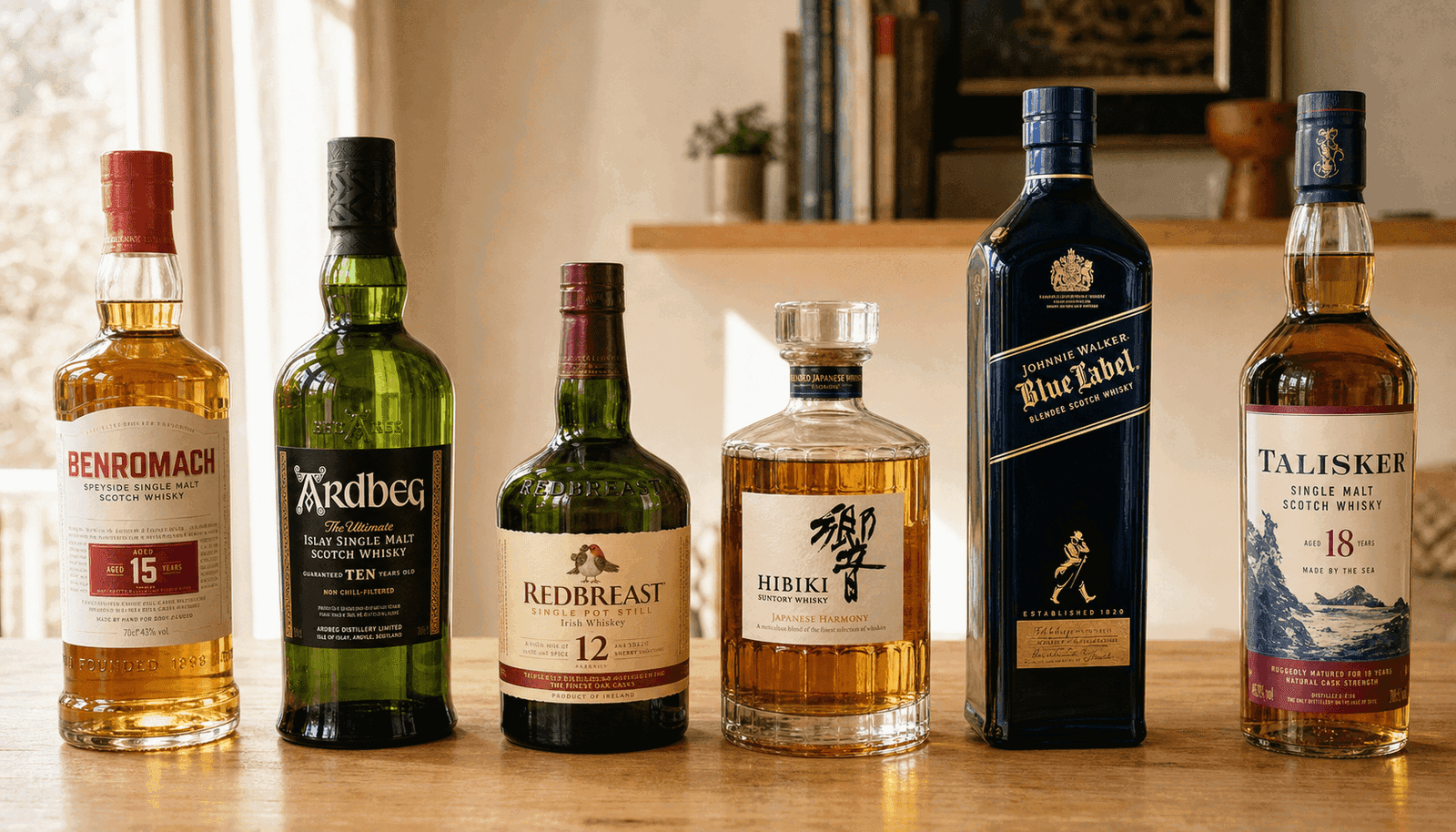
A €500 first whisky collection is not a starter pack — it is a real position. With five well-chosen bottles in the €70–€120 range, you can cover the key regions, styles, and collector stories that matter in 2026, build a foundation you can extend meaningfully, and own bottles that have genuine secondary market credentials rather than just sitting on a shelf looking good. This guide shows how to allocate that budget with purpose.
Key Takeaways
Five bottles at €70–€120 each gives better coverage and better collector credentials than ten bottles at €40–€50 each. Concentration in quality over breadth is the right approach at this budget.
Springbank 10 Year Old is the single most important bottle to include in a first collection under €500 — it has the clearest scarcity story and the best secondary market track record in this price range.
One Islay expression, one Speyside, one Highland or island, one independent bottling, and one bottle from outside Scotland is a balanced five-bottle framework that covers the key collector categories.
Storage from the start: upright, cool, dark. If bottles are held as part of a collection rather than opened, condition at the time of purchase and provenance documentation both add to value at the point of sale.
The secondary market is your friend for buying the first collection. Platforms like Spiritory let you access bottles you may have missed at retail with authentication and buyer protection included.
Why €500 Is a Real Starting Point
Most guides to starting a whisky collection start with the assumption that you should buy cheap to learn. The problem with that approach is that cheap bottles rarely have the scarcity, the brand story, or the secondary market history that makes whisky collecting meaningful. You spend €200 on five bottles and own five things that will never be worth more than you paid — and that will not develop your understanding of what makes the collector market work.
€500 buys you into a different category. At this level, you can access bottles that have real secondary market credentials — expressions from distilleries with documented appreciation at auction, limited annual releases that sell out, and names that serious collectors track. That is the foundation of a real collection, not a shelf of easy-to-find supermarket whisky.
How to Allocate €500 Across Five Bottles
Bottle 1: The Campbeltown Anchor (€75–€85)
Start with Springbank 10 Year Old. This is the most important collector bottle under €100 in Scotland. Family-owned, floor-malted, and bottled entirely on site in Campbeltown — a town with one remaining operational distillery where there were once over thirty. Production is capped by the size of the facility. Annual batches sell through quickly. Older batches trade above retail at auction. It is the clearest proof of concept for whisky collecting at accessible prices and the bottle that grounds any serious collection.
Bottle 2: The Speyside Foundation (€60–€75)
Add a GlenAllachie 12 Year Old. A distillery under quality-focused independent ownership since 2017, already attracting real collector attention, still priced as though it has not fully arrived yet. The value gap between what it delivers and what it costs is still there in 2026. Buy before it closes further.
Bottle 3: The Islay Expression (€80–€100)
Include one Islay bottle. The Laphroaig 10 Year Old Cask Strength is the most accessible entry point with real collector credentials. Each batch is numbered and bottled at natural cask strength — variation between batches gives the expression individual identity. Alternatively, at a similar price point, the Bunnahabhain 12 Year Old gives you the unpeated face of Islay from a distillery with strong festival release performance at secondary.
Bottle 4: The Highland or Island Dimension (€80–€100)
The Arran 18 Year Old or GlenDronach 12 Year Old Original covers this dimension well. Arran gives you an island provenance story and a distillery whose limited editions have shown real appreciation. GlenDronach gives you the entry point to a sherry-forward Highland range where the older expressions now command serious auction prices. Either works. If you favour the sherry-influenced style, GlenDronach. If you want island provenance, Arran.
Bottle 5: The Beyond-Scotland Position (€90–€120)
Use the final allocation for something from outside Scotland. The strongest candidates in this budget range in 2026 are Japanese or Taiwanese. Nikka Yoichi Single Malt from Hokkaido — a distillery with a strong collector following and a history of age-statement scarcity that drives real secondary market demand. Or the Kavalan Solist Vinho Barrique from Taiwan — internationally awarded, cask-strength single malt from Asia's most recognised collector distillery.
What to Avoid at This Budget
Avoid spending €500 across ten or more bottles under €50. At that price point, most bottles are widely available, heavily marketed expressions with no scarcity story. They will not appreciate in value. They will teach you about taste, but not about collecting.
Avoid buying closed bottles of expressions you could open instead. If a bottle's only value is as a collector piece, buying an open or damaged bottle makes no sense. If you are going to drink some of these, factor that into the plan — two or three bottles to open and taste, two or three to hold.
Building From Here
A five-bottle foundation gives you a position to build on systematically. The next step is usually to deepen one of these positions — buying consecutive Springbank batches, following the GlenAllachie limited releases, or adding a second Islay distillery. For a broader view of what makes a whisky collectible before you extend, see What Makes a Whisky Collectible in 2026? For timing decisions as the collection grows, see When Should You Buy, Sell, or Wait as a Whisky Collector?
Tip: Register for the Ardbeg Committee and Friends of Laphroaig before you need to buy festival releases. Allocation access requires membership that is established in advance, not applied for at launch.
FAQ
Should I keep the original packaging?
Yes. Original boxes, tins, or presentation cases add to resale value, sometimes significantly. Lagavulin, GlenDronach and Arran all use quality presentation packaging. Store bottles in their original boxes in a cool, dark location away from direct light or temperature fluctuations.
Is €500 enough to make a return on investment?
Not in a short time frame. Whisky collecting at this budget requires a horizon of several years to generate meaningful returns. The bottles above are chosen for real collector credentials — they have the scarcity and the brand story to support appreciation over time. But whisky is not a liquid asset. Treat any price increase as a bonus, not a plan. See What Are the Best Collectible Whiskies Under €200 in 2026? for a broader picture of the accessible collector market.
Where do I buy these bottles?
For current releases, specialist whisky retailers and direct from distillery. For bottles you missed at retail, Spiritory and specialist auction houses including Whisky Auctioneer and Scotch Whisky Auctions. Spiritory includes photo authentication on every transaction — for a first collection, that protection is worth using, especially on bottles like Nikka Yoichi where the counterfeit risk is higher than in domestic Scotch whisky categories.
About the author

Max Rink
I’m a whisky enthusiast and aspiring writer, exploring new flavours and the stories behind every bottle.
To the author