

Reach thousands of whisky and spirits lovers every day.


How Do You Read a Whisky Label? 7 Things It Tells You
 by Max RinkI’m a whisky enthusiast and aspiring writer, exploring new flavours and the stories behind every bottle.
Follow Spiritory on Google News to get our latest guides and releases delivered straight to your feed.
How Do You Read a Whisky Label? 7 Things It Tells You
A whisky label tells you seven main things: how old the youngest whisky in the bottle is, how strong it is, whether it comes from one cask, what kind of cask matured it, who chose and bottled it, whether it was chill filtered or coloured, and where it was distilled. For Scotch, several of these claims are controlled by the Scotch Whisky Regulations 2009, while others are descriptions that producers choose to print.
Key Takeaways
An age statement refers to the youngest whisky in the bottle, so a 12 Year Old contains nothing younger than 12 years.
Scotch must be bottled at no less than 40% ABV. Many bottles sit at 40% to 46%, while cask strength bottles are not reduced to a standard strength.
Single cask and cask number point to one cask, but a distillation year or bottling year only appears under strict rules.
First fill and refill describe how many times the cask has held whisky before, which affects how much flavour and colour the wood gives.
Non chill filtered and natural colour are separate claims. A bottle can have one, both or neither.
Islay, Campbeltown, Highland, Lowland and Speyside are protected names for Scotch and can only appear on Scotch distilled there.
Tip: Read the whole label, front and back. Details such as cask number, filtration and colour often sit in small print on the back, and a claim that is missing is simply not confirmed.
The Age Statement Is the Youngest Whisky in the Bottle
If a bottle says 12 Years Old, that number refers to the youngest whisky in it. Under the Scotch Whisky Regulations 2009, an age must be given in years, and the rule they build on says an age may only be stated where it refers to the youngest alcoholic component. A 12 Year Old can therefore contain older whisky, but never younger.
The same law sets a floor. Scotch must be matured for not less than three years in oak casks of no more than 700 litres. A bottle with no age statement is still at least three years old. For what a missing number does and does not mean, see What Does "NAS" Mean on a Whisky Bottle?
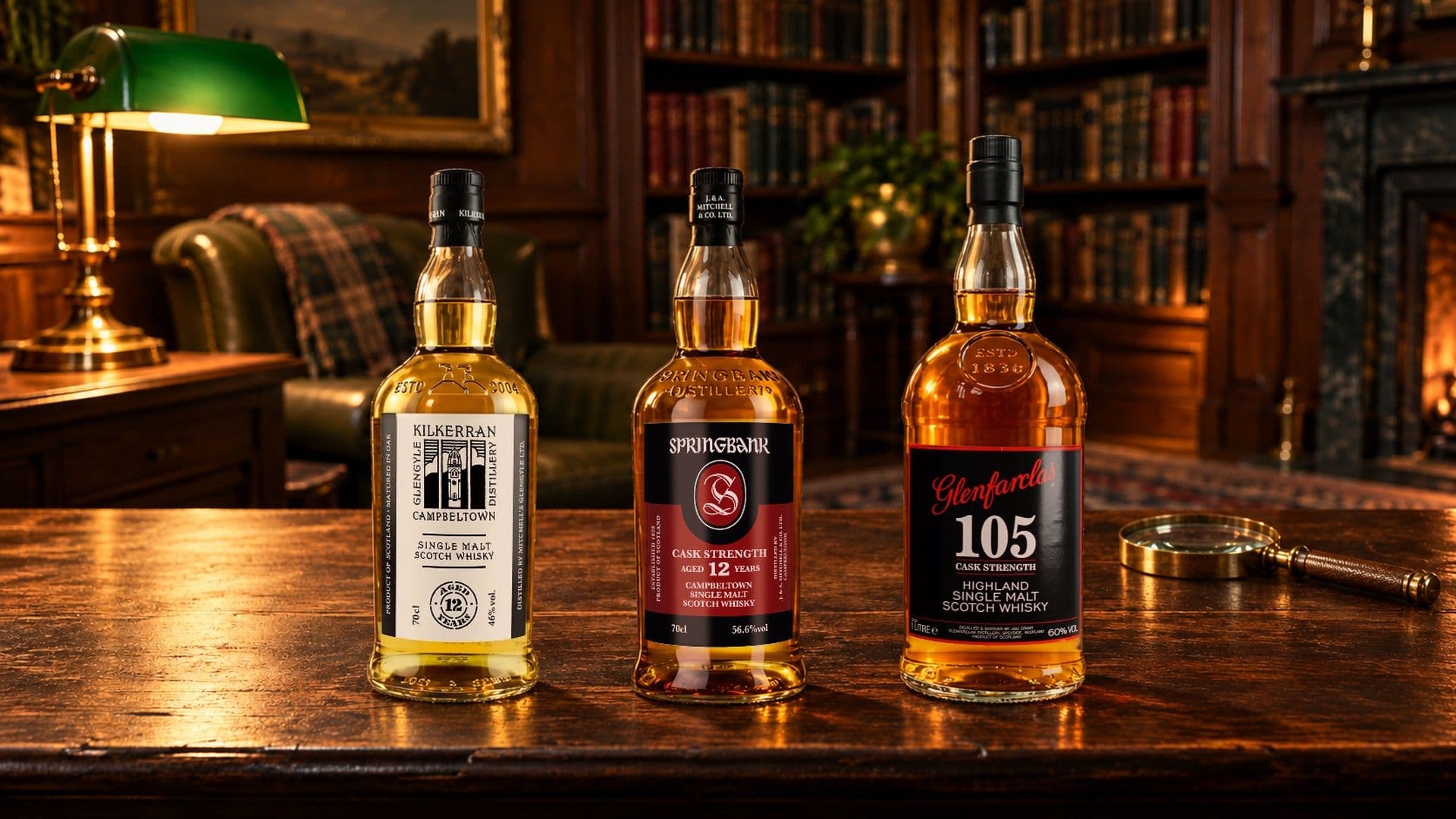
A good example is Kilkerran 12 Years Old, which carries its age on the front label. A buyer can read it as a promise about the youngest whisky, not an average.
The ABV Shows Whether a Whisky Was Reduced or Left at Cask Strength
ABV means alcohol by volume. Scotch must be bottled at a minimum of 40%, and most whisky is reduced with water to a uniform strength of 40% or 43%, as Whisky Advocate notes. Whisky Advocate notes that whisky diluted below 46% can turn cloudy, so some bottlers choose 46% or higher.
Cask strength means the whisky was bottled at the strength it had in the cask, without adding water to bring it down. That is why these bottles often show 55% to 60% or more. Glenfarclas 105 Cask Strength is a well known example at 60%, and it carries no age statement. Springbank 12 Years Old Cask Strength Batch 29 is another cask strength bottle, matured entirely in bourbon casks according to its listing. For the full explanation of how strength changes flavour and price, read What Does "Cask Strength" Mean?
Single Cask, Cask Number and Dates Point to One Cask
A single cask bottling comes from one cask only, with no whisky from other casks added. Single cask is not a legal category in the Scotch Whisky Regulations 2009, so the label is a producer's description. For the definition and what it does and does not guarantee, see What Does Single Cask Actually Mean on a Whisky Label?
Many single cask bottles print a cask number. St. Kilian Single Cask Nr.97/98 is one example, with Cask Nr.97/98 on its label and a bottling strength of 50%. The number lets a buyer identify the exact cask and tell two releases from the same distillery apart.
Distilled and Bottled Dates
Vintage style bottles may show a distillation year and a bottling year. In Scotch, the law only allows a distillation year if all the whisky in the bottle was distilled in that one calendar year. The distillation year must also appear together with the bottling year, a maturation period or an age, in the same field of vision on the label. This is why a label showing a distilled year and a bottled year lets you work out the age yourself.
First Fill and Refill Describe How Active the Cask Was
A first fill cask is one that is filling with whisky for the first time. Kilchoman describes first fill casks as the most active casks it works with. Once a cask has been used more than once, it becomes a refill cask.
A first fill cask generally gives more colour and flavour from the wood, and a long stay can leave the spirit dominated by the oak. A refill cask is gentler and lets the lighter, fruitier and sweeter notes from distillation stay in the foreground. Neither is better in itself, and the fill history is not always printed on the label. When it is, it tells you whether the cask or the spirit is likely to lead.
The type of cask matters too. Bourbon and sherry casks add different notes, and the label may name which one was used, as with the bourbon and sherry mix in Kilkerran 12 Years Old.
A Distillery Bottling and an Independent Bottling Come From Different Choosers
An official bottling is released by the distillery owner under its own brand. An independent bottler buys or sources whisky and releases it under its own label, often by single cask or small batch. The label shows which one you have: the producer name on the front, and the line saying who distilled and who bottled it.
Independent bottlings can offer different cask types, higher strengths and unusual finishes compared with the official range. Check the name of the distillery, because on an independent label it may appear in smaller print than the bottler's name. For a closer comparison, read What Is the Difference Between an Official Bottling and an Independent Bottling?
Non Chill Filtered and Natural Colour Are Separate Claims
Chill filtration cools the whisky and passes it through fine filters to remove compounds that can turn it cloudy when it is diluted below about 46% or chilled, as Whisky Advocate explains. Critics say the process also takes out some aroma and flavour. Barrier filtering is an alternative that avoids the temperature change.
Colour is a different question. The Scotch Whisky Regulations 2009 allow plain caramel colouring as the only permitted addition besides water, and it is used to keep colour consistent from batch to batch. Natural colour on a label means no caramel was added. The Springbank 12 Years Old Cask Strength Batch 29 listing describes natural colour and non chill filtered, and Kilkerran 12 is reported by retailers as non chill filtered and uncoloured. Both claims are worth confirming on the bottle itself.
Region Names Such as Islay and Campbeltown Are Protected
For Scotch, the regulations name five protected geographical indications: two localities, Campbeltown and Islay, and three regions, Highland, Lowland and Speyside. Under regulation 10, these names may only appear on Scotch that was distilled in that locality or region.
The rule also covers similar names that could confuse buyers about where the whisky was distilled. It does not say anything about style. Both Springbank 12 Years Old Cask Strength Batch 29 and Kilkerran 12 Years Old come from Campbeltown, yet the bottles differ in age, strength and casks. Treat the region as a fact about origin, and use the other six items to understand what is in the glass.
Tip: Before buying a gift, photograph the front and back label and check the age, strength, cask details and region against what the seller says. Each of them is a claim you can confirm.
FAQ
What does the age on a whisky label mean?
It is the age of the youngest whisky in the bottle. A 12 Year Old may include older whisky but nothing younger than 12 years, and under the Scotch Whisky Regulations 2009 the number must be in years.
Does no age statement mean the whisky is young?
Not necessarily. Scotch must still mature for at least three years, and the label just does not say how long beyond that. See What Does "NAS" Mean on a Whisky Bottle? for the detail.
What is the difference between cask strength and single cask?
Cask strength is about alcohol level, meaning the whisky was not reduced with water. Single cask is about origin, meaning one cask only. A bottle can be one, both or neither, as covered in What Does "Cask Strength" Mean? and What Does Single Cask Actually Mean on a Whisky Label?
Is non chill filtered the same as natural colour?
No. Non chill filtered refers to filtration, while natural colour means no caramel colouring was added. They are separate claims and a label may make one, both or neither.
Can any whisky say Islay or Campbeltown on the label?
No. For Scotch, protected names such as Islay, Campbeltown, Highland, Lowland and Speyside can only be used where the whisky was distilled in that locality or region.
- Key Takeaways
- The Age Statement Is the Youngest Whisky in the Bottle
- The ABV Shows Whether a Whisky Was Reduced or Left at Cask Strength
- Single Cask, Cask Number and Dates Point to One Cask
- First Fill and Refill Describe How Active the Cask Was
- A Distillery Bottling and an Independent Bottling Come From Different Choosers
- Non Chill Filtered and Natural Colour Are Separate Claims
- Region Names Such as Islay and Campbeltown Are Protected
- FAQ
About the author

Max Rink
I’m a whisky enthusiast and aspiring writer, exploring new flavours and the stories behind every bottle.
To the author