

Reach thousands of whisky and spirits lovers every day.


What Does "Cask Strength" Mean?
 by Max RinkI’m a whisky enthusiast and aspiring writer, exploring new flavours and the stories behind every bottle.
Follow Spiritory on Google News to get our latest guides and releases delivered straight to your feed.
What Does "Cask Strength" Mean?
Key Takeaways
Cask strength = bottled at cask ABV, typically 50–65%+, without dilution.
Standard commercial whisky is diluted to 40–46% ABV for consistency and accessibility.
Cask strength delivers more flavor intensity and character expression.
Cask strength is often non-chill-filtered, preserving oils and mouthfeel.
Cask strength commands higher prices due to yield loss (no dilution = fewer bottles per cask).
Adding water to cask-strength whisky can open up flavors and make it more approachable.
How Cask Strength Differs from Standard Bottlings
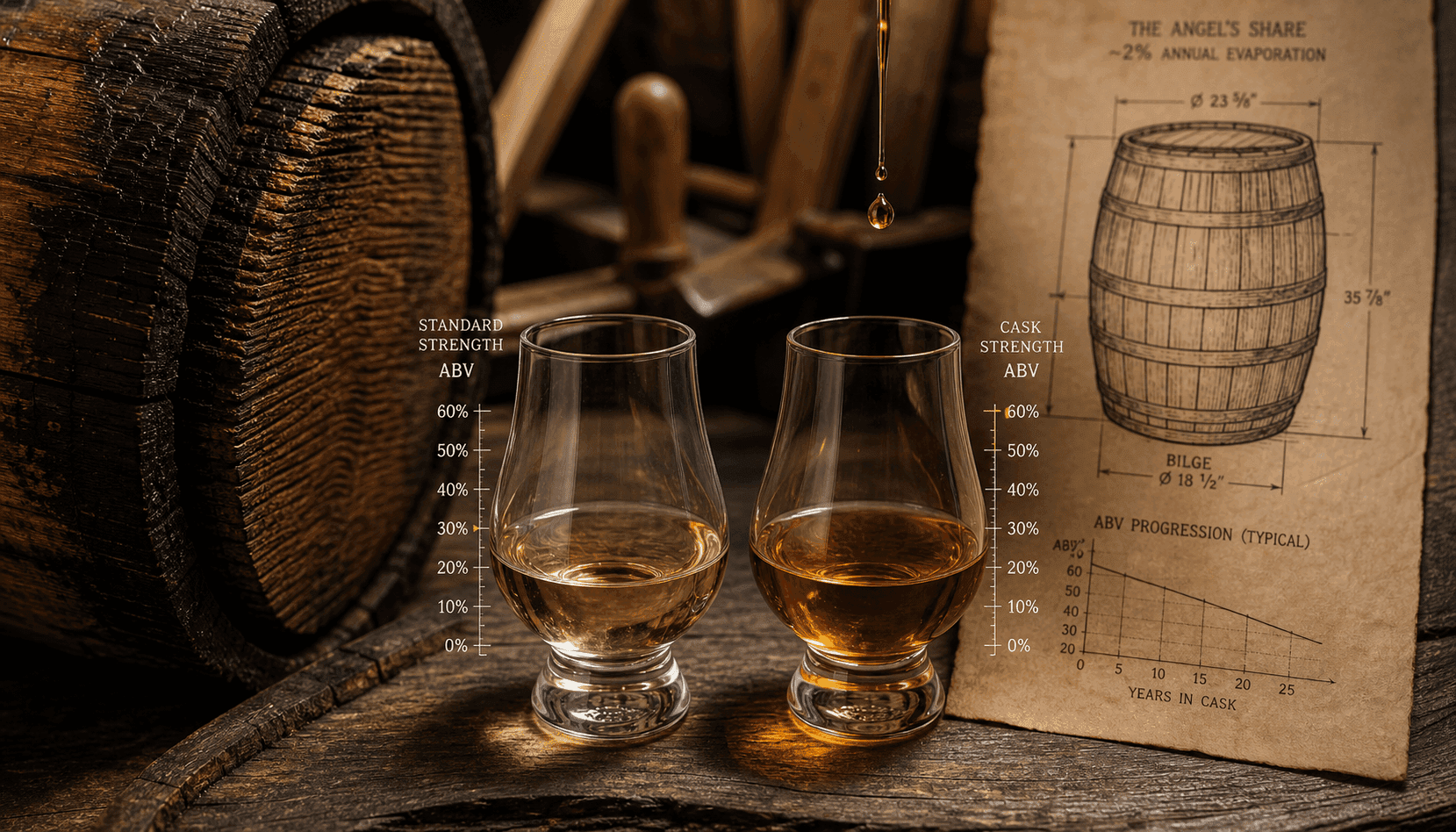
When whisky matures in oak, alcohol evaporates gradually through the cask, a loss called the "angel's share." After 10, 20, or 30 years, the spirit might settle at 55% ABV. At this point, a distillery has two choices: bottle it at cask strength (55% ABV) or dilute it with water to 43% ABV for a standard release.
Dilution serves practical purposes. Lower ABV makes whisky more accessible to casual drinkers (less burn), extends bottle count per cask (more product to sell), and standardizes flavor batch to batch. A distillery's core 12 Year Old is designed to taste consistent year-round, which is easier to achieve at a fixed 43% ABV than at variable cask strengths ranging from 51% to 63% ABV.
Cask strength releases ignore these concerns. They prioritize flavor authenticity and character. By preserving the cask's natural alcohol level, the distillery leaves maximum congeners (flavor compounds) intact and delivers a richer, more textured experience. Cask-strength whisky often feels oily, full, and complex in ways its diluted counterpart cannot match.
Flavor and Drinking Experience
A cask-strength whisky at 58% ABV will taste more intense than the same distillery's standard 43% ABV version. Not just stronger, genuinely different in character. The higher ABV carries more volatile compounds and flavor esters. Water acts as a solvent; removing water removes some aromatic complexity. Cask strength brings wood influence, leather, and spice forward in ways a diluted version softens.
Many collectors find cask strength more satisfying for serious tasting. The richness and depth reward attention. A cask-strength Balvenie or Highland Park feels like a completely different expression than its standard-strength sibling.
However, cask strength is not inherently "better." A carefully diluted standard release can be refined, balanced, and sublime. Some drinkers find cask strength too powerful for casual sipping. This is where adding water becomes a tool: adding a splash of water to cask-strength whisky opens it up, softens the burn, and can actually reveal more subtle flavors. Professional tasters often add water to high-ABV drams to evaluate them fairly.
Tip: If you're new to cask strength, pour a dram and add a small measure of water, a few drops or 10-15ml depending on the volume. Swirl, nose, and sip. You'll often find the spirit becomes more approachable and reveals nuance the neat pour masked. Cask strength is meant for exploration, not necessarily for drowning it straight.
Why Cask Strength Costs More
Cask strength bottlings are more expensive than standard releases for straightforward reasons. First, yield: a single cask bottled at 60% ABV produces fewer bottles than the same cask diluted to 43% ABV. Water is free; excess product is not. Second, cask strength is marketed as premium and scarce, commanding higher margins. Third, cask-strength releases are often limited editions or special selections, reinforcing exclusivity and price.
The price premium reflects real value: maximum flavor expression and rarity. But it also reflects supply constraints and marketing strategy. Some collectors accept the premium; others argue standard releases deliver 80% of the experience at 60% of the price.
FAQ
Is it safe to drink cask-strength whisky at full strength?
Absolutely. Cask strength is designed to be drinkable, though it will feel intense. Start with a small pour and sip slowly. Adding water is optional, not necessary. Many enjoy cask strength neat and find the intensity part of its appeal.
Does cask strength get better with age in the bottle?
Whisky does not mature once bottled (glass is inert), but it can evolve and mellow slightly after opening due to oxidation and evaporation. Some collectors report cask-strength bottles open up noticeably over months of storage after the first pour. Tightly seal your bottle to minimize oxidation.
How much water should I add to cask-strength whisky?
There's no rule. Start with a few drops and adjust. Some prefer cask strength neat; others add 10-20ml to a 50ml pour. Experiment to find your preference. Professional tasters often use a ratio of 2-3 parts whisky to 1 part water for evaluation.
Is all high-ABV whisky "cask strength"?
No. A whisky might be bottled at 55% ABV but still be diluted from its original cask strength of 62% ABV. "Cask strength" specifically means bottled at (or very close to) the strength it left the cask. Always check the label or distillery description to confirm.
Can I find cask-strength options on spiritory.com?
Yes. Many distilleries release cask-strength versions alongside standard bottlings. Use filters or search for terms like "cask strength" or "barrel proof" to find high-ABV releases. Popular cask-strength lines include Balvenie Cask Strength, Highland Park Cask Strength, and Ardbeg Uigeadail.
About the author

Max Rink
I’m a whisky enthusiast and aspiring writer, exploring new flavours and the stories behind every bottle.
To the author