

Reach thousands of whisky and spirits lovers every day.


Will Canadian Whisky Get Cheaper in Europe After Trump's Import Ban?
 by Christopher Deutsch I drink and collect with intention, drawn to the sherried depth of Dalmore and the balance of Yamazaki.
Follow Spiritory on Google News to get our latest guides and releases delivered straight to your feed.
Will Canadian Whisky Get Cheaper in Europe After Trump's Import Ban?
Key Takeaways
President Trump signed an executive order banning the import of nearly all Canadian whiskies and other spirits into the US, effective September 29, 2026.
The ban follows months of escalating trade tension: Canadian provinces pulled US spirits from shelves, Trump imposed tariffs on Canadian dairy, automobiles, and whiskies on August 22, and Canada responded with a 50 percent tariff on $27 billion of US imports.
The US is Canadian whisky's largest export market by a wide margin, which means producers such as Crown Royal and Canadian Club now have significant volume that needs an alternative outlet.
Canadian Club already names Europe as one of its core markets, and Corby Spirit and Wine, a major Canadian producer, already focuses its export efforts on the UK, Germany, and France.
More supply reaching Europe does not automatically mean lower prices; production decisions, existing demand growth, and the possibility of a negotiated resolution all complicate the picture.
Track live pricing on Canadian and other whisky categories on Spiritory as the situation develops.
What Trump's Executive Order Actually Does
On Tuesday, September 8, 2026, President Trump issued an executive order banning the import of nearly all Canadian whiskies and other spirits into the United States, effective September 29, 2026. The order does not ban a narrow list of products. It covers the great majority of Canadian whisky and spirits shipments bound for the US market.
The Stated Justification
Trump cited the continuing provincial-level bans on sales of US whiskies and other spirits in Canada, with particular reference to Saskatchewan's decision to impose a 50 percent reciprocal tariff on American spirits. At the time of the order, Saskatchewan was one of only two Canadian provinces where American whiskies remained available to consumers at all, following widespread provincial removal of US spirits since the dispute began.
Which Brands Are Affected
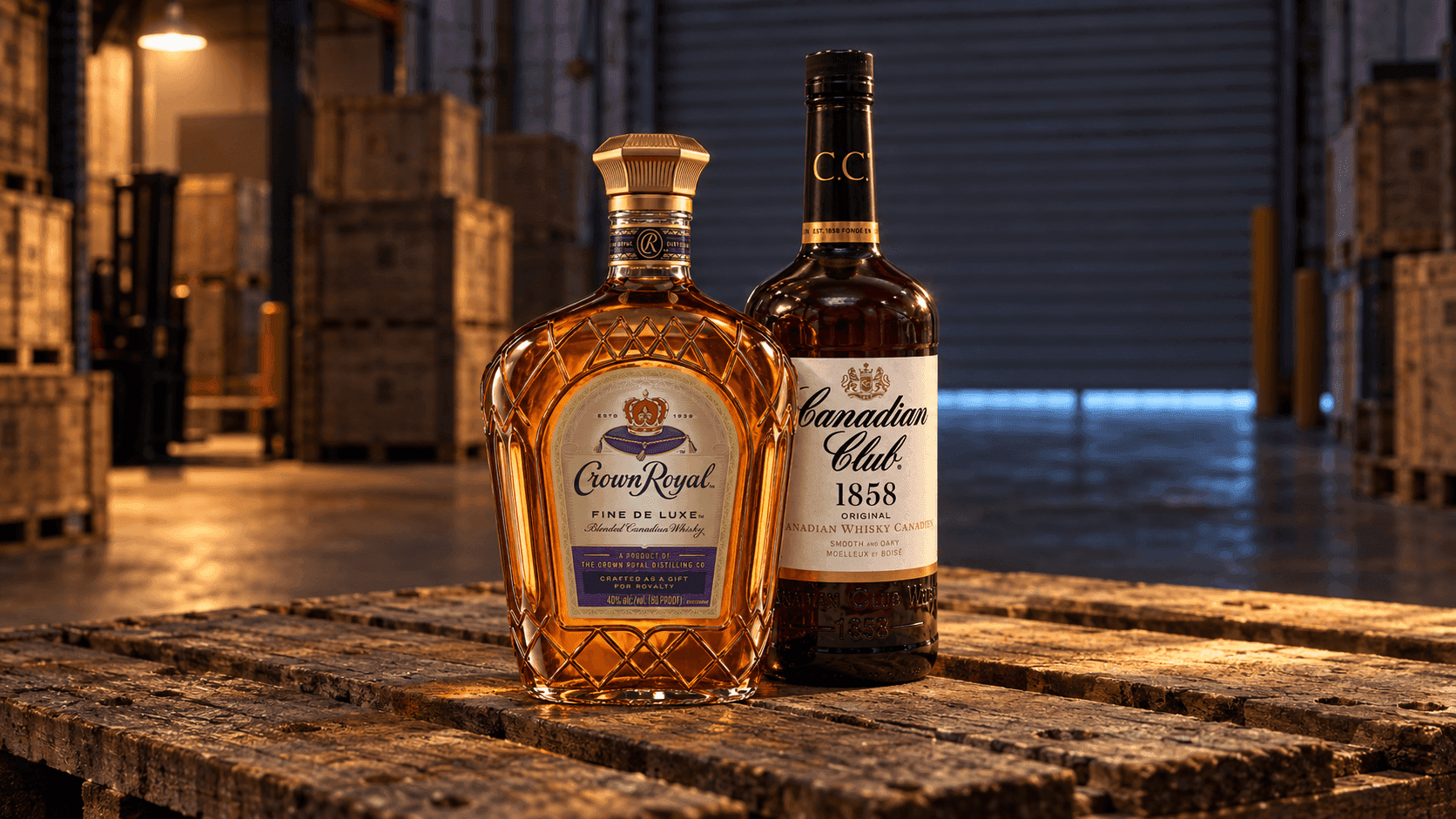
The ban is expected to be a significant blow to Diageo, Suntory Global Spirits, and Heaven Hill, each of which owns major Canadian whisky brands sold into the US. Crown Royal, produced in Manitoba by Diageo and holding more than a 35 percent share of the Canadian whisky category, is the most exposed single brand. Canadian Club, owned by Beam Suntory, and Lot No. 40 are also named among the brands directly affected.
How the US-Canada Trade Dispute Escalated
This is not an isolated action. It is the latest step in a trade dispute between the US and Canada that has been building for more than a year.
Provincial Bans and Retaliatory Tariffs
Canadian provinces began removing US spirits from government-controlled liquor store shelves as an early response to earlier rounds of US tariffs. On August 22, 2026, Trump imposed tariffs on Canadian dairy, automobiles, and whiskies. Canada responded on Tuesday, September 9, 2026, with a 50 percent tariff on $27 billion worth of US imports.
The Cost to US Distillers So Far
Distilled Spirits Council CEO Chris Swonger said American distillers have shouldered the brunt of this dispute for more than a year and a half. According to Swonger, the removal of US spirits from Canadian retail shelves caused US spirits exports to Canada to fall by more than 70 percent. He called for a negotiated solution that restores US spirits to Canadian shelves and returns the sector to a zero-for-zero tariff framework.
Canada's Response
Cal Bricker, CEO of Spirits Canada, called the import ban concerning for the industry he represents. Bricker noted that Canada produces roughly $2 billion in distilled spirits annually, with $1 billion of that sold in the US alone. He said Spirits Canada remains hopeful the dispute can be resolved through negotiation before the ban takes effect on September 29.
Tip: This dispute has moved quickly and includes an explicit hope from Canada's own industry body that it will be resolved before implementation. Treat any near-term price or availability prediction as provisional until the September 29 deadline actually arrives.
Why the US Market Matters So Much to Canadian Whisky
To understand why this ban is significant beyond the US market itself, it helps to see how dependent Canadian whisky production is on US demand.
The Scale of US Dependence
Canada produces roughly 20 million cases of whisky a year, and the United States has historically purchased close to 69 percent of it, by far the largest single destination for the category. Looking at Canadian alcohol exports more broadly, including beer, the US share is closer to 90 percent, underlining how concentrated Canada's export industry is around a single trading partner.
What This Means for Producers
A market that absorbs the majority of a producer's output cannot simply disappear without consequence elsewhere in the business. Distilleries that built distribution, contracts, and production planning around steady US demand now have a real volume of whisky, both finished stock and stock already maturing for future release, that needs a different destination if the ban proceeds as scheduled.
Could Redirected Supply Make Canadian Whisky Cheaper in Europe?
This is the question most relevant to European buyers, and it is also the least certain part of the story.
The Case for Redirection Toward Europe
Europe is not a new market for Canadian whisky, which makes it a plausible destination for redirected volume. Canadian Club already lists Canada, Australia, Japan, and Europe among its major markets. Corby Spirit and Wine, which accounts for a significant share of spirits sold in Canada, already focuses its own export efforts specifically on Britain, Germany, and France. Existing distribution relationships in these markets mean producers would not be starting from zero if they chose to increase European volume.
Why Rising Interest Adds Another Layer
Independent of this dispute, interest in Canadian whisky in the UK has reportedly grown substantially in the past year, with search demand for Canadian whisky brands reported up more than 70 percent. A market that is already showing rising demand may absorb additional volume without the price softening that a flooded, uninterested market would produce.
Why Prices May Not Simply Fall
Several factors complicate a straightforward story of increased supply pushing prices down. Producers facing a sudden loss of their largest market may choose to trim production rather than sell excess stock into Europe at a discount, particularly for aged expressions where holding cost is lower than the reputational cost of discounting a premium brand. Retail pricing in Europe also reflects local excise duty, VAT, and distributor margins that do not move simply because more product becomes available at the producer level. And as Spirits Canada's own comments make clear, there remains a real possibility the dispute is resolved through negotiation before the September 29 deadline, in which case the redirection pressure driving this whole scenario may never fully materialise.
Tip: Watch specific brand availability and secondary-market listings for Crown Royal, Canadian Club, and Lot No. 40 in the weeks after September 29 rather than assuming a price move in advance. The clearest early signal will be whether these brands' European distributors increase allocation, not whether headline commentary predicts they will.
What This Means for European Collectors and Buyers
For collectors and buyers in Europe, the practical takeaway is to watch rather than assume. Canadian whisky occupies a different collecting niche than Scotch or Japanese whisky on platforms like Spiritory, generally positioned as an accessible, everyday category rather than a rarity-driven one, so any price effect here is more likely to show up in retail availability and standard-shelf pricing than in secondary-market premiums.
What to Track
The most useful signals in the coming weeks will be whether major European retailers expand their Canadian whisky ranges, whether Crown Royal and Canadian Club run any new promotional activity in UK, German, or French markets, and whether the September 29 deadline actually arrives without a negotiated resolution. All three would need to align for a meaningful price or availability shift to show up on European shelves.
FAQ
When does the US ban on Canadian whisky take effect?
September 29, 2026, according to the executive order signed by President Trump on September 8, 2026.
Which Canadian whisky brands are affected by the ban?
Crown Royal (Diageo), Canadian Club (Beam Suntory), and Lot No. 40 are among the brands named as directly affected, alongside other Canadian whiskies and spirits covered by the order.
Will Canadian whisky definitely get cheaper in Europe?
Not necessarily. Europe is a plausible destination for redirected supply given existing distribution relationships, particularly for Canadian Club and Corby-distributed brands, but producers could also cut production, retail pricing includes costs unrelated to supply, and the dispute could still be resolved through negotiation before the ban takes effect.
Why did Trump ban Canadian whisky imports?
Trump cited continuing provincial-level Canadian bans on US spirits sales, specifically naming Saskatchewan's 50 percent reciprocal tariff on American spirits, as the trigger. The move follows a broader escalation that included Trump's August 22 tariffs on Canadian dairy, automobiles, and whiskies, and Canada's 50 percent retaliatory tariff on $27 billion of US goods.
Could this dispute still be resolved before September 29?
Yes. Spirits Canada CEO Cal Bricker said the industry remains hopeful a resolution can be reached before implementation, and both sides have an incentive to avoid the mutual damage a full ban would cause.
About the author

Christopher Deutsch
I drink and collect with intention, drawn to the sherried depth of Dalmore and the balance of Yamazaki.
To the author