

Reach thousands of whisky and spirits lovers every day.


The 10 Best Island Whiskies Beyond Islay: Orkney, Skye, Mull, Arran and Jura
 by Max RinkI’m a whisky enthusiast and aspiring writer, exploring new flavours and the stories behind every bottle.
Follow Spiritory on Google News to get our latest guides and releases delivered straight to your feed.
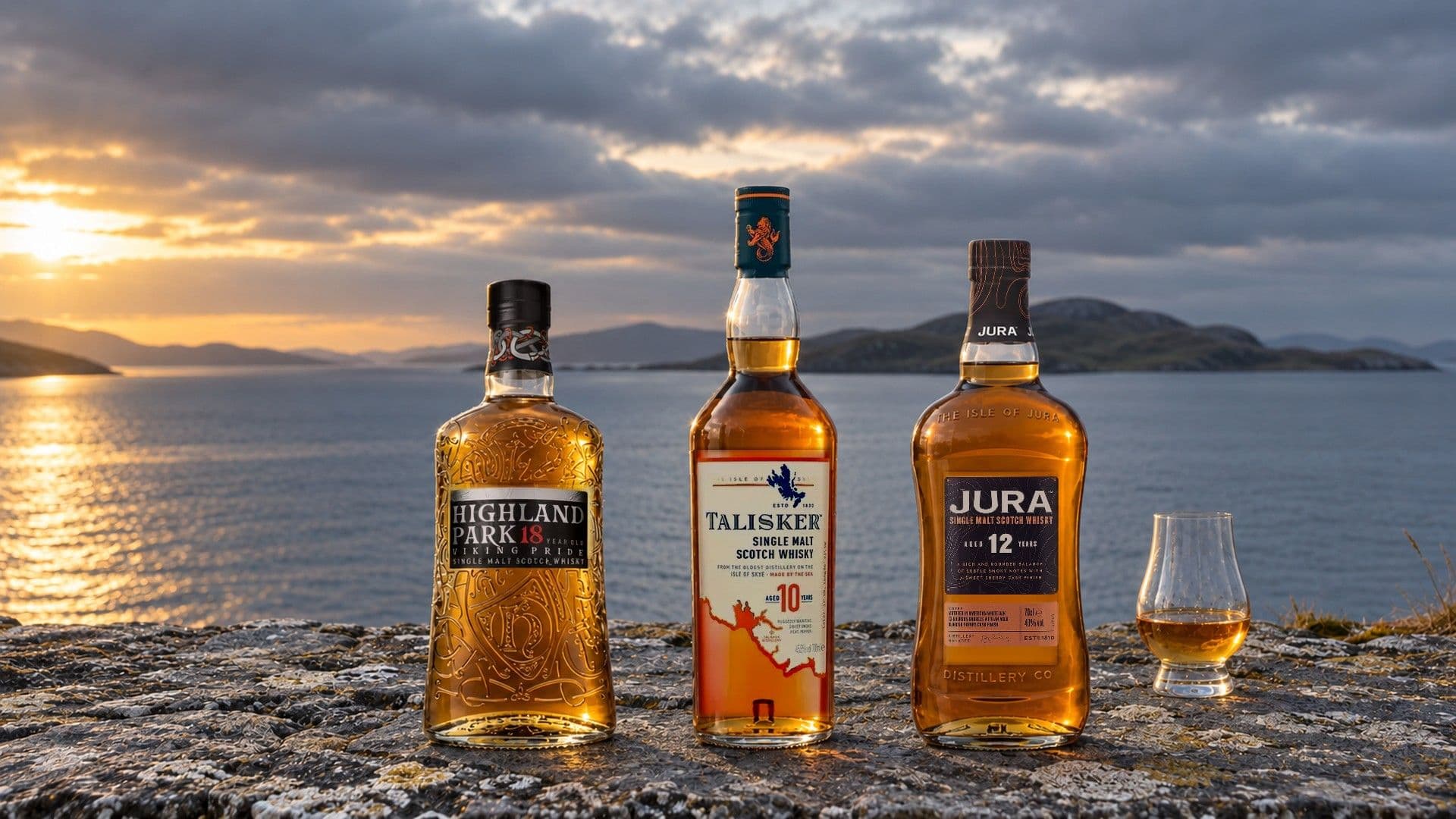
The 10 Best Island Whiskies Beyond Islay: Orkney, Skye, Mull, Arran and Jura
The best island whiskies beyond Islay are Highland Park 12 and 18 and Scapa Skiren and 16 from Orkney, Talisker 10 from Skye, Tobermory 12 and Ledaig 10 from Mull, Arran 10 from Arran, and Jura 12 and 18 from Jura. Together they cover honeyed, maritime, unpeated, lightly smoky and heavily peated styles, which shows that island whisky is far more varied than Islay smoke alone.
Key Takeaways
Orkney, Skye, Mull, Arran and Jura together offer sweet, floral, maritime, peppery and peated whisky, not only Islay smoke.
Highland Park 12 and 18 and Scapa Skiren and 16 show two different Orkney styles, from heathery smoke to soft fruit.
Talisker 10 is bottled at 45.8% and brings pepper, sea salt and smoke from Skye.
Tobermory 12 is unpeated and Ledaig 10 is peated, and both are bottled at 46.3% at the same Mull distillery.
Arran 10 is bottled at 46% and the distillery states it does not use chill filtration or caramel.
Jura 12 and Jura 18 are gentler malts, finished in Oloroso sherry and red wine casks.
Tip: Tasting one island pair side by side teaches more than reading about it. Try Tobermory 12 and Ledaig 10, which come from the same distillery on Mull, to hear exactly what peat adds.
Highland Park 12 Viking Honour balances heather smoke and sherry sweetness
Highland Park is the Orkney name most drinkers meet first, and the 12 Year Old is the clearest introduction to it. The distillery in Kirkwall dates its founding to 1798, and it dries part of its malt over peat that is cut by hand on Hobbister Moor. That peat is heathery, so the smoke is gentle and floral rather than medicinal. Maturation is mainly in sherry seasoned oak, and Highland Park's own notes point to heather honey, Seville orange, fruitcake, winter spice and a touch of smoke.
The bottle suits anyone who wants a first step beyond Speyside without the full force of Islay. Bottling strength differs by market, with 40% the most common figure, so check the label of the bottle you buy. You can find it here: Highland Park 12 Years Old Viking Honour.
Highland Park 18 Viking Pride adds first fill sherry depth
The 18 Year Old is the step up for readers who like the 12 and want more weight. According to retailer specifications, it is bottled at 43% and matured in a high share of first fill sherry seasoned European and American oak casks, with no added colouring. Master of Malt's review picks out dried apricot, honeycomb, gingersnaps, toffee and sherried winter spices on the palate. The Belgian site Whiskynotes felt that 43% is a little modest for such a coastal, intense profile.
The extra years round off the smoke and push the profile toward dried fruit and cocoa. It suits a calm evening glass, and it is a fair choice as a gift for someone who already knows the 12. The listing is here: Highland Park 18 Years Old Viking Pride.
Scapa Skiren is a soft Orkney malt from first fill American oak
Scapa sits in Orkney too, and it was founded in 1885. It is a quieter distillery than its neighbour, and Skiren, released in 2015, is its easy going entry bottle. The Whisky Exchange describes it as matured in first fill American oak casks and bottled at 40%, with creamy, sweet notes of tropical fruit and heather.
Not every reviewer is convinced. One critical review rated it 81 and called it generic and young next to older Scapa bottlings. That is useful context: Skiren is about softness, not power. The cask choice keeps the spirit clean, so the malt itself stays in front. It suits a newcomer who finds peat tiring, or anyone who wants a light Orkney aperitif malt. Find it here: Scapa Skiren.
Scapa 16 shows the maritime side of Orkney
Scapa 16 Year Old is the more rounded of the two Scapa bottles on this list. The Whisky Exchange lists it at 40%, and reviewers describe a fresh, fruity dram with real weight, a hint of sea spray and a touch of smoke. One community tasting also mentions clementine and heather honey on the nose, with ginger and baked apples on the palate. Treat that as reviewer opinion, not an official statement.
The 16 reads as a maritime malt without any heavy peat, which makes it a good pick for drinkers who want island character in a gentle form. It also pairs with the 12 Year Old above for a side by side comparison of two Orkney styles. See it here: Scapa 16 Years Old.
Talisker 10 is the pepper and sea salt benchmark from Skye
Talisker is the only working distillery on the Isle of Skye, and sources date its founding to 1830 or 1831 at Carbost. The 10 Year Old is bottled at 45.8%, a strength that keeps its peppery edge intact. The Whisky Exchange describes powerful peat smoke, sweet citrus, sea salt, peppery spice and a lingering peppery finish.
That mix of smoke, salt and spice is why many drinkers call Talisker the best known island malt after Islay. For a wider look at how smoke works across Scotland, read Why Islay Isn’t Just Smoke. Talisker 10 suits fans of coastal, peppery whisky and anyone who wants smoke with some restraint. Find it here: Talisker 10 Years Old.
Tobermory 12 is the unpeated side of Mull
The Tobermory distillery on the Isle of Mull dates itself to 1798, and it makes two very different whiskies. Tobermory is the unpeated one. The distillery lists the 12 Year Old at 46.3%, matured in American oak, and the style is described as gently sweet and floral.
The higher strength gives it more body than the usual 40% malt. It suits drinkers who want an island whisky with no smoke at all, and it works well as a summer dram. Mull is a small island, and this one distillery in the town of Tobermory is the main reason whisky drinkers know its name. If you are unsure what peated means in practice, our guide to what peated means in whisky explains the basics. The bottle is here: Tobermory 12 Years Old.
Ledaig 10 is the peated side of the same Mull distillery
Ledaig is the peated whisky from the same Tobermory distillery, and it is the closest thing to Islay on this list. The distillery shop lists the 10 Year Old at 46.3% and describes it as peppery, smoky and malty, matured in bourbon casks. The distillery calls Ledaig its bold, peated expression.
Because both whiskies come from one site, Tobermory and Ledaig are a neat pair for anyone who wants to taste what peat changes. Ledaig suits smoke lovers who want a rugged, slightly rustic malt from an island other than Islay. It also shows that peat on the west coast is not limited to one island. Compare it with peated versus unpeated whisky for more background. The listing is here: Ledaig 10 Years Old.
Arran 10 is an unpeated malt that skips chill filtration
Arran's Lochranza distillery was founded in 1995, and it sits at the north end of the island. Its website states that the distillery never adds caramel or strips flavour out of its whiskies with chill filtration. Retailers list the 10 Year Old at 46% and describe a blend of bourbon and sherry casks, though the brand pages do not confirm the exact cask mix.
Retail tasting notes mention vanilla cream, heather honey and green apple, with honeyed malt and orchard fruit on the palate. It is a bright, easy malt and a good fit for beginners who want bottling strength above 40% and no smoke. Its lighter style also makes it an easy bottle to share with friends who are new to whisky. Find it here: Arran 10 Years Old.
Jura 12 finishes ex bourbon whisky in Oloroso sherry
Jura's distillery has made whisky on the island since 1810, according to its own website, and the 12 Year Old is its main bottle. Retailers describe American white oak ex bourbon maturation followed by a finish in Oloroso sherry casks from Jerez, bottled at 40%. Listed notes are dark chocolate, honey, walnut and soft citrus. Jura also launched a separate 12 Year Old Oloroso Edition at 46% in 2026, according to The Whiskey Wash, so check the strength on the listing to see which bottling you are buying.
It is a mild, nutty malt rather than a bold one, which suits relaxed drinking and people who want a gentle introduction to island whisky. It is also an easy match for dark chocolate or roasted nuts. Jura is also the right name to know if you like quiet distilleries on small islands. See it here: Jura 12 Years Old.
Jura 18 spends time in red wine casks
Jura 18 Year Old is bottled at 44% according to retailers, higher than the older standard 40%. It is matured in American white oak ex bourbon casks and then finished in red wine casks. Master of Malt's team lists cinnamon and dried berries on the nose, and brandied cherries and blackcurrant jam on the palate.
Opinions are mixed. Whiskynotes scored it 84 and found it sweet and candied but not too winey, while WhiskyCast scored it 92. That spread is normal for wine finished malts. The 18 suits drinkers who enjoy fruit and spice over smoke and want a longer aged island bottle. Find it here: Jura 18 Years Old.
Tip: Label designs and bottling strengths change over time and by market. Check the strength and cask details on the listing of the exact bottle you want before you bid.
FAQ
Which island whisky is the most heavily peated on this list?
Ledaig 10 is the smokiest bottle here. It comes from the Tobermory distillery on Mull, is bottled at 46.3% and is described by the distillery as peppery, smoky and malty. Talisker 10 and Highland Park 12 are lighter in smoke.
Which island whiskies on this list are unpeated?
Tobermory 12 and Arran 10 are unpeated, and the two Scapa bottles are described as soft with only a touch of smoke. Jura 12 and Jura 18 are also gentle rather than smoky.
Are Orkney whiskies peated?
Highland Park uses peat cut by hand on Hobbister Moor to dry part of its malt, and the smoke is heathery and soft. Scapa is a lighter, fruitier Orkney style, so Orkney covers both light and gently smoky malts.
Why is Talisker bottled at 45.8%?
The 10 Year Old is bottled at 45.8%, a strength that keeps more of its pepper and sea salt character than a 40% bottling would. The Whisky Exchange lists powerful peat smoke, sweet citrus, sea salt and a peppery finish for it.
- Key Takeaways
- Highland Park 12 Viking Honour balances heather smoke and sherry sweetness
- Highland Park 18 Viking Pride adds first fill sherry depth
- Scapa Skiren is a soft Orkney malt from first fill American oak
- Scapa 16 shows the maritime side of Orkney
- Talisker 10 is the pepper and sea salt benchmark from Skye
- Tobermory 12 is the unpeated side of Mull
- Ledaig 10 is the peated side of the same Mull distillery
- Arran 10 is an unpeated malt that skips chill filtration
- Jura 12 finishes ex bourbon whisky in Oloroso sherry
- Jura 18 spends time in red wine casks
- FAQ
About the author

Max Rink
I’m a whisky enthusiast and aspiring writer, exploring new flavours and the stories behind every bottle.
To the author