

Reach thousands of whisky and spirits lovers every day.


16.09.2026

What Effect Does the English Whisky GI Have on the Scotch Whisky GI?
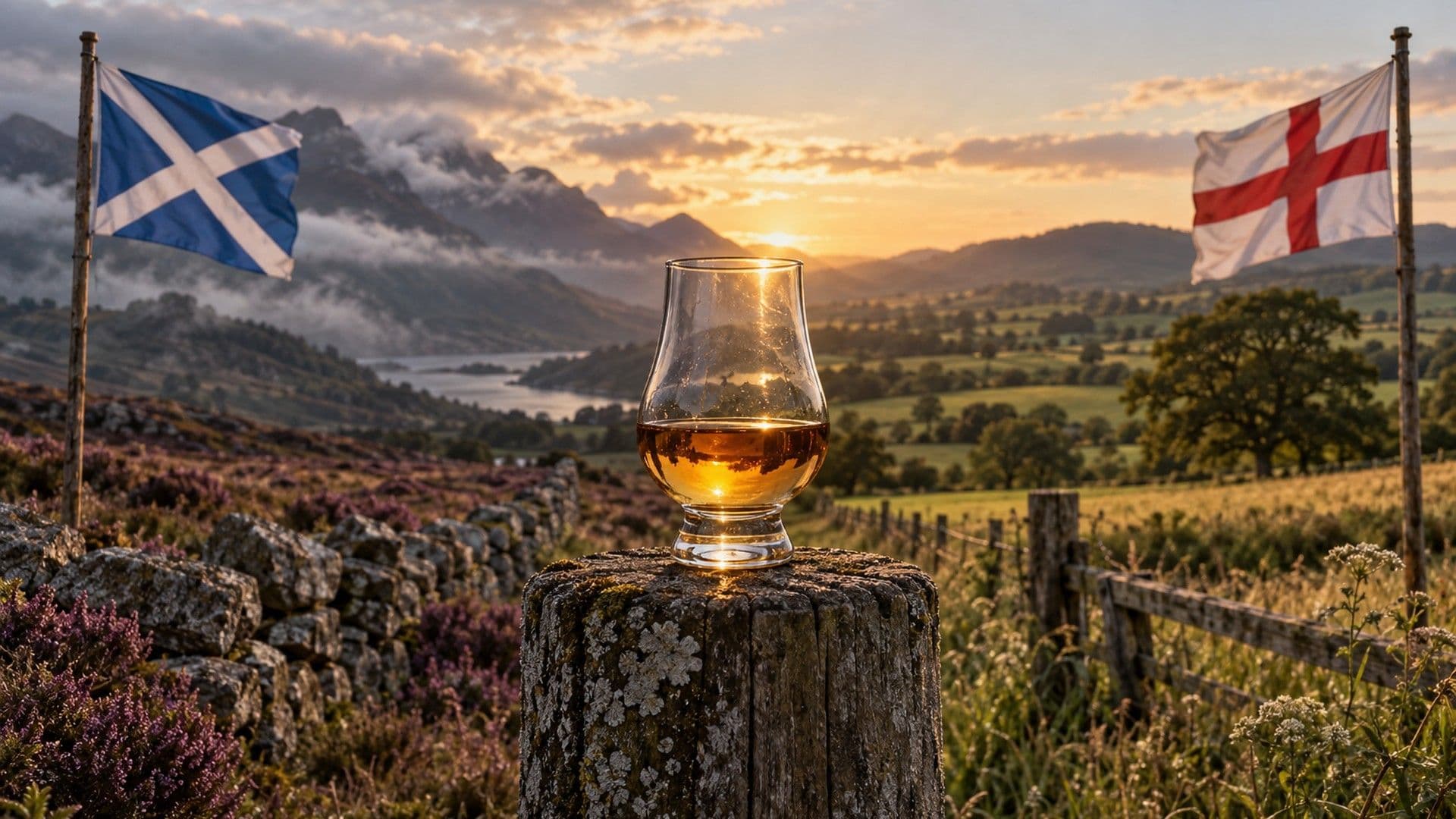
What Effect Does the English Whisky GI Have on the Scotch Whisky GI?
What Effect Does the English Whisky GI Have on the Scotch Whisky GI?
In short, the English Whisky GI does not change how Scotch Whisky is made. Scotch keeps its own protected definition. The real effect is on the words single malt: the new English rules allow a single malt to be made in a more flexible way than Scotch permits, and the Scotch Whisky Association says this undermines what single malt means to whisky drinkers around the world.
The UK Department for Environment, Food and Rural Affairs (Defra) confirmed on 11 September 2026 that "English Whisky" and "English Whiskey" are now protected names under the UK Spirit Drinks Geographical Indications Scheme. With that decision, the national whiskies of all four UK nations have legal protection: English Whisky joins Scotch Whisky, Single Malt Welsh Whisky and Irish Whiskey. The English Whisky Guild, which led the application, called it "a landmark achievement for English Whisky".
What the English Whisky GI Requires
The English Whisky Guild submitted its application in February 2022. It was published for opposition in February 2025 and refined through consultation before final approval. Under the approved rules, English Whisky must be made from cereal grain grown in the UK and English water. The wort must be created in England, the spirit must be distilled in England at less than 94.8% ABV, and it must mature in England for at least three years in wooden casks of no more than 700 litres. It is bottled at no less than 40% ABV, and plain caramel (E150a) is the only additive allowed, for color only.
The rules name two categories, Malt English Whisky and Grain English Whisky, which can carry the prefixes Single or Blended. Producers must be verified under HMRC's Spirit Drink Verification Scheme before they can use the name, and the full product specification is due to be published on 1 October 2026.
Where the English and Scotch Rules Differ
A Scotch single malt must be mashed, fermented and distilled at one distillery in Scotland, using malted barley and pot stills, and matured in Scotland for at least three years. Single Malt Welsh Whisky goes further still: mashing, fermentation, distillation, maturation and bottling must all happen in Wales.
The English rules take a different path. A distillery may work with a local brewery for mashing and fermentation and still call its whisky a single malt, as long as distillation happens at one site. The English Whisky Guild points to history here: when Hicks and Healey laid down England's first modern whisky in 2003, it used wort from St Austell Brewery. English producers may also mature in wooden casks other than oak, as long as this is declared on the label, use modern still designs, and ship matured whisky in inert bulk containers for bottling in export markets, subject to controls.
In one respect the English rules go further than any other UK whisky GI. All cereal grain must be grown in the UK, a requirement the English Whisky Guild describes as unique among the UK's whisky GIs.
Why the Scotch Whisky Association Objects
The Scotch Whisky Association says it is not against an English GI as such, and that it helped with the initial drafting. Its objection is to the single malt rules, which it calls "entirely inconsistent with the reputation of single malt whisky".
"We do not oppose the principle of an English whisky GI and indeed have helped in its initial drafting. But the text as approved undermines the established definition of single malt, creates confusion for consumers and jeopardises the category which the Scotch whisky industry established and built the reputation of around the world."
The debate has reached Westminster. The SNP has called on the UK Government to reverse the decision. Liberal Democrat MP Wendy Chamberlain, who chairs the All Party Parliamentary Group for Scotch Whisky, secured an urgent question in the House of Commons. She said she supports a GI for English whisky, but warned that the new definition weakens the established meaning of single malt. She also criticized the timing of the announcement, made at 5pm on a Friday before recess, ahead of an appeal deadline on 8 October.
What It Means for Scotch and for Whisky Buyers
On paper, Scotch Whisky loses nothing: its own rules and protected name stay exactly as they are. The two categories are also very different in size. Scotland has more than 150 distilleries, and Scotch is the UK's most valuable food and drink export, with sales last year worth around €6.2 billion at today's exchange rate and 1.34 billion bottles shipped to 163 markets. England has more than 70 distilleries, up from 46 at the end of 2023, exports to more than 30 countries, and holds maturing stock valued at around €1.17 billion.
The practical effect shows on the label. English Whisky is now a defined, protected term. At the same time, a Single Malt English Whisky may have been mashed and fermented at a partner brewery, which a Scotch single malt never is, and any maturation in wood other than oak must be stated on the label. Whether the decision stands will be clearer once the 8 October appeal deadline has passed. For the background on the decision itself, read our news on English Whisky Gains Geographical Indication Status.
Frequently Asked Questions
Does the English Whisky GI change how Scotch Whisky is made?
No. Scotch Whisky keeps its own protected definition. The dispute is about how the English rules define single malt, not about the Scotch rules themselves.
Can an English single malt be made with wort from a brewery?
Yes. English distilleries may use a local brewery for mashing and fermentation and still call the whisky a single malt, while a Scotch single malt must be mashed, fermented and distilled at one distillery.
Are any of the English rules stricter than the Scotch rules?
Yes. English Whisky must be made from grain grown in the UK, a requirement the English Whisky Guild says no other UK whisky GI has.
Is the decision final?
Defra approved the GI on 11 September 2026 and the full specification is due on 1 October 2026. An appeal deadline falls on 8 October, and the SNP has called for the decision to be reversed.
About the author

Spiritory Team
Spiritory is a team of dedicated Whisky, Rum and Spirits Enthusiast. Our passion for the product, craftmanship and art of producing the finest spirits in the world will be represented in every article we write on our blog-page. Our goal is to produce content which is interesting to read and for a broad base of consumers, enthusiasts, investors and collectors.