

Reach thousands of whisky and spirits lovers every day.


 MagazineWhat Is the Difference Between Budget, Core, Premium and Ultra Premium Whisky? 5 Price Tiers Explained
What Is the Difference Between Budget, Core, Premium and Ultra Premium Whisky? 5 Price Tiers Explained
 by Janis WilczuraI'm one of Germany's leading whisky experts, featured in Handelsblatt and BILD. To me, whisky is craftsmanship and art.
Follow Spiritory on Google News to get our latest guides and releases delivered straight to your feed.
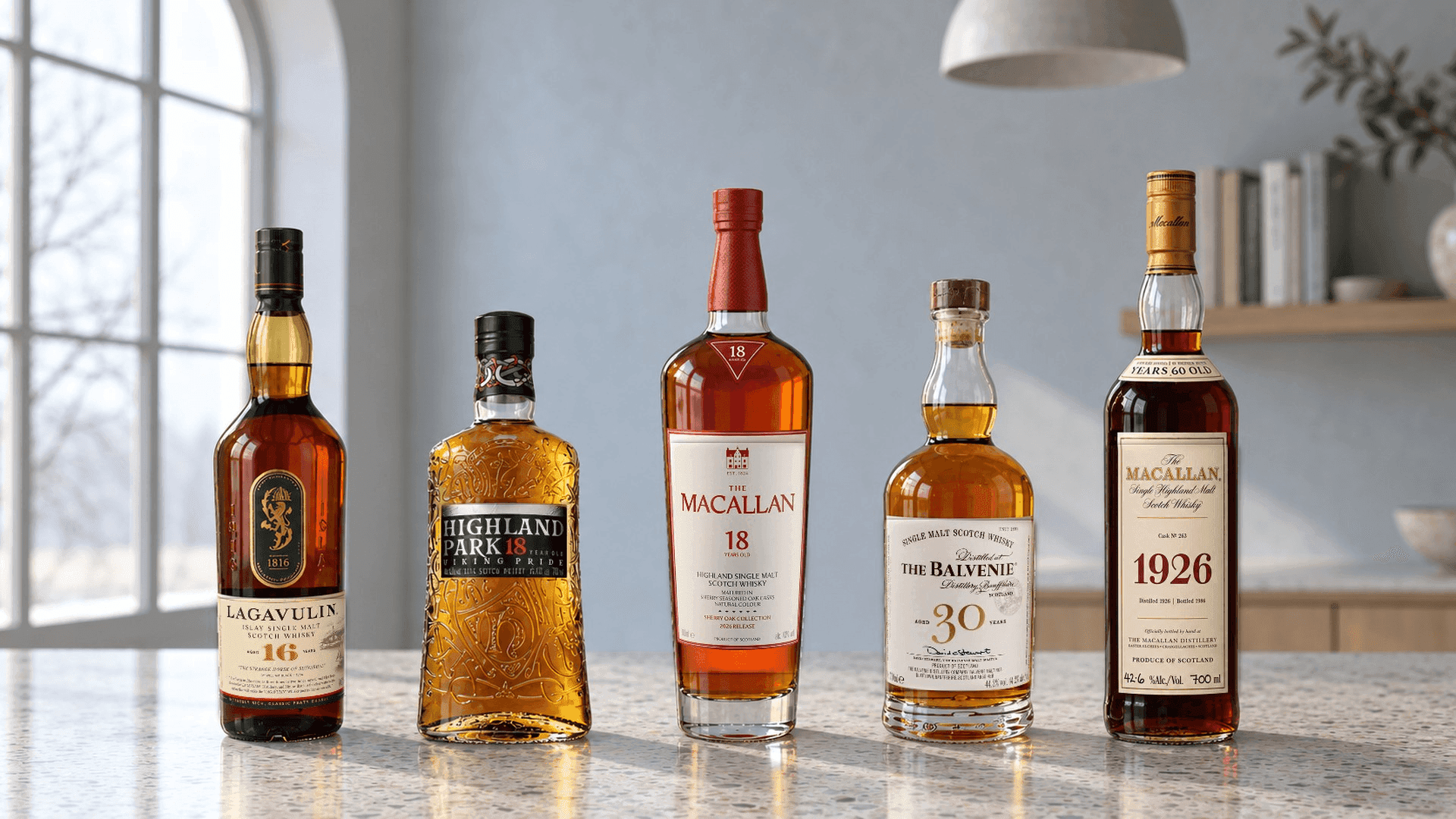
What Is the Difference Between Budget, Core, Premium and Ultra Premium Whisky? 5 Price Tiers Explained
Budget, core, premium, ultra premium and the very top are price tiers, and the brackets in this guide are the ones Spiritory, a marketplace for collectors, uses for a 70 cl bottle in Germany: budget below €100, core €100 to €250, premium €250 to €1,000, ultra premium €1,000 to €5,000 and a top tier above €5,000. They are a practical guide, not an official standard. The spirits industry draws its own lines in US dollars: IWSR, which tracks the global market, starts ultra premium at US$46.13 (around €41) and prestige at US$104.49 (around €94) per bottle in the United States, as reported by The Spirits Business in August 2026.
Key Takeaways
Spiritory groups bottles into five tiers for a 70 cl bottle in Germany: below €100, €100 to €250, €250 to €1,000, €1,000 to €5,000 and above €5,000. This is how a collectors' marketplace sorts bottles, a practical guide and not an official standard.
The industry bands come from IWSR and the Distilled Spirits Council of the United States (DISCUS), and both work in US dollars for the US market. IWSR, as reported by The Spirits Business, names value, standard, premium, super premium, ultra premium, prestige and prestige plus. DISCUS names value, premium, high end premium and super premium.
Those bands are built for the whole spirits shelf, so most of them end below €100. A collector's scale starts where the industry's ends.
Up to the premium tier, price tracks what is in the bottle: age, strength and cask. Above it, scarcity, brand and auction results play a growing part.
At the very top, prices are set at auction. A Macallan 1926 reached a hammer price of £1.7 million in October 2026.
Tip: Read a price as a list of reasons. Ask which of these it pays for: age, strength, cask type, a limited run or a famous name. A bottle that pays for only one of them is often the best value in its tier.
Budget Whisky Costs Below €100 and Covers Most of the Shelf
Budget whisky is the entry level, and on Spiritory's scale it means a 70 cl bottle below €100. That is a wide tier, and it is wide on purpose: it also holds almost the entire industry scale. IWSR's value, standard, premium, super premium and ultra premium bands all end at US$104.48, or about €94, so they sit inside this one tier, and IWSR's prestige band starts at around €94, just below the line to the next tier. Within it, a simple blend can cost €15 and an aged Islay single malt €70. Shelf prices in Germany include alcohol tax and 19% VAT, as our guide to what a good bottle of Scotch costs in Germany explains. Scotch whisky must be matured for at least three years under the Scotch Whisky Regulations, so even the cheapest Scotch has a floor.
What defines this tier
Large production runs and a steady, repeatable house style.
Blends, young single malts and the standard age statements of the big distilleries.
Wide distribution, from supermarkets to specialist shops.
Glenfiddich 12 Years Old is a clear case. It carries a 12 year age statement, is bottled at 40% ABV and usually sells for around €30 to €35 in Germany. At the upper end of the tier, Lagavulin 16 Years Old is a 43% ABV Islay single malt that usually sells for around €65 to €75 in Germany. This tier suits anyone who wants to learn what a distillery tastes like, and it is a safe choice for gifts when you do not know the recipient's preferences.
Core Whisky Costs About €100 to €250 and Rewards Age
Core whisky starts where the standard bottle ends. In Germany it usually costs about €100 to €250 for 70 cl, and it is where older age statements, usually 18 to 25 years, become the norm. IWSR's prestige band, which runs from about €94 to €194, overlaps with the lower part of this bracket, and prestige plus begins at around €194, inside it. The industry thresholds are set for the US market and, as IWSR notes, vary by market, so they only loosely match German shelf prices.
What defines this tier
Age statements of 18 years and more on a single malt.
Smaller production than the 10 and 12 year standards, with more money spent on maturation.
A price that is high enough to feel like a decision, and low enough to open and share.
Highland Park 18 Years Old Viking Pride is a single malt that Whisky Magazine lists at 43% ABV and that usually sells for around €120 to €160 in Germany. Glenfarclas 25 Years Old is a Speyside single malt that Whisky Magazine lists at 43% ABV and that usually sells for around €175 to €220 in Germany. Together they show the range of the tier: a first serious aged malt at one end, a quarter century of maturation at the other. It suits the buyer who knows the standard bottles and wants to taste what extra years do.
Premium Whisky Costs About €250 to €1,000 and Adds Cask Quality and Name
Premium whisky is where bottlers spend on something visible: older whisky, expensive casks and a name that carries weight. The bracket is about €250 to €1,000. In IWSR terms this is all prestige plus, the top band, which starts at US$216.54 and has no ceiling, so the industry has few words for this wide range. Here the question starts to shift from taste per euro to whether you want a particular bottle.
What defines this tier
Age statements of 18 years and up, often released in limited quantities.
Casks that cost more, such as sherry seasoned oak.
Packaging, a famous name and a lively secondary market.
Macallan 18 Years Old Sherry Oak 2026 Release fits here. Macallan describes its Sherry Oak 18 as matured for at least 18 years, mostly in sherry seasoned European oak casks from Jerez, and it usually sells for around €340 to €400 in Germany. The same age statement from a Japanese house costs more: Yamazaki 18 Years Old usually sells for around €550 to €650 in Germany. This tier suits milestone gifts and buyers who value a bottle they may not see again. Our piece on why some whisky is so expensive explains the cost of time in detail.
Ultra Premium Whisky Costs About €1,000 to €5,000 and Is Priced on Scarcity
Ultra premium whisky begins where three digits stop. The bracket is about €1,000 to €5,000, and the bottles in it are old, rare or both. Thirty year old whisky from a famous distillery is the typical case, because a bottler must leave the spirit in the cask for three decades and lose a part of it to evaporation every year. At this level the price is as much a statement about supply as about the liquid.
What defines this tier
Age statements of 30 years or more, or very limited releases.
Presentation boxes and decanters, and a market that watches each new release.
Prices that vary a lot between retailers, because few bottles are sold.
Balvenie 30 Years Old Rare Marriages is a good example. The Balvenie lists it as The Balvenie Thirty, part of its Rare Marriages range, bottled at 44.2% ABV, and it usually sells for around €3,400 to €3,900 in Germany, well inside the tier. This tier suits collectors and milestone gifts, and buyers who treat a bottle as something to keep for a long time.
The Very Top Starts Above €5,000 and Is Priced at Auction
Record and collector bottles are a different market. Shelf prices give way to auction results, and a bottle can sell for far more than any retailer would ask. The bracket starts at €5,000: even a regular Macallan 30 Sherry Oak usually sells for around €5,200 to €5,400 in Germany, and the extremes run into millions. Three things define it: very old whisky, tiny numbers of bottles and a story, such as a closed distillery. Our explainer on ghost distilleries shows how a finite stock of spirit supports prices.
What the record bottles show
On 9 October 2026 Sotheby's sold a Macallan 60 Years Old 1926 from Cask Nr.263 at its first auction on The Macallan Estate. The hammer price in Sotheby's result was £1.7 million, around €2.0 million, and it met the low end of the estimate. The same 1926 vintage had fetched £1.75 million hammer in 2023, according to Whisky Advocate. Buyers pay a premium on top of the hammer price, so headline figures are higher. We went through the result in what the Macallan 1926 result says about the market.
Records do not guarantee a rise. The Macallan 81 Years Old The Reach sold for a hammer price of £240,000 in 2022, around €286,000, and for £105,000, around €125,000, at the same 9 October 2026 Sotheby's sale, a drop of 56%, according to Whisky Advocate. This tier suits collectors who accept that prices go down as well as up. Nothing here is investment advice.
Tip: Brackets move. Compare the current price of the same bottle at two or three established German retailers before you decide which tier it belongs in, and remember that auction and secondary market prices follow different rules than shelf prices.
FAQ
What is the difference between budget, core, premium and ultra premium whisky?
The difference is what the bottle offers beyond the basics. On Spiritory's scale for a 70 cl bottle in Germany, budget bottles cost below €100 and cover blends and standard age statements. Core bottles, €100 to €250, bring 18 to 25 years of age. Premium, €250 to €1,000, adds cask quality and a famous name. Ultra premium, €1,000 to €5,000, adds scarcity, and above €5,000 prices are set at auction. These brackets are a practical guide, not an official standard.
How do IWSR and DISCUS define price tiers?
IWSR uses bands in US dollars, reported by The Spirits Business in August 2026 as value below US$10.12, standard to US$23.21, premium from US$23.22, super premium from US$32.45, ultra premium from US$46.13 and prestige from US$104.49, with prestige plus above US$216.54. These vary by market and change over time. DISCUS uses four names in its US market tables: value, premium, high end premium and super premium.
Why do Spiritory's brackets differ from the industry bands?
The industry bands are built for the whole spirits shelf, from everyday vodka to rare whisky, and they are set in US dollars for the US market. Everything up to IWSR's ultra premium band ends at about €94, and only the prestige and prestige plus bands reach higher, so a collector's scale starts where the industry's ends. Euro prices in Germany also include alcohol tax and 19% VAT. Spiritory, a marketplace for collectors, therefore uses wider euro brackets that separate bottles at the price levels where collectors make different decisions.
Is expensive whisky always better?
No. Price rises with age, scarcity and brand as well as quality, and the steps in taste get smaller as the price grows. Many drinkers find the best value in the budget and core tiers.
- Key Takeaways
- Budget Whisky Costs Below €100 and Covers Most of the Shelf
- Core Whisky Costs About €100 to €250 and Rewards Age
- Premium Whisky Costs About €250 to €1,000 and Adds Cask Quality and Name
- Ultra Premium Whisky Costs About €1,000 to €5,000 and Is Priced on Scarcity
- The Very Top Starts Above €5,000 and Is Priced at Auction
- FAQ
About the author

Janis Wilczura
I'm one of Germany's leading whisky experts, featured in Handelsblatt and BILD. To me, whisky is craftsmanship and art.
To the author