

Reach thousands of whisky and spirits lovers every day.


Why Is Some Whisky So Expensive?
 by Janis WilczuraI'm one of Germany's leading whisky experts, featured in Handelsblatt and BILD. To me, whisky is craftsmanship and art.
Follow Spiritory on Google News to get our latest guides and releases delivered straight to your feed.
Why Is Some Whisky So Expensive?
Key Takeaways
Time is the largest hidden cost in premium whisky. A 30 Year Old ties up capital, warehouse space, and insurance for three decades before a single bottle can be sold.
Cask choice drives both flavour and expense. A first-fill sherry cask costs many times more than a used bourbon barrel, although the gap narrows when casks of the same size are compared.
Spirit distilled before a distillery closed is a finite pool, which supports prices over the long run, but scarcity does not guarantee a rising price and secondary values have corrected since their 2022 peak.
Brand prestige and collector track records are real pricing factors. A Macallan or Highland Park commands more than an equally well made whisky from a less famous name.
Cask strength bottlings genuinely cost more per bottle to produce: each cask fills fewer bottles, and a stronger bottle carries more excise duty.
Single-cask and limited releases spread fixed costs across far fewer bottles, which raises the price of each one.
The True Cost of Time
Decades of Capital Locked in the Warehouse
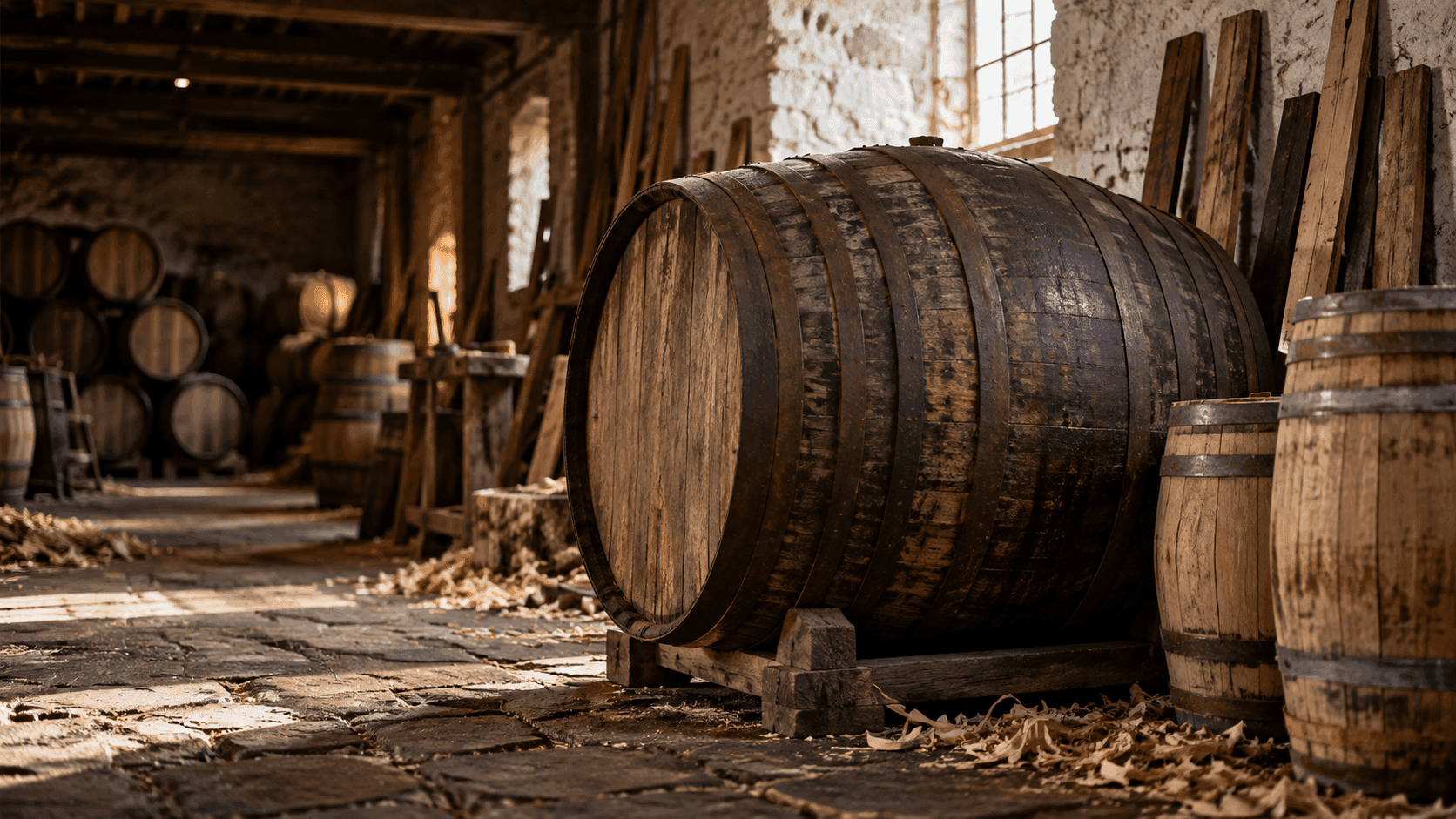
The most overlooked expense in premium whisky is time. Spirit filled into cask in 1996 cannot be sold as a 30 Year Old until 2026. For those three decades the stock sits in a warehouse that has to be built, maintained, secured, and insured, and the cask itself, particularly a first-fill sherry cask, is a significant upfront outlay. Whisky matures in bonded warehouses, so excise duty is suspended until the spirit is released for sale, but the capital, storage, and insurance costs accumulate every year the cask waits.
A 50 Year Old whisky carries half a century of that accumulated cost: cooperage, warehousing, security, insurance, and the steady loss of spirit to evaporation, all financed long before the first bottle earns any revenue. That financial burden is real, and it is embedded in the price.
Evaporation and Yield Loss
In Scotland a cask typically loses around 2 percent of its contents every year to evaporation, known as the angels' share. The rate is higher in the first years of maturation and slows later, but over two decades the cumulative loss can reach around 40 percent of the original volume. Every litre lost is a litre that can never be bottled or sold, which is one reason the oldest expressions carry such steep prices per bottle.
Wood, Cask Type, and Flavour Investment
Sherry Casks and the First-Fill Premium
A used American bourbon barrel is among the cheapest casks a distillery can buy, while a first-fill Spanish oak sherry cask is among the most expensive. The difference is often quoted as tenfold or more, although that figure usually compares a small used bourbon barrel with a much larger sherry butt; compared size for size, the gap is smaller but still substantial. Many Speyside distilleries rely on sherry casks for their core and prestige expressions, and that cost flows through to the bottle.
Port pipes, Madeira casks, and other less common wine casks also cost considerably more than standard barrels. A distillery using them for limited annual releases cannot absorb that cost into a standard bottle price; it has to charge a measurable premium or lose money on the product.
Cask Sourcing and Consistency
Genuine sherry casks are harder to come by than they once were. Traditional sherry consumption has declined, so far fewer casks leave bodega use naturally, and most sherry casks used by whisky producers today are seasoned specifically for that purpose, which means producing and disposing of wine that has no market of its own. Distilleries with cooperage relationships going back decades secure access that newer producers cannot, and that access shows up in the bottle price.
Tip: When two whiskies from the same distillery carry the same age statement but one costs considerably more, check the cask type first. Sherry maturation very often explains the difference.
Scarcity, Prestige, and Secondary-Market Dynamics
Closed Distilleries and Finite Supply
Some of the world's most expensive whiskies were distilled at distilleries that later fell silent for decades. Brora, Rosebank, and Port Ellen closed in the 1980s and early 1990s, and although all three have since been revived, Brora in 2021, Rosebank in 2023, and Port Ellen in 2024, the spirit distilled before closure remains a fixed and shrinking pool. The new make is a different whisky produced on restored equipment, so it does nothing to replenish the old stock. Every pre-closure bottle that is opened makes the remaining supply smaller.
An active distillery may charge a moderate price for a 25 Year Old. A pre-closure bottling of similar age can command a much higher secondary price, not because the liquid is necessarily better, but because it cannot be replaced. Scarcity supports that premium over the long run. It does not guarantee a rising price, though: secondary-market values across the category have corrected since their 2022 peak.
Collector Prestige and Brand Cachet
Highland Park, Macallan, Dalmore, and similar names carry valuations beyond their production costs because they have built collector recognition and secondary-market track records over decades. A collector buying a recognised Macallan vintage knows it has a reasonably liquid resale market. An equivalent whisky from a less famous distillery, however well made, carries no such assurance.
This is not snobbery; it is economics. Prestige makes a bottle easier to resell, and that confidence commands a premium at the point of purchase.
Allocation and Limited Releases
Annual limited releases from prestige distilleries are allocated in small quantities to selected retailers and markets. When demand exceeds that allocation, bottles often change hands on the secondary market above their release price. That pattern was strongest during the boom years. In the more subdued secondary market since 2022, far fewer releases trade at an automatic premium, and those that still do tend to be genuinely scarce.
Production Complexity and Bottling Decisions
Cask Strength, Chill Filtration, and Other Premiums
Bottling at cask strength, often well above 50 percent ABV, is sometimes described as costing nothing extra because the spirit is simply not diluted. That is not quite right. Without dilution, each cask fills fewer bottles, and because excise duty is charged on the volume of pure alcohol, a stronger bottle carries more duty. Cask strength bottlings therefore cost more per bottle to produce, before any premium collectors attach to their perceived authenticity.
Non-chill-filtered whisky may retain more flavour compounds and texture, although how much difference that makes is debated. Skipping chill filtration removes a production step rather than adding one, so where a non-chill-filtered edition carries a premium, it reflects what the market values rather than additional cost.
Batch Variation and Single-Cask Releases
A single-cask release costs more per bottle to bring to market: each cask is distinct, bottling runs are short, and labelling and marketing are individual. A core expression may be bottled in tens of thousands, while a single cask typically yields only a few hundred bottles, so fixed costs are spread across far fewer units. The price reflects that reality.
Some collectors prefer single-cask, uncut, unfiltered expressions because they see them as more honest and less standardised than a release blended to a house style. That preference creates demand, which sustains the premium.
FAQ
Is old whisky always better than young whisky?
No. Older whisky is often more complex, but many young whiskies are excellent. A well made 15 Year Old Speyside may be more enjoyable than an over-oaked 30 Year Old. Age is a marker of time and patience, not a guarantee of quality. Choose bottles for enjoyment and personal taste first, and investment potential second.
Why does independently bottled whisky sometimes cost less than official releases from the same distillery?
Independent bottlers typically carry lower brand and marketing overheads than distillery owners, and their releases do not carry the premium attached to an official label. They also take on more risk, because they lack brand prestige to anchor the price. Some independent bottlings are exceptional value; others simply reflect a less celebrated cask from the same distillery.
Can I expect my expensive whisky to increase in value?
Bottles from closed distilleries, allocated annual releases, and certain recognised Macallan, Highland Park, and Bowmore vintages have historically appreciated over periods of ten years or more. However, the secondary market is volatile, it has corrected since its 2022 peak, and not every expensive bottle appreciates. If you are buying for investment, research the specific expression's secondary-market track record before committing.
What causes such large price differences between bottles of the same age?
Cask type, distillery prestige, bottling decisions such as cask strength, and secondary-market scarcity all contribute. A 20 Year Old sherry-matured expression from a celebrated distillery will command significantly more than a 20 Year Old bourbon-cask bottling from a lesser known name, and the difference reflects production cost, scarcity, and collector demand rather than arbitrary markup.
Should I buy vintage whisky or current releases?
That depends on your goals. Current releases are generally better value for flavour per euro, because you are paying closer to production cost. Older vintages from the secondary market carry prestige, scarcity, and investment potential, but at a premium. If you are a new collector, explore current releases from reputable distilleries first, and consider older vintages later for specific expressions you genuinely enjoy.
About the author

Janis Wilczura
I'm one of Germany's leading whisky experts, featured in Handelsblatt and BILD. To me, whisky is craftsmanship and art.
To the author