

Reach thousands of whisky and spirits lovers every day.


The Whisky Old Fashioned: A Complete Guide
 by Max RinkI’m a whisky enthusiast and aspiring writer, exploring new flavours and the stories behind every bottle.
Follow Spiritory on Google News to get our latest guides and releases delivered straight to your feed.
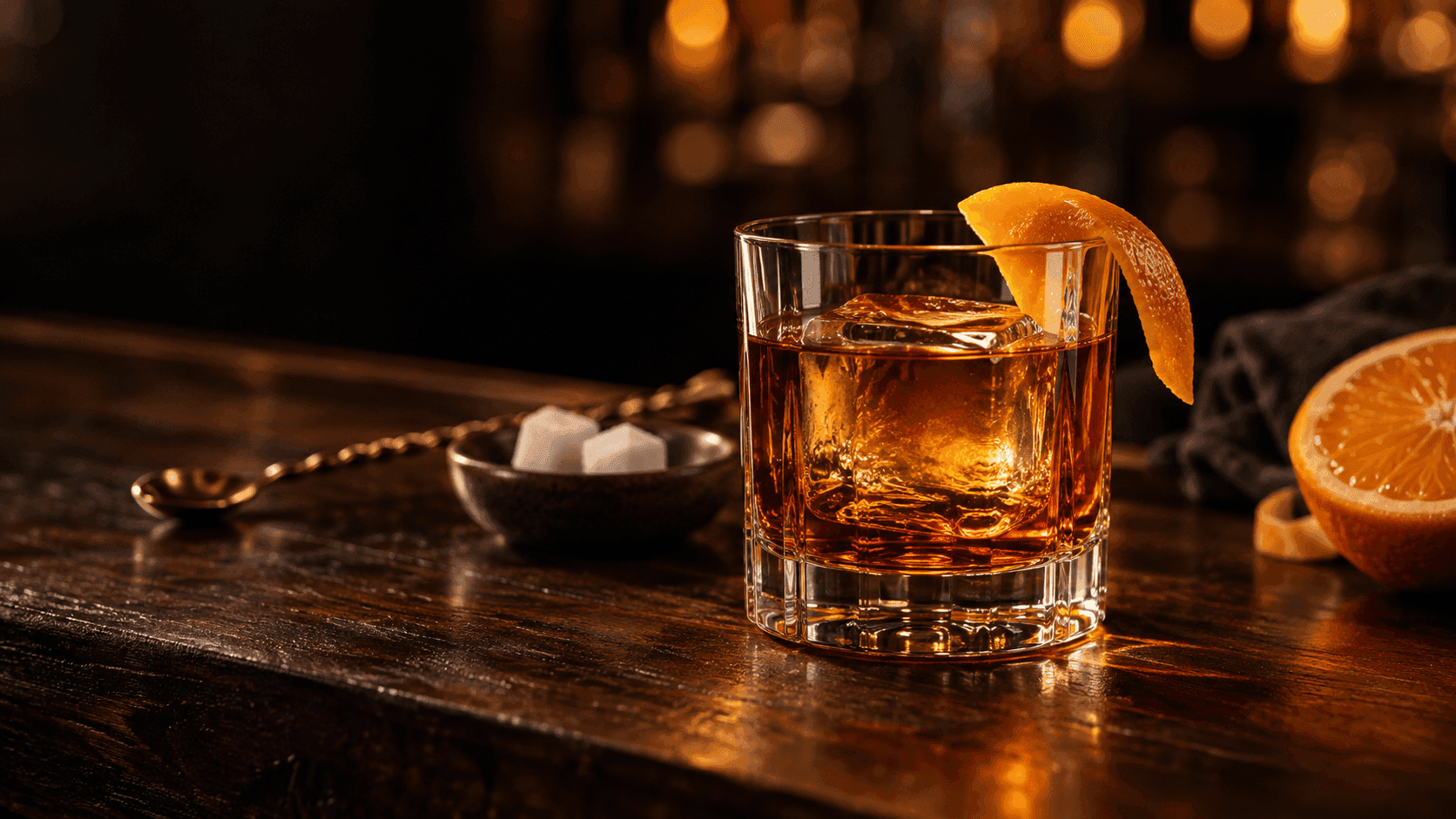
The Whisky Old Fashioned: A Complete Guide
Key Takeaways
The classic recipe needs only whisky, sugar, bitters and a little water, served over ice: resist the temptation to add juice, soda, or muddled fruit.
Stirring rather than shaking is essential: the Old Fashioned is a spirit-forward cocktail that requires controlled dilution, not aeration.
The orange zest is part of the drink's structure, not just decoration; the oils it releases change the aromatic profile of the finished glass.
Bourbon and rye are the bases named in the IBA official recipe; Scotch or Japanese whisky produce compelling variations in the same format.
Ice size matters: a single large cube melts more slowly than small cubes, so the drink dilutes gradually instead of turning watery.
Explore the range of whiskies suited to an Old Fashioned format on Spiritory.
The Classic Recipe
The Old Fashioned's blueprint is older than its name. On 13 May 1806, The Balance and Columbian Repository, a newspaper in Hudson, New York, printed the earliest known definition of the cocktail: a stimulating liquor made of spirits of any kind, sugar, water and bitters. That is still exactly what goes into an Old Fashioned. The popular story that the drink was invented at the Pendennis Club in Louisville is disputed: the club was founded in 1881, and cocktail historians such as David Wondrich reject the claim because old fashioned cocktails were already mentioned in print before then. The recipe below follows the official specification of the International Bartenders Association (IBA), alongside common modern bar practice.
Ingredients
You need 45 to 60 ml of bourbon or rye whiskey (the IBA specification uses 45 ml), one sugar cube or 7.5 ml of rich sugar syrup (two parts sugar to one part water), two or three dashes of Angostura bitters, a few dashes of plain water if you are using a sugar cube, a dash of orange bitters if you like, ice, and a wide strip of orange zest. The IBA garnish is an orange slice or zest with a cocktail cherry.
Method
The IBA method builds the drink in the glass: place the sugar cube in an old fashioned glass, saturate it with the bitters, add a few dashes of plain water and muddle until the sugar has dissolved. Fill the glass with ice cubes, add the whisky and stir gently. If you prefer syrup, stir the whisky, syrup and bitters with ice in a mixing glass instead, then strain into a chilled old fashioned glass over a single large cube, as Difford's Guide recommends. To finish, hold the orange zest skin side down over the drink and pinch it firmly to release its oils, run it around the rim if you wish, then drop it into the glass.
Choosing the Right Whisky
The Old Fashioned is an unusually revealing drink. Because the other ingredients are minimal, the character of the whisky dominates every sip. This means the quality and style of the base spirit matters more than in almost any other cocktail format.
Bourbon
Bourbon is the classic choice and one of the two whiskeys named in the IBA recipe. Its characteristic sweetness, vanilla, and oak notes sit naturally within the cocktail's structure, and a bottling with some strength behind it holds its character better through dilution. Higher-rye bourbons, those with a noticeably spicy grain character, produce a drier, more complex Old Fashioned that suits drinkers who find a standard bourbon version too sweet.
Rye Whiskey
Rye whiskey produces a leaner, drier Old Fashioned with more prominent spice. The reduction in sweetness means the bitters and sugar play a more structural role rather than complementing existing sweetness in the spirit. The two styles also combine well: Difford's Guide's preferred version blends bourbon at 45 per cent ABV with straight rye at 50 per cent. Search rye whiskey expressions on Spiritory to find bottles suited to this format.
Scotch and Japanese Variations
A Scotch Old Fashioned simply follows the classic format with a quality blended or single malt Scotch. It should not be confused with the Rob Roy, which pairs Scotch with sweet vermouth and bitters and is the Scotch counterpart of the Manhattan. The smoke of an Islay single malt in this context produces a drink with entirely different aromatics from the standard bourbon version. For a Japanese whisky Old Fashioned, Hibiki Japanese Harmony, a blend bottled at 43 per cent ABV, gives a lighter, more delicate drink, while Nikka From the Barrel, bottled at 51.4 per cent, stands up to dilution with a fuller, more intense profile.
Tip: Stirring time is not a trivial detail. Under-stirring leaves the drink insufficiently chilled and diluted; the whisky tastes raw and the sweetener has not fully integrated. Keep stirring until the glass feels cold to the touch and condensation has formed on the outside, then taste before serving.
The Bitters Question
Bitters are the seasoning of a cocktail: used in small quantities, their impact is disproportionate to their volume. In an Old Fashioned, the choice and quantity of bitters have a marked effect on the aroma and flavour of the finished drink.
Angostura Bitters
Angostura is the default: Difford's Guide notes that it became the most commonly used aromatic bitters in the Old Fashioned. Its full recipe is a closely guarded secret, but gentian is its best-known bittering agent, and the producer describes its profile as a bouquet of fruits, spices and herbs. The IBA specification calls for a few dashes and Difford's Guide uses three; start with two and add a third for a more bitter, aromatic result.
Orange Bitters
Adding a dash of orange bitters alongside the Angostura introduces a citrus note that bridges the orange zest and the whisky. It is an optional refinement rather than part of the IBA specification. Fee Brothers West Indian Orange Bitters, Regans' Orange Bitters No. 6 and The Bitter Truth Orange Bitters are all well-established options, each with a slightly different aromatic profile.
Mole and Chocolate Bitters
For a more adventurous Old Fashioned, chocolate or mole bitters in place of or alongside Angostura add a dark, spiced bitterness. Bittermens Xocolatl Mole Bitters, built on cacao, cinnamon and spice, are a well-known example. These variations are best approached as separate recipes in their own right rather than casual modifications to the standard formula.
Sugar and Sweetener Choices
The sweetener's role in an Old Fashioned is to provide balance and help integrate the bitters with the spirit, not to make the drink sweet. The choice of sweetener does affect the final flavour profile, however, and is worth considering deliberately.
Sugar Cube vs. Simple Syrup
A sugar cube, saturated with bitters and muddled with a few dashes of water, is the traditional method and the one the IBA specifies. Syrup is more convenient and gives a more consistent result because the sugar is already dissolved; Difford's Guide considers it both easier and better. Simple syrup uses equal parts sugar and water, while rich syrup uses two parts sugar to one part water, so less of it is needed for the same sweetness. Both approaches make an excellent drink.
Demerara Syrup
Making a rich (2:1) syrup with unrefined demerara sugar, as Difford's Guide recommends, adds a deeper, rounder sweetness that pairs particularly well with bourbon and rye. Muscovado, or a blend of unrefined sugar and white caster sugar, works in the same way. The flavour contribution is small but perceptible.
Variations Worth Making
The Old Fashioned's classic structure lends itself to deliberate variation. Each of these modifications produces a drink with its own identity while remaining recognisably within the Old Fashioned family.
The Oaxaca Old Fashioned
Created by Phil Ward at Death & Co in New York in 2007, the Oaxaca Old Fashioned replaces whisky with agave spirits: 45 ml reposado tequila and 15 ml mezcal, a teaspoon of agave syrup and two dashes of Angostura bitters, stirred, strained over a large cube and finished with a flamed orange twist. It contains no whisky at all, but it shows how far the Old Fashioned template can stretch, and it has become a modern classic in its own right.
The Peated Scotch Old Fashioned
Swapping bourbon for peated Scotch is one of the most natural variations. A moderately peated Scotch, two dashes of Angostura and a rich demerara syrup produce an Old Fashioned that is both recognisable and distinctly different from the bourbon original, with the smoke carrying through the zest and bitters.
FAQ
Should you put fruit in an Old Fashioned?
Not in the classic version. Muddling an orange slice and a maraschino cherry into the drink took hold around Prohibition and in the years that followed, and the modern cocktail revival largely stripped it back out. The IBA recipe muddles only sugar, bitters and water in the glass; fruit appears solely as the garnish, an orange slice or zest with a cocktail cherry.
Why do you stir an Old Fashioned instead of shaking it?
The Old Fashioned is a spirit-forward cocktail that benefits from controlled dilution and a clear, translucent appearance. Shaking would aerate the drink, make it cloudy, and over-dilute it in a way that loses the whisky's presence. Stirring provides the necessary chill and dilution without these side effects.
What is the best glass for an Old Fashioned?
An old fashioned glass, also called a rocks glass or lowball, is the standard and the glass named in the IBA recipe. This short, heavy-bottomed tumbler takes its name from the drink. A larger double old fashioned glass leaves more room for a big ice cube, and Difford's Guide recommends chilling the glass before use.
How much whisky goes in an Old Fashioned?
The IBA official recipe uses 45 ml of bourbon or rye whiskey, while many modern specifications, including Difford's Guide, use 60 ml. Either works, provided the sugar and bitters are adjusted to keep the drink balanced and it is stirred to the right dilution.
About the author

Max Rink
I’m a whisky enthusiast and aspiring writer, exploring new flavours and the stories behind every bottle.
To the author