

Reach thousands of whisky and spirits lovers every day.


What German Whisky Regions Are Emerging in 2026?
 by Max RinkI’m a whisky enthusiast and aspiring writer, exploring new flavours and the stories behind every bottle.
Follow Spiritory on Google News to get our latest guides and releases delivered straight to your feed.
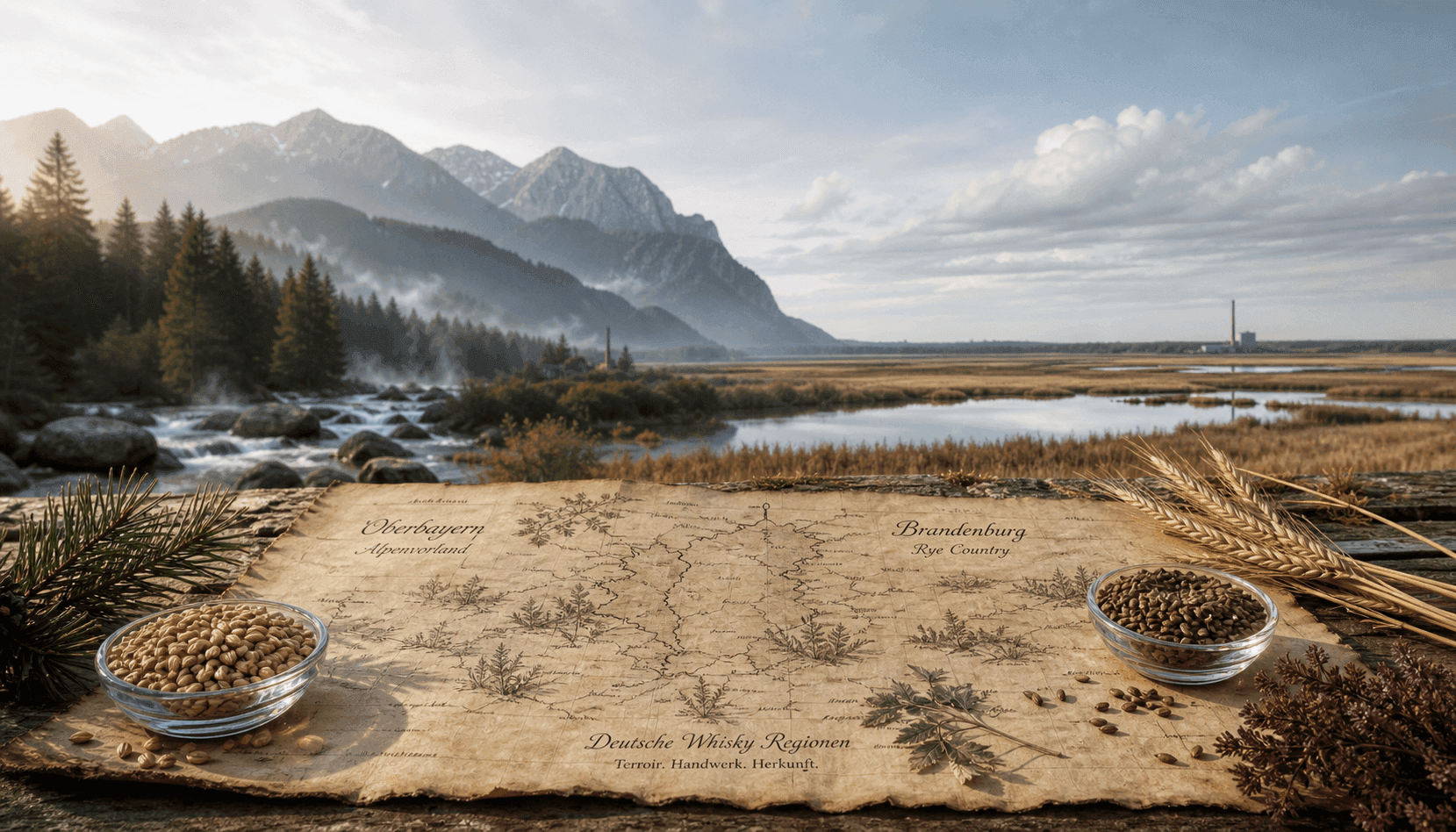
What German Whisky Regions Are Emerging in 2026?
Key Takeaways
Bavaria remains the anchor of German whisky production, with SLYRS at Schliersee and Lantenhammer driving international visibility for the region's single malt style.
Brandenburg is emerging as the home of Germany's most distinctive rye whisky character, led by Spreewood Distillery operating in the Spreewald biosphere reserve.
Franconia, home to Blaue Maus, widely recognised as the world's oldest private single malt distillery, has a heritage attracting new collector interest as awareness of German whisky grows internationally.
German whisky law (Whisky-Verordnung) mandates a minimum three-year maturation period, giving all legally designated German whisky a meaningful baseline of oak integration.
Unlike Scotland's legally defined regions, German regional identity is driven by individual distillery character and raw material advantages rather than formal appellation rules.
Collectors interested in earliest bottlings from emerging regional distilleries can track availability on Spiritory as releases enter the secondary market.
Bavaria: The Foundation of German Whisky
The Alpine foothills of Upper Bavaria, centred on the Schliersee area, represent the oldest and most developed cluster of German whisky production. The combination of clean alpine water sources, locally grown barley, and cool mountain maturation conditions has produced a regional style that is increasingly consistent and internationally recognised among whisky collectors exploring European production beyond Scotland.
SLYRS at Schliersee
SLYRS, founded in 1999, is the distillery most responsible for putting Bavarian single malt on the international map. Its core range, matured in new American oak, demonstrates the potential of Bavarian raw materials and has opened the conversation about German whisky for buyers across Europe. The distillery produces annual limited releases alongside its core range, and early bottlings of significant releases have begun to appear on the secondary market at premiums to their original retail prices.
Lantenhammer
Lantenhammer, also based at Schliersee, has deep roots in Bavarian fruit schnapps production, a tradition that informs the distillery's precise, technically accomplished approach to spirit making. Its whisky production represents a smaller share of overall output than SLYRS, but quality expressions from Lantenhammer have attracted attention from collectors interested in the full breadth of Bavarian craft distilling rather than only its most prominent name.
Huppmann and the wider Bavarian cluster
Beyond the Schliersee producers, Huppmann and a number of smaller Bavarian distilleries contribute to a growing regional production base. The diversity of these producers, in cask programme, grain source, and house style, means that Bavarian whisky is not a monolithic category but rather a set of related approaches sharing the raw material advantages of the region's agricultural and water heritage.
Tip: When assessing Bavarian whisky, pay attention to whether the distillery uses local or imported grain. Those working with specific local barley varieties are developing a terroir-linked character that has long-term collector appeal as the category matures.
Brandenburg and the Rise of German Rye
Brandenburg, the region surrounding Berlin in north-eastern Germany, has emerged as the centre of a distinctly different German whisky style: grain-forward, rye-influenced, and structurally closer to Eastern European and American rye whiskey traditions than to either Scottish or Bavarian malt. Spreewood Distillery is the primary engine of this regional identity in 2026.
Spreewood Distillery and its rye character
Spreewood operates in the Spreewald, a UNESCO biosphere reserve south-east of Berlin known for its extensive waterways and distinctive agricultural character. The distillery's whisky programme is built on rye grain, producing spirit with a pronounced spice character and body that sets it apart from barley-based German whiskies. As German craft distilling gains international recognition, Spreewood's regional specificity gives it a compelling story for export markets where the rye category is well understood.
Why rye fits Brandenburg's identity
Rye has deep historical roots in north German and Eastern European agriculture, a natural crop for the region's lighter, sandier soils. Spreewood's use of rye reflects a genuine regional agricultural heritage, lending the whisky a terroir narrative that resonates with collectors interested in the provenance and cultural specificity of their bottles rather than purely in the liquid's organoleptic properties.
Franconia: Heritage and Collectibility
Franconia, in northern Bavaria, occupies a special position in German whisky history as the home of Blaue Maus, widely cited as the world's oldest private single malt distillery. The distillery's long history and relatively limited production have created a collector dynamic quite different from newer German producers, with early releases and specific vintages achieving meaningful secondary market prices as awareness of the category grows.
Blaue Maus and the Franconian tradition
Blaue Maus began producing single malt whisky decades before the modern German craft distilling movement took shape, and the distillery's long track record means it possesses vintages and aged expressions that simply do not exist from newer producers. This historical depth is a unique dimension of collector value in the German market. Franconian character is shaped by the region's continental climate, with hot summers and cold winters producing more active cask interaction than highland producers typically experience.
Collectibility of Franconian releases
The combination of historical depth, small production volumes, and growing international awareness has created genuine secondary market activity around Blaue Maus releases. Collectors entering the German whisky market with an investment perspective are advised to research the distillery's release history and track current availability through secondary market platforms such as Spiritory.
Emerging Regions Beyond the Established Clusters
Outside Bavaria, Brandenburg, and Franconia, craft distilleries are emerging across Germany, from Rhineland-Palatinate to Saxony, producing whisky in small volumes that are beginning to reach collectors outside their immediate regional markets. The breadth of this emerging geography suggests that German whisky's regional story is still in its early chapters.
Northern Germany
Several craft distilleries in northern German states have begun whisky programmes in recent years. The North Sea and Baltic climates provide maturation conditions that differ meaningfully from alpine Bavaria, with greater humidity variation and distinct raw material profiles. Early releases from northern German producers are beginning to appear at specialist retailers and on collector platforms, often in very limited quantities that create natural scarcity.
Rhineland and Baden-Württemberg
The south-western wine regions of Germany present an interesting possibility for whisky production: distilleries with deep wine and spirits heritage repurposing wine casks for whisky maturation. The region's winemaking tradition means access to high-quality local oak and specialist finishing casks not available to distilleries elsewhere in Germany, creating a potential point of regional differentiation that several producers are beginning to explore seriously.
Tip: The most interesting investment opportunities in emerging German whisky regions often come from the earliest releases of distilleries with a clearly differentiated raw material or production approach. First releases from quality craft distilleries have historically shown appreciation as the producer's reputation develops.
How German Regional Identity Compares to Scotland
Scotland's whisky regions, the Highlands, Speyside, Islay, Campbeltown, and the Lowlands, are legally defined designations with associated flavour conventions understood by collectors worldwide. Germany's emerging regional identity operates differently: there are no formal appellation rules, and regional character is driven by individual distillery choices and raw material advantages rather than legally codified production parameters.
The case for and against formal German appellation
Proponents of formal German whisky regionalisation argue that defined appellations would increase export recognition and collector confidence, following the Scotch model that has been enormously successful commercially. Sceptics argue that Germany's diverse production base is better served by celebrating individual distillery identity rather than imposing regional designations onto a category still finding its collective character and consumer audience internationally.
Collector implications in 2026
For collectors, the absence of formal regions means research into individual distilleries is more important than in the Scotch market. Understanding a German distillery's specific grain source, cask programme, and production philosophy is the best guide to the character of its whisky. Regional identity, where it exists, is a useful shorthand but not a complete picture of what will end up in the glass.
FAQ
How many whisky distilleries are currently operating in Germany?
Germany has more than 200 distilleries with a whisky programme of some kind, ranging from established producers with broad distribution to very small craft operations producing limited quantities for local or regional markets. The number has grown considerably since 2010 as the craft distilling movement gained momentum across Europe and German consumers developed a stronger appetite for domestic spirits.
Is German whisky exported internationally?
SLYRS is the most widely exported German single malt, with distribution across Europe and into Asian and North American markets. Other producers, particularly Spreewood and Blaue Maus, have growing export profiles. German whisky as a category remains underrepresented in international markets relative to its quality, which is part of what makes the category interesting for collectors looking for value before broader recognition arrives.
Are there age statement requirements for German whisky?
German whisky law requires a minimum maturation period of three years for spirit to be designated as whisky. Beyond that minimum, age statement conventions broadly follow European and international norms. Distilleries may state an age if all whisky in the expression meets that age, and no-age-statement bottlings are increasingly common among craft producers experimenting with younger but well-integrated spirit.
Where can I buy bottles from emerging German whisky regions?
Specialist German spirits retailers carry a broader range of domestic production than general off-licences. For investment-grade and collectible expressions, Spiritory provides access to secondary market availability and transparent pricing, making it easier to track when releases from smaller regional distilleries reach the collector market at fair, data-driven prices.
About the author

Max Rink
I’m a whisky enthusiast and aspiring writer, exploring new flavours and the stories behind every bottle.
To the author