

Reach thousands of whisky and spirits lovers every day.


A Spirit for Every Nation: The World Cup 2026 Drinks Guide
 by Christopher Deutsch I drink and collect with intention, drawn to the sherried depth of Dalmore and the balance of Yamazaki.
Follow Spiritory on Google News to get our latest guides and releases delivered straight to your feed.
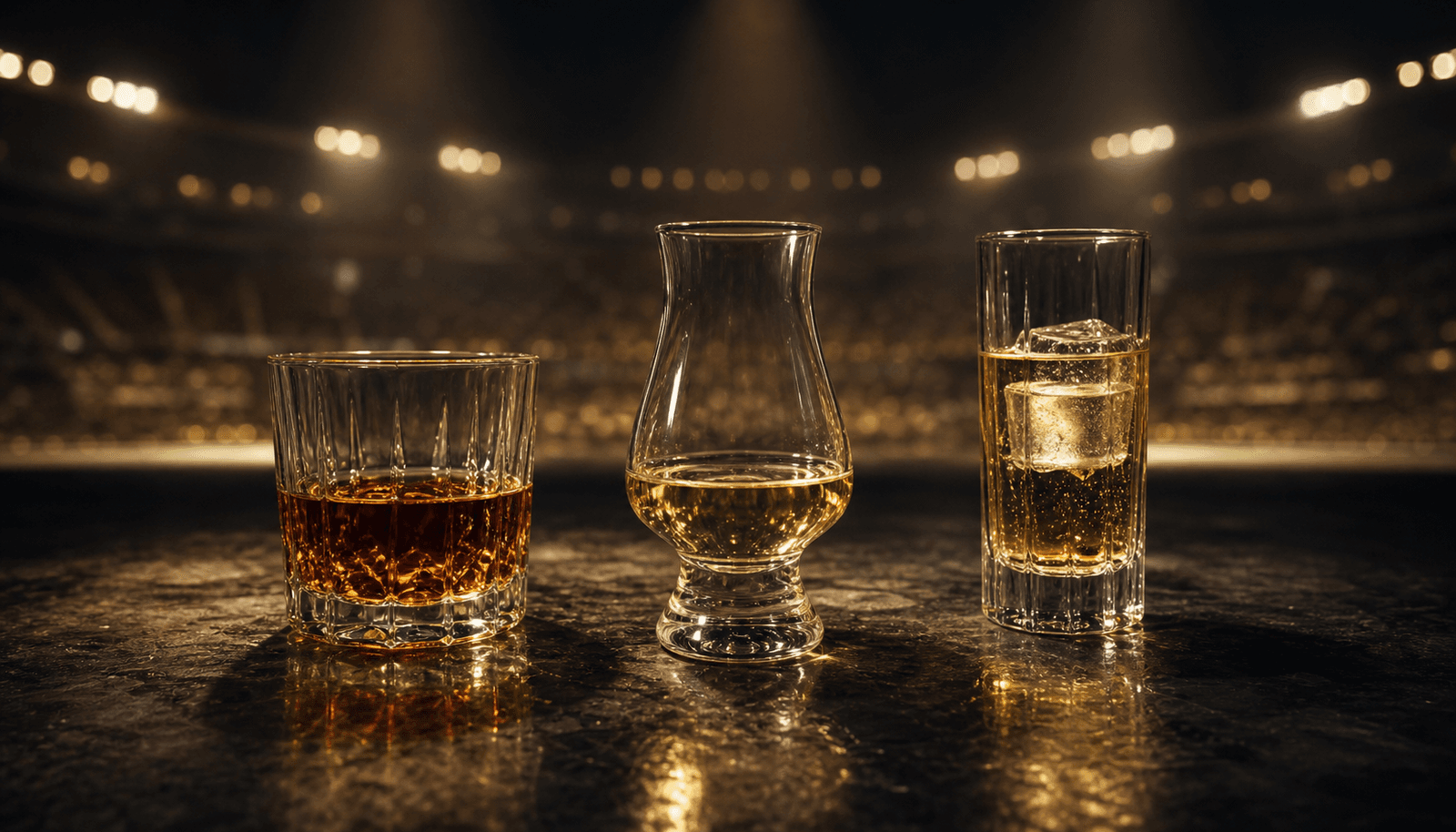
A Spirit for Every Nation: The World Cup 2026 Drinks Guide
- Key Takeaways
- Three Host Nations
- USA: Bourbon and Rye
- Mexico: Tequila and Mezcal
- Canada: Canadian Whisky
- Scotland: Single Malt
- FAQ
Key Takeaways
- World Cup 2026 runs from June 11 to July 19, with matches spread across 16 cities in the USA, Canada, and Mexico.
- Each host nation has a spirit tradition worth exploring: American whiskey in the US, tequila and mezcal in Mexico, and Canadian whisky in Canada.
- Scotland returns to the World Cup after a 28-year absence, giving European fans a compelling reason to pour a single malt at home.
- Don Julio has released a dedicated FIFA World Cup 2026 Limited Edition, and Ben Nevis has bottled a 27-year-old expression distilled the year Scotland last competed.
- The best approach is to match your glass to the match on screen: bourbon for US group games, mezcal for the Mexico opening fixture, Scotch for Scotland's long-awaited return.
The Tournament and Its Three Host Nations
The 2026 FIFA World Cup is the largest in the tournament's history. For the first time, 48 national teams will compete across 104 matches, played in 16 cities spread across three countries. The United States hosts 11 venues, including the final at MetLife Stadium in New Jersey on July 19. Mexico hosts in Mexico City, Guadalajara, and Monterrey. Canada hosts in Toronto and Vancouver.
This format creates something no previous World Cup has offered: a single tournament that cuts across three distinct spirits cultures. American bourbon and rye, Mexican tequila and mezcal, and Canadian whisky are all native to their host nations in the most literal sense. Each has geography, law, and agricultural history baked into it. That makes the 2026 tournament a rare occasion for spirits drinkers to think about what they are pouring and why.
Scotland earns a place in this guide as what you might call the unofficial fourth nation. After qualifying for their first World Cup since France 1998, the Scots bring with them 28 years of anticipation and a spirits tradition that needs no introduction. For fans watching at home across Europe, single malt Scotch whisky is the natural companion.
USA: Bourbon and Rye
The United States hosts matches from Miami and Los Angeles to New York, Dallas, and Seattle. The spirit that unifies these cities, whatever their local character, is American whiskey. Bourbon is the flagship: by law, it must be made from a grain mash of at least 51% corn, aged in new charred oak barrels, and distilled and aged on American soil. The result is a spirit that tends toward vanilla, caramel, and stone fruit, with a warmth that suits long evenings.
Jim Beam is the Official Spirits Partner of the US Soccer Federation and has built its match-day identity around the Beam and Lemonade serve. For collectors and serious drinkers, the more interesting expression in the portfolio is the Jim Beam Lineage 15-Year-Old Batch 2, a long-aged release that moves well beyond the approachable core range into territory worth sitting with.
For a premium match-day pour, Woodford Reserve remains the benchmark expression for American whiskey at the quality-to-price crossover. Distilled in Versailles, Kentucky, it is triple distilled in copper pot stills and aged in a rickhouse, producing a richer, more textured result than column-distilled bourbons. The nose opens with dried fruit and baking spice; the palate delivers dark chocolate and a clean rye finish.
Those looking for aged expressions with real depth should consider the Wild Turkey Masters Keep range. The Wild Turkey 10-Year-Old Masters Keep Triumph is a 100% rye whiskey finished in new American white oak, bringing an unusual herbal intensity to a spirit category more often associated with corn sweetness.
Kansas City's World Cup Whiskey
J. Rieger and Co., based in Kansas City, released a dedicated World Cup edition whiskey for the tournament, priced at $48. It blends straight bourbon, light corn whiskey, straight rye, and a 15-year-old oloroso sherry component. Kansas City is not a host city for 2026, but the release reflects how deeply American whiskey has absorbed the tournament into its cultural moment.
Mexico: Tequila and Mezcal
Estadio Azteca in Mexico City hosts the tournament's opening match on June 11, as well as four further fixtures. For spirits drinkers, Mexico's contribution to the tournament runs deeper than any official partnership: it is home to two of the most complex and culturally specific spirits categories in the world.
Tequila
Tequila is made from blue Weber agave, grown primarily in the state of Jalisco. Production is tightly regulated by a denomination of origin: to carry the name, a spirit must be made in Jalisco or one of four other approved Mexican states, from agave that has been harvested, roasted, fermented, and distilled according to defined standards. Reposado expressions are aged between two months and one year in oak; añejo expressions are aged between one and three years.
Don Julio has released a Don Julio 1942 FIFA World Cup 2026 Limited Edition specifically for this tournament. The liquid is the same as the standard 1942: 100% blue Weber agave, aged for a minimum of two and a half years in American white oak barrels. What distinguishes the release is the packaging, a gold decanter with a malachite closure and a trophy-inspired design that makes it a credible collector's item beyond its contents. For those who prefer to approach the liquid without the collectible premium, the Don Julio 1942 standard expression is available as a direct comparison.
At the premium end of the category, Clase Azul Reposado occupies its own position. The tequila itself is produced in the highlands of Jalisco and aged for eight months in American oak barrels that previously held bourbon. But the ceramic decanter, hand-painted by artisans in Santa María Canchesda, has become the defining visual of premium tequila globally. For a spirits shelf that will see guests during the tournament, few bottles make a stronger first impression.
Mezcal
Mezcal is tequila's older, wilder sibling. Where tequila must use blue Weber agave, mezcal can be produced from many agave varieties across a broader range of Mexican states. The agave hearts, known as piñas, are traditionally roasted in underground earthen pits before fermentation, which gives most mezcals a characteristic smokiness that tequila does not share. The two spirits are often grouped together, but the production processes and flavour profiles are meaningfully different. Mezcal rewards slower attention, particularly with aged or single-varietal expressions.
Canada: Canadian Whisky
Canada's two host cities are Toronto and Vancouver, two of North America's most internationally composed cities. The spirit that claims them is Canadian whisky, a category that remains underappreciated outside its home market despite a long and well-documented production history.
Canadian whisky is lighter in style than both Scotch and bourbon. It is typically made from a blend of grain whiskies, aged for a minimum of three years in wooden barrels in Canada. The lighter character comes partly from the grain mix and partly from the use of previously used barrels, which contribute less active wood character than the new charred oak required for bourbon. The result is a spirit that mixes well and drinks easily, without the weight of aged Scotch or the sweetness of corn-forward bourbon.
Crown Royal is the best-known premium Canadian whisky internationally, and the Crown Royal Limited Edition is the appropriate starting point for anyone approaching the category seriously. The blend draws on whiskies from Crown Royal's Gimli distillery in Manitoba and represents the house style at its most polished: light vanilla, a gentle grain sweetness, and a clean finish that makes it accessible to drinkers coming from other whisky traditions.
For Canadian whisky enthusiasts, J.P. Wiser's 24-Year-Old was named the 2026 Canadian Whisky of the Year. It is not currently available on Spiritory, but it is worth seeking out as a benchmark for what extended aging can produce in this category.
Scotland: Single Malt for the Home Viewer
Scotland qualified for the 2026 World Cup, ending a 28-year absence from the tournament. Their last appearance was at France 1998. For European fans watching at home, Scotland's return adds a layer to the tournament that no other nation quite replicates: it is a story of patience and of a football culture that has spent nearly three decades watching from the outside.
It is fitting, then, that one of the most resonant bottles for this tournament was distilled in that same year. The Ben Nevis 27-Year-Old 1998 World Cup Edition, bottled by Master of Malt, was distilled in December 1998, the month after Scotland's group stage exit from that tournament. It has spent 27 years in wood, finishing in a Pedro Ximénez sherry cask, and is bottled at 47.5% ABV. Tasting notes describe tropical fruit, melon rind, and sweet pastry, the kind of complexity that accumulates quietly over nearly three decades. Priced at £249.95, it is a collector's bottle in the fullest sense: specific in provenance, limited in availability, and meaningful in context.
For the home viewer who wants to raise a glass when Scotland take the field, this is the bottle that makes the occasion feel like it deserves.
FAQ
What is the official spirit of the World Cup 2026?
There is no single official spirit of the 2026 FIFA World Cup. At the national federation level, Jim Beam holds an official partnership with the US Soccer Federation. Don Julio has released a FIFA World Cup 2026 Limited Edition tequila in partnership with the tournament. Beyond those arrangements, the three host nations each have their own spirit traditions: American whiskey in the USA, tequila and mezcal in Mexico, and Canadian whisky in Canada.
What should I drink while watching matches?
The most natural approach is to match the spirit to the match. Bourbon or rye for US fixtures, tequila or mezcal when Mexico are playing, and Canadian whisky for the Toronto and Vancouver games. For Scotland's matches, single malt Scotch is the obvious choice. The Ben Nevis 1998 World Cup Edition is the most contextually appropriate bottle in existence for those fixtures.
What is the difference between tequila and mezcal?
Both are Mexican spirits made from agave, but they differ in the agave varieties used, the geography permitted, and the production method. Tequila must use blue Weber agave grown in Jalisco and a small number of other approved states. Mezcal can use many agave varieties across a wider range of Mexican states. The most significant production difference is that mezcal agave hearts are traditionally roasted in underground earthen pits before fermentation, creating the smoky character that distinguishes most mezcals from tequila. Not all mezcal is heavily smoky, but smoke is more characteristic of mezcal than tequila.
What is Canadian whisky?
Canadian whisky is a blended grain whisky produced in Canada and aged for a minimum of three years in wooden barrels. It is typically lighter in body and flavour than Scotch single malt or American bourbon, partly because it is usually made from a mix of grains and aged in previously used barrels rather than new charred oak. Canadian whisky has historically been associated with approachability and mixability, though premium aged expressions from producers such as Crown Royal and J.P. Wiser's demonstrate that the category is capable of considerable complexity.
About the author

Christopher Deutsch
I drink and collect with intention, drawn to the sherried depth of Dalmore and the balance of Yamazaki.
To the author