

Reach thousands of whisky and spirits lovers every day.


Scotch vs Japanese Whisky: Which Should You Collect in 2026?
 by Max RinkI’m a whisky enthusiast and aspiring writer, exploring new flavours and the stories behind every bottle.
Follow Spiritory on Google News to get our latest guides and releases delivered straight to your feed.
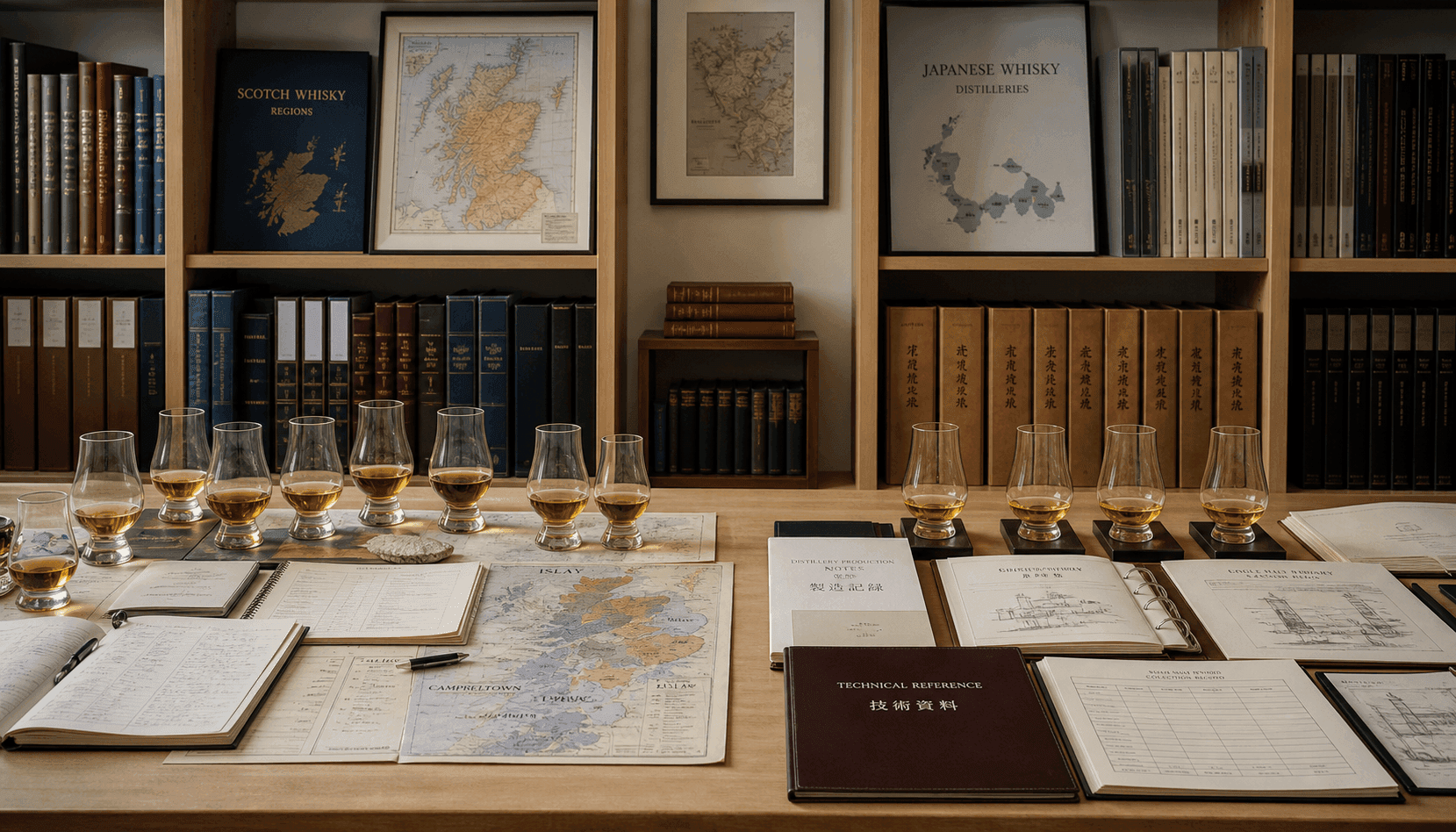
Scotch vs Japanese Whisky: Which Should You Collect in 2026?
Key Takeaways
Scotch whisky offers unmatched diversity across 10+ regions with centuries of experimentation; Japanese whisky emphasizes precision and controlled production, creating scarcity-driven appreciation.
Scotch independent bottlers (Cadenhead's, Gordon MacPhail) provide character-driven alternatives; Japanese distilleries (Yamazaki, Hibiki, Hakushu) release limited official expressions that dominate secondary-market growth.
Scotch pricing remains stable and diverse across all tiers; Japanese prices have shown consistent annual appreciation on key releases since 2015, driven by global demand and production constraints.
Scotch collections benefit from breadth and layered discovery; Japanese collections reward patience and allocation-tracking due to limited stock and release windows.
A balanced strategy acquires flagship Scotch from 3-4 regions, then allocates secondary budget to Japanese allocation releases and Japanese independent bottlings as they emerge.
Scotch: Depth Through Tradition and Terroir
Regional Diversity as a Collecting Advantage
Scotch whisky's geographic fragmentation is its greatest strength for collectors. Five main regions, Islay, Speyside, Highland, Lowland, and Campbeltown, plus the maritime character of Talisker (Isle of Skye) and Tobermory (Isle of Mull), create distinct flavour profiles rooted in local water, peat sources, and malting traditions. A Scotch collection naturally fragments across these territories: Ardbeg or Lagavulin for peated intensity, Glenlivet or Macallan for elegant oak aging, Clynelish for saline coastal notes. This diversity means a Scotch collector builds a learning arc, acquiring skill in regional character recognition and cask-type appreciation simply through variety.
Independent Bottlers and Secondary-Market Accessibility
Scotland's independent bottler ecosystem, Cadenhead's, Gordon MacPhail, and Signatory among them, creates continuous discovery opportunities. A single distillery like Glenlivet or Mortlach ships hundreds of independent single-cask bottlings annually, each with unique maturation profile and cask quality. Independent bottlings typically sell for substantially less than equivalent official vintages, often at higher ABV and with more assertive character. For collectors seeking value and complexity, this ecosystem is unmatched: a 25-year Mortlach from Gordon MacPhail may cost at a mid-range independent bottling price and deliver single-cask character that official 25-year releases no longer offer at any price.
Tip: Secondary-market demand for Scotch remains stable across all ABV levels and bottler types. Unlike Japanese releases that can experience significant post-release secondary-market appreciation, Scotch appreciation is gradual, predictable, and indexed largely to age statement and distillery reputation. This stability makes Scotch ideal for long-term hold strategies without dramatic volatility.
Japanese Whisky: Precision and Scarcity-Driven Appreciation
Distillery-Focused Production and Limited Allocation
Japanese whisky production centres on a small number of flagship distilleries, Yamazaki (Suntory), Hakushu (Suntory), Yoichi (Nikka), and Miyagikyo (Nikka) among them, alongside blends such as Hibiki that draw on that same distillery stock, each producing under strict quality gates and low annual volumes. Where Scotch distilleries ship millions of bottles annually, Yamazaki produces roughly 6 million litres per year, with only a fraction bottled as single malts. Allocation scarcity is intentional: Suntory and Nikka manage demand through careful release windows, strategic geographic distribution, and core-range stability. For collectors, this means most Japanese whisky is acquired either at retail release (if you secure allocation) or at secondary market (often 2-5 years post-release) at significant premiums.
Secondary-Market Momentum and Global Demand
Japanese whisky secondary-market appreciation has outpaced Scotch consistently since 2015. A Yamazaki 18-year at retail has appreciated substantially on the secondary market. Hibiki Harmony, released at its recommended retail price, now trades above that on the secondary market. This appreciation stems from three forces: Japanese craftsmanship's global prestige (parallel to Japanese design and automotive reputation), finite production (Yamazaki 18 and 12 are now discontinued), and strong Asian collector demand (Japan, China, Korea, Taiwan) competing for limited supply. Unlike Scotch, where broad distillery portfolios buffer scarcity, Japanese scarcity is existential; a discontinued age statement or closed distillery means no new supply enters the market, only existing bottles recirculate.
Building a Balanced Strategy
Foundation: Scotch for Breadth
Start a collection with Scotch breadth: a 15-year Glenlivet (Speyside reference), a 12-year Lagavulin or Ardbeg (Islay reference), a Clynelish 14 or Highland Park 12 (Highland/maritime reference), and one older-statement independent bottling (25+ years) to anchor your understanding of oak maturation. This foundation teaches palate, terroir, and cask science at moderate cost, with every bottle in this starting set available at standard retail pricing. Each purchase can be a daily drinker or a hold; most will appreciate gently if held 5+ years, but the real value is educational.
Secondary: Japanese Allocation-Tracking
Once Scotch foundation is solid, allocate 20-30% of annual whisky budget to Japanese allocation releases. This means joining Suntory loyalty programs, monitoring Nikka distributor releases, and cultivating relationships with specialty retailers who allocate limited releases fairly, and tracking secondary-market platforms such as Spiritory for post-allocation availability. When a Yamazaki 18 or Hibiki 21 becomes available, acquiring at retail pricing for hold-and-secondary-sell can create meaningful returns over 3-5 years depending on market conditions. This strategy requires patience: some years may yield no Japanese allocations, other years multiple. Successful execution transforms Japanese collecting from reactive (buying at auction at 5x retail) to proactive (acquiring at retail, selling post-hype).
Integration and Rebalancing
A mature balanced collection (3-5 years) might consist of 40% Scotch (10+ bottles across regions), 40% Japanese (8-12 bottles, mix of holdings and completed sales), and 20% other (Irish, American, independent bottler experiments). This distribution captures Scotch's learning breadth and secondary-market stability, while also participating in Japanese appreciation without over-concentration. Rebalance annually by selling complete Japanese expressions and deploying proceeds into new Scotch regional exploration or Japanese allocation opportunities.
FAQ
Should I buy Japanese whisky if I can't secure allocation?
Yes, but with eyes open. Secondary-market Japanese whisky is purchased at a premium; typically 3-8x retail for discontinued age statements. If you're buying for enjoyment (daily sips, not investment), a retail-priced Yamazaki 18 bottle is still excellent whisky, and the price reflects legitimate scarcity. If you're collecting for appreciation, secondary purchase is less efficient than primary allocation; instead, focus on Scotch holds or vintage Japanese bottles from the 1990s-2000s (pre-scarcity) now appearing at auction as original owners disperse collections.
Is Japanese whisky overrated as an investment?
No, but it's mispriced. Genuine scarcity (Yamazaki 18 discontinued, Hibiki 30 gone) and international demand support secondary-market premiums. However, new-release Japanese whisky pricing has drifted upward (Yamazaki 12 now retails well above where it stood five years ago), compressing forward appreciation. Best strategy: buy primary allocation at recommended retail, hold 3-5 years, sell to secondary when appreciation peaks (often 2-3 years post-release). Don't buy secondary-market new releases expecting further gains.
Can I collect only Japanese whisky?
Absolutely, but you'll miss the educational breadth that Scotch's regional diversity offers. Japanese whisky teaches cask work and micro-expressions; Scotch teaches terroir, yeast selection, and water chemistry across vastly different environments. A Japanese-only collector becomes expert in single-distillery signatures but less equipped to evaluate regional character or recognize cask-quality anomalies in Scotch. Recommend: 70% Japanese, 30% Scotch flagship bottles to calibrate palate against established standards.
What's the best entry point for Japanese whisky collecting?
Yamazaki 12 or Hibiki Harmony at retail. Both are consistent, widely available at original MSRP through specialist retailers, with secondary-market pricing visible on platforms such as Spiritory, and demonstrate core Suntory house style. Neither is currently discontinued, so you're not buying at artificial scarcity premiums. Acquire a bottle, sit with it for a month, then decide if Japanese whisky's precision aesthetic appeals to you before committing budget to allocation tracking or secondary-market hunting.
How much should I allocate to Japanese whisky vs Scotch?
Start 20% Japanese, 80% Scotch. Once you've acquired 10+ Scotch bottles and understand regional character, shift to 40% Japanese, 60% Scotch. A collector with a mature 50+ bottle portfolio might eventually reach 50/50, but this typically takes 5-10 years and requires consistent allocation success. The ratio depends on your market access: collectors in Asia with strong allocation relationships can skew more heavily Japanese; European collectors benefit from Scotch accessibility and lower pricing.
About the author

Max Rink
I’m a whisky enthusiast and aspiring writer, exploring new flavours and the stories behind every bottle.
To the author