

Reach thousands of whisky and spirits lovers every day.


The Scotch Supply Squeeze: Why Production Cuts Mean Higher Prices
 by Janis WilczuraI'm one of Germany's leading whisky experts, featured in Handelsblatt and BILD. To me, whisky is craftsmanship and art.
Follow Spiritory on Google News to get our latest guides and releases delivered straight to your feed.
The Scotch Supply Squeeze: Why Production Cuts Mean Higher Prices
Key Takeaways
Scotch whisky production cuts from 2008 to 2016 are now creating a maturation gap that cannot be quickly corrected.
Age-stated expressions from 18 years upward face the most acute supply constraints, as this stock predates capacity expansion efforts.
Rising demand in Asia, particularly China and South Korea, is absorbing supply at a pace that outstrips new production.
Several major distilleries have already announced reductions to age-stated ranges, a direct signal of insufficient aged stock.
Secondary-market prices for constrained expressions are rising to reflect genuine scarcity, not speculation alone.
Investors can track live pricing on Spiritory to monitor which expressions are experiencing sustained demand pressure.
Understanding the Scotch Whisky Supply Chain
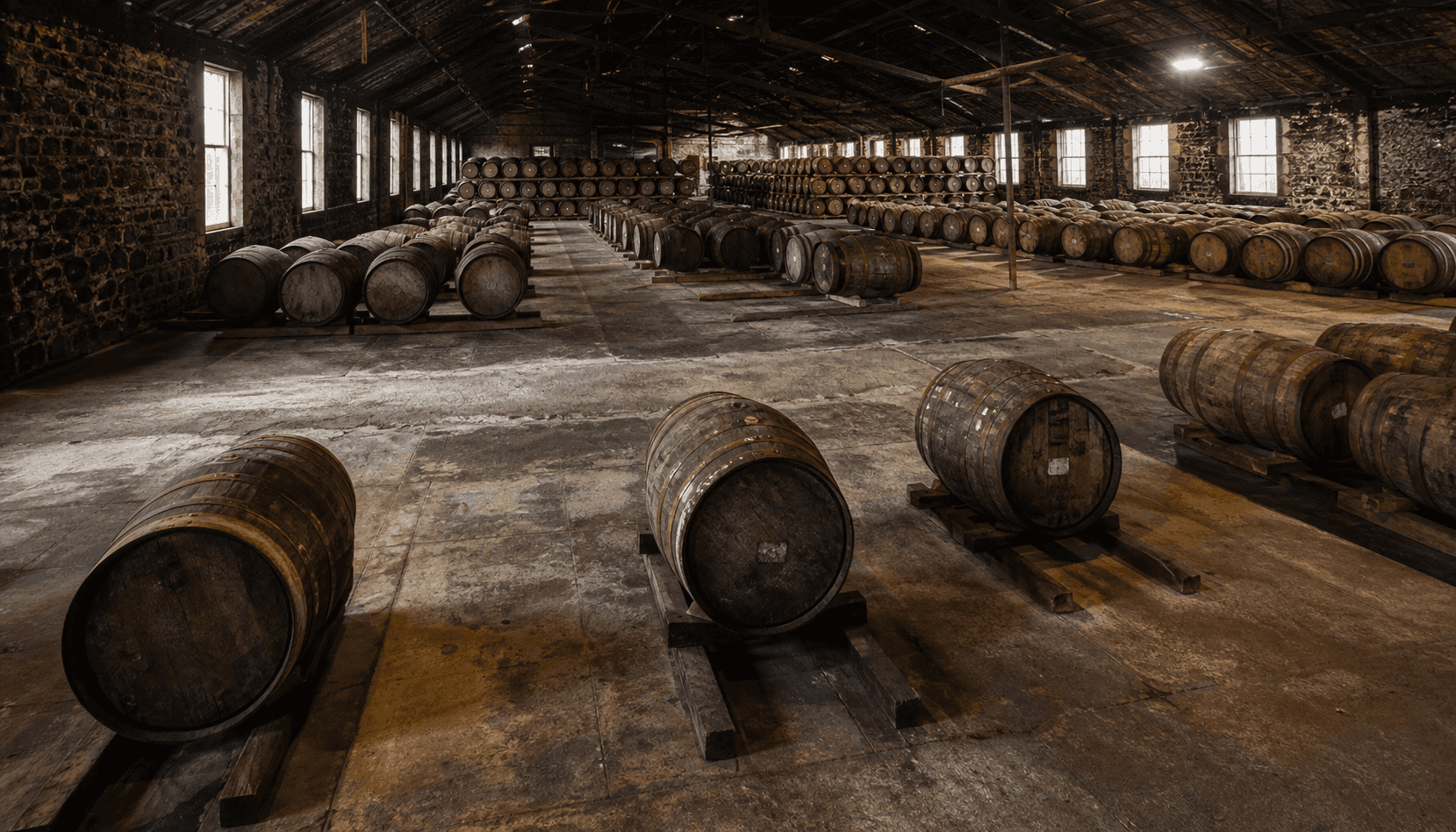
Whisky is among the few consumer goods where the production decision made today determines what is available to sell a decade or more from now. New make spirit distilled in 2026 cannot legally be called Scotch whisky until it has spent at least three years in oak cask. A 12-year-old expression being bottled today was distilled in 2014. An 18-year-old expression was distilled in 2008, precisely the period when the global financial crisis triggered significant production cutbacks across the industry.
The Maturation Gap Explained
When distilleries cut production during downturns, they are effectively choosing to have less aged stock available years later. The decision is rational in the short term, as holding costs for mature spirit are significant. But the consequence is a maturation gap: a period when distilleries have insufficient aged stock to meet demand at current or growing volume levels. This gap is not theoretical in 2026. Several major Speyside and Highland distilleries have reduced age statements or quietly reformulated expressions to manage constrained aged stock.
Why New Production Cannot Solve the Problem Quickly
Even a distillery that has invested heavily in expanded capacity since 2015 cannot simply turn on a tap of 18-year-old whisky. It must wait for the expanded production from that period to mature. The industry has been investing in new distilleries and expanded stills, but this investment addresses supply for the mid-2030s, not 2026. The next several years represent the peak of the maturation gap for the expressions most sought after by collectors and investors.
Why Distilleries Cut Production
The 2008 financial crisis prompted immediate cost-cutting across the industry, including significant reductions in new make production. But the cuts were not confined to that single event. A second round of adjustments occurred in several distilleries between 2012 and 2016 as demand forecasts were revised and capital was redirected toward distillery upgrades and visitor centre investments rather than raw production volume.
Financial Crisis Cuts and Their Legacy
Distilleries that cut back in 2008 and 2009 are now contending with limited availability of whisky that was distilled during those years. This affects not just the volume of aged stock available but also specific cask types. Expressions finished in specific wood varieties, or drawn from particular warehouses, may be even more constrained than headline production figures suggest.
Demand Forecasting Failures
It is worth noting that demand forecasting in the spirits industry has historically been unreliable. The sustained growth of whisky's global collector base from 2015 onward was not fully anticipated by many producers. Distilleries that scaled back based on conservative demand models are now facing a more buoyant market than they planned for, compounding the maturation gap created by earlier production decisions.
Tip: When researching a bottle for investment, check whether the distillery has recently reformulated or discontinued any age-stated expressions. A change in age statement range is often the clearest public signal of constrained aged stock.
Which Distilleries Are Most Affected
The supply squeeze is not uniform across Scotch whisky. Some regions and distilleries are considerably more exposed than others, depending on production volumes in the 2008 to 2016 period and the degree of growth in international demand for their specific expressions.
Speyside
The Speyside region, which produces the majority of Scotch whisky by volume, includes both distilleries that have managed their aged stock well and those that have faced significant pressure on 18-year and older expressions. Distilleries producing prestige expressions at relatively low volumes have faced the starkest constraints.
Islay
Islay distilleries with global collector followings, including Ardbeg, Lagavulin, and Laphroaig, have seen sustained demand growth that has consistently outpaced their ability to increase aged stock. The island's limited physical footprint restricts how much capacity can be added in any given timeframe. Expressions from these distilleries at 16 years and above command significant secondary-market premiums. Search Lagavulin 16 or Ardbeg limited releases on Spiritory to see current secondary pricing.
Highland and Island Distilleries
Smaller Highland and Island distilleries with strong collector followings but limited production capacity face some of the most pronounced constraints. The combination of genuine scarcity and passionate collector communities has driven secondary-market premiums for aged expressions from this group well above retail.
How the Supply Squeeze Is Affecting Prices
Secondary-market pricing already reflects the supply constraints visible at the distillery level. The most pronounced price growth is concentrated in age-stated expressions of 18 years and above from distilleries with documented production constraints, particularly those that have already announced reformulations or discontinuations.
Price Trends in 2026
Across the major auction platforms and exchanges in 2026, the clearest trend is a widening premium between age-stated expressions and NAS releases from the same distilleries. As age-stated stock becomes scarcer, the gap between a distillery's standard bottling and its oldest age-stated releases is growing. This is a direct market signal of the maturation gap playing out in real time.
The NAS Response
Several major distilleries have responded to constrained aged stock by expanding their NAS ranges, blending older and younger stock to maintain consistency without being tied to a specific age statement. From a commercial standpoint, this is a sensible response. From a collector and investor perspective, it typically transfers collector interest and secondary-market premiums toward the remaining age-stated expressions, which become relatively scarcer as NAS volumes grow.
What Investors and Collectors Should Do
The supply squeeze creates a clear framework for thinking about where value is likely to concentrate over the next decade. The expressions most exposed to genuine scarcity, aged single malts from distilleries with documented production constraints, are the most straightforward beneficiaries of the structural dynamics described here.
Research Production History Before Buying
Before investing in any expression, it is worth researching the distillery's production history for the years when the whisky was made. Expressions distilled in 2008 to 2012, when production cuts were most widespread, represent a finite cohort that will not be replaced at the same volume. This historical context adds to the investment case for aged expressions from that period.
Monitor Distillery Announcements
Distillery decisions to discontinue, reformulate, or limit specific age-stated expressions are public signals of the supply squeeze at work. Monitoring these announcements provides early intelligence about which expressions are likely to face the most acute secondary-market pressure. Spiritory tracks live bid and ask prices across a wide range of expressions, making it straightforward to see how the market responds to these announcements in real time.
FAQ
Why are Scotch whisky prices going up?
The primary driver is a structural supply squeeze created by production cuts from 2008 to 2016, combined with growing international demand. Age-stated expressions above 18 years are most affected because the stock available today was made during a period of reduced production.
Which Scotch whiskies are most affected by the supply squeeze?
Age-stated single malts of 18 years and above from distilleries with documented production constraints are most affected. Islay distilleries, premium Speyside producers, and Highland distilleries with limited physical capacity are among the most exposed.
Will new distilleries solve the supply problem?
New distillery openings and capacity expansions will address supply for the mid-2030s onward. They cannot solve the constraint on aged stock that exists today, because whisky distilled in a newly expanded facility in 2020 will not reach 18 years of age until 2038.
Is the supply squeeze permanent?
The current maturation gap is structural but not permanent. As new production from the 2015 to 2020 expansion period matures, supply at the 10 to 12 year age statement will gradually increase. The constraint on 18-year and older expressions from highly regarded distilleries, however, reflects both the production cuts of earlier years and the finite nature of some distillery sites, which cannot simply expand without limit.
About the author

Janis Wilczura
I'm one of Germany's leading whisky experts, featured in Handelsblatt and BILD. To me, whisky is craftsmanship and art.
To the author