

Reach thousands of whisky and spirits lovers every day.


How to Host a Whisky Tasting Night at Home
 by Max RinkI’m a whisky enthusiast and aspiring writer, exploring new flavours and the stories behind every bottle.
Follow Spiritory on Google News to get our latest guides and releases delivered straight to your feed.
How to Host a Whisky Tasting Night at Home
Key Takeaways
Six to eight guests is the ideal size for a home tasting: large enough to generate varied impressions, small enough for meaningful conversation.
A flight of five to seven whiskies is the practical maximum before palate fatigue and flavour memory begin to compromise the experience.
Tasting order matters: move from lighter to heavier, from lower peat to higher peat, and from younger to older expressions where possible.
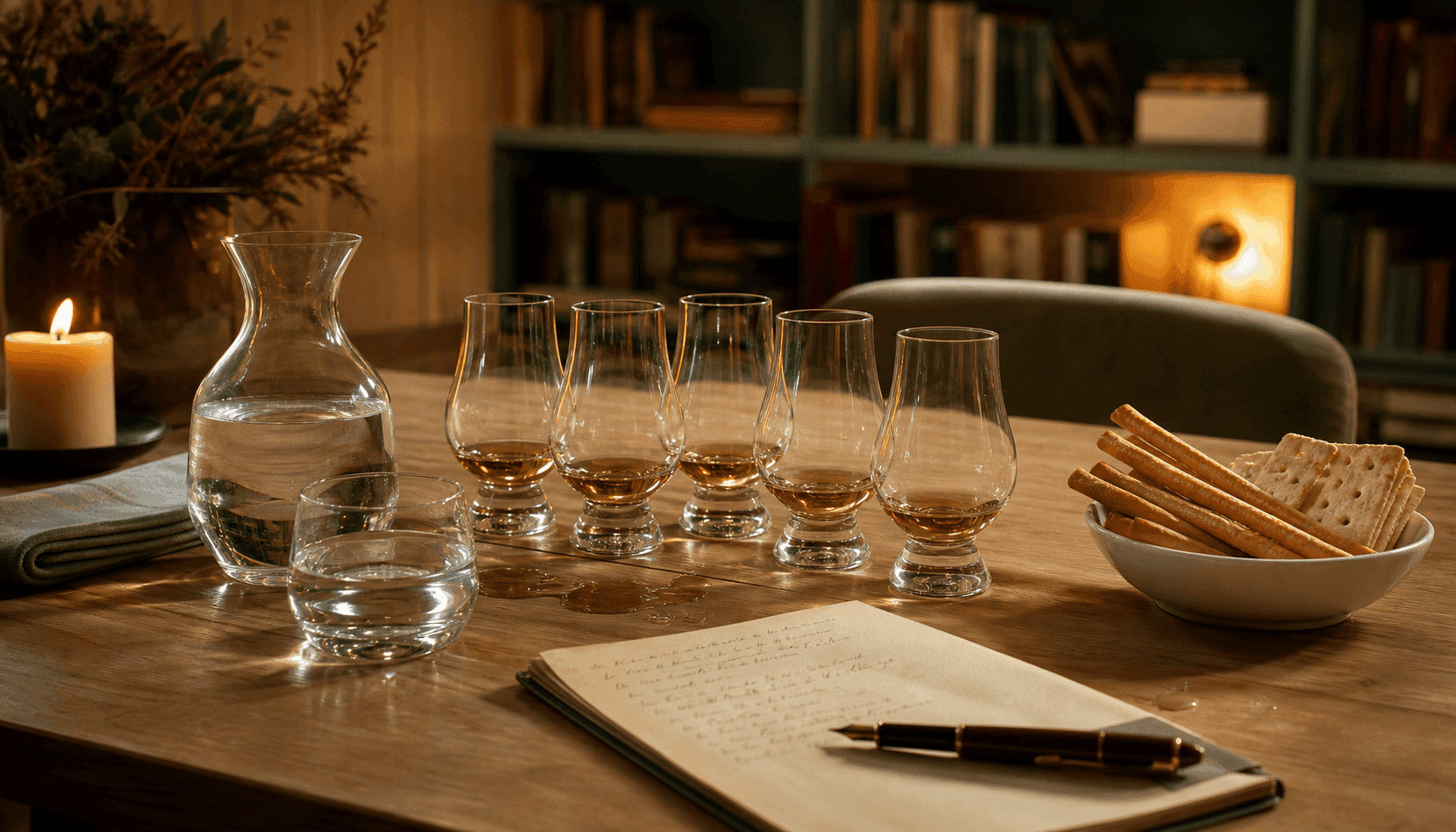
Provide water, neutral palate cleansers (plain crackers or bread), and printed tasting notes for each bottle.
Pour modestly: 15 to 20ml per pour is sufficient for evaluation and keeps the overall quantity consumed at a reasonable level across a full flight.
Source an interesting and varied selection from Spiritory to give the evening a genuine curatorial theme.
Planning the Evening
A successful whisky tasting is planned around a theme that creates a coherent narrative for the evening. Without a theme, a tasting becomes a random selection of bottles that offers limited educational or aesthetic value beyond the individual pours. A theme allows each whisky to be understood in context, and gives guests a framework for comparing and discussing what they are tasting.
Choosing a Theme
The most accessible themes for a home tasting are regional (a tour of Islay, a comparison of Speyside styles), stylistic (peated vs. unpeated expressions from the same region), temporal (a vertical of the same expression across different vintages), or varietal (single cask independent bottlings from different wood types). A regional theme is typically the most accessible for guests with mixed experience levels, as it provides a geographic anchor that is easy to explain and remember.
Number of Guests and Bottles
Six to eight guests is optimal for a home tasting. Below four, the evening can feel more like a private tasting than an event; above ten, it becomes difficult to maintain coherent discussion across the group. Five to seven whiskies is the right range for a focused tasting; below five limits comparative interest, and above seven creates palate fatigue that compromises the later pours. For a three-hour evening, five or six well-chosen bottles is the standard.
Choosing the Bottles
The selection of bottles is the most important planning decision. A good flight tells a story: each whisky should illuminate something about the theme, whether by exemplifying a regional character, contrasting with an adjacent expression, or demonstrating the impact of a specific production variable.
Building a Contrasting Flight
Within any theme, seek contrast rather than similarity. A flight of seven nearly identical expressions from the same house style teaches relatively little. A flight that moves from light and fruity to complex and smoky, or from lightly oaked to heavily sherried, produces far more interesting impressions and more engaged discussion. For an Islay theme, for example, the contrast between the gentler coastal peat of Caol Ila and the medicinal intensity of Laphroaig is more illuminating than comparing two expressions with similar profiles.
Adding a Wild Card
Including one bottle that breaks the theme deliberately, a Japanese whisky in a Scotch tasting, or a single cask independent bottling among distillery releases, adds an element of surprise and creates a natural discussion point. The wild card often generates the most animated conversation of the evening.
Tip: Prepare a simple tasting sheet for each guest listing the bottles in tasting order with space to note aroma, palate, and finish impressions for each. This structured note-taking keeps guests engaged throughout the flight and gives them a record to take home.
Setting Up the Tasting
The physical setup of a home tasting is straightforward but benefits from some deliberate preparation. Glassware, water provision, palate cleansers, and the presentation of the bottles all affect the quality of the experience.
Glassware
Tulip-shaped nosing glasses, such as the Glencairn or a standard copita, are designed specifically for spirit evaluation and concentrate aromatic compounds toward the nose. If dedicated nosing glasses are not available, any narrow-mouthed wine glass is a reasonable substitute. Avoid wide-bowled wine glasses and straight-sided tumblers, which disperse aromatics too broadly. Each guest needs one glass per pour (or a thorough rinse between pours), and a separate glass for water.
Water and Cleansers
Provide still water in a separate glass for each guest throughout the tasting. Water is essential both for hydration and for adding to specific whiskies to open up aromatics. Neutral palate cleansers, plain crackers, a small piece of sourdough bread, or unsalted breadsticks, should be available between pours. Avoid strongly flavoured foods, particularly cheese, which can significantly distort whisky perception.
Bottle Presentation
Decide in advance whether to conduct the tasting blind (bottles covered) or open. Blind tastings are more rigorous and educational, forcing guests to form opinions without the influence of label expectations. Open tastings are more relaxed and conversational, with the bottle's provenance adding context to each pour. Both formats have their place; blind is recommended for at least one element of the evening to generate genuinely uninfluenced impressions.
Leading the Tasting
The host's role during a tasting is to frame each whisky, manage the pace of the evening, and facilitate discussion without dominating it. The goal is to create enough structure that guests learn and engage, while leaving sufficient space for organic conversation and debate.
Introducing Each Whisky
Before pouring each whisky, provide a brief, factual introduction: distillery, region, age, ABV, and one or two defining characteristics to look for. Keep the introduction concise, two to three sentences, so that guests form their own impressions before the host's framing influences them. Save the fuller discussion for after the first impressions have been shared.
Managing the Tasting Vocabulary
Many guests, particularly those newer to whisky, feel self-conscious about articulating flavour impressions. Starting with colour and appearance, which requires no specialised vocabulary, creates an accessible entry point. Then moving to the nose, the palate, and the finish in sequence gives everyone a structured way to contribute. Remind guests that there are no wrong answers in tasting: impressions are personal and subjective, and the most interesting moments often come from unexpected or idiosyncratic observations.
Food Pairings for a Whisky Tasting Night
Food at a whisky tasting should serve the whisky rather than compete with it. The goal is to provide palate-cleansing neutrality between pours and, where deliberately chosen, complementary flavour pairings that enhance specific expressions.
Safe Palate Cleansers
Plain crackers, unsalted breadsticks, or a simple sourdough loaf are the safest options. Water biscuits are specifically designed for tasting contexts and are ideal. Plain nuts, cashews or blanched almonds, work well as a neutral filler. Avoid seasoned or flavoured products.
Deliberate Pairings
For a more ambitious pairing component, dark chocolate (above 70 per cent cacao) pairs exceptionally well with peated expressions and old sherried whiskies. Strong cheeses work with aged expressions but should be offered at the end of the tasting rather than throughout, as they significantly alter palate perception. Smoked salmon or smoked meats echo the smoke character of Islay expressions in an interesting way. These pairings work best when presented as a deliberate element of the evening's structure rather than casual snacking.
FAQ
How many whiskies should I include in a home tasting?
Five to seven is the practical range. Below five limits comparative interest; above seven creates palate fatigue that compromises the quality of impressions for the later pours. For a first tasting, five well-chosen bottles provides a strong, manageable experience.
How much whisky should I pour per person per pour?
15 to 20ml per pour is the standard for evaluation purposes. This is enough to assess aroma, palate, and finish without consuming the equivalent of a standard measure per expression. Across a five-bottle flight at 20ml per pour, each guest will have consumed approximately 100ml of whisky over the course of the evening.
Should I serve food during a whisky tasting?
Neutral palate cleansers, water, and plain crackers should always be available. More substantial food is best served at the end of the tasting flight rather than throughout, to avoid flavour interference with the evaluated expressions. A modest supper or cheese board following the formal tasting works well as the social conclusion to the evening.
Is it better to taste blind or with labels visible?
Both formats have merit. Blind tasting produces more honest, uninfluenced impressions and is more revealing of genuine palate preferences. Open tasting with labels visible is more relaxed and generates more context-rich conversation. A combination works well: taste the first two or three bottles blind to generate uninfluenced impressions, then reveal the labels and taste the remainder openly.
About the author

Max Rink
I’m a whisky enthusiast and aspiring writer, exploring new flavours and the stories behind every bottle.
To the author