

Reach thousands of whisky and spirits lovers every day.


Which Highland Single Malts Are Rising in Value in 2026?
 by Christopher Deutsch I drink and collect with intention, drawn to the sherried depth of Dalmore and the balance of Yamazaki.
Follow Spiritory on Google News to get our latest guides and releases delivered straight to your feed.
Which Highland Single Malts Are Rising in Value in 2026?
The Highlands is Scotland's largest and most diverse whisky region — stretching from Tain in the north to Crieff in the south, and from Oban on the west coast to Glenmorangie on the Dornoch Firth. That diversity means the region has never had the single-distillery cult identity of Islay or the cluster recognition of Speyside. Collectors have historically under-weighted it relative to its quality. In 2026, that is beginning to correct. Five distilleries deserve attention.
Key Takeaways
GlenDronach is the most established Highland name in the collector market — older vintages and single casks have been appreciating steadily for years, driven by the Billy Walker effect.
Balblair is the most under-valued distillery in this list relative to the quality of its vintage releases — the transition from NAS back to vintage statements in 2019 has drawn renewed collector attention.
Old Pulteney's single cask releases and older age-statement expressions have a growing collector following driven by the distillery's coastal character and limited production.
Dalmore's Luminary series and older constellation releases sit at a higher price point but have documented appreciation at auction — the entry for serious collection building.
Talisker, technically from the Isle of Skye, is one of the most consistent secondary market performers in the Highland category — the annual limited releases and cask strength expressions consistently hold value.
Why Highland Whisky Is Undervalued by Collectors
Islay has a clear identity — smoky, coastal, limited island production. Speyside has volume and brand recognition. The Highlands has neither a defining flavour profile nor a concentrated marketing identity. Every distillery is different: Dalmore is heavy and sherried, Glenmorangie is floral and light, Talisker is coastal and peated, Old Pulteney is salty and unpeated. That diversity is a strength for drinkers and a challenge for collectors who build around a clear narrative.
The result is a region where quality and collector value have historically diverged — genuinely exceptional whisky available at prices that do not reflect the production constraints and liquid quality behind them. That divergence is correcting as individual distilleries build collector followings based on specific expressions rather than regional identity.
Five Highland Names Showing Real Momentum
GlenDronach
The clearest collector story in the Highlands. Acquired by Billy Walker in 2008, GlenDronach has followed the same quality trajectory as GlenAllachie and BenRiach under Walker's ownership — intensive cask programme, consistent improvement, growing collector following. The older vintage releases, sold directly from the distillery, have been the primary driver of secondary market attention. The GlenDronach 12 Year Old Original is the accessible entry point to a range that has real collector credentials at its upper end. Vintage single casks from the early distillery years now appear regularly at auction.
Balblair
A small distillery in Ross-shire with a history going back to 1790 and a collector story built around vintage releases. Until 2019, Balblair sold all expressions as vintage-dated bottles rather than age-statement whisky — a positioning that attracted collector interest and created genuine back-catalogue value. The 2019 transition to age statements marked a change in direction, but the pre-2019 vintage releases — the 2005, 2003, and 1999 expressions — continue to trade well at secondary. The current 12 Year Old and 15 Year Old expressions represent an entry point to a distillery that is still finding its new collector identity. Find available expressions on Spiritory.
Old Pulteney
Located in Wick on the far north coast of Scotland — one of the most northerly distilleries on the mainland. The coastal character, the combination of ex-bourbon and ex-sherry casks, and the limited production volumes have created a growing collector following around the older expressions and single cask releases. The 18 and 21 Year Old expressions have established secondary market credentials. The Navigator, an accessible NAS expression, is the entry point but it is the aged statements that attract collector attention. Find available expressions on Spiritory.
Dalmore
At the premium end of the Highland category, Dalmore has developed one of the most structured collector ranges in Scottish whisky. The Luminary series, the King Alexander III, and the older constellation single cask expressions have all achieved significant prices at auction. The entry to this collector tier requires a larger budget — typically €200 and above for expressions with documented appreciation — but the track record is established. The Dalmore 12 Year Old is the starting point; the collector positions are built significantly above it. Find available expressions on Spiritory.
Talisker
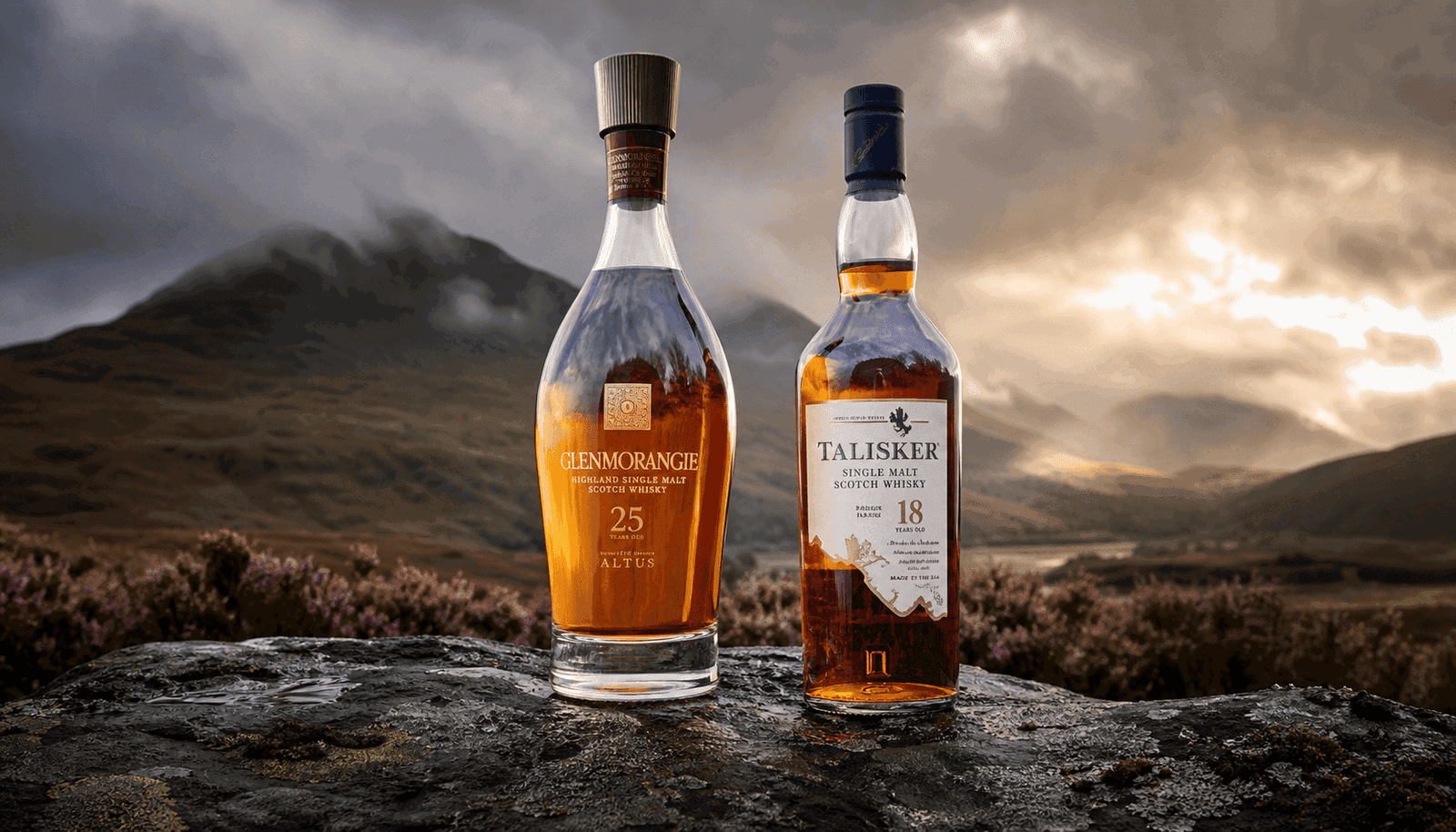
Technically from the Isle of Skye rather than the Highland mainland, but consistently categorised alongside Highland whiskies in the collector market. Talisker is the most consistent secondary market performer in this group for accessible expressions. The annual limited releases — Storm, 57 North, and the annual Distillers Edition — all show documented secondary market activity. The 10 Year Old cask strength expressions and older distillery bottlings have a long track record of appreciation. Find available expressions on Spiritory.
How to Position in Highland Whisky
The most efficient approach to building Highland exposure in a collection is to identify one or two distilleries with a specific story — GlenDronach's vintage cask programme, Balblair's pre-2019 vintage releases, Old Pulteney's limited aged expressions — and build depth there rather than spreading across the full region. A focused position in three consecutive GlenDronach vintages or a run of Balblair vintage expressions tells a more coherent collector story than twelve different Highland bottles from twelve different distilleries.
Tip: The Balblair pre-2019 vintage releases — especially the 2003 and 1999 expressions — are currently available at secondary market prices that still undervalue the production quality and scarcity of the liquid. The transition to age statements in 2019 reduced awareness of these bottles without reducing their inherent quality.
For broader guidance on what makes a whisky collectible before committing to a Highland position, see What Makes a Whisky Collectible in 2026?
FAQ
Is GlenDronach the best starting point for a Highland collection?
Yes, for most collectors. It has the clearest quality trajectory, the most established secondary market credentials in the accessible price range, and the widest range of expressions to build across — from the 12 Year Old entry point to vintage single casks. The Billy Walker ownership story provides a clear before-and-after narrative that the collector market understands and has already priced into the older expressions. The younger expressions are still catching up.
Why are Highland whiskies generally cheaper than Islay expressions?
Islay has a concentrated regional identity, a defined flavour profile, and a collective scarcity story built around island production. Every Islay distillery benefits from the regional reputation. Highland distilleries are more dispersed, more stylistically diverse, and less collectively marketed. The lack of a single Highland identity means each distillery builds its collector following independently, which takes longer and results in lower base prices relative to comparable quality from Islay. That gap is what creates the opportunity.
Are Dalmore older expressions a good investment at higher price points?
The documented auction record for Dalmore constellation single casks and older Luminary expressions shows real appreciation. At the higher end of the market — €500 and above per bottle — Dalmore has established secondary market credentials. Below that level, the standard core range does not show the same appreciation pattern. Investing in Dalmore requires entering at the right expressions, not just the brand name.
About the author

Christopher Deutsch
I drink and collect with intention, drawn to the sherried depth of Dalmore and the balance of Yamazaki.
To the author