

Reach thousands of whisky and spirits lovers every day.


Which Whisky Should I Buy First as a Beginner?
 by Christopher Deutsch I drink and collect with intention, drawn to the sherried depth of Dalmore and the balance of Yamazaki.
Follow Spiritory on Google News to get our latest guides and releases delivered straight to your feed.
Which Whisky Should I Buy First as a Beginner?
Key Takeaways
Taste before you buy. Visit a whisky bar, a distillery, or ask friends if you can sample their bottles. Your first purchase should confirm a flavour you've already enjoyed, not surprise you.
Start at an accessible price point (by-the-glass tasting at bars is affordable; a first bottle of quality whisky is a worthwhile investment without overcommitting capital). Quality 10–15 year-old expressions offer excellent examples from well-regarded producers.
Choose a style that matches your baseline taste: light Speyside if you prefer delicate florals and fruit; Highland if you want richer depth; Irish if you want smoothness; Islay or peated if you prefer smoke and intensity.
Avoid age statements above 20 years for a first bottle, unless you've tasted similar expressions and know you enjoy them. Older whisky is often more complex but less approachable for new palates.
The most expensive bottle on the shelf is rarely the best first purchase. A well-made 12-year-old from a quality distillery often teaches more than a prestigious, complex 30-year-old.
Buy from a retailer with good selection and knowledgeable staff. Ask what they'd recommend for a beginner who enjoys [your flavour preference]. Trust their advice over online rankings.
Taste Before You Commit
Why Sampling Matters
Whisky is an expensive category with significant price variation. That's an important commitment for a drink you've never tasted. The easiest way to avoid a regrettable purchase is to taste the bottle first, ideally multiple times and in different contexts.
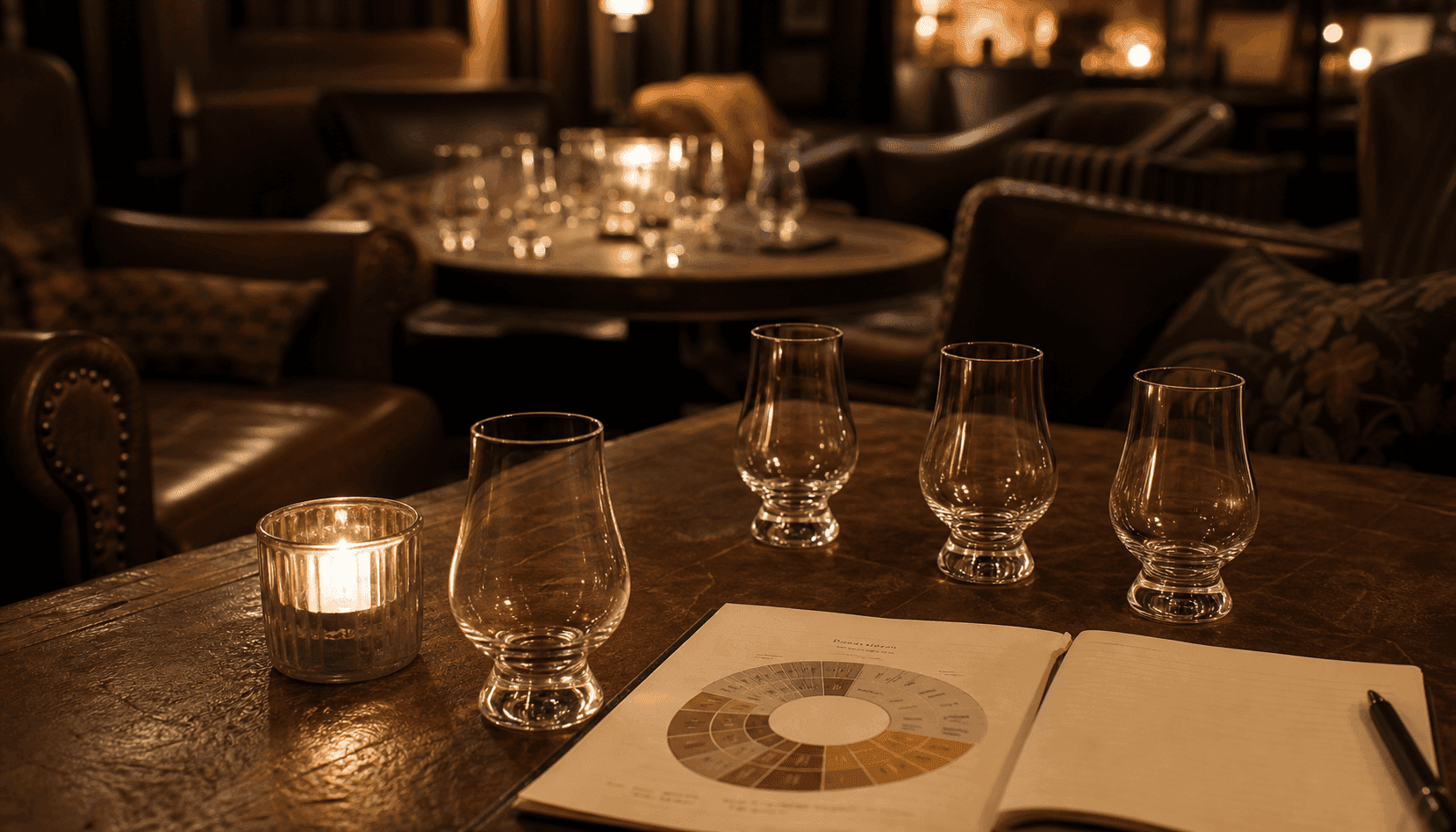
Whisky bars, restaurants with serious drink programs, and distillery visitor centres all offer by-the-glass pours at reasonable rates. In most markets, you can taste quality single malts affordably. By tasting several expressions before buying a bottle, you can develop a clearer sense of what you enjoy.
How Tasting Shapes Understanding
Tasting multiple whiskies teaches your palate. The first dram might taste sharp or overwhelming. The second glass of the same whisky, minutes later, opens up: your palate adjusts, and you start perceiving sweetness, fruit, or subtle wood character you missed initially. Trying different distilleries back-to-back (even if you skip the palate cleansers) teaches you the difference between Speyside (often fruity, floral), Highland (richer, darker fruit), and Islay (smoke and brine).
This education is invaluable before you commit to your first purchase. You may discover that peated whisky, which seems appealing in theory, is actually too intense for your tastes. Or you may find that a lightweight Speyside, which friends dismissed as "boring," is exactly what you enjoy.
Group Tastings and Sharing
If bar tastings aren't accessible, ask friends with whisky collections if you can join a tasting or sample a bottle they're opening. Most collectors enjoy sharing and discussing whisky. You might experience three or four different styles in an evening, learning more than you would from weeks of reading reviews online.
Tip: Take notes during tastings, even simple ones like "light, fruity, easy" or "smoky, intense, needs water". These notes will guide your first purchase decision and become reference points as your collection grows.
Choosing Your First Bottle: By Style and Budget
The Accessible Entry Range
Within an accessible price range, you can find excellent single malts from quality distilleries. Well-made 10-year-old expressions, quality 12-year-old examples, and respected distillery options are all solid, well-regarded, approachable first bottles. They're accessible, not so complex that a new palate feels lost, but genuinely good, with character and quality craftsmanship evident.
Avoid budget commodity bottlings that are technically drinkable but lack the depth or polish to teach you what good whisky tastes like. At premium price points, you're likely paying for prestige or age rather than flavour accessibility. Save the truly expensive bottles for later, when you've developed preferences and confidence.
Light Speyside: The Approachable Entry
If you enjoy light wines or prefer subtlety over intensity, Speyside whiskies are an excellent starting point. Distilleries like Glenmorangie, Dalwhinnie, and many others produce whiskies with floral notes, honey, and fruit character without heavy smoke or intense wood tannins. Speyside 10-year-old expressions are archetypal: they're light, approachable, and teach you fundamental single-malt flavours without overwhelming your palate.
Highland: Rich and Rounded
If you prefer fuller flavours and darker fruit, Highland whiskies offer depth without the smoke and intensity of peated whisky. Quality examples from well-regarded distilleries in this region deliver richer, rounder experiences. A well-made 12-year-old from this category is approachable for beginners while delivering genuine complexity.
Irish: Smooth and Forgiving
Irish whiskey is historically triple-distilled, which creates a smooth, light character even in older expressions. Quality Irish producers are known for forgiving, approachable, and consistent profiles. If you've never had a spirit before or prefer very smooth profiles, an Irish whiskey is a low-risk first purchase.
Peated and Smoky: Only if You're Curious
Islay whiskies and other peated expressions are striking and beloved by many collectors, but they're not ideal first bottles. Peat smoke is polarising: some people love it immediately, others find it off-putting or overwhelming on a fresh palate. If you've tasted peated whisky and genuinely enjoyed the smoke and brine, then yes, a quality peated expression is a great first bottle choice. If you haven't tasted peat yet, taste before you buy.
Age, Price, and the Beginner Trap
Why Older Isn't Always Better for First-Time Drinkers
A 30-year-old whisky is complex, refined, and impressive, but it's also often very expensive, difficult to properly appreciate on a first tasting, and a poor use of capital when you're still learning your tastes. The difference between a well-made 10-year-old and a well-made 20-year-old is real but subtle. The difference between either and a 30-year-old is often about accumulated wood character, which newer drinkers sometimes perceive as over-oaked rather than refined.
Your first bottle should be approachable, not a milestone collection piece. Choose something at an accessible price point and enjoy it. Buy the truly old expressions in a few years, when you understand your own preferences and can truly appreciate what 20 or 30 years in wood adds to the spirit.
The Prestige Trap
Certain names, Macallan, Highland Park, Balvenie, are famous and prestigious. Their prestige is earned, but it also means they're priced accordingly. A prestige-brand 18-year-old is an excellent whisky, but it's not proportionally better than a quality 10-year-old from another well-regarded distillery. You're paying partly for age and cask type, partly for brand and collector prestige. For a first bottle, you want to taste quality whisky, not primarily pay for prestige. Save the premium names for later.
Reading Reviews Before Buying
Online whisky communities and review sites are helpful, but they can mislead beginners. A bottle rated 90+ points might be excellent, but if it's a complex 25-year-old sherry-cask expression, it may not be the best learning tool. Conversely, a 10-year-old rated 85 points might be better for a beginner because it's approachable and well-crafted. Read reviews for quality confirmation, but prioritise approachability and price-to-quality ratio for your first purchase.
Storage, Serving, and Enjoyment
Storage Essentials
Store your bottle upright in a cool, dark place (not a sunny windowsill, not above a radiator). Whisky is stable and long-lived; it won't go bad in a home cabinet for years or decades. If you're not opening the bottle within a few weeks, store it at room temperature away from heat and light. Once opened, whisky keeps indefinitely if the cap is sealed; the alcohol content prevents spoilage.
How to Drink Your First Bottle
Add a few drops of water to your whisky: it opens up the aromatic compounds and makes the whisky less sharp on your palate. Start with neat (no water or ice), then add water incrementally and taste the difference. Ice is optional; it chills the whisky and mutes some flavours, which some enjoy and others find counterproductive for serious tasting. Avoid large ice cubes that melt quickly and dilute the whisky.
Glassware and Atmosphere
Any clean glass works, but a tulip-shaped whisky glass or snifter helps concentrate aromas. Sit down, take your time, and sip slowly. Whisky is meant to be savoured, not rushed. Take notes on what you taste: sweetness, fruit, wood, smoke, spice. These notes build a tasting vocabulary that informs future purchases.
FAQ
Can I buy a bottle online if I can't visit a bar or distillery?
Yes, but it carries more risk. Reputable online retailers provide detailed tasting notes and descriptions. Read multiple reviews and cross-reference tasting notes. If several sources describe a whisky as "approachable," "smooth," or "fruity," and the price is in your range, it's likely a safe bet. If reviews are polarised, with some people loving it and others finding it off-putting, it may not be ideal for a first bottle (unless you're deliberately seeking that polarising quality).
Should I buy a set or variety pack for my first purchase?
Many distilleries sell sets of 3–5 small bottles or 50ml samples. These are excellent for first-time buyers: you get to try multiple styles without committing to an expensive single bottle. A Speyside sampler might include 3–5 different distilleries, letting you compare and figure out which you prefer. This is a smarter first purchase than one prestigious bottle.
What if my first bottle doesn't taste good to me?
That's okay. Whisky palates develop, and you may discover that something you didn't enjoy initially becomes a favourite later as your palate matures. Don't feel obligated to finish a bottle you don't like. Give it to a friend, use it in cocktails, or keep it in your cabinet and revisit it in a year. Your preferences will evolve.
When should I start buying older or more expensive bottles?
After you've enjoyed your first bottle and bought 1–2 more expressions that confirm your emerging tastes. Once you've tasted 5+ different whiskies and know whether you prefer Speyside's lightness, Highland's richness, or peated whisky's intensity, you're ready to invest in a 15+ year-old or a more prestigious bottle. This progression, from approachable entry bottles to collector-level purchases, is the sensible learning path.
Is whisky collecting only for wealthy people?
Not at all. Building a collection of quality bottles at reasonable price points is accessible to most people. Over a year, buying one bottle every other month, you can build a diverse, interesting collection of quality examples without excessive expense. Some collectors focus on quality over quantity, owning 5 exceptional bottles rather than 50 mediocre ones. Whisky collecting is as affordable or expensive as you decide to make it.
About the author

Christopher Deutsch
I drink and collect with intention, drawn to the sherried depth of Dalmore and the balance of Yamazaki.
To the author