

Reach thousands of whisky and spirits lovers every day.


What Are the Best Japanese Whiskies to Buy in Germany in 2026?
 by Christopher Deutsch I drink and collect with intention, drawn to the sherried depth of Dalmore and the balance of Yamazaki.
Follow Spiritory on Google News to get our latest guides and releases delivered straight to your feed.
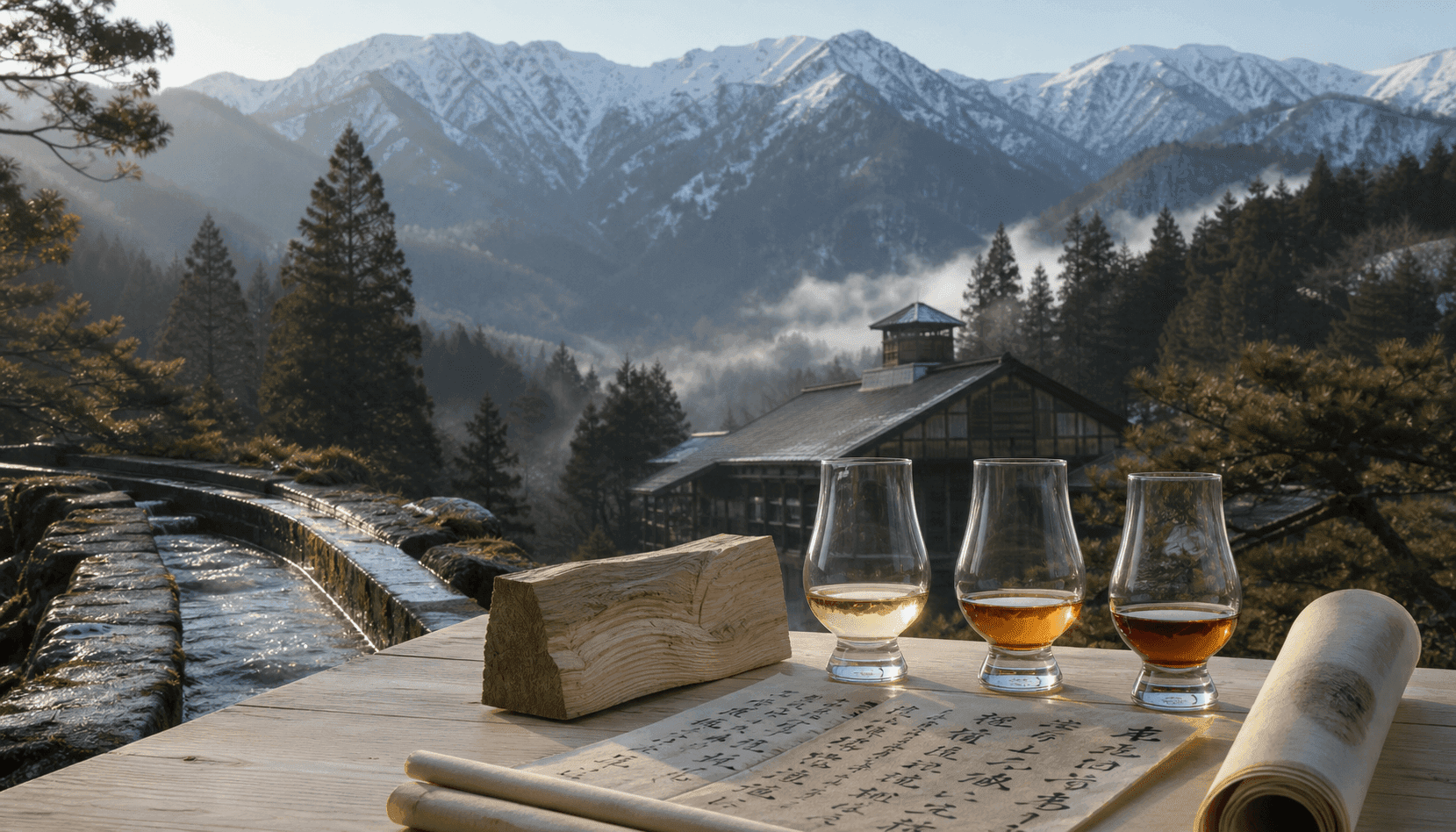
What Are the Best Japanese Whiskies to Buy in Germany in 2026?
Key Takeaways
Japanese whisky is among the most actively traded categories on the German secondary market, with strong demand for genuine expressions from Nikka and Suntory.
New Japanese whisky labelling regulations introduced in 2021 require that products labelled as Japanese whisky must be distilled, matured, and bottled in Japan: buyers should verify compliance.
Limited releases from Nikka, Yamazaki, and Chichibu attract the most sustained collector interest in Germany.
Entry-level expressions like Nikka From The Barrel and Suntory Toki offer genuine quality at accessible price points.
Import volumes from Japan to Europe are constrained by distillery capacity, which underpins secondary market premiums on aged and limited releases.
Browse current Japanese whisky listings on Spiritory for the most reliable secondary market access in Germany.
Understanding Japanese Whisky Regulations
The 2021 Labelling Standards
In 2021, the Japan Spirits and Liqueurs Makers Association introduced voluntary labelling standards for Japanese whisky, requiring that products marketed under that designation must be produced using ingredients sourced in Japan, fermented and distilled in Japan, matured in Japan for a minimum of three years, and bottled in Japan. These standards were introduced in response to a market in which some products labelled as Japanese whisky contained imported Scotch or other spirits blended domestically. While the standards are voluntary rather than legally mandatory, the major houses, including Nikka, Suntory, and most craft producers, comply, and German buyers can use compliance as a meaningful quality signal when evaluating purchases.
What This Means for Buyers in Germany
For German collectors purchasing Japanese whisky on the secondary market, the practical implication is to focus on expressions from producers that have explicitly adopted the 2021 standards and where the age statement, distillery of origin, and production process can be verified. Bottles from before 2021 that predated the standards should be evaluated on individual provenance. Expressions that carry no age statement and cannot be traced to a specific Japanese distillery merit more scrutiny than those from the major houses with documented production histories.
The Established Japanese Houses
Nikka
Nikka was founded by Masataka Taketsuru, who studied distillation in Scotland before returning to Japan to create a whisky in the Scottish tradition but shaped by Japanese ingredients, climate, and aesthetic. The company operates two principal distilleries: Yoichi on Hokkaido, which produces a heavier, more peated style influenced by its northern coastal setting, and Miyagikyo in the Sendai valley, which produces a lighter, more fragrant spirit. The blend of these two house styles underpins Nikka From The Barrel, one of the most critically celebrated value propositions in all of Japanese whisky: a blended malt and grain at cask strength that punches well above its price point. For German collectors building a Japanese whisky position, From The Barrel is a natural starting point.
Suntory
Suntory operates the Yamazaki, Hakushu, and Chita distilleries, producing single malts and grain whisky that feed the company's flagship blends. Yamazaki, Japan's first whisky distillery, produces a spirit with considerable complexity shaped by multiple cask types including Japanese Mizunara oak, which imparts incense-like aromatics entirely absent from Scotch-influenced expressions. The 12 Year Old is a reference point for the category; aged statements carry significant premiums in Germany. Hakushu, located in the Japanese Alps, produces a lighter, more herbaceous style with subtle peat that appeals to buyers who want Japanese character without the richness of Yamazaki. The Hibiki blended range represents Suntory's highest expression of the blender's art and commands a premium in the collector market, particularly for older and limited editions.
Tip: For German collectors entering the Japanese whisky category, start with Nikka From The Barrel and Yamazaki 12 as reference points before moving into aged or limited releases. Both represent the category at its most accessible without compromising on quality.
Independent and Craft Producers
Chichibu Distillery
Chichibu, founded by Ichiro Akuto in 2008, has become one of the most sought-after Japanese craft distilleries in the world. The distillery's small scale, commitment to hand production, and founder's obsessive attention to wood sourcing, including Japanese Mizunara oak alongside more conventional cask types, have produced a series of releases that command significant secondary market premiums in Germany and across Europe. The annual Chichibu release schedule is followed closely by collectors, and bottles often move quickly from retail to secondary market at substantial premiums. Buyers in Germany who want Chichibu should monitor dedicated spirits platforms rather than expecting retail availability.
Mars Shinshu
Mars Shinshu operates at altitude in the Japanese Alps, producing a whisky shaped by the cold mountain climate and continental temperature swings. The distillery's revival (it was largely dormant for over two decades before restarting production in 2011) and its Komagatake single malt releases have attracted growing attention from the international collector community. For German buyers seeking Japanese whisky outside the Nikka and Suntory orbit, Mars represents one of the more credible craft alternatives with genuine production heritage.
What to Buy in Germany in 2026
Entry-Level Expressions Worth Owning
At the accessible end of the Japanese whisky market, several expressions deliver genuine quality without the premiums associated with age statements and limited releases. Nikka From The Barrel remains the most frequently cited value buy in the category. Suntory Toki is a well-made blended whisky designed for accessibility, and while it does not carry the collector interest of the single malt range, it represents an honest introduction to the house style.
Investment-Grade Releases
For buyers seeking Japanese whisky with meaningful appreciation potential, the focus should be on age-stated expressions from the major distilleries and annual limited releases from Chichibu. Yamazaki 18 and 25 Year Old expressions carry sustained secondary market premiums in Germany. Hibiki 21 Year Old is among the most sought-after Japanese blends and commands prices that reflect its limited annual production. When these bottles appear on the secondary market, they do not remain available long.
Buying Japanese Whisky in Germany
Secondary Market as the Primary Channel
German retail availability of premium Japanese whisky is limited. Most specialist expressions, aged statements, and limited releases are not stocked at retail and must be sourced through the secondary market. Spiritory provides the most comprehensive access to Japanese whisky listings for German buyers, with transparent pricing and verified bottle provenance across both the Nikka and Suntory ranges and craft producers including Chichibu. Searching Japanese whisky on Spiritory gives a current picture of market availability.
FAQ
What are the Japanese whisky labelling standards?
Voluntary standards introduced by the Japan Spirits and Liqueurs Makers Association in 2021 require that Japanese whisky be produced using Japanese ingredients, fermented and distilled in Japan, matured in Japan for a minimum of three years, and bottled in Japan. Major producers comply; buyers should check compliance for unfamiliar brands.
Is Nikka From The Barrel still worth buying in 2026?
Yes. Nikka From The Barrel remains one of the best value propositions in Japanese whisky: a cask-strength blended malt that consistently outperforms its price point. It is also one of the more reliably available Japanese expressions in Germany.
Where can I find Chichibu bottles in Germany?
Chichibu has very limited retail distribution in Germany. The secondary market is the reliable channel. Spiritory lists available Chichibu bottles when stock appears.
Why is Japanese whisky so expensive in Germany?
Japanese distillery capacity is constrained relative to global demand, which means that annual production volumes are limited. When aged stocks were depleted following the global Japanese whisky boom, many age-stated expressions were discontinued. The result is sustained scarcity for the most sought-after releases, which drives secondary market premiums significantly above retail.
Which Japanese whisky is best for a long-term investment?
Age-stated expressions from Yamazaki and Hakushu, Hibiki 21 Year Old, and annual limited releases from Chichibu have the strongest track record on the European secondary market. All carry premiums that reflect genuine scarcity rather than speculative positioning.
About the author

Christopher Deutsch
I drink and collect with intention, drawn to the sherried depth of Dalmore and the balance of Yamazaki.
To the author