

Reach thousands of whisky and spirits lovers every day.


What Is the Best German Single Malt Whisky in 2026?
 by Christopher Deutsch I drink and collect with intention, drawn to the sherried depth of Dalmore and the balance of Yamazaki.
Follow Spiritory on Google News to get our latest guides and releases delivered straight to your feed.
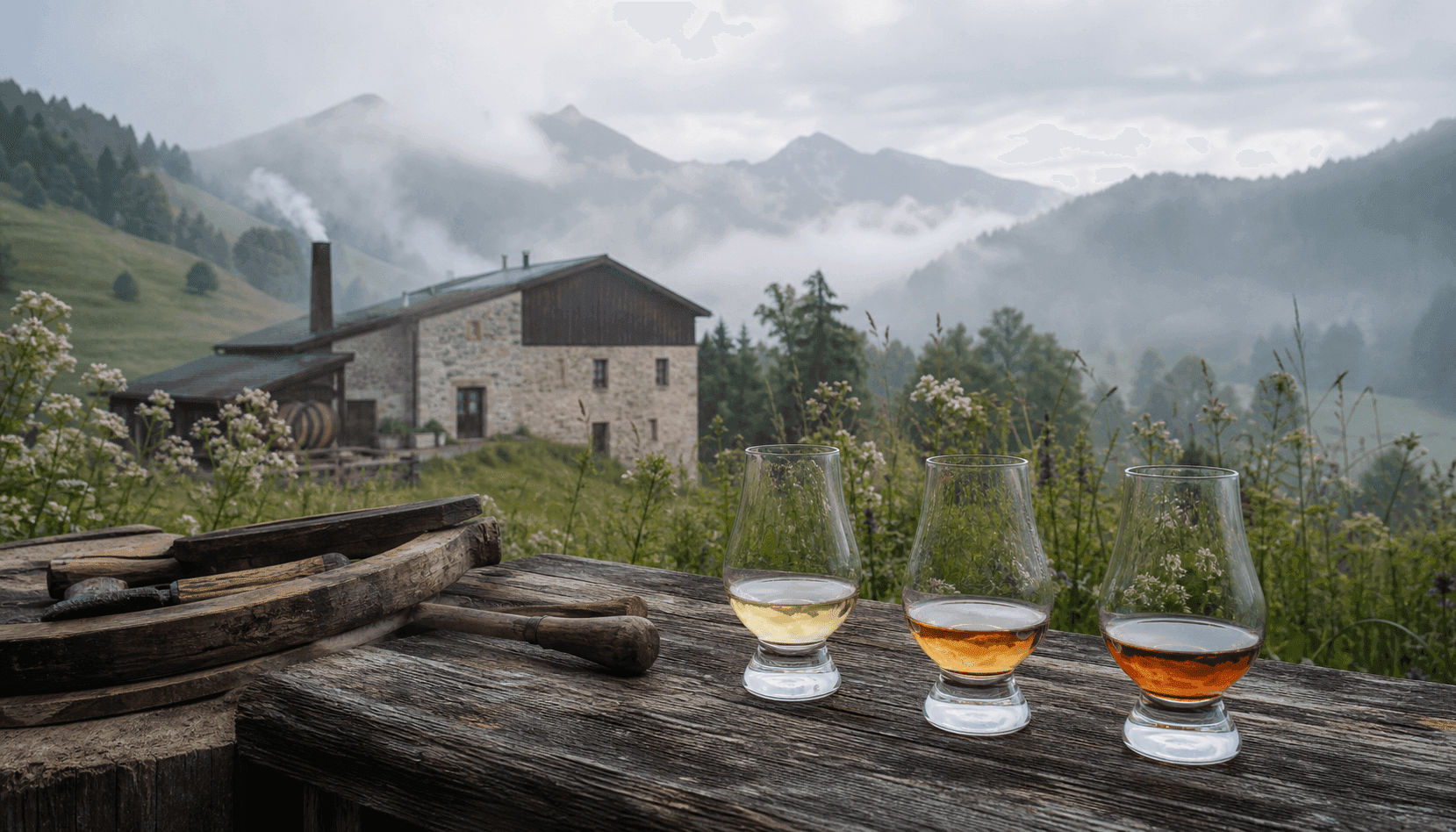
What Is the Best German Single Malt Whisky in 2026?
Key Takeaways
SLYRS from Schliersee, Bavaria, is the most internationally recognised German single malt and the natural starting point for anyone new to the category.
Blaue Maus in Franconia is widely regarded as Germany's most collectible single malt distillery and among the oldest private single malt distilleries in the world.
Spreewood in Brandenburg produces a rye-forward single malt that contrasts sharply with the Bavarian style and represents a distinct regional identity within German whisky.
Germany's Whisky-Verordnung requires a minimum three-year oak maturation, but the most compelling German single malts age considerably longer.
German single malt is increasingly available on international platforms: Spiritory carries a growing selection of expressions for European collectors.
The best German single malts are defined by regional terroir: Bavarian barley, Alpine water, and Continental climate maturation produce a character genuinely distinct from Scotch, Irish, or Japanese counterparts.
The Rise of German Single Malt
Germany's whisky production history is longer than most drinkers realise. While the country's spirits tradition is dominated by beer and fruit schnapps, single malt whisky production has been developing steadily since the early 1980s, with significant acceleration in the 2000s and 2010s as a new generation of distillers recognised the potential of the category and invested accordingly.
The Regulatory Foundation
Germany's Whisky-Verordnung, the regulation governing whisky production, mirrors the essential requirements of Scotch whisky law: distillation from grain, oak cask maturation, and a minimum three-year ageing period. This framework gave German distillers a structure to work within and consumers a baseline quality guarantee. The most ambitious producers have always treated the regulation as a minimum rather than a target, pushing toward longer maturations and more considered cask strategies.
Growing International Recognition
The shift from domestic curiosity to internationally recognised category has been driven by improving liquid quality, growing collector interest in non-Scotch single malts, and sustained positive coverage from international whisky media and competition judges. German expressions now appear regularly in international competition results, and buyers in the UK, US, and Asia have begun to treat the category with the seriousness previously reserved for Scottish and Japanese output.
The Leading German Single Malt Distilleries
The German single malt category is led by a handful of distilleries with distinct regional identities and production philosophies worth knowing before choosing a bottle.
SLYRS: Bavaria's Standard Bearer
Founded in 1999 at Schliersee in the Bavarian Alps, SLYRS is the most widely distributed and internationally recognised German single malt. Its core range demonstrates a consistent house style: clean, malt-forward, shaped by Bavarian barley and Alpine water, while its limited edition programme explores cask finishing, extended maturation, and single barrel expressions that give collectors a reason to follow the distillery's output closely each year. For those new to German single malt, SLYRS is the natural and reliable starting point.
Blaue Maus: Germany's Most Collectible Name
Blaue Maus, based in Eggolsheim in Franconia, is widely regarded as the oldest private single malt distillery in Germany, and by some measures, one of the oldest in the world outside Scotland. Its founder began producing single malt in the early 1980s at a time when German whisky barely existed as a concept. The distillery's releases are small in volume, distinctive in character, and increasingly sought by collectors for their historical significance and genuine scarcity value.
Spreewood: Rye and Brandenburg Character
Spreewood, located in Brandenburg near Berlin, occupies a different corner of the German single malt landscape. Its production is characterised by a rye-forward approach that reflects the grain traditions of north-eastern Germany rather than the barley-driven Bavarian style. For collectors interested in the full breadth of German whisky, Spreewood provides a compelling regional counterpoint and a demonstration that the category is not simply a Bavarian story.
Lantenhammer: Schliersee's Other Voice
Lantenhammer shares the Schliersee location with SLYRS but arrives at whisky from a different direction: the distillery's primary reputation is in premium fruit schnapps, with whisky production developed as a natural extension of a deep craft distillation tradition. Its whisky releases occupy a niche position of particular interest to buyers who follow the full spectrum of German distillation rather than single malt specifically.
Huppmann: Bavarian Tradition
Huppmann is among the Bavarian producers contributing to the region's growing single malt reputation, drawing on the same tradition of quality agricultural distillation that has long defined Bavarian spirits production. Its releases appeal to collectors interested in the diversity of the Bavarian single malt category beyond its most prominent name.
Tip: For a comprehensive introduction to German single malt, compare expressions from at least two distilleries with different regional identities: a SLYRS alongside a Spreewood, for example. The contrast demonstrates how much the category varies by producer and geography, and challenges the assumption that it is simply a single homogeneous style.
What Sets German Single Malts Apart
German single malt whisky is not simply Scotch produced on the Continent. Its character reflects the specific raw materials, climate, and craft traditions of its region of origin in ways that experienced tasters can identify clearly.
Bavarian Barley
Bavaria's barley-growing tradition, sustained over centuries by the region's agricultural landscape, produces a grain with specific characteristics that contribute to the malt's flavour profile. Bavarian distillers sourcing locally are not simply making a provenance claim; the barley genuinely differs from Scottish or Irish equivalents in ways that shape the spirit from the very beginning of the production process.
Continental Maturation Climate
Germany's Continental climate produces more pronounced seasonal temperature swings than Scotland's maritime environment: hotter summers and colder winters. This accelerates the interaction between spirit and wood in ways that can produce different extraction profiles at similar ages. German single malts often show more oak influence at younger ages than comparable Scotch expressions, which requires skilled cask selection and management to balance effectively.
The Influence of Distilling Heritage
Many German distillers arrived at single malt with a background in fruit schnapps or grain spirit production, bringing techniques and sensibilities that differ from the Scotch whisky tradition. This cross-pollination of craft traditions is visible in some German expressions, particularly around fermentation practices and decisions about distillation cuts, and contributes to the category's distinctiveness rather than detracting from it.
How to Choose a German Single Malt in 2026
Choosing a German single malt is not simply a matter of brand recognition. The category is diverse enough that understanding what you are looking for makes a significant difference to the quality of the outcome.
Start with a Regional Anchor
Bavaria and north-eastern Germany produce noticeably different expressions. For a clean, malt-forward style with Alpine character, SLYRS is the reliable starting point. For something more rye-influenced and Continental in character, Spreewood offers a contrasting entry. Identifying a regional preference first narrows the search considerably and avoids the frustration of buying blindly across a broad and varied category.
Core Range Before Limited Editions
The core range of any German distillery establishes the house style. Forming a view of that baseline expression before moving to limited editions gives collectors a clearer sense of what the distillery is doing with additional cask time or finishing, and whether those developments represent genuine improvement or experimentation for its own sake. Starting with the core builds the reference point that makes the limited editions legible.
Buying for Collection
For collectors, Blaue Maus releases occupy a particularly interesting position: historically significant, scarce, and increasingly difficult to source outside specialist channels. For SLYRS limited editions and single cask releases, Spiritory provides a reliable secondary market alongside current release availability. The broader German whisky category can be searched on Spiritory for a current view of what is accessible.
FAQ
Is German single malt whisky as good as Scotch?
German single malt is a different category, not a lesser one. The best German expressions, from SLYRS, Blaue Maus, Spreewood, and others, produce quality that stands on its own terms rather than requiring comparison with Scotch. The flavour profiles are distinct, shaped by regional raw materials, Continental maturation, and a craft tradition that has been developing seriously for over four decades.
What is the best German single malt for beginners?
SLYRS Classic Single Malt is the most accessible starting point: a well-balanced, approachable expression that introduces the Bavarian single malt style without demanding specialist knowledge. It is widely available through specialist retailers and on Spiritory, making it easy to find across Germany and the broader EU market.
Why is Blaue Maus considered Germany's most collectible whisky?
Blaue Maus occupies a unique historical position as one of Germany's earliest private single malt distilleries, with production dating back to the early 1980s. Its small volumes, distinct character, and historical significance combine to create strong collector demand for releases that are rarely available in significant quantities through standard retail channels.
Where can I buy German single malt whisky online?
German single malt is available through specialist retailers across Germany and on specialist online platforms. Spiritory carries a growing selection of German expressions including SLYRS releases, making it a reliable source for European buyers looking for both current releases and secondary market bottles from the domestic category.
Does German whisky age differently from Scotch?
Yes. Germany's Continental climate, with more pronounced seasonal temperature swings than Scotland's maritime environment, accelerates wood extraction and maturation. German single malts can show significant oak influence at younger ages than comparable Scotch expressions, which requires careful cask selection and management. This is part of what gives German single malt its distinctive character rather than simply making it a European imitation of Scotch.
About the author

Christopher Deutsch
I drink and collect with intention, drawn to the sherried depth of Dalmore and the balance of Yamazaki.
To the author