

Reach thousands of whisky and spirits lovers every day.


Are Distillery Anniversary Bottlings Worth Buying?
 by Janis WilczuraI'm one of Germany's leading whisky experts, featured in Handelsblatt and BILD. To me, whisky is craftsmanship and art.
Follow Spiritory on Google News to get our latest guides and releases delivered straight to your feed.
Are Distillery Anniversary Bottlings Worth Buying?
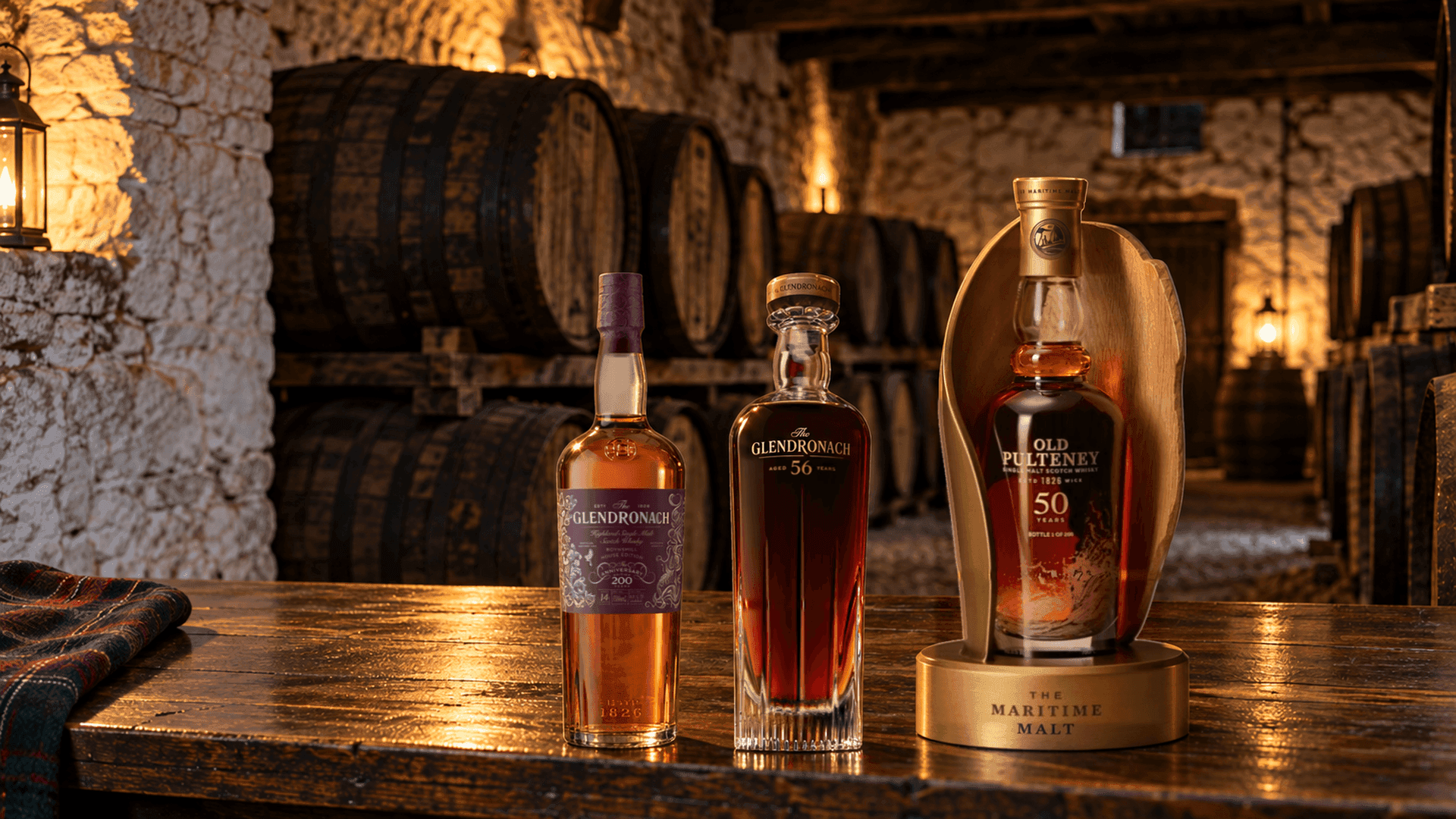
A distillery anniversary bottling is worth buying when its age, cask selection and edition size make the whisky itself exceptional, not simply because the label marks a round number of years. GlenDronach and Old Pulteney reached 200 years in 2026, Arbikie reached 10, and releases tied to The Macallan's 2024 bicentenary are still reaching the market, at prices from under 100 pounds to tens of thousands.
Key Takeaways
GlenDronach and Old Pulteney were both founded in 1826, and each marked 200 years of production in 2026 with new whisky releases.
Arbikie, a family run estate distillery in Angus, released The Signature in September 2026, exactly 10 years after filling its first casks.
GlenDronach's two 2026 anniversary whiskies show the range: a 14 Years Old at 46.8% ABV priced around £95, and a 56 Years Old cask strength decanter limited to 200 bottles at £35,000.
Old Pulteney marked its 200th anniversary with a 50 Years Old limited to 200 decanters at £20,000, alongside a 30 Years Old and an earlier 10 Years Old distillery exclusive.
A meaningful anniversary bottling usually differs from the core range in age, cask selection or edition size, not only in the packaging.
Collectors weigh a confirmed edition size, the distillery's reputation and complete original packaging more heavily than the anniversary story alone.
Tip: Before paying an anniversary premium, compare the bottling to the distillery's own age statement releases at a similar maturation. If an anniversary edition costs several times more for a similar age and a similar cask type, much of that difference is buying the occasion, not necessarily more whisky.
What Separates an Anniversary Bottling From a Relabelled Release
Not every whisky released in an anniversary year deserves the name. Distilleries mark round numbers constantly, and some anniversary editions are simply a standard age statement whisky in new packaging, sold at a premium for the occasion. A bottling earns the description when at least one of three things changes: the age or cask selection is genuinely different from the core range, the edition size is small enough to be a real constraint rather than a marketing word, or the whisky itself was assembled specifically for the milestone rather than pulled from routine stock.
Age and Cask Selection
GlenDronach's two 2026 releases show both ends of this scale. The GlenDronach 14 Years Old Boynsmill House Edition is matured in the distillery's usual Oloroso and Pedro Ximénez sherry casks, with a small addition of Claret red wine casks introduced by master blender Dr Rachel Barrie specifically for this release. That is a real change to the recipe, not only the label. The GlenDronach 56 Years Old goes further: distilled in September 1968 and bottled at natural cask strength, it was assembled from a single parcel of very old stock that cannot be repeated once it is gone.
Edition Size as a Real Number
The word limited means little without a figure attached to it. The 14 Years Old is a wide release through The Whisky Shop with no published bottle count, priced at an accessible £95. The 56 Years Old is limited to 200 hand numbered decanters at £35,000 each. Both are legitimate anniversary bottlings, but they sit at opposite ends of what limited can mean, and the number is what tells a buyer which one they are looking at.
Four Anniversaries Behind 2026's Notable Releases
2026 has been a busy year for distillery anniversaries, and the releases attached to them vary widely in scale and price.
GlenDronach's 200th Anniversary
GlenDronach was founded in 1826 by James Allardice at Boynsmill Estate in Aberdeenshire, an area known as the Valley of the Brambles, where he secured one of Scotland's earliest whisky licenses. Alongside the 14 Years Old and the 56 Years Old described above, Spiritory has a full breakdown of the 56 Years Old's investment case in GlenDronach 200th Anniversary 56 Year Old: Worth the Investment?
Old Pulteney's 200th Anniversary
Old Pulteney was also founded in 1826, in the fishing port of Wick on Scotland's northeast coast. Its 200th anniversary began earlier in the year with the Pulteney 10 Years Old 200th Anniversary Distillery Exclusive, before the distillery's owner, International Beverage, released two further whiskies in June: the Old Pulteney 50 Years Old 200th Anniversary Limited Edition, limited to 200 decanters at £20,000 and bottled at 40.8% ABV from just four casks, and the Old Pulteney 30 Years Old 200th Anniversary Limited Edition, limited to 1,000 bottles at £1,750 and bottled at 50.4% ABV. For the full story on the older release, read Old Pulteney 200th Anniversary 50 Year Old: A Coastal Legacy.
Arbikie's 10th Anniversary
Arbikie is a different kind of anniversary. Brothers Iain, John and David Stirling began building the distillery on their family's Angus estate in 2013 and filled their first casks in 2016. The Arbikie 10 Years Old The Signature launched on 7 September 2026, exactly 10 years after that first fill, made entirely from Odyssey barley grown, distilled, matured and bottled on the estate. It is priced at £250, bottled at 48% ABV, and limited to 1,000 bottles worldwide.
The Macallan's 200th Anniversary
The Macallan was founded in 1824 by Alexander Reid, and its 200th anniversary in 2024 produced two of the most distinctive releases in the brand's history: the ring shaped Macallan TIME : SPACE decanter and Macallan TIME : SPACE Mastery, alongside the Macallan Horizon, developed with Bentley Motors. The collection continues with the new release, the Macallan TIME : SPACE Sherry Cask, a 20 Years Old at 44.8% ABV married in the first 200 Valdespino sherry seasoned casks filled during the bicentenary.
Should You Drink It or Keep It?
The decision to open a bottle or keep it sealed depends less on price than on how replaceable it is. A whisky released in a wide run at an accessible price, like the GlenDronach 14 Years Old or the Arbikie Signature, was made to be tasted, and opening one does not put a rare object at risk. A whisky assembled from a single, unrepeatable parcel of stock and released in a run of a few hundred, like the GlenDronach 56 Years Old or the Old Pulteney 50 Years Old, is a different proposition: once it is gone, no more can ever be made, and that scarcity is worth weighing before pulling the cork.
Neither choice is wrong. Some collectors buy these releases specifically to drink on the anniversary itself, treating the occasion as the point. Others hold them unopened as part of a collection built around distillery history. What matters is deciding deliberately, based on how rare and how replaceable the specific bottle is, rather than assuming that any anniversary whisky is automatically too valuable to open or automatically a safe holding for the future.
What Serious Collectors Look For
Beyond the anniversary story itself, three things tend to matter most to buyers evaluating these releases.
A confirmed edition size. A number like 200 decanters or 1,000 bottles gives a buyer something concrete to assess, unlike a vague claim of limited availability.
The distillery's underlying reputation. GlenDronach's sherry cask maturation, Old Pulteney's maritime character and The Macallan's collector following all existed long before any anniversary, and that established demand tends to outlast the anniversary story itself.
Complete original packaging. Presentation cases, certificates and any accompanying documentation matter as much to a future buyer as the bottle, particularly on releases like the GlenDronach 56 Years Old, which comes in a hand carved American black walnut cabinet.
Tip: Photograph and file away any certificate of authenticity, presentation case and purchase documentation the moment an anniversary bottling arrives. These pieces are easy to misplace over a long holding period, and a buyer years later will ask for them as a matter of course.
FAQ
What makes an anniversary bottling different from a standard release?
A genuine anniversary bottling changes the age statement, cask selection or edition size from the core range, or was assembled specifically to mark the milestone. A release that is only the standard whisky in new packaging at a higher price is not the same thing, even if it carries an anniversary name.
Are the GlenDronach and Old Pulteney 200th anniversary whiskies good investments?
Their fundamentals vary by release. The GlenDronach 56 Years Old and Old Pulteney 50 Years Old are extremely limited and drawn from stock that cannot be replaced, which supports long term collector interest, while accessible releases like the GlenDronach 14 Years Old are priced closer to standard age statement whisky. No outcome can be promised, and buyers should weigh rarity and distillery reputation rather than assume any anniversary bottle will rise in value.
Should I drink an anniversary bottling or keep it sealed?
It depends on how replaceable the bottle is. Wide releases at accessible prices, like the Arbikie Signature, were made to be opened. Extremely limited releases from a single old parcel of stock, like the GlenDronach 56 Years Old, are harder to replace once opened, so that decision deserves more thought.
Where can I find these anniversary bottlings?
Spiritory is a bid and ask marketplace for whisky and spirits based in Munich, shipping within the EU, where bottles from private sellers are authenticated by Spiritory's experts before a buyer pays. Search the distillery name directly on spiritory.com to see what is currently listed.
How rare does a bottling need to be to matter for collectors?
There is no fixed threshold, but a confirmed number matters more than the word limited. Runs of a few hundred, like GlenDronach's 200 decanters of the 56 Years Old or Old Pulteney's 200 decanters of the 50 Years Old, are treated differently by collectors than releases of 1,000 bottles or more, such as Arbikie's Signature or Old Pulteney's 30 Years Old.
About the author

Janis Wilczura
I'm one of Germany's leading whisky experts, featured in Handelsblatt and BILD. To me, whisky is craftsmanship and art.
To the author