

Reach thousands of whisky and spirits lovers every day.


Ardbeg vs Laphroaig: Which Should Collectors Buy in 2026?
 by Christopher Deutsch I drink and collect with intention, drawn to the sherried depth of Dalmore and the balance of Yamazaki.
Follow Spiritory on Google News to get our latest guides and releases delivered straight to your feed.
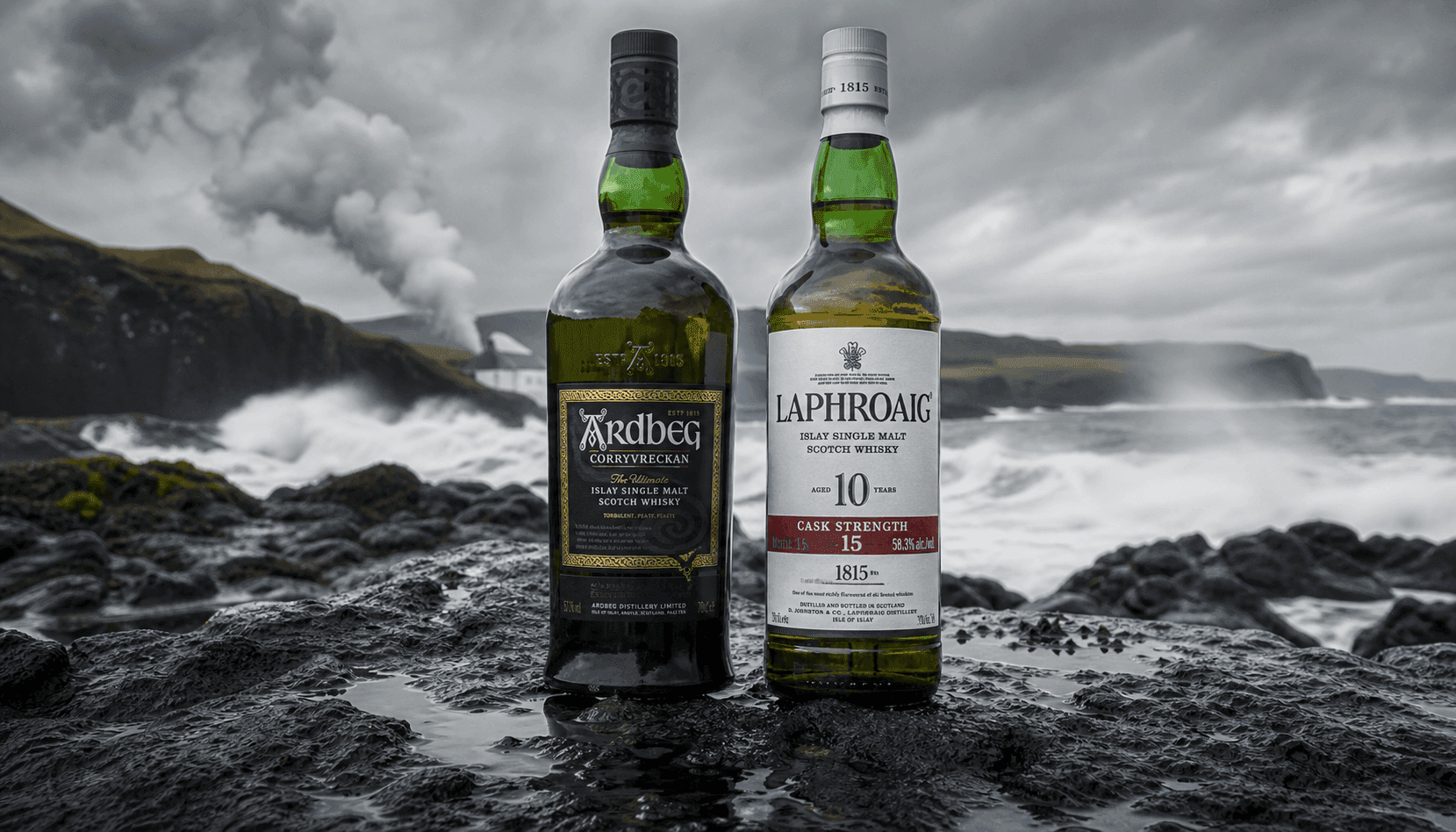
Ardbeg vs Laphroaig: Which Should Collectors Buy in 2026?
Ardbeg and Laphroaig are neighbours on Islay and two of the most recognisable names in Scotch whisky collecting. Both have festival releases that sell out immediately. Both have secondary market track records measured in years. Both have passionate collector communities that track every batch. The question — which to buy in 2026 — comes down to budget, tolerance for price volatility, and what kind of collection you are building.
Key Takeaways
Ardbeg has the stronger record on limited annual festival releases — the Fèis Ìle expressions consistently trade at higher multiples of retail price than Laphroaig equivalents.
Laphroaig 10 Year Old Cask Strength batches offer better value for new collectors entering the Islay market — accessible price points with a genuine track record.
The Laphroaig Càirdeas series released at Fèis Ìle each year is the closest equivalent to Ardbeg's annual limited releases in terms of collector behaviour and secondary market performance.
Ardbeg's regular range — Uigeadail and Corryvreckan — holds value better on the secondary market than Laphroaig's equivalent standard expressions.
Both distilleries are owned by large drinks companies (Ardbeg by LVMH, Laphroaig by Beam Suntory) but operate as independent brands with production decisions made at distillery level.
Two Distilleries, Two Collector Stories
Ardbeg
Ardbeg was nearly silent for much of the 1980s and 1990s before being purchased by Glenmorangie in 1997. The revival narrative — a distillery brought back from the edge by a devoted following — became central to the brand identity. The Ardbeg Committee, a membership programme for loyal collectors, receives priority access to limited releases. This direct relationship between the distillery and its most committed buyers drives the rapid sellouts that characterise Ardbeg limited release launches.
The annual Fèis Ìle limited expression is the most anticipated Ardbeg release of each year. These expressions — given names like Uigeadail, Corryvreckan, and the rotating festival bottlings — sell through within hours and regularly appear on secondary markets at two to three times retail price within weeks. The Uigeadail and Corryvreckan, available year-round, also hold their secondary market value well relative to other distilleries in the same price range. Find them on Spiritory.
Laphroaig
Laphroaig has been making whisky on Islay since 1815. It is one of the oldest continuously operating distilleries on the island. The Friends of Laphroaig programme gives registered members a square foot of land on Islay — a membership mechanic that has created an extraordinarily loyal global following. The royal warrant, held since 1994, adds a layer of institutional credibility. The Laphroaig 10 Year Old Cask Strength is the year-round expression with the strongest collector credentials — each batch is numbered, bottled at natural cask strength, and varies slightly from the previous release.
Secondary Market Performance
On the secondary market, Ardbeg consistently outperforms Laphroaig on like-for-like comparisons of limited expressions. Ardbeg festival releases from the last five years regularly trade at 50–100% above retail price on auction platforms. Laphroaig Càirdeas expressions trade at a premium, but typically in the 20–50% range. The Ardbeg premium is driven by the Committee pre-sale dynamic — bottles are allocated before public release, and uncollected allocations are never restocked, maintaining scarcity.
For standard range bottles — the Ardbeg 10 vs the Laphroaig 10 — both trade at or slightly below retail on the secondary market in normal conditions. The collector premium is concentrated in the limited expressions, not the core range.
Tip: Both the Ardbeg Uigeadail and the Laphroaig Càirdeas have multi-year track records at auction. If you are buying for investment rather than drinking, prioritise the expressions with documented sold prices over multiple auction cycles rather than the most recent festival release.
Festival Releases: The Collector Battleground
The most direct comparison between the two distilleries happens each May at Fèis Ìle. Both release a festival-exclusive expression available only to those on the island or through allocated retail channels. These are the bottles that drive the most collector activity and the most significant secondary market premiums.
The Ardbeg Fèis Ìle expression is typically the more aggressively priced at secondary — demand from the global Ardbeg Committee membership base exceeds supply by a wider margin than equivalent Laphroaig expressions. For collectors tracking 2026 festival releases across both distilleries, see Which Fèis Ìle 2026 Bottles Are Worth Watching? and Are Festival Whisky Bottles Worth Collecting in 2026?
Which to Buy in 2026
If your primary goal is maximising secondary market return on limited expressions, Ardbeg has the stronger current track record. The festival releases and Committee exclusives consistently achieve higher multiples of retail price. The trade-off is that getting access to these bottles at retail requires either Committee membership, priority retailer allocation, or buying through secondary at a significant premium.
If you are entering the Islay collector market for the first time or building at a more accessible price point, the Laphroaig 10 Year Old Cask Strength batches offer a lower entry point with a real track record. The Càirdeas series gives you festival release exposure at prices that are typically 30–40% lower than comparable Ardbeg expressions at secondary.
The answer for most collectors is both — the two distilleries occupy slightly different niches in an Islay collection, and having representation from each makes strategic sense. Start where the value is better for your current budget. See Which Islay Whiskies Are Worth Collecting in 2026? for the full picture across all Islay distilleries.
FAQ
Is Ardbeg or Laphroaig more peated?
Ardbeg is typically more heavily peated. The Ardbeg 10 Year Old is bottled at around 55 ppm phenols. Laphroaig 10 Year Old is around 40–45 ppm. Both are heavily peated by any standard — the difference is most apparent in comparison rather than in isolation. The Ardbeg Supernova series, when released, has pushed well above 100 ppm. Most collector bottles from both distilleries sit in the 40–60 ppm range.
Can I buy Ardbeg or Laphroaig festival releases after they sell out at retail?
Yes, through the secondary market. Platforms like Spiritory, and specialist auction houses including Whisky Auctioneer and Scotch Whisky Auctions, carry festival expressions after the retail window closes. You will pay above retail price — typically 30–100% more depending on the expression and how recently it was released. For guidance on when it makes sense to buy at secondary prices, see When Should You Buy, Sell, or Wait as a Whisky Collector?
Which has the better standard range for collecting?
Ardbeg's standard range — the Uigeadail and Corryvreckan in particular — holds its secondary market value more consistently than the Laphroaig standard range. Both are strong expressions and both are worth having in a collection. But if you can only choose one standard expression to hold, Ardbeg Uigeadail has the better track record as a secondary market performer.
About the author

Christopher Deutsch
I drink and collect with intention, drawn to the sherried depth of Dalmore and the balance of Yamazaki.
To the author