

Reach thousands of whisky and spirits lovers every day.


Ardbeg's Vintage_Y2K Trilogy: Three Whiskies, One Comeback Story
 by Christopher Deutsch I drink and collect with intention, drawn to the sherried depth of Dalmore and the balance of Yamazaki.
Follow Spiritory on Google News to get our latest guides and releases delivered straight to your feed.
Ardbeg's Vintage_Y2K Trilogy: Three Whiskies, One Comeback Story
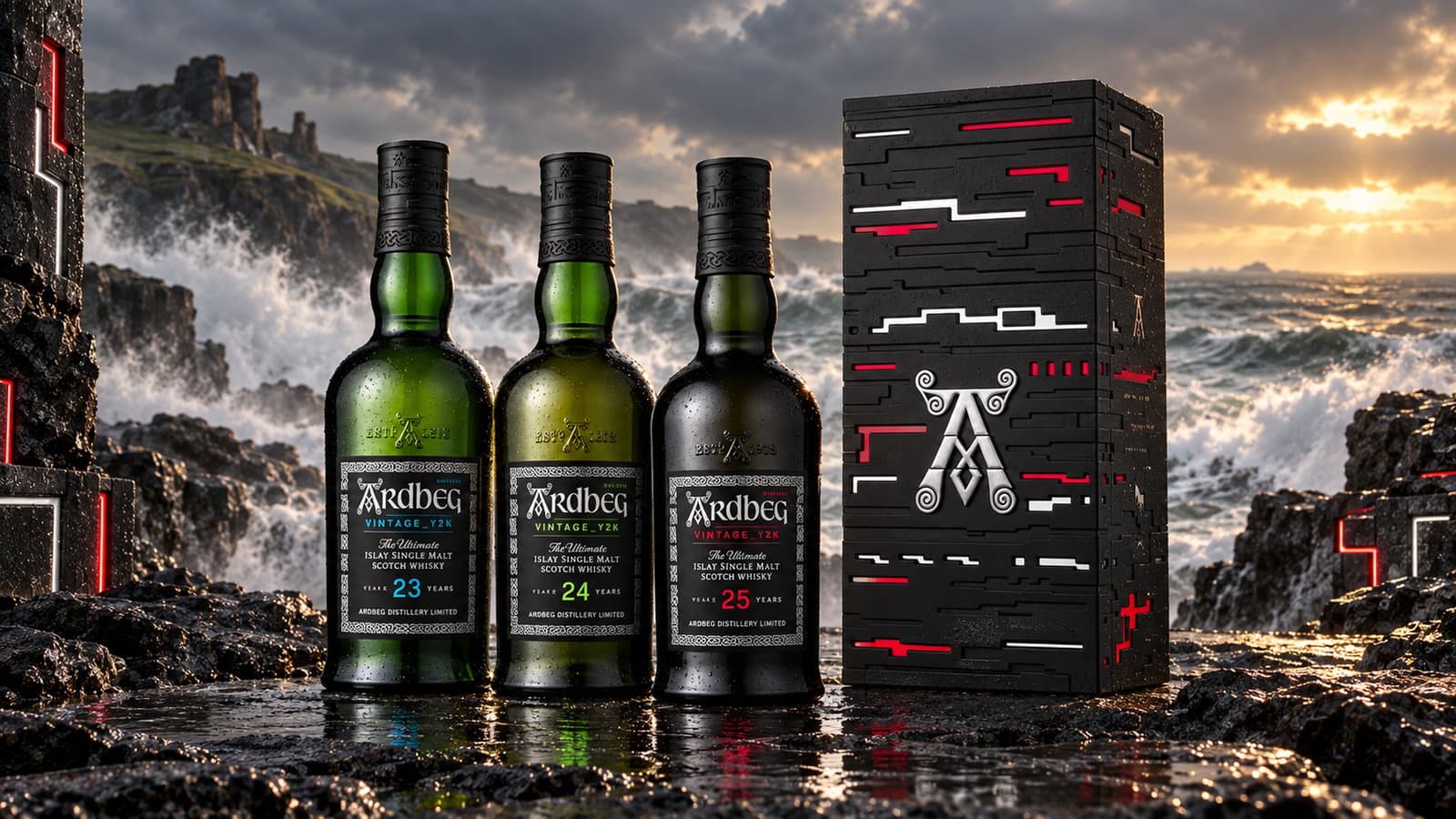
Ardbeg's Vintage_Y2K trilogy is three single malts distilled from the same 2000 vintage spirit, the year Ardbeg Ten launched and the Ardbeg Committee formed, three years after the Glenmorangie Company reopened the distillery. Released as the 23 Years Old in 2024, the 24 Years Old in 2025 and the 25 Years Old in 2026, each bottle carries a different cask finish, moving from Oloroso sherry and bourbon through Amontillado sherry to Tempranillo red wine.
Key Takeaways
All three whiskies come from the same 2000 vintage, distilled the year Ardbeg Ten launched and the Ardbeg Committee formed.
Each release carries its own cask finish: Oloroso sherry and bourbon for the 23 Years Old, Amontillado sherry for the 24 Years Old, and Tempranillo red wine for the 25 Years Old.
The 25 Years Old is the only one made with spirit from Ardbeg's old still, retired in 2001.
The three bottles share a packaging concept built around the RGB colour spectrum, with the final release pairing Ardbeg black with red.
Tip: Taste the trilogy in release order. The cask finishes move from classic Ardbeg territory into progressively bolder ground, so pouring the 23 Years Old first and the 25 Years Old last follows the story the way Ardbeg built it.
A Distillery That Almost Disappeared
Ardbeg closed twice in the twentieth century, first in 1981 and again in 1991. The Glenmorangie Company bought the distillery in 1997 and reopened it with full time production, and the first bottlings after the reopening were the 17 Years Old, the 1978 Vintage and Ardbeg Provenance. Three years later, in 2000, the distillery launched Ardbeg Ten and formed the Ardbeg Committee, the members club built to keep the doors open for good.
The spirit inside all three Vintage_Y2K releases was distilled that same year. It sat quietly in casks while Ardbeg rebuilt its reputation around the Ten, only reaching bottle a quarter of a century later as the final chapter of a trilogy nobody could have planned for in 2000.
Three Bottles, Three Casks
Each release in the trilogy finishes the same base spirit in a different cask, and the sequence tells its own story. The Ardbeg 23 Years Old Vintage_Y2K, released in 2024, matured in Oloroso sherry and bourbon casks and was bottled at 46% ABV, described by Ardbeg as a glitch in the ardware. The Ardbeg 24 Years Old Vintage_Y2K followed in 2025 with an Amontillado sherry finish, moving the whisky toward richer toffee and fruit notes. The Ardbeg 25 Years Old Vintage_Y2K closes the set in 2026 with a finish nobody expected from Ardbeg: Tempranillo red wine casks from Bodega Numanthia in north west Spain, the first time the distillery has used red wine casks at all. It is also the only bottle in the trilogy made with spirit from Ardbeg's old still, which was retired in 2001.
A Trilogy Built to Be Seen
Packaging carries the story as much as the liquid does. Each Vintage_Y2K release uses a different colour from the RGB spectrum, giving the set a chunky, early computer look that nods to the turn of the millennium without turning any single bottle into a novelty. The 25 Years Old, the last release, pairs Ardbeg's signature black with red, a fitting close for a set that started life as a wink at the Y2K panic and ended up documenting one of the most important years in the distillery's modern history.
Tasting the Set Side by Side
Lined up next to each other, the three whiskies read like chapters. The 23 Years Old opens with lemon balsam, heather honey and creosote, settling into peppermint, aniseed and ground coffee, the most classically Ardbeg of the three. The 24 Years Old turns sweeter and richer, built on creamy toffee, blackcurrant and almond, with damp moss and graphite underneath the smoke. The 25 Years Old is the outlier: chilli chocolate, smoked blackcurrant and paprika up front, then coffee, spare ribs, menthol and lime pickle, a tasting note list that reads more like a spice rack than a whisky.
Tip: If you can only try one bottle from the set, the 25 Years Old shows the widest range of flavour, but the 23 Years Old is the clearest link back to Ardbeg's core style and the best starting point if this is your first Vintage_Y2K release.
FAQ
What is Ardbeg's Vintage_Y2K trilogy?
A set of three single malts distilled from the same 2000 vintage spirit, released as the 23 Years Old in 2024, the 24 Years Old in 2025 and the 25 Years Old in 2026, each finished in a different cask.
Why is it called Vintage_Y2K?
The spirit was distilled in 2000, the same year Ardbeg Ten launched and the Ardbeg Committee formed, and the name plays on the Y2K computer scare that defined that year in popular memory.
What makes the 25 Years Old different from the other two?
It is the only release finished in red wine casks rather than sherry or bourbon, the only one made from spirit distilled using Ardbeg's retired old still, and at 25 years old it is the longest matured of the three.
Is there a fourth Vintage_Y2K release coming?
No. Ardbeg has confirmed the 25 Years Old closes the trilogy, and once the remaining 2000 vintage casks are used, this particular batch of Ardbeg history cannot be recreated.
About the author

Christopher Deutsch
I drink and collect with intention, drawn to the sherried depth of Dalmore and the balance of Yamazaki.
To the author