

Reach thousands of whisky and spirits lovers every day.


Ardbeg Dolce Review: Does the Marsala Cask Earn Its Price?
 by Christopher Deutsch I drink and collect with intention, drawn to the sherried depth of Dalmore and the balance of Yamazaki.
Follow Spiritory on Google News to get our latest guides and releases delivered straight to your feed.
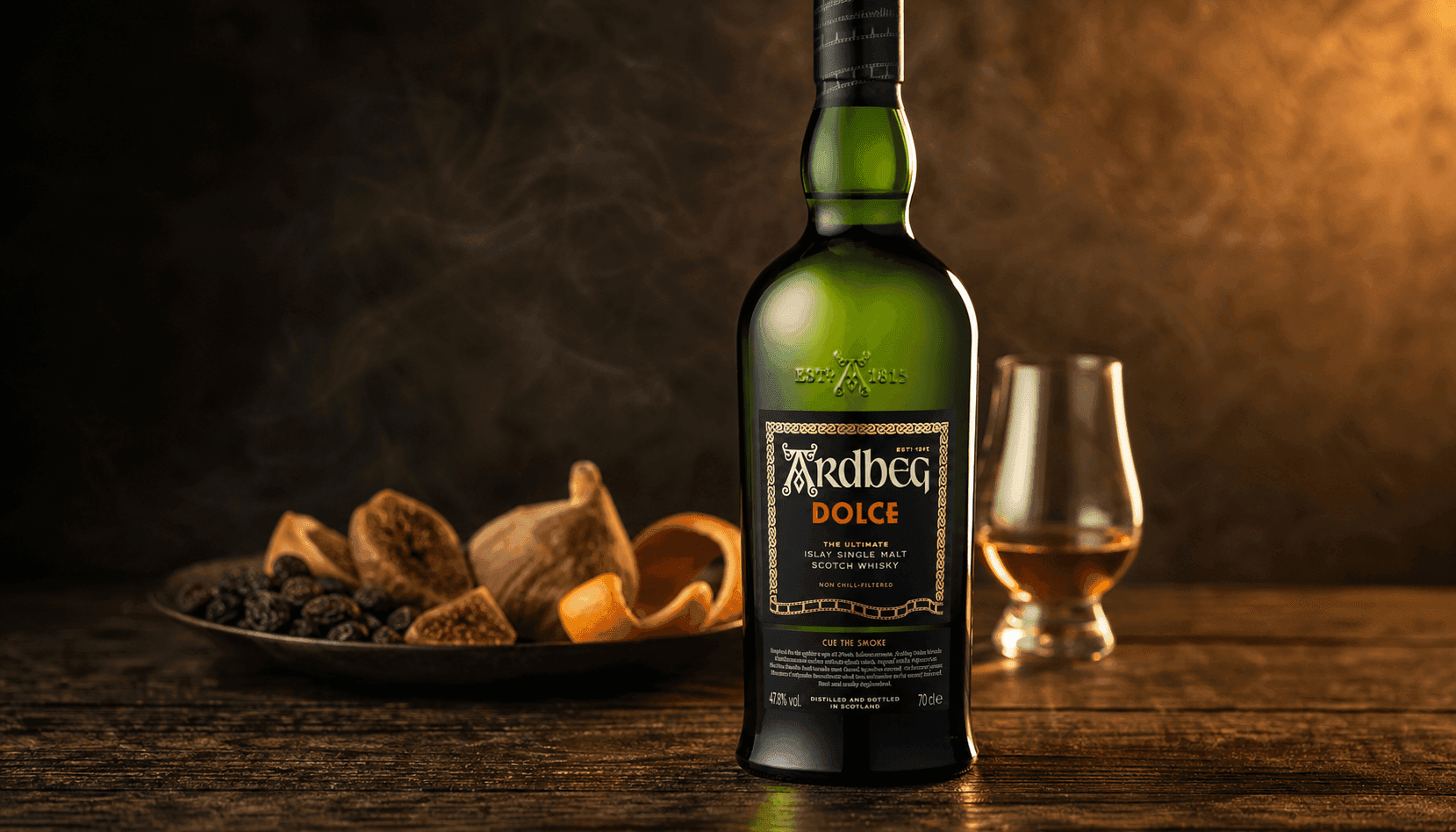
Ardbeg Dolce Review: Does the Marsala Cask Earn Its Price?
Key Takeaways
Ardbeg Dolce uses a Marsala cask finish: a Sicilian fortified wine vessel: to bring sweetness and dried fruit character to Ardbeg's heavily peated base spirit.
The combination of Islay peat smoke with Marsala's dark fruit and oxidative notes is technically ambitious and unlike most previous Ardbeg special releases.
As a summer 2026 limited edition, Dolce follows Ardbeg's well-established pattern of annual Committee and Day releases targeting collector engagement.
The bottle is available on the secondary market through platforms including Spiritory, where demand has been strong in the weeks following release.
Value judgement depends partly on how the buyer weights novelty against established character: drinkers who prefer Ardbeg's core range without modification may find Dolce superfluous; collectors focused on technically interesting limited editions will see it differently.
Marsala finishing is rare in Scotch whisky overall, giving Dolce a structural distinctiveness beyond Ardbeg branding alone.
What Is Ardbeg Dolce?
The Ardbeg Special Release Context
Ardbeg has established one of the most active special release programmes in Scotch whisky. The annual Ardbeg Day and Committee releases create a collector cadence: a reliable rhythm of limited editions that keeps the brand at the centre of collector conversation throughout the year. These releases vary considerably in their approach: some foreground maturation age, others experiment with cask types, and some revisit heritage production methods. Dolce sits firmly in the cask experiment category, applying a finish that Ardbeg has not used before on a widely distributed release.
Marsala: The Cask Selection
Marsala is a fortified wine produced in western Sicily, typically made from indigenous grape varieties and subjected to an oxidative maturation process that develops concentrated dried fruit, caramel, and nutty characteristics. The casks in which Marsala is aged carry these flavour compounds in the wood, and when Scotch whisky is finished in these vessels, it absorbs a layer of sweetness and complexity distinct from the more familiar sherry or port cask finishes. For Ardbeg specifically, the interaction between the Marsala cask's sweetness and the distillery's characteristic tar, medicinal, and smoky notes creates a genuinely unusual flavour dynamic.
Tip: When assessing a cask-finished Ardbeg, the key question is integration: whether the finish complements and extends the base spirit or sits uncomfortably on top of it. Dolce's Marsala character is most apparent on the nose and the mid-palate; the peat smoke reasserts itself on the long finish.
Tasting Notes and Profile
The Nose
The nose of Ardbeg Dolce opens with the recognisable Ardbeg signature: smoke, tar, and the coastal salinity that immediately locates it on the Kildalton shore. Layered over this, and unmistakably distinct from it, are the Marsala-derived notes: dried figs, dark raisins, a hint of orange peel, and something approaching the caramelised character of reduced wine. The two elements do not fight for dominance: they occupy different registers, with the peat carrying bass tones while the Marsala notes develop in the mid-range. It is an unusual nose that rewards patience and repeated attention.
The Palate
On the palate, Dolce delivers a fuller sweetness than most Ardbeg releases. The arrival is warm and round, with the Marsala's dried fruit and light tannins creating a texture that softens the usual Ardbeg intensity. This is not a gentle whisky: the peat smoke reasserts itself through the mid-palate: but the interplay between smoke and sweetness is more harmonious than the concept might initially suggest. The finish is long, drying progressively as the smoke outlasts the fruit notes, leaving the characteristic Ardbeg aftertaste intact.
Where It Fits in the Range
For those who know Ardbeg's standard lineup: Ten Years Old, Uigeadail, Corryvreckan: Dolce occupies a position closest to Uigeadail in its willingness to bring sweetness and fruit into contact with Ardbeg peat. The Marsala finish, however, creates a more specific and less generically sweet profile than the sherry cask influence in Uigeadail, giving Dolce a character that is identifiably its own rather than merely a variation on an existing theme.
Does the Price Hold Up?
The Value Proposition for Drinkers
Price justification for limited-edition Ardbeg releases involves two calculations: drinking value per pour, and secondary market value for collectors who may not open the bottle at all. For drinkers, the premium over core Ardbeg expressions needs to be justified by what the Marsala finish actually adds. Dolce makes a credible case: the finish is genuinely distinctive, technically executed, and adds a dimension to the Ardbeg profile that the core range does not provide. Whether that justifies the specific asking price is a matter for individual buyers, but the whisky itself does not feel like a cynical limited edition carrying a premium for scarcity alone.
Secondary Market Dynamics
For collectors, the question is different: does Dolce have the characteristics that sustain secondary market value over time? Limited editions with genuine technical interest, a distinctive production backstory, and strong brand equity tend to hold value better than novelty releases. Ardbeg has demonstrated through the performance of previous special releases that its brand equity supports secondary market trading. Dolce's Marsala angle is sufficiently unusual within the Ardbeg range and within Scotch whisky generally that it seems likely to maintain collector interest. Early secondary market signals, with demand outpacing supply in the weeks following release, are consistent with a bottle that will not simply disappear into unopened collections unnoticed.
Ardbeg Dolce vs. Other Ardbeg Specials
Against Uigeadail
Uigeadail remains the benchmark for the sweet-and-smoky combination in the Ardbeg permanent range. Dolce is not a replacement for it but a different take on the same conceptual territory. The Marsala finish creates a lighter, more fruit-forward sweetness compared to Uigeadail's deeper, earthier sherry cask influence. Collectors who love Uigeadail will find Dolce interesting but distinct: it does not replicate the experience, and should not be evaluated against it directly.
Against Previous Annual Limited Editions
Ardbeg's recent annual releases have varied in their quality and collector longevity. Those that foregrounded unusual cask types or documented production details have performed strongest on secondary markets. Dolce's Marsala angle gives it a clear technical story that should support long-term collector interest, placing it above less focused novelty releases in the hierarchy of Ardbeg specials.
Tip: For collectors deciding between opening and holding Ardbeg Dolce, the Marsala finish gives the bottle enough structural distinctiveness to support sustained collector interest, particularly if Ardbeg does not return to Marsala cask finishing in subsequent releases.
FAQ
What is Marsala cask finishing?
Marsala is a Sicilian fortified wine. After Marsala has been drawn from the cask, the residual wine in the wood imparts its flavour compounds: dried fruit, caramel, oxidative notes: to any spirit subsequently matured in the vessel. For whisky, this creates a finishing layer of sweetness and complexity distinct from the more common sherry, port, or bourbon cask finishes. Marsala casks are rare in Scotch whisky production, giving Dolce a technical profile that is unusual beyond simply being a new Ardbeg release.
Is Ardbeg Dolce worth buying for investment?
Dolce has the characteristics that typically support collector value retention: limited production, genuine technical interest, strong brand equity, and secondary market demand that exceeded supply at release. Whether it appreciates significantly depends on how Ardbeg prices subsequent releases and whether the Marsala angle maintains collector interest over time. It is a more credible investment than a straightforwardly novelty release, but no whisky investment is guaranteed.
How does Dolce compare to Ardbeg's core range for everyday drinking?
Dolce is less versatile than Ardbeg Ten Years Old or Corryvreckan as an everyday drinker: the Marsala finish creates a profile that is more specific and more dependent on occasion than the more straightforwardly peaty core expressions. As an occasional pour alongside dessert or on its own after a meal, it is excellent. As a daily whisky, its sweetness may become cloying over repeated encounters in a way that the cleaner, peat-forward core expressions do not.
Where can I buy Ardbeg Dolce?
Given its limited nature, Ardbeg Dolce may be exhausted from primary retail channels quickly after release. The secondary market is the most reliable source for buyers who missed the initial allocation: Spiritory lists currently available bottles with transparent pricing, allowing buyers to assess the market before committing.
About the author

Christopher Deutsch
I drink and collect with intention, drawn to the sherried depth of Dalmore and the balance of Yamazaki.
To the author