

Reach thousands of whisky and spirits lovers every day.


08.01.2026

Original Packaging and Condition on Spiritory: Why We Don’t Make Exceptions
Original Packaging and Condition on Spiritory: Why We Don’t Make Exceptions
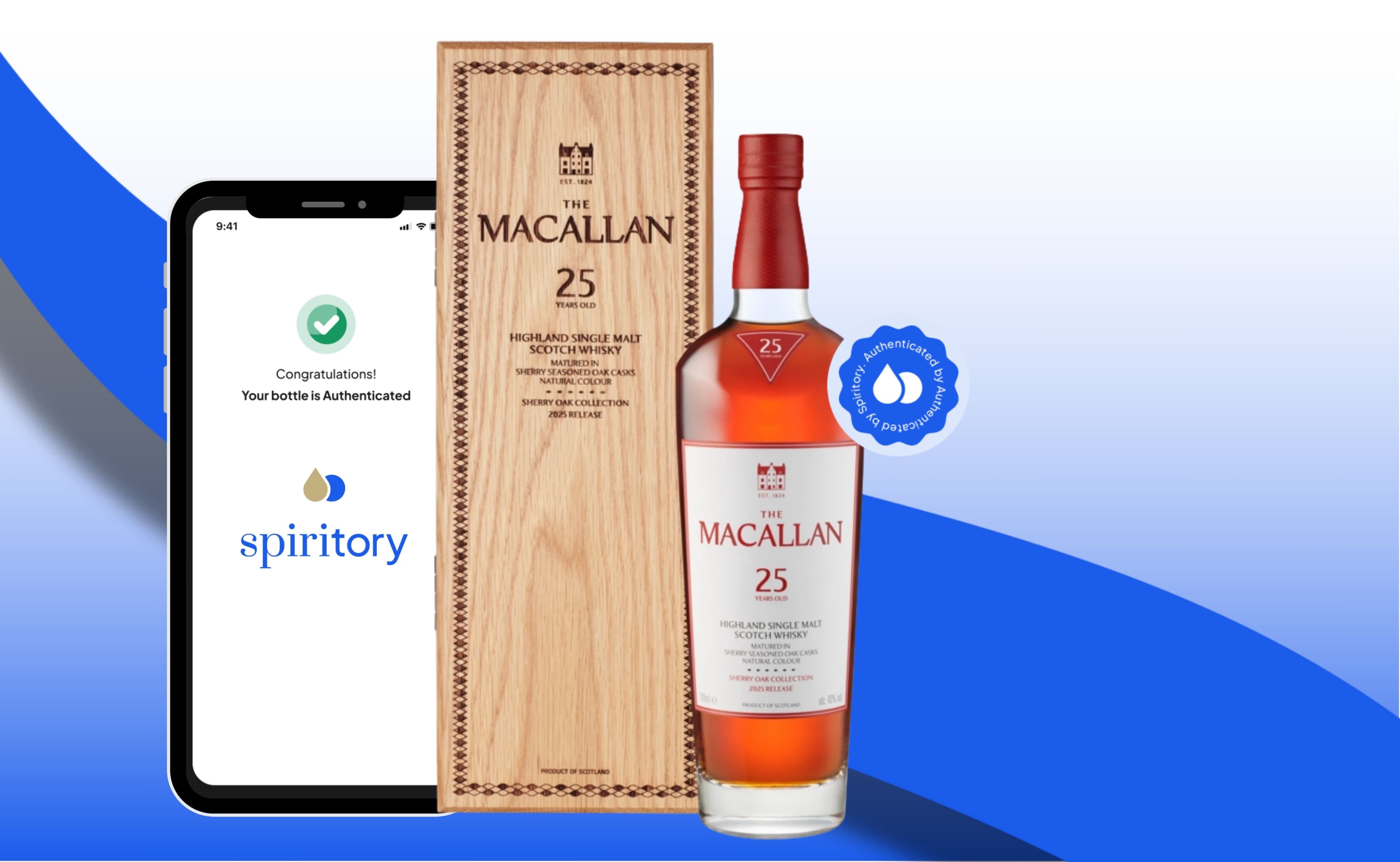
Whether you’re buying your very first special bottle or choosing a long-awaited release, two questions usually come first: “Does it include the original packaging?” and “What condition is it in?” At Spiritory, we answer both with a clear standard: if a bottle was originally released by the producer with its original packaging, it can only be listed and shipped on Spiritory with that original packaging. If the packaging is missing, the bottle cannot be listed.
This isn’t formality for its own sake. It’s a quality principle — designed to create clarity, reduce uncertainty, and deliver a reliable premium buying experience.
Tip: For many releases, the original packaging is part of the product as intended — it supports identification, protects during shipping, and completes the presentation.
The Spiritory Standard: Original Packaging Is Required — When It Belongs to the Release
In practice, the rule is simple:
- Was the release originally sold with a box, tube, or case? → Then it must be listed with that original packaging.
- Was there no original packaging for that release? → A listing without packaging can be allowed — but only when it’s clearly established that none existed.
This prevents the grey areas that commonly cause friction in secondary sales: Was the box lost? Replaced? Does it actually match the exact edition? Spiritory removes that uncertainty.
Note: Original packaging isn’t “nice to have.” In many releases, it is part of the product’s identity.
Why Packaging Matters for Whisky Bottles
1) Collectability: Completeness Drives Perception
For limited editions, packaging is often intentionally designed — embossed details, serial references, booklets, custom inserts. To many collectors, this is part of the collectible, not an accessory. Without it, a bottle may feel incomplete, even if the liquid is flawless.
2) Pricing and Resale: Comparability Creates Fair Value
A bottle with original packaging is easier to position in the market:
- clearer like-for-like comparisons,
- more confident valuation,
- typically smoother resale,
- fewer follow-up questions.
In short, original packaging reduces uncertainty — and uncertainty is the main barrier to trust.
3) Authenticity: Packaging as an Additional Plausibility Signal
Especially for sought-after releases, packaging can carry useful identifiers: edition naming, design features, and other release-specific details. It does not replace verification — but it strengthens overall plausibility when assessing an offer.
4) Shipping Protection: Designed Fit Beats Improvisation
Many original boxes and cases are built to hold the bottle securely and absorb movement. Without that fitted protection, the risk of damage to the capsule, label, or glass increases — and with it the risk of avoidable value loss.
Did you know? In the collectible segment, minor cosmetic issues often reduce perceived value faster than small differences in purchase price.
Condition: Spiritory Requires “Like New” — For Bottle and Packaging
The next crucial question is always: “Is it in good condition?” On Spiritory, “good” is not subjective. Only bottles and original packaging in good condition may be sold, with the benchmark set to “like new.” And crucially: Spiritory checks this as part of the authentication process. Because “good” online can mean anything. Collectibles require consistent standards.
What “Like New” Typically Means
We treat bottle and packaging as one unit. Key indicators include:
- Fill level: appropriate, without noticeable loss
- Capsule and seal: clean, intact, no signs of tampering
- Label: no major scratches, lifting, or moisture damage
- Glass: no chips, cracks, or significant abrasion
- Inserts/booklets: included if originally part of the set
Note: A great bottle in heavily damaged packaging often no longer meets premium collector expectations — even if the liquid is perfect.
Why We Enforce This: Trust, Transparency, and Quality
A premium marketplace must deliver two things at once: the fascination of origin and craft — and the security of reliable standards. That is exactly what our rules on packaging and condition are designed to ensure:
- For buyers: clearer expectations, lower risk, higher comparability
- For sellers: fewer questions, fewer disputes, stronger market acceptance
- For Spiritory: consistent quality that reflects the premium nature of the category
A Practical Checklist for Sellers
- Was original packaging part of the release? → Then it must be included.
- Assess condition strictly: bottle and packaging should be “like new.”
- Record essential details: release name, ABV, volume, edition, serial references (if applicable).
- Provide strong photos: front/back, capsule, fill level, bottle base, packaging on all sides, corners and edges.
Tip: Capsules and packaging edges are the most common points of dispute — photograph them clearly.
On Spiritory, original packaging and condition are not optional extras — they are the foundation of a reliable premium marketplace. That turns recurring questions into clear answers, and hesitation into confident buying.
Please enjoy responsibly.
FAQ
1) Is original packaging always included on Spiritory? If a bottle was originally released by the producer with original packaging (box/tube/case), then yes: it can only be listed and shipped on Spiritory with that original packaging. If the release had no packaging to begin with, it may be listed without it.
2) What if a bottle comes with packaging, but not the correct one? Spiritory’s goal is to avoid that ambiguity. Listings must match the correct packaging for the specific release, preventing confusion caused by “similar” or later-sourced packaging.
3) Why does packaging matter if I plan to open the bottle? Even for drinking, original packaging has practical value: it protects during shipping, preserves presentation, and signals that the bottle is complete as originally intended.
4) What does “like new” actually mean? “Like new” means no noticeable defects on bottle or packaging: an appropriate fill level, a clean capsule/seal with no signs of interference, a well-preserved label, intact glass, and packaging without severe dents, tears, or stains.
5) What should buyers check first when assessing condition? Focus on: • Fill level (unusual loss is a red flag) • Capsule/seal (clean and intact) • Label condition (no moisture damage) • Packaging edges/corners (impact wear shows here first)
6) Does “original packaging” include an outer shipping carton? No. “Original packaging” refers to the producer’s packaging (box/tube/case). Outer shipping cartons are transport materials, not part of the release.
7) Does Spiritory actually check bottle and packaging? Yes. As part of the authentication process, Spiritory checks that listings meet the platform’s standards — especially regarding original packaging and “like new” condition.
8) What if the bottle or packaging is damaged during shipping? Spiritory’s standards are designed to reduce that risk (including requiring original packaging where applicable). If damage occurs, it should be documented immediately upon arrival (photos) and reported through the platform process.
9) Why are photos important if there is an authentication process? Because photos create clarity upfront. They show capsule, label, fill level, packaging corners/edges, and any minor marks — helping buyers set accurate expectations.
10) Are there exceptions for older or historic releases? Older releases can vary by era and presentation. The principle remains: if original packaging was part of the release, it must be included. If none existed, a listing without packaging may be allowed — but that must be clear.
About the author

Spiritory Team
Spiritory is a team of dedicated Whisky, Rum and Spirits Enthusiast. Our passion for the product, craftmanship and art of producing the finest spirits in the world will be represented in every article we write on our blog-page. Our goal is to produce content which is interesting to read and for a broad base of consumers, enthusiasts, investors and collectors.