

Reach thousands of whisky and spirits lovers every day.
Islay Selection
Peat, smoke, and the wild Atlantic — Islay's spirit is unmistakable.
Islay: Scotland's Most Iconic Whisky Island
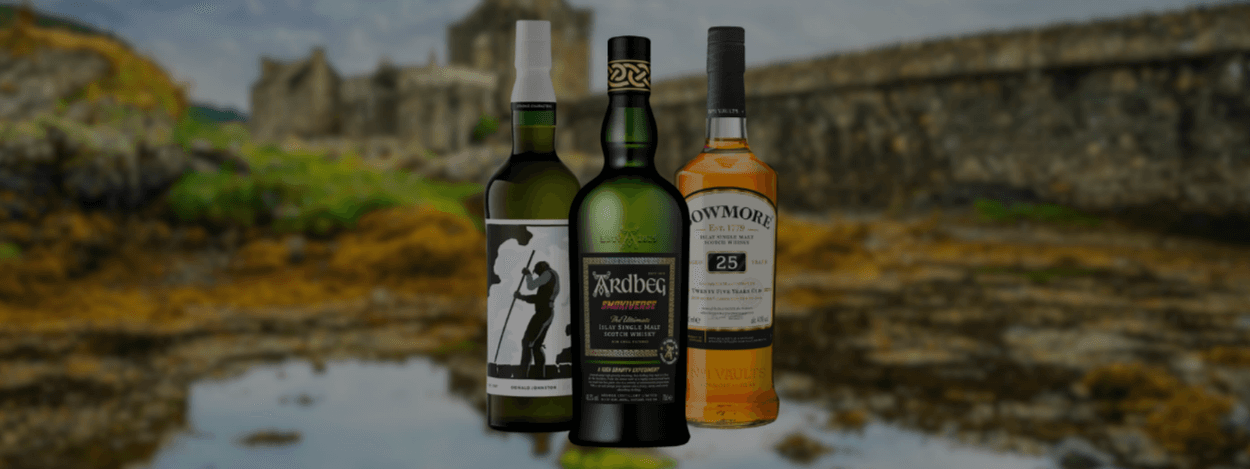
Few places in the spirits world inspire the same intensity of feeling as Islay. This small Hebridean island — just 3,200 inhabitants, ten active distilleries — has produced some of the most celebrated, collected, and passionately debated whiskies in the history of Scotch. Its identity is rooted in the island's elemental conditions: thick coastal peat bogs, soft spring water running over peat-rich ground, and a maritime climate saturated with Atlantic brine and sea air. These forces combine to create whiskies of extraordinary depth and character, from the legendary medicinal intensity of Laphroaig to the rich, layered smoke of Lagavulin, the oily cult-status peat of Ardbeg, and the balanced elegance of Bowmore. Islay is legally recognised as one of Scotland's five protected whisky regions, a distinction it has earned through centuries of uncompromising craft and a character that cannot be replicated anywhere else on earth. Explore the full range of Islay single malts on Spiritory and discover what makes this island the most passionately followed whisky region in the world.
Table of the content:
Islay Whisky: Smoke, Sea, and Singular Character
Islay — pronounced "Eye-lah" — is a small island off the southwest coast of Scotland, yet it occupies an outsized position in the world of single malt Scotch. Home to ten active distilleries on a landmass just forty by twenty-four kilometres, Islay is legally recognised as its own distinct whisky region and is universally associated with one of the most distinctive flavour profiles in the spirits world: intense peat smoke, iodine, brine, and sea air. The island's unique coastal peat — enriched with seaweed and moss from millennia of Atlantic exposure — gives Islay whiskies their defining character, a quality that sets them apart from any other peated Scotch. Iconic names such as Laphroaig, Ardbeg, and Lagavulin have built devoted global followings, while houses such as Bowmore, Bruichladdich, and Bunnahabhain demonstrate the remarkable range that Islay is capable of producing.
What Makes Islay Special?
Islay's identity in whisky is shaped by a combination of forces that cannot be replicated anywhere else.
- Coastal peat with maritime character: The peat found on Islay is distinct from mainland Scottish peat. Saturated with sea air, seaweed, and moss, it imparts notes of iodine, brine, and smoke that go far beyond simple earthiness. This terroir-driven quality is the primary reason Islay malt has no true equivalent elsewhere in the whisky world.
- A spectrum from bold to delicate: While Islay is famous for its heavily peated southern coast distilleries — Laphroaig, Lagavulin, and Ardbeg — the northern coast produces lighter, more accessible expressions at Bunnahabhain and Caol Ila, and Bruichladdich even produces an entirely unpeated single malt. Islay is far more versatile than its fiery reputation suggests.
- A living tradition of floor malting: Bowmore, Laphroaig, and Kilchoman all still operate traditional floor maltings, where barley is spread, turned by hand, and dried over peat fires. This centuries-old practice is a rarity even across Scotland as a whole, and remains one of the most direct ways the island imprints its character onto its spirit.
- Cult status and collector appeal: Islay whiskies — particularly aged releases from Ardbeg, Laphroaig, and the now-revived Port Ellen — command serious attention in the collector market. Limited annual releases, distillery-exclusive bottlings, and cask-strength expressions are eagerly sought by enthusiasts around the world, making Islay one of the most dynamic secondary markets in Scotch whisky.
Notable Bottles to Explore
Islay's range spans from the approachable to the intensely powerful, offering something for every stage of a whisky journey.
- Laphroaig 10 Year Old: Perhaps the most iconic peated single malt in existence, this Laphroaig expression is the benchmark for medicinal, seaweed-infused, smoky Scotch. Its combination of iodine, bonfire smoke, sweet vanilla, and briny maritime character has captivated generations of whisky drinkers. It remains the defining entry point for all things Islay.
- Lagavulin 16 Year Old: One of the most celebrated aged expressions in all of Scotch whisky, the Lagavulin 16 Year Old delivers dense peat smoke, rich dried fruit, dark chocolate, and a profound, lingering finish. It is the product of one of Islay's most storied distilleries, founded in 1816 on the island's southern shore.
- Ardbeg 10 Year Old: A cult classic from one of Islay's most beloved distilleries, the Ardbeg 10 is intensely peated but balanced with surprising sweetness and citrus beneath the smoke. It has won numerous international awards and is considered by many enthusiasts to be one of the finest-value single malts in the world.
- Bruichladdich Classic Laddie: A departure from the Islay norm — this unpeated, terroir-focused single malt from Bruichladdich showcases what the island can produce when peat is set aside. Bottled at 50% ABV and made exclusively from Scottish barley, it challenges preconceptions about Islay whisky and stands as one of the most thoughtfully produced drams on the island.
From the ferociously peated to the hauntingly refined, these bottles reveal the full depth and range of Islay's whisky tradition — an island whose identity is inseparable from the sea, the peat, and the uncompromising spirit that has made it legendary.
For the Adventurous and the Discerning
Islay is the region that converts and polarises in equal measure. For the curious newcomer, a first encounter with Laphroaig or Ardbeg is an unforgettable sensory experience — confrontational at first, then utterly compelling. For the experienced collector, Islay offers a depth of rare and limited releases that few other regions can match: aged Lagavulin expressions, annual Ardbeg Day releases, cask-strength Bowmore, and sought-after bottlings from the restored Port Ellen. The annual Fèis Ìle festival draws whisky pilgrims from across the world to this remote island, testament to the devotion Islay inspires. Whether you are seeking your first peated dram or adding a rare island expression to a serious collection, the Spiritory Islay selection is the place to begin.