

Reach thousands of whisky and spirits lovers every day.


20.02.2026

How do dunnage and racked warehouses, cask position, and coastal exposure affect whisky aging and flavor?
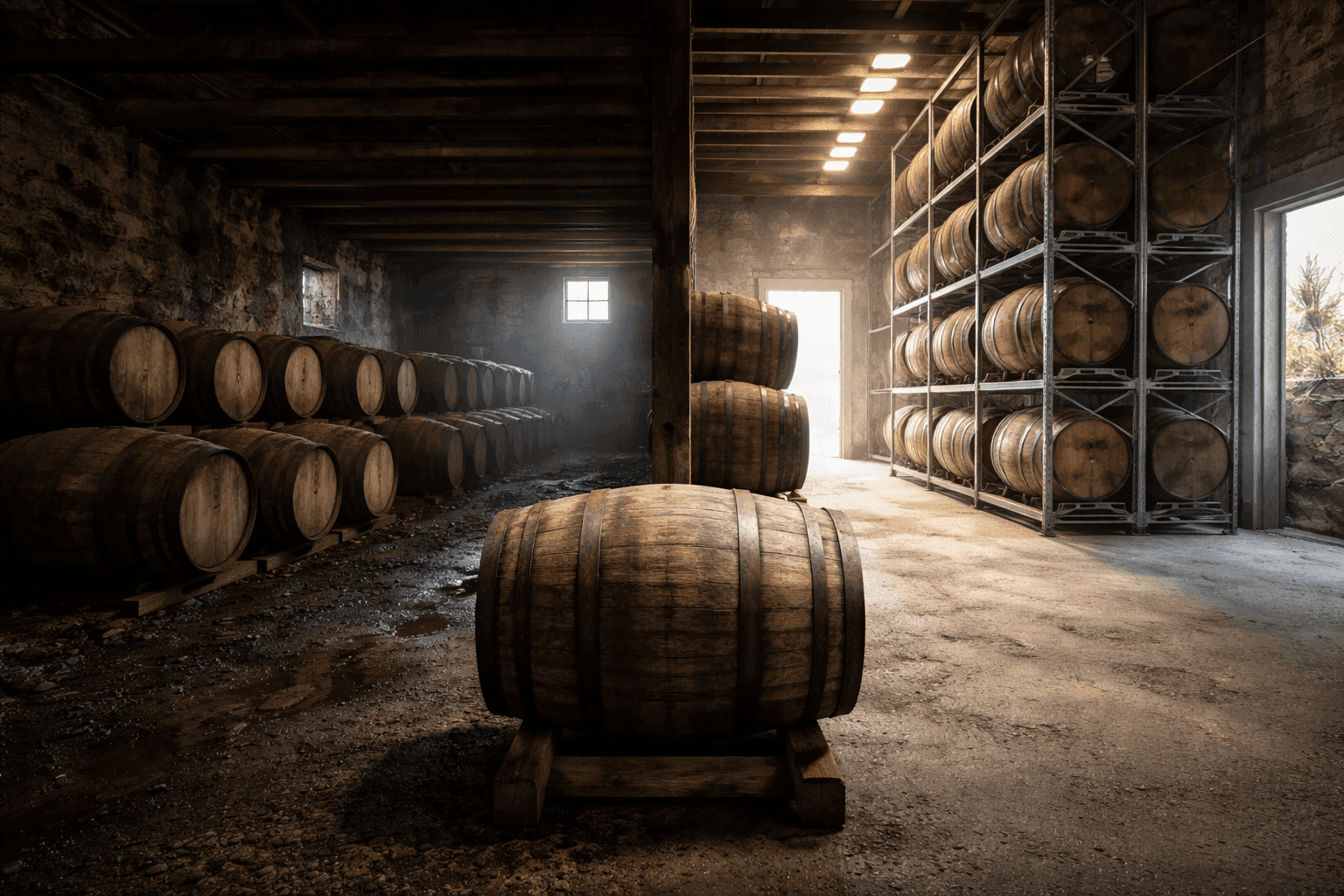
How do dunnage and racked warehouses, cask position, and coastal exposure affect whisky aging and flavor?
Dunnage vs Racked Warehouses
Traditional dunnage warehouses in Scotland:
- low stone buildings with earthen floors and thick walls
- casks stacked 2–3 high
Benefits:
- stable temperature year-round
- high humidity
- slow, even maturation
Result: smooth, balanced whiskies, ideal for long maturation.
Racked warehouses:
- tall metal or concrete structures
- casks stacked up to 12–14 high
Effects:
- quicker temperature changes
- differences between top and bottom casks
- more intensive cask interaction
Better for efficiency and shorter maturations, but less predictable.
Cask Position Matters
Even within one warehouse, whisky can develop differently:
- Height — top casks see higher temperatures and faster evaporation
- Proximity to walls — affects airflow and heat
- Air circulation — determines oxidation rate
Two casks filled the same day can taste very different after years.
Coastal Warehouses
Whiskies aged near the sea often experience:
- higher humidity → slower ABV decrease
- milder temperatures → steady maturation
- subtle “maritime” influence
Whiskies from coastal regions are often described as more mineral or slightly briny, though this is mainly due to aging conditions, not salt.
Adapting to Climate Change
Distilleries increasingly:
- invest in insulated warehouses
- monitor temperature and humidity digitally
- shorten and fine-tune maturation periods
Maturation is no longer purely passive — it’s a managed compromise between tradition and nature.
What This Means for Consumers
Age and cask type are no longer the only considerations. Whisky enthusiasts also value:
- where it matured
- which warehouse
- local microclimate conditions
Even small details can explain why two whiskies of the same age and cask type taste completely different.
Conclusion
Climate influences whisky not only through temperature and humidity but also through warehouse architecture and microclimate. Dunnage or racked, coastal or inland, top or bottom cask — each factor leaves its mark. For whisky lovers, this adds another fascinating layer to discovering and appreciating their favorite spirit.
About the author

Damian Baran
Hooked since a Talisker 10 in 2021, I've tasted over 800 whiskies and love Islay peat and independent bottlings.
To the author