

Reach thousands of whisky and spirits lovers every day.


Can Whisky and Beer Coexist? The Case for Both at Oktoberfest
 by Max RinkI’m a whisky enthusiast and aspiring writer, exploring new flavours and the stories behind every bottle.
Follow Spiritory on Google News to get our latest guides and releases delivered straight to your feed.
Can Whisky and Beer Coexist? The Case for Both at Oktoberfest
Key Takeaways
Beer and whisky serve different functions at Oktoberfest, the beer tent is a social and cultural experience, the whisky moment is more contemplative and separate from the festival floor.
Munich's specialist whisky bars and retailers are active during Oktoberfest and offer a genuine alternative to the tent experience for the evening or morning session.
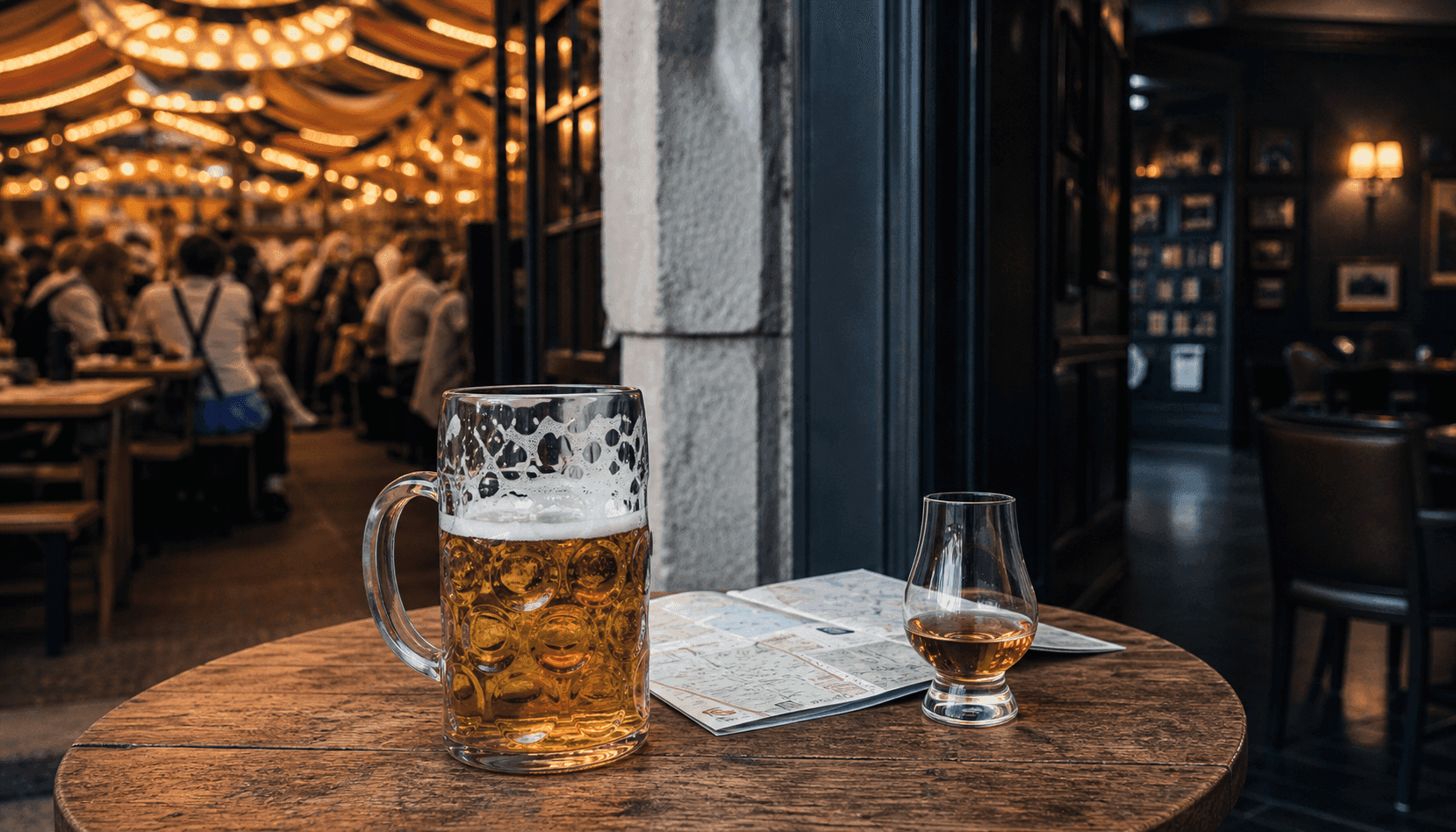
A beer-and-whisky chase, a small whisky alongside a beer, has deep roots in American and Scottish pub culture and is not inappropriate at Oktoberfest in spirit, even if Bavarian tradition does not emphasise it.
German collectors visiting Oktoberfest often structure their day around the festival in the afternoon and whisky retail and tasting in the morning or evening.
The growing German craft spirits movement has created whisky bars in Munich that are designed for exactly this kind of cross-category visitor.
Neither drink needs to be abandoned for the other; the question is one of timing and occasion rather than allegiance.
The Cultural Weight of Beer at Oktoberfest
What beer means at the festival
Oktoberfest beer is not simply a drink at the Munich festival; it is the occasion itself. The six Munich breweries licensed to serve at the Theresienwiese, Augustiner, Hofbräu, Hacker-Pschorr, Löwenbräu, Paulaner, and Spaten, produce specific festival editions that are brewed to higher strength and richer body than their standard lagers. The beer tent serves as the social infrastructure of the festival: communal tables, brass bands, the one-litre Masskrug, and a volume and intensity of communal experience that has no direct parallel in whisky culture. Attempting to replace this experience with a whisky alternative misunderstands what Oktoberfest is. The beer is the point.
The case for participation rather than resistance
A serious whisky collector visiting Munich for Oktoberfest who refuses to engage with the festival's beer culture is missing an important part of the destination's identity. The Märzen and helles poured at the festival are excellent examples of their style, brewed with the same care and tradition that applies to premium Scotch production, and experienced in a social context unique to Munich. The more rewarding approach is full participation in the beer tradition during the festival hours, followed by a return to whisky at the end of the day, treating the two as complementary experiences rather than competing loyalties.
Historical context of the beer-whisky relationship in Germany
Germany's relationship with whisky has historically been mediated through its dominant beer culture. The Reinheitsgebot, Bavaria's purity law governing beer ingredients, created a national identity strongly associated with grain-based fermented drinks, a tradition that, ironically, shares significant overlap with whisky production. German consumers who have crossed from serious beer appreciation to serious whisky collecting often describe the transition as natural: both drinks reward attention to provenance, production method, and terroir, and both are embedded in specific regional identities that German drinks culture tends to take seriously.
The Beer and Whisky Chase, A Tradition Worth Knowing
Origins in Scottish and American pub culture
The pairing of a small whisky alongside a beer, sometimes called a "boilermaker" in American tradition or a "hauf and a hauf" in Scotland, has deep roots in both cultures. The whisky serves as an intensifier and contrast to the beer: the malt and smoke notes in the spirit bring out the grain character of the lager in a way that drinking either alone does not produce. At its best, the combination creates a sensory dialogue between two grain-based traditions that is more interesting than the sum of its parts.
Adapting the concept for Oktoberfest
Bringing the beer-and-whisky chase concept to Oktoberfest requires a degree of pragmatic adaptation. The tent environment does not lend itself to careful whisky nosing and note-taking, and the one-litre Masskrug arrives in rounds rather than allowing precise pairing timing. The more workable adaptation is a small dram of a light, accessible whisky, a blended Scotch or a smooth Irish expression, taken before entering the tent, sharpening the palate before the evening's beer, and then a more considered pour of something characterful at the end of the night when the tents have closed and the city returns to a more reflective pace.
Which whiskies to choose for the transition
A whisky consumed in the orbit of Oktoberfest should not demand too much from the drinker in terms of concentration. A lighter blended Scotch or a straightforward Irish whiskey serves the transitional moment better than a heavily peated single malt or a cask-strength expression that requires quiet and attention to reveal its character. Monkey Shoulder, Highland Park 12, or a light Irish expression are well-calibrated for the context, they are interesting without being demanding, and they hold their own in the noise and warmth of a festival evening.
Tip: Book a table at a Munich whisky bar for the evening of your first festival day, rather than attempting to plan it at the end of an unscheduled night. The best venues near the Theresienwiese fill up during Oktoberfest period, and a reservation ensures the whisky part of the evening happens rather than simply being a good intention.
Structured Coexistence, Planning the Day
Morning as whisky time
The hours before the festival tents open in the late morning are among the best for whisky-focused activity in Munich. Specialist retailers open early, the city has not yet reached festival intensity, and the focused attention that a proper tasting requires is available in a way it will not be later in the day. A systematic visit to one or two specialist shops, followed by a short tasting session at a whisky bar before lunch, allows a collector to complete a meaningful whisky agenda before the afternoon beer culture takes over entirely.
The festival afternoon and evening as beer time
The Oktoberfest tents are at their best from mid-afternoon, when the atmosphere is fully established, the bands are playing, and the communal energy of the festival is at its highest. This is not the time for quiet single malt contemplation; it is the time for beer. Embracing this completely, rather than treating it as a concession, is both more honest and more enjoyable than attempting to maintain a whisky-first posture in an environment that does not support it.
Late evening as the return to whisky
As the tents close and the city settles into its normal evening pace, the whisky moment reasserts itself. Munich's specialist whisky bars, which run later than the festival grounds, offer a quiet, considered counterpoint to the day's intensity. A well-chosen single malt served at the correct temperature in a proper nosing glass, in a bar that takes the drink seriously, is an appropriate closing note for a day that began in the tasting room and passed through the Masskrug.
FAQ
Is it appropriate to drink whisky at Oktoberfest?
Nothing prevents it, and the festival city has numerous venues that serve whisky. However, drinking whisky inside the traditional beer tents misses the point of the experience. The better approach is to treat whisky and beer as belonging to different parts of the day rather than competing for the same moment in the tent.
Does drinking beer affect palate sensitivity for whisky later?
Significant beer consumption, particularly at the volumes associated with a full day at Oktoberfest, does blunt the palate for subtle spirit notes. If a whisky tasting or retail visit is a serious priority, scheduling it before the beer session rather than after is the more productive choice. A late evening dram is more of a pleasure than an analysis at that point, and should be treated accordingly.
Are there whisky events that run alongside Oktoberfest in Munich?
The period around Oktoberfest has historically seen specialist whisky events, tastings, and retailer promotions in Munich that are designed to attract the festival's international visitor base. These are typically announced by specialist retailers and the local German whisky society chapters in the weeks preceding the festival and are worth tracking if the whisky agenda is as important as the festival itself.
About the author

Max Rink
I’m a whisky enthusiast and aspiring writer, exploring new flavours and the stories behind every bottle.
To the author