

Reach thousands of whisky and spirits lovers every day.


Which Whisky Distilleries Prioritise Quality Over Marketing in 2026?
 by Damian BaranHooked since a Talisker 10 in 2021, I've tasted over 800 whiskies and love Islay peat and independent bottlings.
Follow Spiritory on Google News to get our latest guides and releases delivered straight to your feed.
Which Whisky Distilleries Prioritise Quality Over Marketing in 2026?
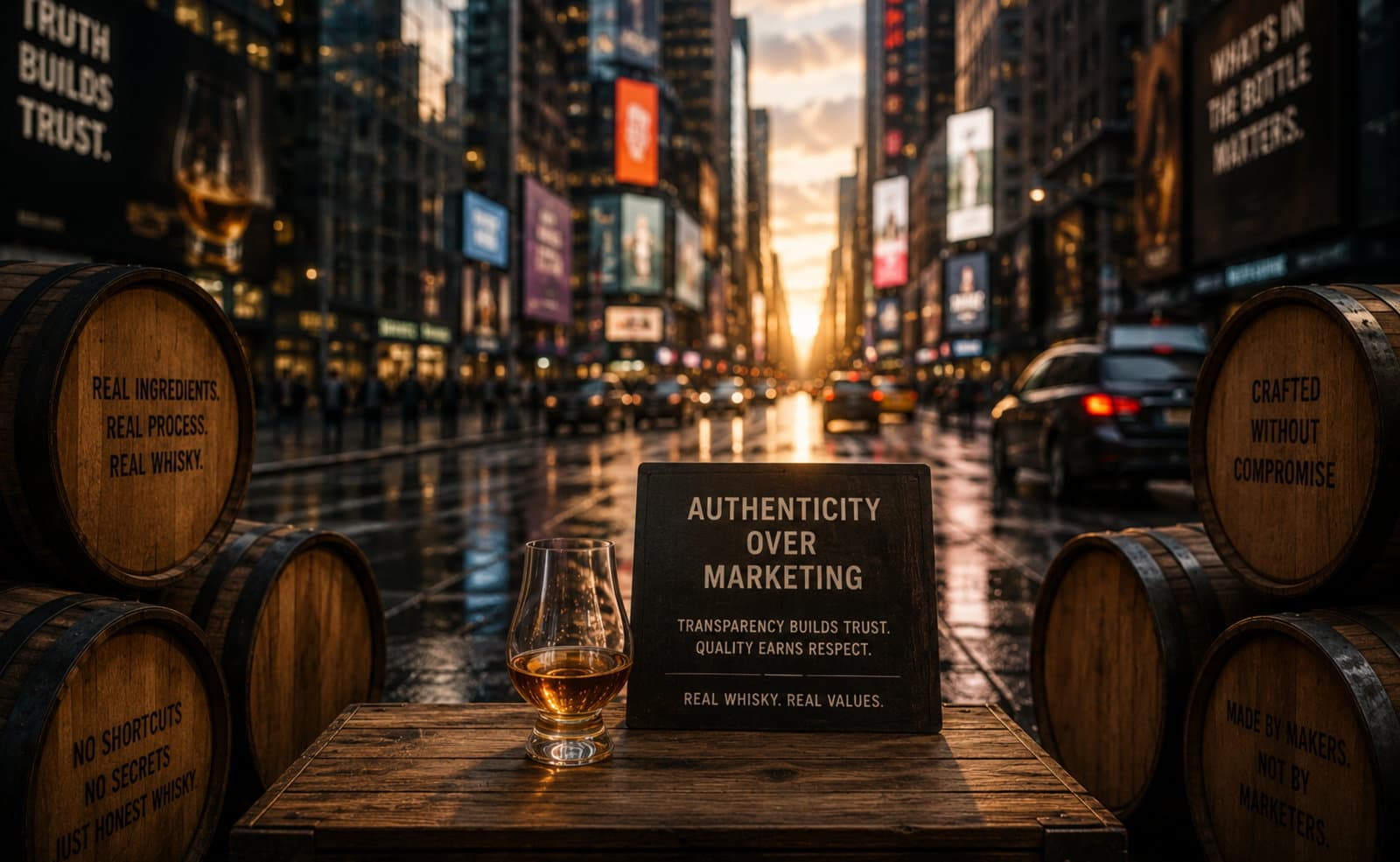
Until recently, the whisky world was built largely on storytelling: multi-generational traditions, “secret recipes,” and atmospheric legends. Today, a growing group of consumers is no longer satisfied with that. The question is no longer “what story is the brand selling?” but rather: “what’s actually in the bottle, and how was it made?”
In response to this shift, one of the most important trends in modern whisky is gaining momentum: authenticity and production transparency.
From Field to Bottle
One of the pillars of this change is the grain-to-glass approach—or even going a step further with farm-to-glass. The idea is full control over production: from growing the grain all the way to bottling.
A great example is Minden Mill, which operates on a “ground-to-glass” model. The distillery not only produces whisky but also grows its own barley, malts it, and uses its own water source. This level of control was rare just a few years ago.
A similar philosophy—though in a European context—is represented by Zuidam Distillers. Here too, we see in-house grain, traditional production methods (including windmills for milling), and long fermentations that genuinely impact flavor.
Open Production Instead of “Magic”
The new wave of distilleries increasingly reveals details that were once carefully hidden:
- raw ingredient composition
- fermentation time
- cask types
- no chill filtration or added caramel coloring
A good example is Wilderness Trail, which openly communicates even technical aspects like the yeast strains used. This level of transparency is rarely seen among large producers.
Meanwhile, Mackmyra builds its identity around locality and openness—from Swedish barley and local oak to experiments with maturation environments.
Locality as the New Quality
Authenticity often goes hand in hand with locality. Instead of copying the Scotch style, new distilleries increasingly build their own identity based on their region.
Balcones from Texas uses local grains and experiments with fermentation and raw material processing, creating a profile unlike anything else.
Similarly, Westland explores different barley varieties and the influence of the Pacific Northwest terroir.
In Europe, Stauning is another interesting example—a distillery that returns to traditional floor malting and relies heavily on local ingredients.
“No Bullshit”? Not Quite
Although the authenticity trend is clear, a healthy dose of skepticism is still needed. The whisky industry is not required to disclose many production details. In practice, this means:
- some brands use sourced distillate
- NAS (No Age Statement) labels leave a lot open to interpretation
- marketing can still outpace reality
True transparency isn’t about slogans—it’s about specifics.
How to Recognize an “Honest” Distillery
There are a few signals worth paying attention to:
- does the distillery talk about the process (not just the story)?
- does it disclose production details?
- does it actually produce its own distillate?
- is the communication consistent and concrete?
The more data provided, the less room there is for marketing illusion.
Conclusion
The new wave of whisky isn’t competing on history—it’s competing on credibility.
Distilleries like Minden Mill, Mackmyra, and Zuidam Distillers show that the future of the industry may look very different from its past.
👉 The new currency in whisky is no longer age—it’s transparency.
And for consumers, that means one thing: never before has it been so easy to drink consciously—and so hard to be misled.
About the author

Damian Baran
Hooked since a Talisker 10 in 2021, I've tasted over 800 whiskies and love Islay peat and independent bottlings.
To the author