

Reach thousands of whisky and spirits lovers every day.


What Is Yuzen? The Kyoto Craft Behind the Hibiki Chiso Bottle
 by Max RinkI’m a whisky enthusiast and aspiring writer, exploring new flavours and the stories behind every bottle.
Follow Spiritory on Google News to get our latest guides and releases delivered straight to your feed.
What Is Yuzen? The Kyoto Craft Behind the Hibiki Chiso Bottle
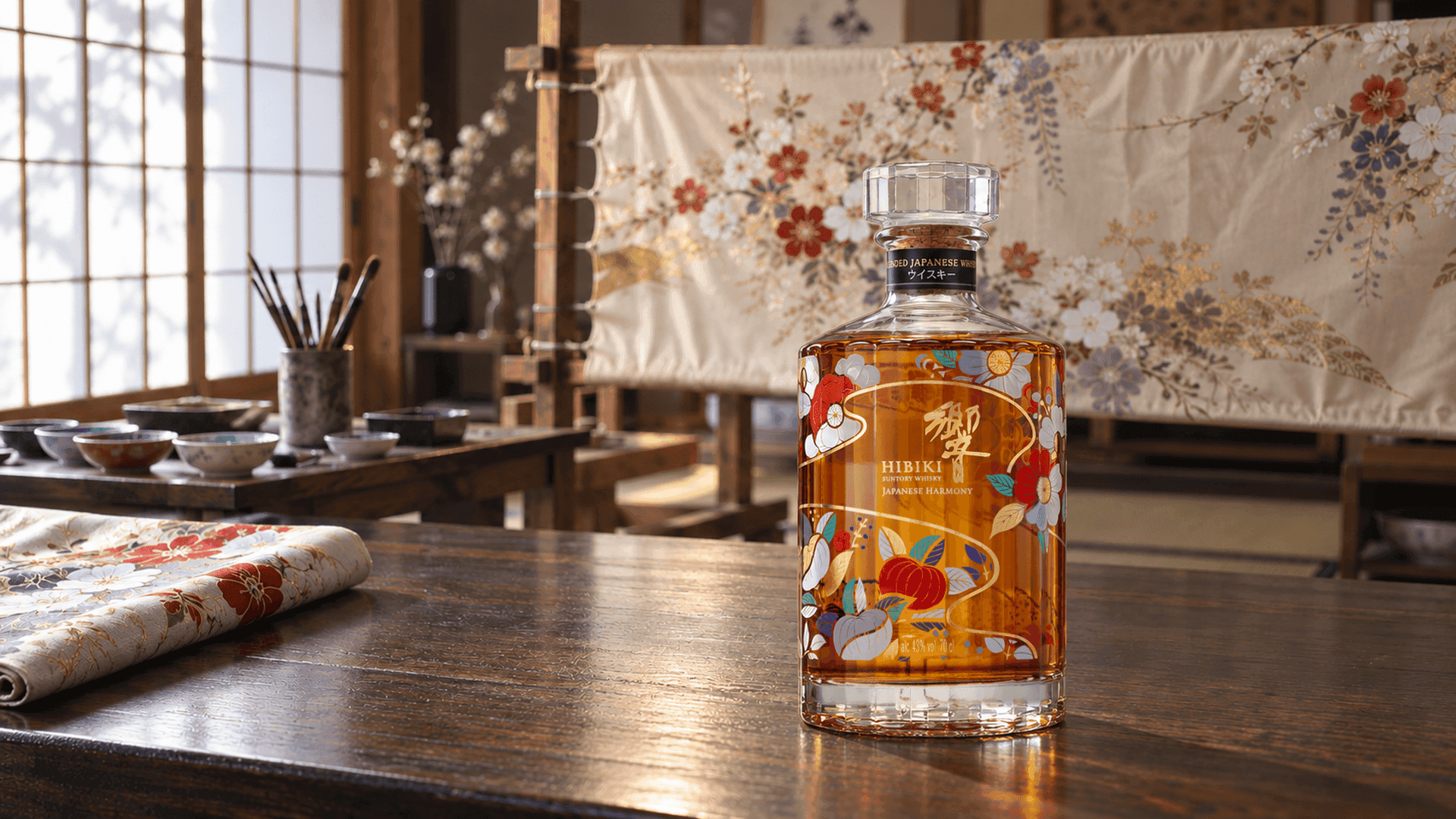
Yuzen is a Japanese method of dyeing silk by hand, using lines of rice paste to hold each color apart while an artist paints the design directly onto the cloth. The technique traces back to Miyazaki Yuzensai, a Kyoto fan painter active in the late 1600s, and it lies behind the floral pattern that the Kyoto kimono house Chiso designed for the Hibiki Japanese Harmony Chiso Limited Edition Design 2026 bottle.
Key Takeaways
Yuzen is a resist dyeing technique that lets an artist paint a picture onto silk rather than repeat a single stencil across the cloth.
It was developed by Miyazaki Yuzensai, a fan painter working in Kyoto in the late 1600s and early 1700s.
The main steps are sketching the design, piping on rice paste resist lines, hand painting the colors, steaming to fix the dye, and washing the paste away.
Chiso, the Kyoto house behind the craft, was founded in 1555 and moved into yuzen dyeing in the early Meiji period.
The tachibana flower on the Hibiki Chiso Limited Edition Design 2026 bottle is Chiso's own family crest.
The whisky inside the bottle is standard Hibiki Japanese Harmony at 43% ABV in a 70cl bottle. Only the design is new.
Tip: Yuzen pieces are judged on how cleanly the resist lines keep each color apart. On the Hibiki Chiso bottle, look for the same discipline: the thin gold lines separating the cherry blossom and tachibana motifs should stay crisp even where the pattern wraps around a facet.
What Is Yuzen?
Yuzen is a way of dyeing silk by hand so that a picture, not just a repeating pattern, can appear across a piece of cloth. Lines of rice paste keep each dye separate while an artist paints in the colors, so the finished design keeps the free feel of a brush painting instead of the regularity of a printed or stencilled fabric.
The method is named after Miyazaki Yuzensai, whose real name was Hioki Kiyochika. He worked as a fan painter in Kyoto from the 1680s into the early 1700s, during the Edo period, and his fan designs were popular enough that a kimono merchant asked him to apply the same style to cloth. He adapted his brushwork into a rice paste resist method he called yuzen zome, and by 1688 his designs had been published as a pattern book, Yuzen Hinagata, that spread the style across the city.
The Steps Behind a Kyo Yuzen Piece
A finished Kyo Yuzen piece passes through several stages, all done by hand.
The design is sketched onto the silk with a pale blue dye called aobana, which washes out easily, so the lines guide the work without staining the finished piece.
An artisan pipes rice paste along those lines from a small paper cone, building a resist that keeps each dye inside its own shape once color is applied.
Dyes are painted on by hand inside the resist lines, with the artist controlling how one color shades into the next.
The cloth is steamed at around 100 degrees Celsius to fix the dye permanently into the silk fibers.
Finally the fabric is washed in running water to remove the paste and any loose dye, leaving the finished pattern behind.
Why Yuzen Is Prized
Kyo Yuzen is valued because it lets a dyer work like a painter. Earlier dyeing methods relied on repeating a single stencil or block, but the resist paste method let a design vary across a piece the way a hand painted scroll does, with shading and detail that no repeating pattern could match. Kyoto's version of the craft is often described as drawing on centuries of the city's own sense of color and restraint, and finished pieces can carry gold thread, embroidery or foil added after the dyeing itself is complete.
Chiso: The Kyoto House Behind the Craft
Chiso was founded in Kyoto in 1555, when Yozaemon Chikiriya opened a shop making vestments for monks and aristocrats. The shop name Chikiriya, and the tachibana citrus flower that became its crest, both trace back to the family's earlier work as carpenters who built the Chikiridai, ceremonial offering platforms used at Kasuga Taisha shrine in Nara.
For much of the Edo period, Chiso served as an official vestment supplier to temples and the imperial court. Its move into yuzen dyeing came later, in the early Meiji period, when the house began commissioning designs from painters and opened a dedicated yuzen workshop in 1871. From there Chiso grew into one of Kyoto's best known yuzen houses, a position it still holds today.
From Kimono to Whisky Bottle: The Hibiki Chiso Design 2026
In 2026 Suntory launched The Masterpiece of Japanese Artistry, Hibiki's first global campaign, with actress Anna Sawai as the brand's first Global Ambassador. The campaign film follows Sawai to Chiso's Kyoto workshop and draws a parallel between kimono making and whisky blending, describing both as crafts shaped by time and precision. In the campaign's key visuals, Sawai wears a Chiso kimono made with traditional yuzen dyeing.
Chiso also designed the pattern for the Hibiki Japanese Harmony Chiso Limited Edition Design 2026, translating that same floral, hand painted style onto glass rather than silk. Cherry blossom and tachibana flowers in vermilion, white, lavender and gold spread across the bottle, joined by thin gold lines, and the whisky inside is standard Hibiki Japanese Harmony, a blend without an age statement bottled at 43% ABV in a 70cl bottle. The tachibana is not a random choice of flower. It is Chiso's own family crest, the same one that traces back to the Chikiridai platforms at Kasuga Taisha.
The facets themselves are original to the Hibiki bottle, not to this edition: every Hibiki bottle has 24 facets, standing for the 24 hours of a day and the 24 sekki, the traditional divisions of the Japanese calendar year. For a closer look at the bottle's design details and how it compares with earlier Japanese Harmony editions, see 7 Things to Know About the Hibiki Chiso Limited Edition Design 2026.
Tip: The whisky in the Chiso bottle is identical to standard Hibiki Japanese Harmony, so if you want to taste the blend rather than keep the bottle sealed, a regular Hibiki Japanese Harmony holds the same liquid.
FAQ
What does yuzen mean?
Yuzen is a Japanese method of dyeing silk by hand, using rice paste lines to keep each color separate while an artist paints the design directly onto the cloth. It is named after Miyazaki Yuzensai, the Kyoto fan painter credited with developing it.
Who invented yuzen dyeing?
Miyazaki Yuzensai, whose real name was Hioki Kiyochika, developed the technique in Kyoto in the late 1600s. He had worked as a fan painter, and his designs were published as a pattern book called Yuzen Hinagata in 1688.
How old is Chiso?
Chiso was founded in Kyoto in 1555 as a maker of vestments for monks and aristocrats. It moved into yuzen dyeing in the early Meiji period, opening a dedicated yuzen workshop in 1871.
Is the Hibiki Chiso bottle a different whisky?
No. It holds standard Hibiki Japanese Harmony, a blend without an age statement bottled at 43% ABV in a 70cl bottle. Chiso designed the floral pattern on the glass; the whisky itself is unchanged.
Why is there a tachibana flower on the bottle?
The tachibana is Chiso's own family crest, tracing back to the Chikiridai offering platforms that the family's carpenter ancestors built for Kasuga Taisha shrine in Nara.
About the author

Max Rink
I’m a whisky enthusiast and aspiring writer, exploring new flavours and the stories behind every bottle.
To the author