

Reach thousands of whisky and spirits lovers every day.


Mortlach on Shetland? The Story Behind a Bottle and the Man Who Knows the Beast of Dufftown
 by Damian BaranHooked since a Talisker 10 in 2021, I've tasted over 800 whiskies and love Islay peat and independent bottlings.
Follow Spiritory on Google News to get our latest guides and releases delivered straight to your feed.
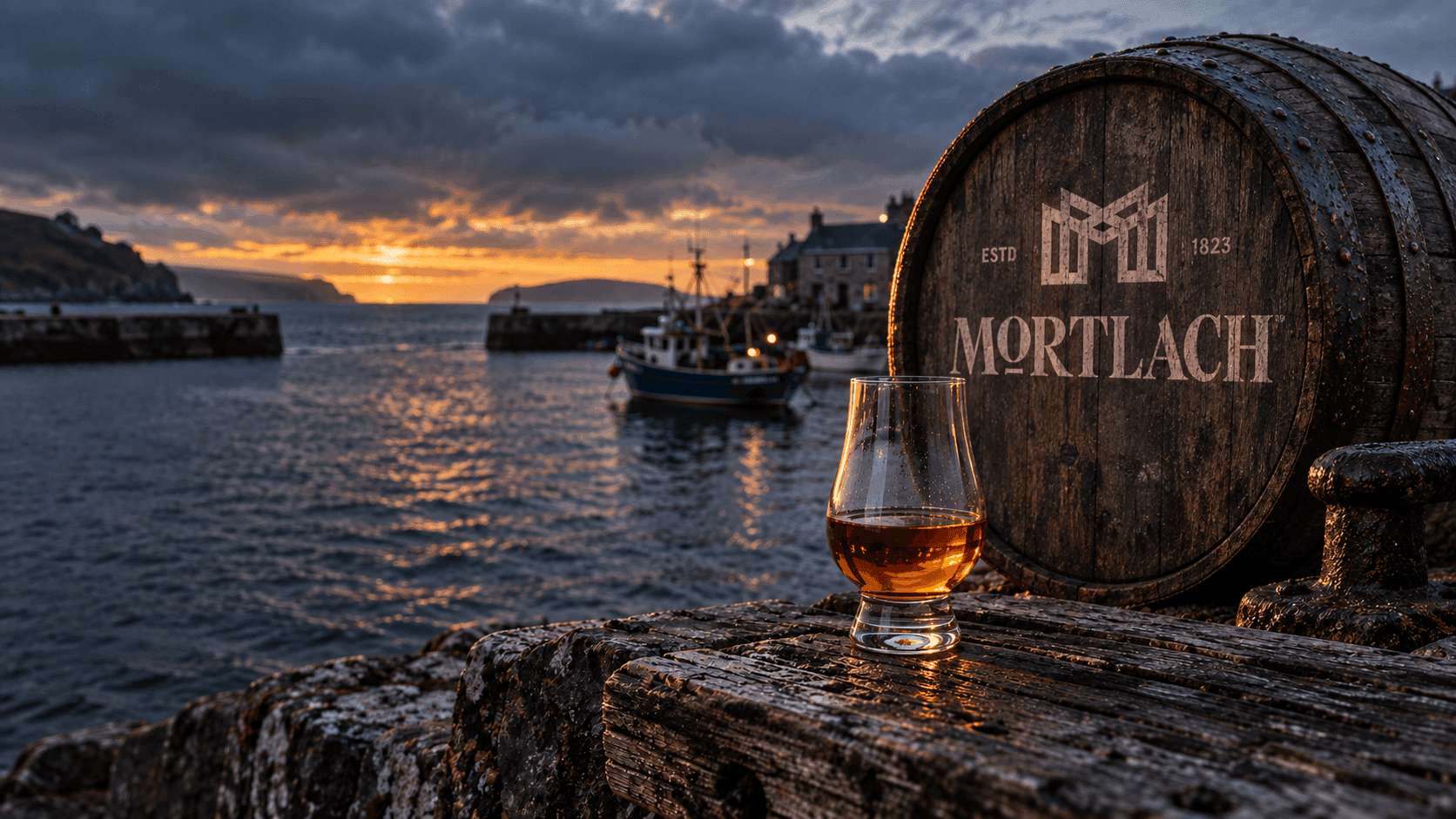
Mortlach on Shetland? The Story Behind a Bottle and the Man Who Knows the Beast of Dufftown
This 12-year-old Mortlach is a limited cask release of whisky distilled at the Mortlach distillery in Dufftown, Speyside, and bottled at 50.4% ABV by Lerwick Distillery, the first Scotch whisky distillery on the Shetland Islands. The cask was selected by Ian Millar, Lerwick's Master Distiller, who managed Mortlach from 1991 to 1996 and was inducted into the Whisky Magazine Hall of Fame in 2017. The whisky itself was made in Speyside, not on Shetland, which makes the bottle an early chapter in the story of a distillery whose own single malt is still maturing.
There are bottles that catch our attention because of their age. Others stand out because of their strength, rarity, distillery name or the number of bottles released. And then there are bottles that become truly fascinating only once you discover the story behind them.
This Mortlach belongs firmly to the last category.
At first glance, it is a 12-year-old Mortlach bottled at 50.4% ABV, presented as a limited cask release and bottled by Lerwick Distillery on the Shetland Islands. The bottle carries a wonderfully old-fashioned appearance, a handwritten-style label, a bottle number (No. 54) and the kind of strength that immediately suggests this is something aimed more at whisky enthusiasts and collectors than the mass market.
But the most important detail on the label is a name:
Ian Millar.
And that is where this bottle becomes much more than simply another Mortlach.
Mortlach: The Beast of Dufftown
Mortlach is one of those distilleries that carries a completely different aura for whisky collectors.
Founded in Dufftown in 1823, Mortlach was the first legal distillery established in the town and went on to become one of the defining names of Speyside whisky. Over the decades, its distinctive style earned it the famous nickname “The Beast of Dufftown.”
And it is a fitting name.
Mortlach has never been a whisky that disappears quietly into the background. It is rich, powerful and often remarkably muscular, with a weight and depth that distinguish it from many of the lighter, more delicate styles associated with Speyside.
Part of that identity comes from its unusual distillation regime and the use of traditional worm tubs. Mortlach became particularly famous for its so-called 2.81-times distillation, an unconventional approach that contributes to the complexity and substantial character of its spirit.
Interestingly, although Mortlach has an extraordinary history as a distillery and whisky producer, its story as a widely recognised single malt brand is considerably more recent. For many years, its only regular official bottling was a 16-year-old in the Flora & Fauna series, which United Distillers (today part of Diageo) introduced in 1991.
For collectors, that makes Mortlach especially intriguing.
It has a long distillery history, but its modern single-malt story is much younger.
And somewhere in the middle of that story stands Ian Millar.
The Man Who Knows Mortlach From the Inside
Ian Millar is a name worth knowing if you are interested in the people who have shaped Scotch whisky over the last half-century.
His career spans more than five decades. He worked at a number of important Scottish distilleries before becoming Distillery Manager at Mortlach in 1991, a position he held until 1996.
He then managed Linkwood and Glen Elgin before joining William Grant & Sons in 1998, where he became involved with some of the world's most famous whisky names, including Glenfiddich, The Balvenie and Kininvie.
He eventually became a global whisky ambassador and was inducted into the Whisky Magazine Hall of Fame in 2017.
And this completely changes the way I look at this particular bottle.
This is not simply a Mortlach selected by someone with experience in the whisky industry.
This is a Mortlach selected by a man who actually managed Mortlach.
Ian Millar knew the distillery at a time when its modern single-malt reputation was still being formed. He knew the spirit, the production process and, perhaps most importantly, the character that Mortlach could produce.
So when his name appears on a Mortlach cask selected for Lerwick Distillery, it carries a significance that goes far beyond a marketing signature.
It is a connection between two very different chapters of Scotch whisky.
Why Is Mortlach on the Shetland Islands?
This is where the story takes another fascinating turn.
Lerwick Distillery is based on the Shetland Islands and was founded by Martin Watt and Calum Miller, who wanted to create the first single malt whisky from Shetland.
The company was established in 2022, and one of its most important appointments was Ian Millar as Master Distiller.
For a young distillery, this is a remarkable foundation.
A new distillery can buy beautiful stills. It can build impressive warehouses. It can create an attractive brand and tell a compelling story.
But it cannot buy fifty years of experience.
Lerwick gained something far more valuable: a Master Distiller who has spent decades working with some of Scotland's most respected whisky-producing institutions.
While its own spirit matures, Lerwick has already released a number of limited edition bottlings from casks that Ian Millar sought out himself.
And that makes these early bottlings particularly interesting.
Whisky at the Edge of the World
Shetland has something that cannot simply be manufactured by a marketing department.
It is genuinely remote.
Lerwick sits at around 60° north, where the North Atlantic meets the North Sea. The local climate is cool, windy and distinctly maritime, with the ocean playing an important role in the identity of the islands.
Lerwick Distillery places considerable emphasis on its location and the conditions in which its future whisky will mature. The distillery also draws on local springs connected with the islands' ancient geological landscape, poetically referring to them as the “Springs of Valhalla.”
It is not Islay.
It is not Speyside.
It is not Campbeltown.
And that is exactly what makes Lerwick so interesting.
The distillery has the opportunity to create a whisky identity that belongs entirely to Shetland, influenced not only by the spirit produced in its stills, but also by the climate, landscape and maritime environment surrounding it.
For a whisky collector, that is a story worth following from the beginning.
But This Is Not Yet Lerwick Whisky
There is one important distinction to make.
The Mortlach in this bottle was not distilled at Lerwick Distillery.
It is Mortlach from Speyside, selected as a limited cask release and bottled in connection with the Lerwick project.
That distinction matters.
Lerwick's own single malt is still developing. The distillery's ambition is to create the first genuine Shetland single malt, and its own spirit will ultimately be the whisky that defines the distillery's place in history.
So how should we look at bottles like this?
I see them as a prologue.
They are not yet the main story.
They are the first chapters.
And sometimes the prologue becomes extremely valuable when you know how the story eventually develops.
Tip: Under the Scotch Whisky Regulations 2009, a spirit must mature in oak casks in Scotland for at least three years before it can be called Scotch whisky, and an age statement always refers to the youngest whisky in the bottle. That is why young distilleries such as Lerwick release new make spirit or whisky sourced from established distilleries while their own casks mature, so always check the label to see where the liquid was actually distilled.
Why This Bottle Matters to a Collector
When we think about collectible whisky, we often focus on three things:
age, rarity and provenance.
This bottle offers something slightly different.
We have:
Mortlach. 12 years old. 50.4% ABV. Limited Cask Release. Bottle No. 54. Ian Millar. Lerwick Distillery. Shetland.
Each of these details is interesting on its own.
Together, they create a much more compelling story.
The relatively small bottle number immediately gives the release a personal character. This is not the sort of mass-market presentation where thousands of identical bottles disappear into retail shelves.
And then there is Ian Millar.
The fact that the man responsible for developing a new whisky identity on Shetland once managed Mortlach itself creates a remarkable connection between the old and the new.
Dufftown meets Shetland.
Experience meets ambition.
The past meets the future.
That, to me, is the real attraction of this bottle.
What Might Be Waiting in the Glass?
At 50.4% ABV, I would not expect a gentle or understated Mortlach.
I would expect weight and concentration.
On the nose, I would look for dark honey, dried fruit, raisins, orange peel, vanilla, nuts and warm spices, together with the rich, slightly meaty character that Mortlach is known for.
On the palate, I would expect an oily texture, ripe dark fruit, caramel, orange, nuts, dark chocolate, pepper and oak. The higher strength should give the whisky plenty of structure and intensity.
The finish should be long and warming, with dried fruit, dark chocolate, spices, oak and perhaps a touch of dryness developing towards the end.
And this is exactly the kind of whisky I would first taste without water.
Only afterwards would I add a few drops and see where it takes me.
At 50.4%, there is plenty of room to experiment. A small amount of water can reveal another layer of fruit, spice or sweetness and show how much complexity is hiding behind the initial power.
The Real Story May Begin Years From Now
Lerwick is still a young distillery.
And that is precisely why collectors should be paying attention.
I would never claim that every early bottling connected with a new distillery will become a valuable collector's item. Whisky doesn't work that way.
But there is another kind of value that can become increasingly important over time:
provenance.
Imagine looking back at Lerwick in ten or fifteen years.
By then, the distillery may have released mature versions of its own single malt. Its identity may be fully established. Its spirit may have developed a recognisable character. Collectors may be searching for the early expressions that documented the beginning of the journey.
And suddenly, bottles like this Mortlach become more interesting.
Not necessarily because of what they are worth financially, but because of what they represent.
They document the period before Lerwick had a mature whisky of its own.
They document the involvement of Ian Millar.
They document the early philosophy of the distillery.
And, ultimately, they document the birth of a new Scotch whisky story.
Lerwick is already building long-term projects around its own spirit. Its Haad Still Fellowship, for example, follows that spirit over eight years, from the first new make to an eight-year-old Shetland single malt, showing that the distillery is thinking well beyond simple release cycles.
That is exactly how a serious whisky project should think.
Tip: Small limited releases like this one are often barely listed online, so keep the receipt, any paperwork that came with the bottle and a clear photo of the label showing the bottle number. That record makes the bottle's provenance far easier to demonstrate if you ever decide to sell it.
A Bottle With a Story
The more I look at this Mortlach, the more I like it.
Not because it is simply another 12-year-old Mortlach.
Quite the opposite.
It is not just another Mortlach.
It is a bottle that connects one of Speyside's most distinctive distilleries with one of Scotland's most ambitious new whisky projects.
And above both stands Ian Millar, a man who does not know Mortlach merely from books, tasting notes or old photographs.
He once managed the distillery.
That gives this bottle a completely different dimension.
Mortlach represents the past.
Lerwick represents the future.
And Ian Millar stands between the two.
For me, that is what makes Bottle No. 54 worth having in a collection.
Some bottles are collected because they are old.
Some because they are rare.
Some because they are expensive.
But there is another category that I find even more fascinating:
bottles that preserve a moment in whisky history.
This is one of them.
Some bottles are collected for their age. Others for the story they will tell years from now.
And I have a feeling this Mortlach from Lerwick may belong to the second category.
- Mortlach: The Beast of Dufftown
- The Man Who Knows Mortlach From the Inside
- Why Is Mortlach on the Shetland Islands?
- Whisky at the Edge of the World
- But This Is Not Yet Lerwick Whisky
- Why This Bottle Matters to a Collector
- What Might Be Waiting in the Glass?
- The Real Story May Begin Years From Now
- A Bottle With a Story
About the author
Damian Baran
Hooked since a Talisker 10 in 2021, I've tasted over 800 whiskies and love Islay peat and independent bottlings.
To the author