

Reach thousands of whisky and spirits lovers every day.


Light and Fruity Scotch Whiskies Perfect for Hot Weather
 by Max RinkI’m a whisky enthusiast and aspiring writer, exploring new flavours and the stories behind every bottle.
Follow Spiritory on Google News to get our latest guides and releases delivered straight to your feed.
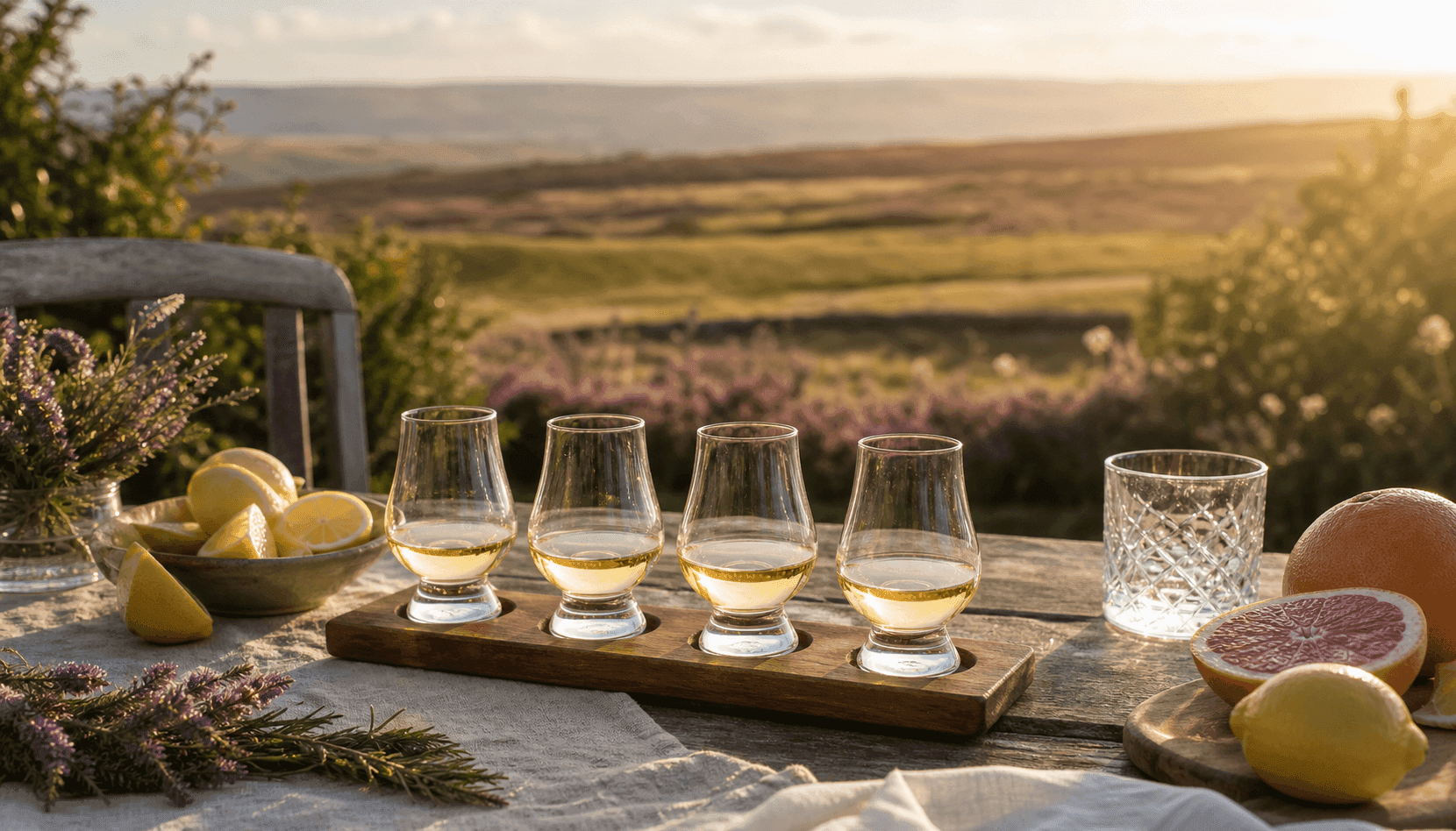
Light and Fruity Scotch Whiskies Perfect for Hot Weather
Key Takeaways
Lowland single malts are the lightest Scotch expressions: unpeated, often triple-distilled, with floral and citrus profiles ideal for warm weather.
Light Highland and Speyside expressions offer more complexity while retaining fruit-forward, approachable profiles.
A small addition of water or a single large ice cube typically improves these whiskies in summer by opening the nose and softening the alcohol.
Glenkinchie 12 and Auchentoshan are the benchmark Lowland expressions for summer drinking.
Speyside whiskies with high-percentage virgin or first-fill bourbon cask maturation tend to produce the lightest, most fruit-forward character in the region.
The highball is an excellent delivery format for this style: the carbonation lifts the light fruit notes without masking them.
What Makes a Scotch Whisky Light and Fruity
Distillation approach
The shape and size of the still, along with the distillery's approach to spirit cut, determines much of a whisky's base character before wood ever enters the picture. Tall, narrow stills produce lighter spirit with more copper contact, which strips sulphurous compounds and encourages the development of fruity esters. Distilleries known for light, fruit-forward output (Glenmorangie, Auchentoshan, Glenkinchie) use notably tall stills for exactly this reason. The character is built in before maturation begins.
Cask selection and maturation
First-fill bourbon casks contribute vanilla, coconut, and tropical fruit notes to maturing spirit. Second-fill and refill casks deliver less flavour contribution, producing whisky that retains more of its new-make fruit character with less wood dominance. The lightest, most fruit-forward Scotch whiskies are typically those that have spent the majority of their maturation in ex-bourbon wood rather than sherry casks, and often in refill cooperage rather than heavily active first-fill barrels.
Regional tendencies
While no region is entirely homogeneous in style, Lowland and lighter Speyside expressions share a tendency toward lightness that the Island and campfire traditions of Islay and Orkney do not. The Lowlands, geographically flat, agricultural, with a tradition of lighter, more approachable spirits, consistently produce some of Scotland's least heavy whiskies. Speyside's diversity is greater, but the region's best-known lighter expressions consistently outperform heavier styles in warm-weather conditions.
The Lowland Expressions Worth Knowing
Glenkinchie 12
Glenkinchie 12 is produced at a distillery south-east of Edinburgh and remains the clearest single-malt illustration of the Lowland style. The profile is dry, grassy, and lemon-forward with a gentle maltiness and a finish that resolves cleanly. It does not have the complexity of a mature Speyside or the richness of a sherry-influenced expression, but in summer heat that restraint reads as elegance. Over a single large cube, it is one of the most accessible and genuinely satisfying warm-weather drams in the entire Scotch canon.
Auchentoshan
Auchentoshan is triple-distilled, unusually for Scotch, almost standard in Irish whiskey, which produces a lighter, softer spirit than double-distilled expressions. The core range spans from the unaged American Oak expression through to the Three Wood variant, which introduces a light sweetness from sherry and Pedro Ximénez cask finishing without adding the weight that a full sherry maturation would bring. The Three Wood is a particularly interesting choice for warm-weather drinking: the light sweetness integrates beautifully with citrus garnish and a small addition of water.
Bladnoch and Ailsa Bay
Bladnoch, revived under new ownership and now producing in the south-west of Scotland, delivers a fragrant and fruity profile that is less well-known than Glenkinchie but equally rewarding for summer drinking. Ailsa Bay, produced at the William Grant and Sons facility in Girvan, offers a different take, with a very light peat level that adds just enough smoky texture to complement rather than dominate the fruit character.
Light Speyside Expressions for Summer
The Glenlivet 12
The Glenlivet 12 remains one of the most consistently fruit-forward expressions in the Speyside region: apple, pear, and citrus notes developed in American oak, with a finish that is clean and moderately sweet without the heavier vanilla or dried fruit that more aggressively ex-bourbon-influenced expressions can produce. In warm weather, the restraint of The Glenlivet 12 is a significant asset. It performs well with a single ice cube and equally well in highball format.
Craigellachie 13
Craigellachie 13 occupies a more unusual position: a Speyside single malt with a waxier, meatier character than most of its regional peers, yet one that retains enough fruit and lightness to work in summer with the addition of water. It is a more interesting pairing whisky than a pure heat-quencher, and pairs particularly well with the lighter end of BBQ fare (grilled chicken, vegetables) where its character adds dimension rather than competing with heavy flavours.
Glenfarclas 12
Glenfarclas 12 is a lightly sherried Speyside that retains the freshness and accessibility of the region's lighter style while adding just enough dried fruit and warm spice to make it genuinely complex. Served at its standard bottling strength with a small addition of water, it is approachable without being simple. The sherry influence here is a background note rather than a dominant character, a useful distinction from the distillery's older and richer expressions, which are considerably better suited to winter evenings.
Tip: When comparing light Scotch expressions side by side in summer, chill all glasses in the freezer for at least five minutes before pouring. The cold slows dilution from a single ice cube and gives each whisky the best possible window in which to express its character before the temperature rises.
Light Highland Single Malts
Dalwhinnie 15
Dalwhinnie 15, from one of the highest distilleries in Scotland, produces a uniquely honeyed, heathery profile with light peat and stone fruit that makes it one of the most immediately appealing warm-weather Highland expressions. The light peat, barely perceptible, adds texture without weight. The honey and vanilla from American oak maturation provide sweetness that does not feel cloying in heat. With a single ice cube and patience, this is one of the more complete summer single malt experiences available.
Glenmorangie Original
Glenmorangie's flagship expression uses ex-bourbon casks from the Ozark Mountains in Missouri, chosen for their tight grain and gentle flavour contribution. The result is a profile built around peach, citrus, and vanilla (classic bourbon-cask fruit) with a light body that handles summer conditions and ice better than almost any other Highland expression in the core range. It is also the whisky most often recommended as an entry point for new whisky drinkers, a status it has earned by being genuinely good rather than merely inoffensive.
FAQ
Are Lowland whiskies considered inferior to Speyside or Highland expressions?
No. The historical reputation of Lowland whisky as lighter or less prestigious reflects the region's different production tradition (grain whisky, triple distillation, lower-strength spirit) rather than a genuine quality hierarchy. The best Lowland single malts are excellent whiskies judged on their own terms, and their lightness is a feature rather than an absence of character.
What is the best light Scotch for converting someone who claims not to like whisky?
Glenmorangie Original or Auchentoshan Three Wood are the most reliable introductory whiskies for reluctant converts. Both are light enough that the alcohol character does not dominate the experience, and both have accessible fruit-forward profiles that do not require prior whisky vocabulary to appreciate.
How does light Scotch compare to Irish whiskey for summer drinking?
The two are close in character and summer suitability, but there are differences. Light Scotch tends to have a slightly more defined malt and barley character alongside its fruit notes; Irish whiskey is often softer and rounder. Both work well in highball format and with light dilution. Choosing between them is mostly a matter of preference rather than objective quality.
Can you age light Scotch in your own collection before drinking?
Light, fruit-forward Scotch expressions are designed to be drunk rather than stored for long additional periods. Unlike heavily sherried or robust Highland expressions, which can develop interesting complexity over years of home storage, lighter whiskies tend not to change significantly once bottled. Buy and enjoy; the aging work has already been done by the distillery.
About the author

Max Rink
I’m a whisky enthusiast and aspiring writer, exploring new flavours and the stories behind every bottle.
To the author