

Reach thousands of whisky and spirits lovers every day.


Laphroaig Elements L1.0, L2.0 and L3.0 - Three Experiments, One Distillery
 by Damian BaranHooked since a Talisker 10 in 2021, I've tasted over 800 whiskies and love Islay peat and independent bottlings.
Follow Spiritory on Google News to get our latest guides and releases delivered straight to your feed.
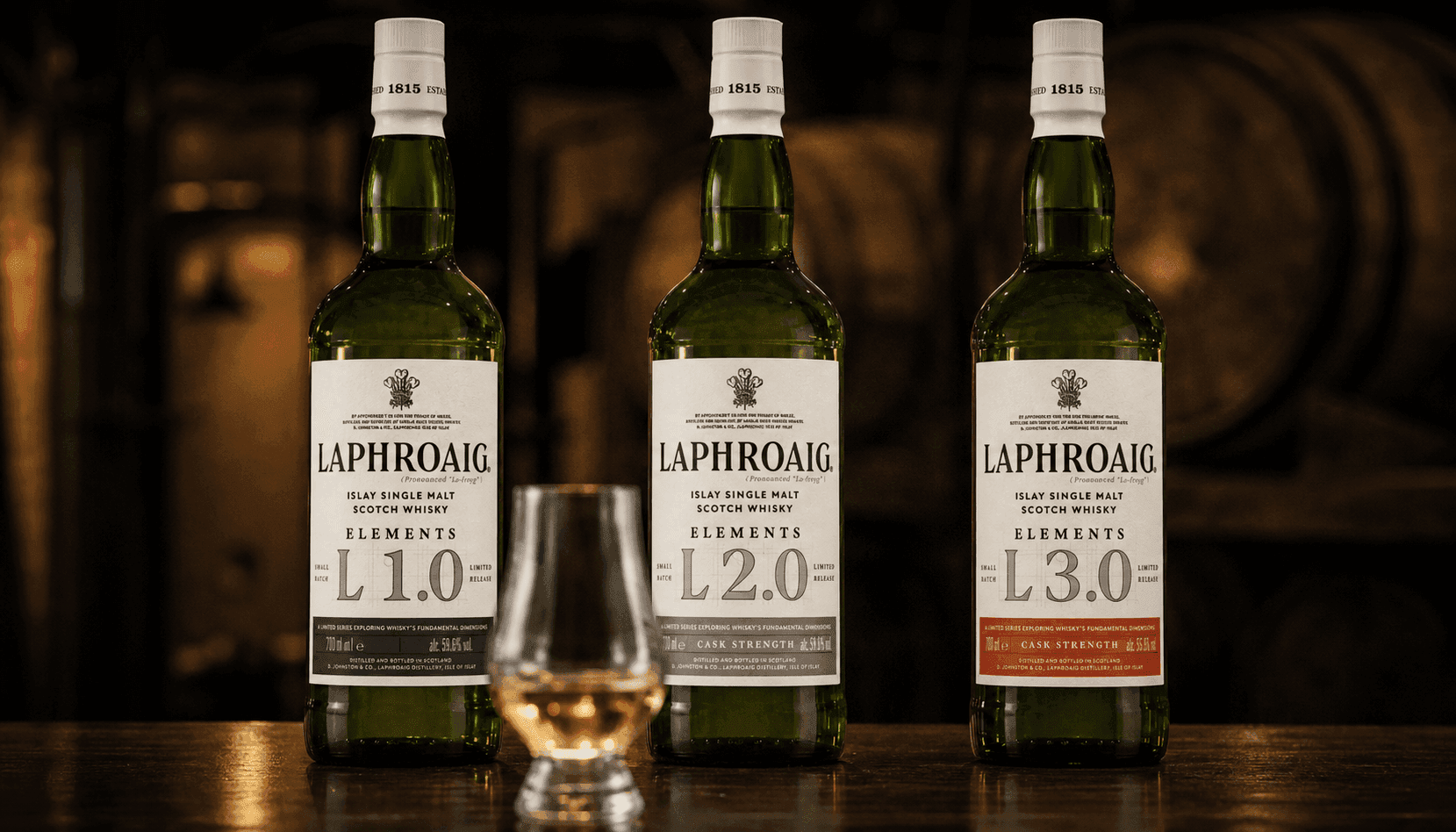
Laphroaig Elements L1.0, L2.0 and L3.0 - Three Experiments, One Distillery
There are whiskies we buy because of their age, others because of a particular cask, and some because they represent a specific moment in a distillery's history. Then there are bottles we buy simply out of curiosity. Laphroaig Elements definitely belongs to the latter category – although when it comes to the first three releases of the series, curiosity can quickly turn into fascination.
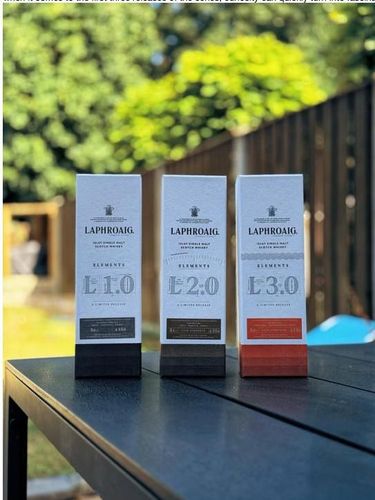
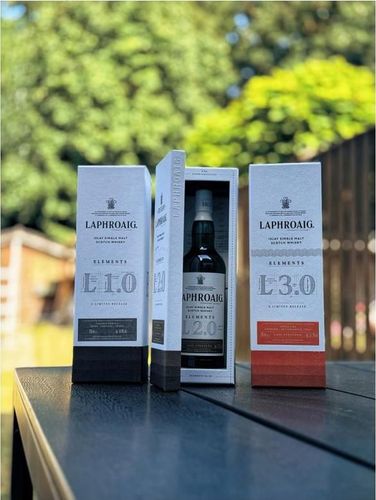
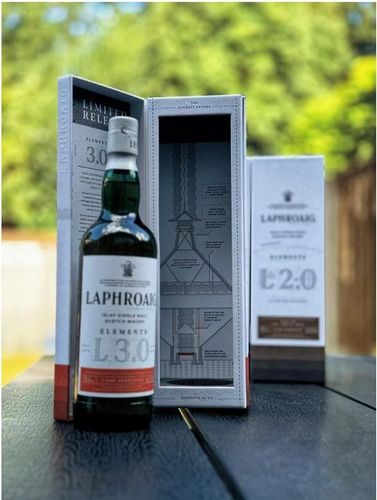
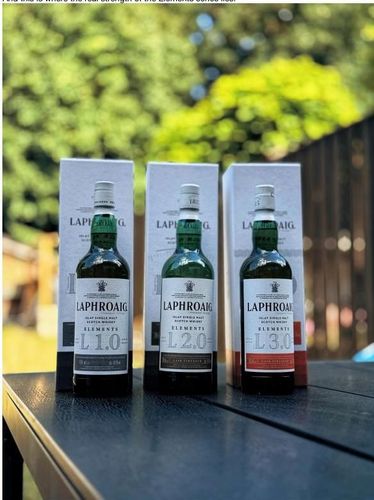
On my table are three bottles: Laphroaig Elements L1.0, L2.0 and L3.0. Three editions from the same series, three different experiments, and three attempts to answer one question: how can you change the character of a whisky while remaining faithful to the DNA of Laphroaig?
This question is particularly interesting when it comes to an Islay distillery. Laphroaig has one of the most recognisable profiles in the entire whisky world. Peat, smoke, iodine, sea breeze, ash and wet wood – for some, these are almost medicinal aromas; for others, they represent some of the most beautiful scents you can find in a glass of whisky. Changing such a distinctive profile without losing its identity is no easy task.
The Elements series, however, shows that experimentation does not have to be limited to cask maturation. You can change the production process, fermentation or the way peat is used and then observe how these seemingly technical decisions influence the final spirit.
And that, for me, is the greatest value of this series.
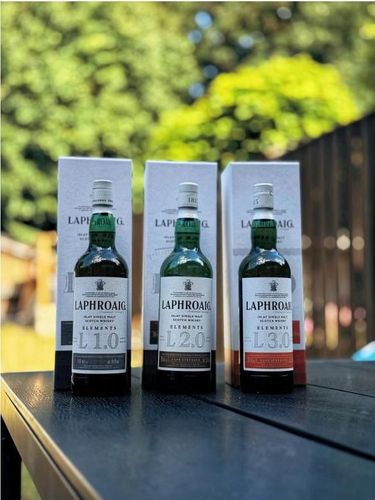
Laphroaig – A Whisky That Needs No Introduction
The history of Laphroaig dates back to 1815, when the distillery on the island of Islay was established by brothers Donald and Alexander Johnston. Over more than two centuries, Laphroaig has become one of the symbols of Islay and one of the most recognisable producers of heavily peated whisky.
For many people, Laphroaig 10 Year Old is their first encounter with truly intense peated whisky. It is also a whisky that can divide drinkers like few others. Some fall in love with it from the very first sip, while others need time to understand its unique character.
Laphroaig is a particularly important distillery for me. Laphroaig 10 was the whisky that started my own journey, and over time my fascination with the brand developed towards increasingly experimental and more powerful expressions. Whisky bottled at cask strength holds a special place in my collection, especially Laphroaig 10 Cask Strength.
That is why the Elements series is so fascinating. These are not simply three more limited-edition bottles. They are an opportunity to look behind the scenes and discover what actually creates the character of Laphroaig.
Elements – Whisky as an Experiment
The Elements series was created as a platform for experimentation with the whisky-making process. Instead of focusing solely on age or cask type, the people behind the series decided to examine what happens much earlier in the production process.
And this is where the concept of the collection becomes truly fascinating.
If we take the same distillery, the same style of whisky and the characteristic Islay peat, but change one element of the production process, we can create a whisky that is still recognisably Laphroaig while revealing a completely different personality.
The first release, L1.0, was the beginning of this journey. It was followed by L2.0, which shifted the focus towards fermentation. The latest of the three bottles, L3.0, took the experiment in another direction, focusing once again on the use of peat.
The result is three whiskies that almost demand to be tasted side by side.
Laphroaig Elements L1.0 – The Beginning of the Experiment
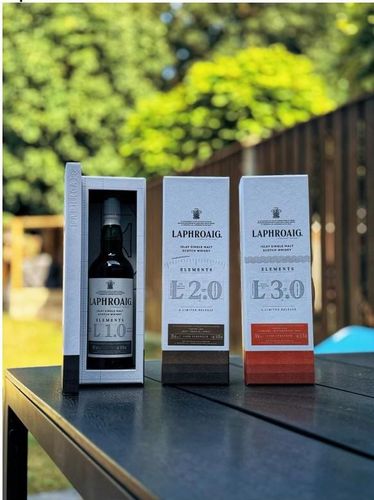
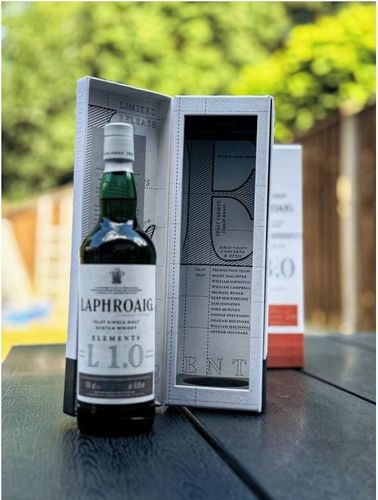
Laphroaig Elements L1.0 is the first release in the series and, at the same time, the starting point for the entire experiment.
The whisky was bottled at approximately 58.6% ABV, without an age statement. The high strength immediately suggests that this is a whisky aimed primarily at enthusiasts of powerful, intense drams.
L1.0 is not a whisky that tries to convince you to like it. From the very first encounter, it makes it perfectly clear that this is Laphroaig.
On the nose, there is characteristic peat, smoke and maritime character. Salt, wet wood, ash and a slightly medicinal quality are all present. With time, citrus, vanilla and subtle pepper notes begin to emerge.
On the palate, the whisky is intense and oily. The alcohol is clearly present, but it works well with the weight and texture of the spirit. There is plenty of peat, ash and smoke, accompanied by salty maritime notes and citrus. It is dry, powerful and uncompromising.
The finish is long and warming. The smoke remains on the palate long after swallowing, while the maritime, slightly iodine-like character reminds us that this whisky comes from one of Scotland's most distinctive islands.
For me, L1.0 is the most traditional interpretation of the three. If you love Laphroaig for its peated, maritime and smoky character, this is the bottle that delivers the most of what you would expect. But this is only the beginning.

Laphroaig Elements L2.0 – When Fermentation Changes Everything
If L1.0 is a whisky that demonstrates the power of peat, L2.0 proves that the character of whisky can also be shaped in places we often forget about when tasting.
This time, the experiment focused on fermentation.
Extending the fermentation process allowed the distillery to create a more complex and fruit-driven spirit. And this is where L2.0 becomes particularly interesting.
The whisky was bottled at 59.6% ABV, making it the strongest of the three expressions discussed here.
The first impression, however, may be surprising.
Instead of the expected explosion of peat, we get significantly more fruit and creamy aromas. Apple, citrus, vanilla and honey appear first. There are also notes reminiscent of vanilla custard and sweet pastry.
Only gradually does the Laphroaig we know begin to emerge. The peat is still there, but it feels more integrated with the rest of the aromas.
On the palate, things get really interesting. Green apples, honey and sweet vanilla notes appear first. There are hints of crème brûlée, fruit and a delicate creaminess. In the background, there is still smoke and maritime character.
This is where the whole concept of the Elements series becomes most apparent.
Laphroaig does not stop being Laphroaig. The distinctive peat and smoke are still present, but by changing one element of the production process, we get a completely different balance.
For me, L2.0 is perhaps the most interesting bottle from the perspective of whisky geeks. It demonstrates that the character of whisky does not begin in the cask.
Sometimes, it begins much earlier.
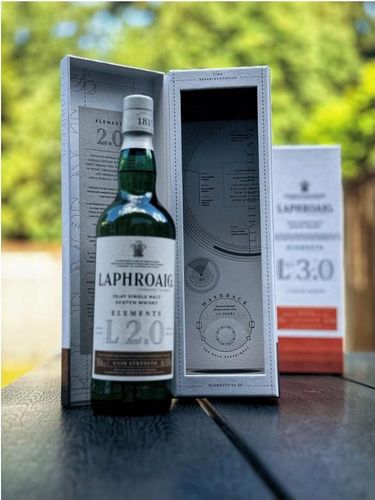
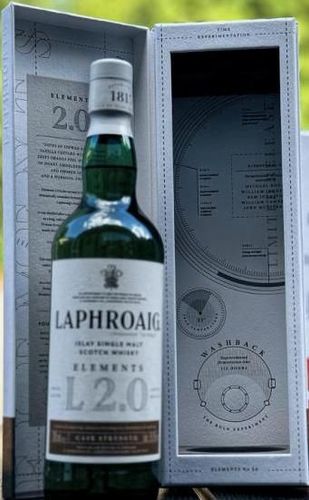
Laphroaig Elements L3.0 – A Return to Fire
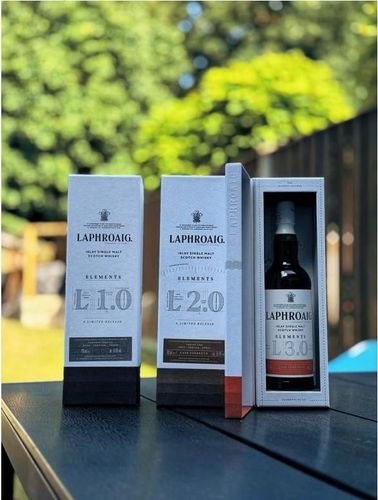
If L2.0 takes us into the world of fruit and fermentation, L3.0 once again directs our attention towards one of the most important symbols of Laphroaig – fire.
In this edition, the experiment focused on the way peat is used during the drying of the malt. The inspiration came from a process in which peat burned for longer and more intensely, influencing the character of the malt.
The result?
L3.0 is the smokiest and most charred whisky of the three.
The bottle was released at 55.3% ABV. This is the lowest strength of the three expressions, but that certainly does not mean it is the least intense.
Quite the opposite.
The nose immediately reveals a whisky dominated by smoke. Charcoal, ash and heavily burnt peat are joined by maritime notes, salt, vanilla and citrus.
On the palate, L3.0 is extremely intense. The peat is deep, heavy and distinctly smoky. There are notes of dark chocolate, cocoa, pepper and roasted grains. With time, darker fruit flavours begin to emerge – plums and blackberries.
This combination is one of the most interesting aspects of L3.0 for me.
We have the classic smokiness of Laphroaig, but it is darker, drier and at times reminiscent of the aroma of a dying bonfire.
The finish is long and powerful. Smoke, ash, leather and slightly medicinal notes remain on the palate long after the whisky has been swallowed.
L3.0 is definitely a whisky for those who enjoy Laphroaig in its most uncompromising form.
Three Whiskies, Three Different Stories
The greatest pleasure of tasting Elements comes from comparing all three bottles.
L1.0 presents a classic Laphroaig – maritime, peated and dry.
L2.0 opens the door to the world of fermentation and reveals a more fruity and creamy side of the distillery.
L3.0 returns to fire and peat, offering the most intense, charred and smoky profile of the three. You could say that each whisky answers a different question. L1.0: What happens when we change the way we work with the production process? L2.0: How much can fermentation influence the character of the spirit? L3.0: What happens to the whisky when we change the way peat and fire are used? And that is precisely what makes the Elements series so fascinating.
How Should You Taste Laphroaig Elements?
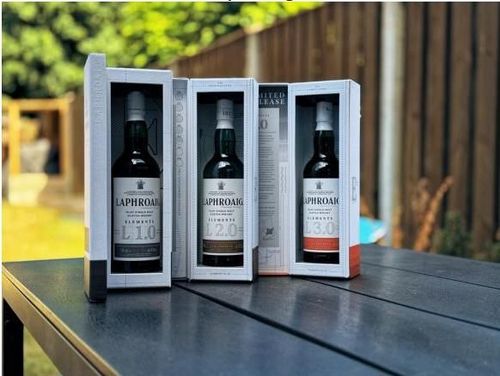
If I were to recommend a tasting order, I would start with L1.0, move on to L2.0, and finish with L3.0.
The first whisky provides a classic point of reference.
The second shows how much fermentation can change the character of the spirit and how a heavily peated whisky can develop additional layers of fruitiness.
The third closes the tasting with an explosion of smoke, peat and fire.
Because of the high alcohol strength, I would recommend giving each whisky a few minutes in the glass. I would also not hesitate to add a few drops of water. This can be particularly interesting with L2.0, helping to reveal additional fruit notes, while with L1.0 and L3.0, water can soften the alcohol and allow you to explore the structure of the peat more easily.
This is definitely not a series to be rushed.
Elements requires time.
Which One Is the Best?
Of course, that depends on what you are looking for in a whisky.
If you want the most classic Laphroaig, I would choose L1.0.
If you are looking for the most unusual and experimental profile, my choice would be L2.0.
If you want smoke, peat and fire, I would reach for L3.0 without hesitation.
For me, however, the most interesting thing is that I do not have to choose just one.
Having all three bottles allows you to conduct your own experiment. You can place them side by side, pour them into three glasses and try to answer the question of how many different personalities one distillery can have. And this is where the real strength of the Elements series lies.
Final Thoughts
Laphroaig Elements L1.0, L2.0 and L3.0 are more than three limited-edition whiskies. They are three different perspectives on the process of creating a single malt.
L1.0 reminds us why we fell in love with Laphroaig in the first place.
L2.0 shows that there is far more behind the character of whisky than simply the cask.
L3.0 reminds us that, when it comes to Laphroaig, everything ultimately comes back to peat, smoke and fire.
For a collector, owning the first three editions also has an additional appeal. Each bottle becomes part of a larger story, and together they create a record of experiments carried out by one of Scotland's most distinctive distilleries.
For me, this is the greatest strength of the series. Elements is not trying to create a 'new Laphroaig'. It is trying to understand what Laphroaig actually is.
Is it peat? Smoke? The sea? Fermentation? Fire? Or perhaps all of these elements together? After tasting L1.0, L2.0 and L3.0, the answer seems simple.
Laphroaig is the sum of all these elements – and the Elements series allows us, step by step, to take this whisky apart and explore what lies at its very core.
And that is precisely why I believe these three bottles are best enjoyed together. Not simply as three more whiskies to add to a collection, but as a single, three-part story about how a small change in the production process can create an entirely new interpretation of one of Islay's most iconic whiskies.
- Laphroaig – A Whisky That Needs No Introduction
- Elements – Whisky as an Experiment
- Laphroaig Elements L1.0 – The Beginning of the Experiment
- Laphroaig Elements L2.0 – When Fermentation Changes Everything
- Laphroaig Elements L3.0 – A Return to Fire
- Three Whiskies, Three Different Stories
- How Should You Taste Laphroaig Elements?
- Which One Is the Best?
- Final Thoughts
About the author

Damian Baran
Hooked since a Talisker 10 in 2021, I've tasted over 800 whiskies and love Islay peat and independent bottlings.
To the author