

Reach thousands of whisky and spirits lovers every day.


Is Ardbeg Worth Collecting?
 by Max RinkI’m a whisky enthusiast and aspiring writer, exploring new flavours and the stories behind every bottle.
Follow Spiritory on Google News to get our latest guides and releases delivered straight to your feed.
Is Ardbeg Worth Collecting?
Key Takeaways
Ardbeg's annual Committee Bottlings are genuinely limited and sell out quickly, creating real scarcity that drives secondary-market demand.
Older Ardbeg expressions (pre-2000 releases) have appreciated substantially, far exceeding typical vintage bottles, but this reflects historical scarcity as much as future value potential.
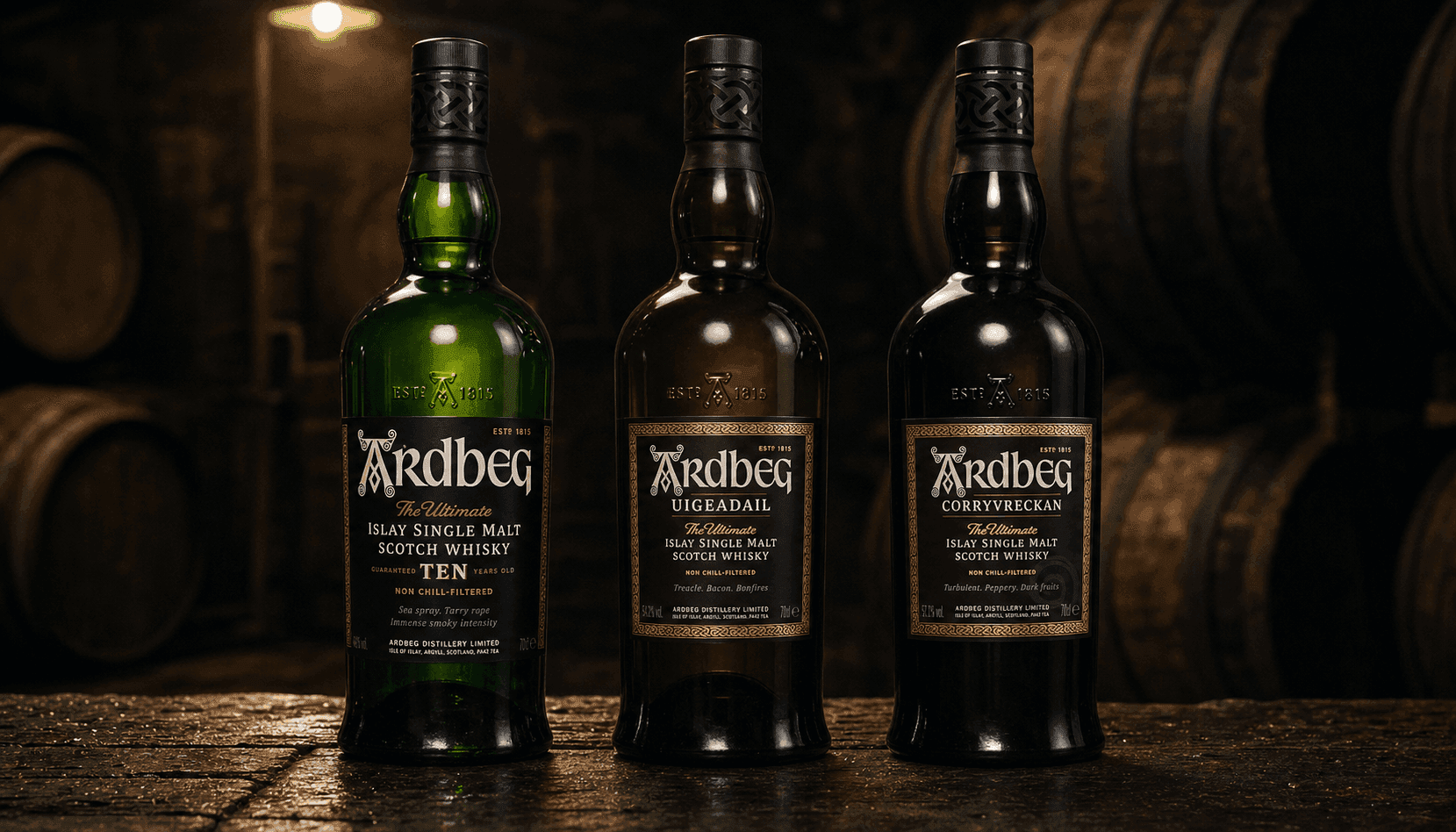
Ardbeg's core range (10-year, Uigeadail, Corryvreckan) is widely available at reasonable prices, making them accessible entry points without betting on appreciation.
The secondary market for Ardbeg is active and liquid, meaning you can sell holdings relatively easily, but prices can be volatile.
Collecting Ardbeg makes sense if you genuinely love heavily peated Islay whisky and enjoy engaging with the release calendar; it is riskier if you are purely chasing investment returns.
Spiritory (spiritory.com) maintains dedicated Ardbeg listings on its marketplace, including recent Committee Bottlings and special releases as they become available, allowing collectors to track the range and plan acquisitions.
What Makes Ardbeg Collectible
The Committee Release Model
Ardbeg's most collectible offerings come through the "Ardbeg Committee",a membership program where a limited number of bottles are released annually in small quantities (typically 8,000–15,000 units per release). These sell out within hours. The artificial constraint is by design: Ardbeg creates scarcity, which drives membership and secondary-market interest.
This model is not unique to Ardbeg, but Ardbeg executes it more ruthlessly than most. The strategy works: Committee Bottlings command immediate premiums on the secondary market, often well above retail within weeks of release.
Cult Appeal
Ardbeg has cultivated an intensely engaged collector base. Online forums, Ardbeg Day (an annual global celebration), and the Committee itself create community. This social dimension is real, and it drives demand independent of whisky quality. Ardbeg merchandise, limited-edition packaging, and releases tied to distillery milestones reinforce the brand loyalty.
Peated Islay Quality
Ardbeg produces genuinely excellent peated whisky. The distillery sources good barley, uses Islay peat, and ages spirit in well-managed ex-bourbon and ex-sherry casks. The core 10-year expression is a benchmark for Islay. This quality foundation is what allows the scarcity strategy to work; the bottles command premium prices because they are scarce and good, not just scarce.
Historical Price Performance and Future Prospects
The Old Ardbeg Boom (Pre-2000)
Bottles released before 2000, particularly the original 17-year, the closed-bottle era pre-1997, and rare vintage releases, have appreciated at extraordinary rates. A bottle purchased at modest retail in 1990 might sell for multiples of its original price today. These gains reflect scarcity that simply cannot be replicated. Ardbeg was less famous then, fewer bottles were kept as investments, and aging stock is finite.
Anyone who held old Ardbeg from the 1980s and 1990s made exceptional returns. The question for new collectors is whether those gains can repeat.
Modern Ardbeg Appreciation (2000–Present)
Committee Bottlings released in the 2010s have appreciated, but more modestly than old Ardbeg. A 2012 Committee release that sold at modest retail has appreciated meaningfully over a decade, but far less dramatically than old bottles. Recent releases (2023–2025) show smaller premiums, suggesting the market may be approaching saturation as Ardbeg increases production and more collectors join the competition.
Future Value Uncertainty
Several risk factors threaten future appreciation. Ardbeg is now owned by LVMH, a luxury conglomerate. LVMH has the capability to increase production to meet demand, which could erode scarcity. The secondary market has also attracted financial speculators and market-making firms, changing the character of trading from collector-to-collector to investor-to-investor. Market dynamics driven by speculation are less stable than those driven by genuine passion.
Tip: If you are collecting Ardbeg, treat Committee Bottlings as acquisitions you would not mind drinking if the secondary market disappoints. Collect for the whisky itself, not just the investment angle.
Building an Ardbeg Collection
Core Range (Entry-Level, Always Available)
The Ardbeg 10-year, Uigeadail (non-age-statement, sherry-cask heavy), and Corryvreckan (10-year, heavier peat) form the core. All are widely available at entry-level pricing. These are the foundation for any serious Ardbeg collection. They rarely appreciate significantly, but they are not likely to depreciate either. Buying these is about experiencing the distillery, not speculation.
Committee Bottlings (Active Collecting)
If you commit to collecting Ardbeg, joining the Committee is the path to access. Releases happen once or twice per year. Membership costs around a modest annual cost. Each bottling is typically at mid-range collector level at release. To maximize appreciation potential, secure bottles at retail and hold them unopened. Some collectors participate for tasting access only, opening bottles shortly after purchase; this negates investment upside but reflects a different priority (drinking over investment).
Special Releases and Vintage Bottlings
Ardbeg periodically releases aged expressions (15-year, 17-year, 19-year), limited-edition cask finishes, and rare individual-cask releases. These are typically more expensive and less liquid than Committee Bottlings. Secondary-market data is thinner, making value assessment harder. Price appreciation for these is mixed; some have held value well, others have not. Approach with caution.
Building with Intent
A focused Ardbeg collection might include: the core three (10, Uigeadail, Corryvreckan), Committee Bottlings from three to five recent years (diversifying the bet), and one special release (15-year or a cask-finished expression). Total outlay: a meaningful investment. This is an active, engaged collection; not passive investment. Spiritory's marketplace listings show what Committee releases and special bottlings are currently available, helping you track each release's character and plan acquisitions as new bottlings appear.
Alternatives to Ardbeg for Peated Whisky Collectors
Lagavulin 16 Year Old
Heavier peat than Ardbeg, more complex on the palate, less aggressively marketed. Widely available, rarely as scarce as Ardbeg. Secondary-market premiums are modest (10–20% above retail). A more stable, less speculative option for peated Islay collecting.
Talisker 10 Year Old
Skye-based, peppery peat (not sweet like Ardbeg), excellent quality. Widely available. Some collector interest, but far less secondary-market activity than Ardbeg. Good if you want peated Scotch without the speculation layer.
Caol Ila 12 Year Old
Islay, lightly peated, coastal. Less polarizing than Ardbeg, less collector demand, stable prices. A solid Islay experience without the hype.
Benromach 10 Year Old
Speyside-peat (lighter, more delicate), genuine quality, underrated. Minimal secondary-market activity or investment potential, but excellent drinking whisky. Good if you collect for pleasure rather than appreciation.
FAQ
Will Ardbeg Committee Bottlings keep appreciating?
Probably not at historical rates. Recent releases show smaller premiums than 2010s bottlings, suggesting market saturation. Future appreciation will depend on Ardbeg's production choices and broader collector interest. Treat recent purchases as long-term holds, not quick flips.
Should I join the Ardbeg Committee to collect?
Only if you are genuinely interested in Ardbeg whisky and want access to limited releases. If your sole motivation is investment, you can buy Committee Bottlings on the secondary market without membership; you will pay a premium, but you avoid the annual fee and the obligation to buy every release.
Is Ardbeg better than other peated Islays?
Ardbeg is excellent, but not objectively superior to Lagavulin or Talisker. It is more heavily peated, which appeals to some palates and alienates others. Quality-wise, the three are peers. Ardbeg's collectibility premium reflects marketing and strategy, not taste superiority alone.
Can I make money collecting Ardbeg?
Historically, yes. But returns are not guaranteed, and recent releases show smaller appreciation than older bottlings. Treat investment as a secondary benefit, not the primary goal. Collect bottles you would enjoy drinking, and any appreciation is a bonus.
What is the best Ardbeg to start with?
The 10-year. It is widely available, affordable, and a benchmark expression. Once you know whether the peaty profile appeals to you, explore Uigeadail and Corryvreckan. Only then should you commit to chasing Committee Bottlings.
About the author

Max Rink
I’m a whisky enthusiast and aspiring writer, exploring new flavours and the stories behind every bottle.
To the author